Vegetarian Protein on GLP-1: How to Hit Your Daily Goal
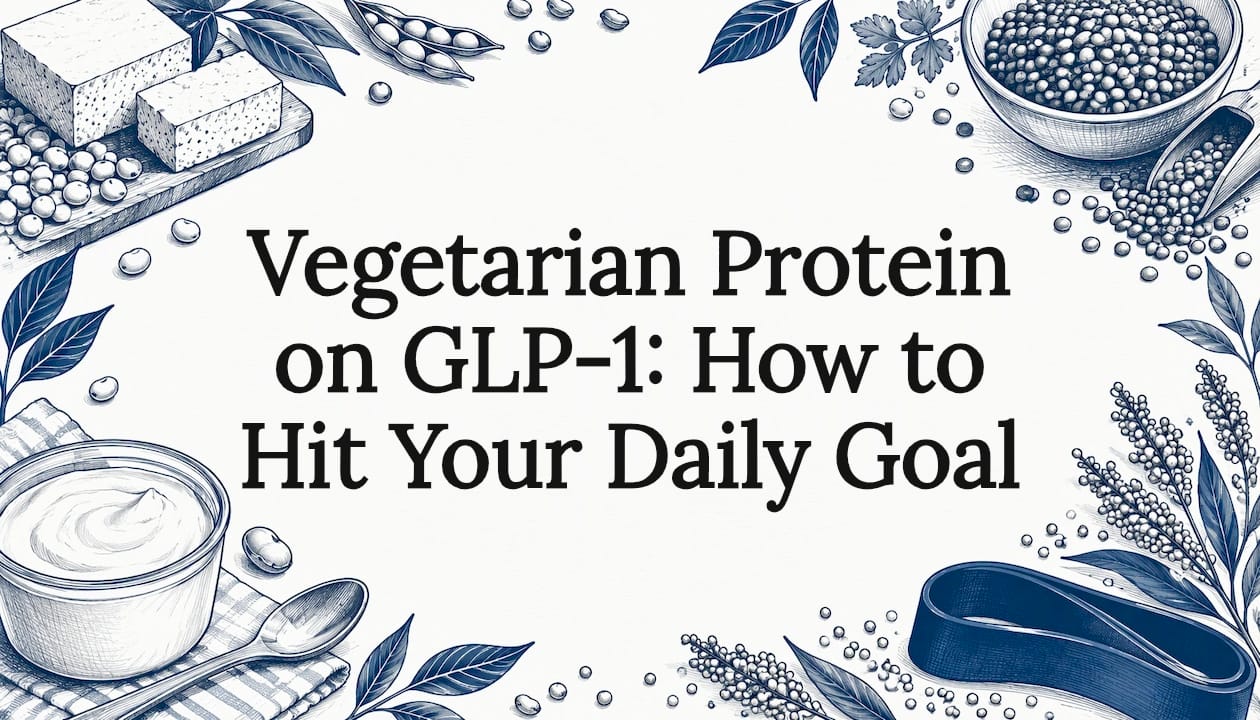
Vegetarian Protein on GLP-1: How to Hit Your Daily Goal

You can reach your protein target on a GLP-1 medication without meat. The target is usually 1.0 to 1.6 grams per kilogram of body weight per day, and a vegetarian plan gets there when protein comes first at every meal, portions are planned in advance, and strength training is part of the week. Fullness from the medication is the real obstacle, not the plant-based diet. A connected program that pairs clinician oversight with nutrition coaching and daily logging, like GLPCare, takes the guesswork out of hitting the number.
GlpcareMake Protein Part of Personalized CareGLPCare combines personalized nutrition coaching, clinician support, and daily habit logging to support your weight management journey.VisitTL;DR
- Clinical consensus for people on GLP-1 therapy is 1.0 to 1.6 g of protein per kg of body weight daily, well above the standard 0.8 g/kg recommendation.
- Eat the protein food first at each meal, before the fullness signal ends your appetite, and add a protein shake on low-appetite days.
- Lentils, tofu, Greek yogurt, cottage cheese and quinoa are the workhorses of a vegetarian plan. A full day of them lands around 80 to 95 g.
- Protein alone does not protect muscle. Pair it with resistance training at least 2 to 3 times a week.
- Fiber and 2 to 3 liters of fluid a day keep a bean-heavy diet comfortable.
Table of Contents
- Why protein matters more on a GLP-1 medication
- Work out your number
- Which vegetarian foods carry the most protein
- Eat the protein first
- A sample vegetarian day
- Make it comfortable: nausea, constipation and fluids
- Protein is half the muscle plan
- Where a connected program helps
- Our point of view
- FAQ
- Sources
Why protein matters more on a GLP-1 medication
GLP-1 medications such as semaglutide and tirzepatide reduce hunger and make you feel full sooner. That is how they work, and it is why weight comes off. The side effect of eating less is that you can easily eat too little protein, and when calories drop, the body can pull from lean mass as well as fat.
That is the reason clinical guidance sets a higher protein bar than usual. A 2025 review of nutrition for GLP-1 therapy reports that consensus targets run from 1.0 to 1.6 g/kg daily, compared with the general RDA of 0.8 g/kg. The exact figure within that range depends on your age, activity level, how fast you are losing weight and how much muscle you start with. The same review notes the target is often calculated against ideal body weight rather than your actual weight.
Your prescriber sets the final number with you. Treat the range as the frame for that conversation, not a replacement for it.
Work out your number
Protein targets are written in kilograms. To convert pounds, divide by 2.2.
Worked example: a person who weighs 154 lb is about 70 kg. The range of 1.0 to 1.6 g/kg gives roughly 70 to 112 g of protein a day. Someone newer to exercise and losing weight slowly would aim toward the lower end. Someone training with weights and losing quickly would aim higher.

If you have kidney disease or another condition that affects how much protein is safe for you, confirm your target with your doctor before raising your intake.
Most people find that a daily target is hard to hold in their head. Splitting it across three meals and one snack is easier: for a 90 g goal, that is about 20 to 25 g per meal and a 15 g snack.
Which vegetarian foods carry the most protein
Plant proteins are lower in protein per bite than meat, so portion size matters. These averages come from a Johns Hopkins Medicine protein chart, which notes that values vary slightly by manufacturer.
| Food | Portion | Protein (approx.) |
|---|---|---|
| Tofu | 1 oz | 3 g |
| Lentils | ½ cup | 9 g |
| Cottage cheese or part-skim ricotta | ½ cup | 14 g |
| Plain nonfat Greek yogurt | 5 oz | 12 to 18 g |
| Quinoa | ⅓ cup | 6 g |
| High-protein cereal | ¾ to 1⅓ cup | 7 to 15 g |
| Bread | 1 oz slice | 3 g |
| Cooked or raw vegetables | ½ to 1 cup | 2 g |
Two patterns stand out. First, dairy foods are the most compact protein for a small appetite: half a cup of cottage cheese gives you more than a cup of vegetables, rice and bread combined. Second, tofu is easy to scale. Six ounces is 18 g, and it takes on whatever sauce you cook it in.
If you are lacto-ovo vegetarian, dairy makes the target far easier. If you are vegan, lean on tofu and lentils, and use a protein shake more often to cover the gap that dairy would fill.
Eat the protein first
On a GLP-1 medication, fullness arrives early and suddenly. A 2025 JAMA Internal Medicine patient guide recommends eating protein-rich foods first in a meal, so your nutritional needs are met before fullness stops you.
In practice:
- Start with the tofu, lentils, yogurt or cottage cheese on your plate, then add grains and vegetables.
- Keep portions small and eat slowly. Stop when you feel satisfied.
- Use snacks as a second chance. A half cup of cottage cheese or a Greek yogurt cup is a 12 to 18 g top-up.
- On low-appetite days, use a protein shake. The same guide notes that shakes can help when appetite is very low.
For more structure, our protein-first GLP-1 meal plan guide and high-protein meal plans for GLP-1 patients go further on how to build the plate.
A sample vegetarian day
This day is built from the portions in the table above. It is a template, not a prescription.
Breakfast: 5 oz plain nonfat Greek yogurt (12 to 18 g) with ¾ cup high-protein cereal (7 to 15 g). About 19 to 33 g.
Lunch: 1 cup cooked lentils (18 g) with ⅓ cup quinoa (6 g) and a handful of vegetables (about 2 g). About 26 g.

Snack: ½ cup cottage cheese (14 g).
Dinner: 6 oz tofu (18 g) with ⅓ cup quinoa (6 g) and a cup of vegetables (2 g). About 26 g.
Total: roughly 85 to 99 g, which sits inside the 70 to 112 g range from our worked example. A shake on a slow day adds a cushion without adding volume.
For a vegan version, swap the yogurt and cottage cheese for more tofu, lentils and a plant-based protein shake, and check the label for grams per serving, since products vary.
Make it comfortable: nausea, constipation and fluids
A high-protein vegetarian diet can mean more beans, lentils and whole grains, and GLP-1 medications slow digestion. A few adjustments keep it manageable.
- Nausea: the JAMA guide advises avoiding high-fat foods when you feel queasy. Choose lean, simple protein such as plain yogurt or plain lentils over fried or creamy dishes.
- Constipation: the same guide recommends increasing soluble and insoluble fiber with plenty of water. Add fiber gradually. Our guide on adding fiber safely on GLP-1 suggests starting small and building over days, and our page on constipation on GLP-1 medications explains what helps.
- Fluids: aim for 2 to 3 liters of fluid a day, mainly water, to help prevent dehydration.
If nausea or vomiting is persistent, or you cannot keep fluids down, contact your prescriber promptly.
Protein is half the muscle plan
Protein supplies the raw material. Training tells the body to keep the muscle. The 2025 nutrition review states that pairing high protein with structured resistance exercise, ideally 2 to 3 times a week, supports muscle retention, and that aerobic exercise alone is generally not enough to protect lean mass during GLP-1 weight loss.
That means a vegetarian who eats 100 g of protein but only walks is covering half the job. Our guides on strength training on GLP-1 and how to prevent muscle loss on GLP-1 medications lay out how much training to aim for and how to start.
Where a connected program helps
The hard part of a vegetarian GLP-1 plan is consistency. You need to know the number, track it on days when you barely want to eat, and adjust as your weight and dose change.
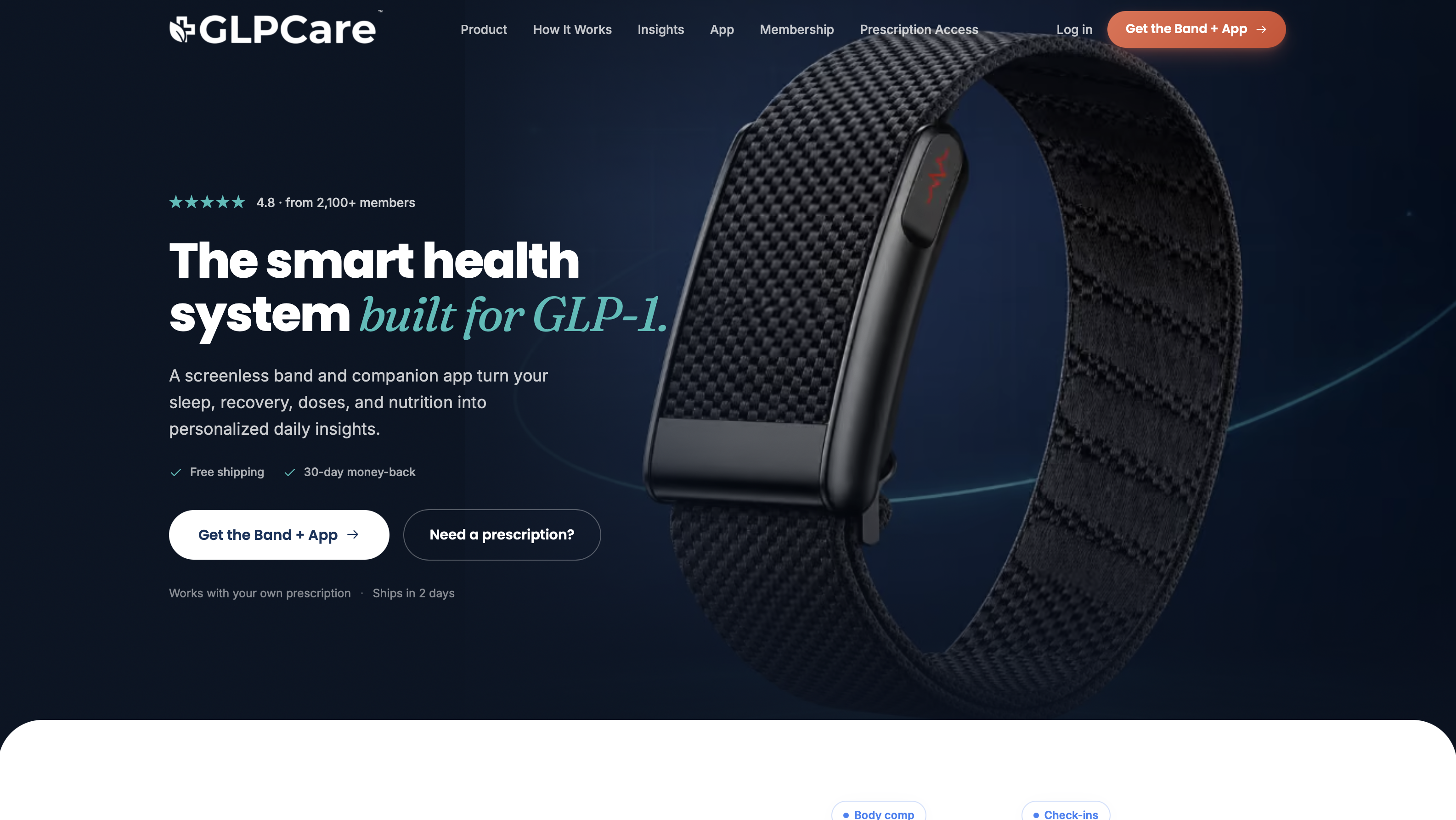
GLPCare is built around that problem. Our system combines prescription GLP-1 medication, personalized nutrition coaching, clinician support and an AI-driven app where you log your meals and doses. A screenless wearable band tracks sleep, heart rate and activity, so your recovery and your protein habits show up together. Plans exist for people with or without an existing prescription.
- GLPCare Membership: $199 per year.
- Semaglutide Care: from $209 per month.
- Tirzepatide Care: from $299 per month.
If you want to see whether GLP-1 treatment fits you, take the GLP-1 readiness quiz, or compare the plans on the GLPCare site.
Our point of view
Most advice on protein and GLP-1 assumes a plate with chicken on it. People who eat vegetarian are told to figure it out alone, and that is where plans break down.
We see it differently. A GLP-1 medication is a medical treatment, and the nutrition around it should be personal and supervised. That is why every GLPCare plan includes clinician oversight of the medication, nutrition coaching built around how you actually eat, and an app where you log what you eat and your dose.
Your band adds the other half: sleep, heart rate and activity, so recovery and training are part of the same picture as your meals. The point is a clearer conversation with your clinician, not another number to feel bad about.
Vegetarian and vegan eating can fit well inside this. It needs a plan, protein first at each meal, and strength work. We built GLPCare so that plan does not depend on willpower alone.
Dominique
FAQ
Can you be vegan on a GLP-1 medication?
Yes. A 2025 JAMA Internal Medicine guide says vegetarian and vegan diets can support GLP-1 therapy when you prioritize protein at meals and use shakes when appetite is very low. Plan around tofu, lentils and other dense plant proteins, and review your targets with your clinician.
How much protein should I eat on GLP-1 medication?
Consensus guidance gives a range of 1.0 to 1.6 g per kg of body weight daily, sometimes calculated from ideal body weight. Your age, activity, rate of weight loss and muscle mass decide where in the range you land. Your prescriber can set the specific number.
What kind of protein is best for GLP-1?
The best protein is the one you will actually finish in a small meal. Compact options such as Greek yogurt, cottage cheese, tofu and lentils deliver a lot of protein per bite, according to the Johns Hopkins chart. A shake is a practical backup on low-appetite days.
Is protein enough to keep my muscle?
Not on its own. Guidance pairs high protein with resistance training 2 to 3 times a week, since aerobic exercise alone is generally insufficient to protect lean mass. Our muscle loss prevention guide covers the full approach.
Sources
- I Am Taking a GLP-1 Weight-Loss Medication: What Should I Eat? (JAMA Internal Medicine, 2025)
- Nutritional priorities to support GLP-1 therapy (PubMed Central, 2025)
- Protein Content of Common Foods (Johns Hopkins Medicine)