How to Prevent Muscle Loss on GLP-1 Medications
How to Prevent Muscle Loss on GLP-1 Medications
TL;DR:
- Muscle loss can occur with GLP-1 therapy alongside fat loss if not carefully managed. Adequate protein intake, resistance training, and body composition monitoring help prevent muscle wasting. Using tools like DEXA scans provides accurate insights into muscle preservation during weight loss.
Muscle loss is a documented side effect of GLP-1 receptor agonist therapy, occurring alongside fat loss when caloric intake drops sharply. Preventing it requires a deliberate combination of adequate protein intake, resistance training, and body composition monitoring. Medical guidelines now treat muscle preservation as a clinical priority for anyone on semaglutide or similar GLP-1 medications. Without a structured plan, you risk losing the lean mass that drives your metabolism, energy, and long-term weight control. The good news: you can prevent muscle loss on GLP-1 therapy with the right approach.
How to prevent muscle loss on GLP-1: the protein foundation
Protein is the single most important dietary lever for preserving lean mass during GLP-1 therapy. The challenge is that GLP-1 medications suppress appetite significantly, which causes many people to underestimate how much protein they actually need. Appetite suppression from GLP-1 drugs makes proactive intake planning non-negotiable.

Medical guidance sets the target at 1.2 to 1.6 grams of protein per kilogram of body weight per day for GLP-1 users. For a 180-pound person, that translates to roughly 98 to 130 grams of protein daily. That number feels large when your appetite is suppressed, which is why strategy matters more than willpower here.
Spreading protein across meals
Timing your protein intake is as important as the total amount. Spreading roughly 30 grams of protein per meal maximizes muscle synthesis because the body absorbs and uses protein most efficiently in moderate doses. Eating 100 grams in one sitting does not produce the same muscle-building signal as distributing it across three or four meals.
Practical high-protein foods that work well for people with reduced appetite include:
- Greek yogurt (17–20 grams per cup, easy to eat in small amounts)
- Eggs (6 grams each, versatile and quick)
- Canned tuna or salmon (25 grams per 3-ounce serving)
- Cottage cheese (14 grams per half cup)
- Edamame (17 grams per cup, plant-based option)
When whole foods fall short, high-protein shakes with 30 to 40 grams of protein per serving and minimal sugar help close the gap. Look for options with whey isolate or casein as the primary protein source.
Pro Tip: Set a phone reminder for each meal with a protein target attached. Tracking grams, not just “eating healthy,” is what separates people who preserve muscle from those who don’t.
How can resistance training maintain muscle on GLP-1 medications?
Resistance training is the most effective nonpharmacological method for stopping muscle wasting during a caloric deficit. Strength training outperforms cardiovascular exercise alone when the goal is muscle retention. Cardio burns calories, but it does not send the same muscle-preserving signal to your body that lifting weights does.
Experts recommend 2 to 3 full-body resistance training sessions per week for people on GLP-1 receptor agonists. Full-body sessions are more efficient than split routines for most people, because they stimulate all major muscle groups multiple times per week without requiring five or six gym visits.
Compound movements first
Compound movements recruit multiple muscle groups simultaneously, giving you the most muscle-preserving stimulus per minute of training. Prioritize:
- Squats and goblet squats (quads, glutes, core)
- Deadlifts and Romanian deadlifts (hamstrings, glutes, lower back)
- Bench press or push-ups (chest, shoulders, triceps)
- Rows (back, biceps, rear deltoids)
- Overhead press (shoulders, triceps, upper back)
Isolation exercises like bicep curls have their place, but they should come after compound work, not replace it. Aim for 3 sets of 8 to 12 repetitions per exercise, with enough resistance that the last two reps of each set feel genuinely challenging.
Clinical trials confirm that combined GLP-1 medication with structured resistance training and adequate protein can preserve or even increase lean soft tissue during weight loss. That finding changes the conversation from “damage control” to genuine muscle building while losing fat.
Pro Tip: If you are new to lifting, start with two sessions per week using bodyweight or light resistance. Consistency over 8 weeks beats intensity in week one followed by injury.
Which tools can track muscle preservation effectively?
Tracking your weight on a standard bathroom scale tells you almost nothing useful about muscle preservation. Standard scales cannot distinguish fat loss from muscle loss, so a person losing two pounds of muscle and gaining one pound of fat would see the scale drop and assume progress. That assumption is dangerous.
Body composition tools give you the data that actually matters. The two most accessible options are:
| Tool | How it works | Accuracy level | Typical cost |
|---|---|---|---|
| DEXA scan | Low-dose X-ray measures fat, muscle, and bone separately | Very high | $50–$150 per scan |
| Bioelectrical impedance analysis (BIA) | Electrical current estimates body composition | Moderate | Free at many gyms |
| Skinfold calipers | Trained technician measures fat at multiple sites | Moderate | Low cost |
| Smart scale BIA | Consumer-grade impedance at home | Lower than clinical BIA | $30–$150 one-time |
DEXA scans are the gold standard. A scan every 8 to 12 weeks gives you a clear picture of whether you are losing fat, muscle, or both. Body composition assessments like DEXA or professional BIA are the only reliable way for GLP-1 users to monitor progress correctly. That data lets you and your care team adjust protein targets or training volume before muscle loss becomes significant.
What lifestyle habits support muscle preservation during GLP-1 weight loss?
Protein and training are the two biggest levers, but several supporting habits determine whether your results hold over months, not just weeks.
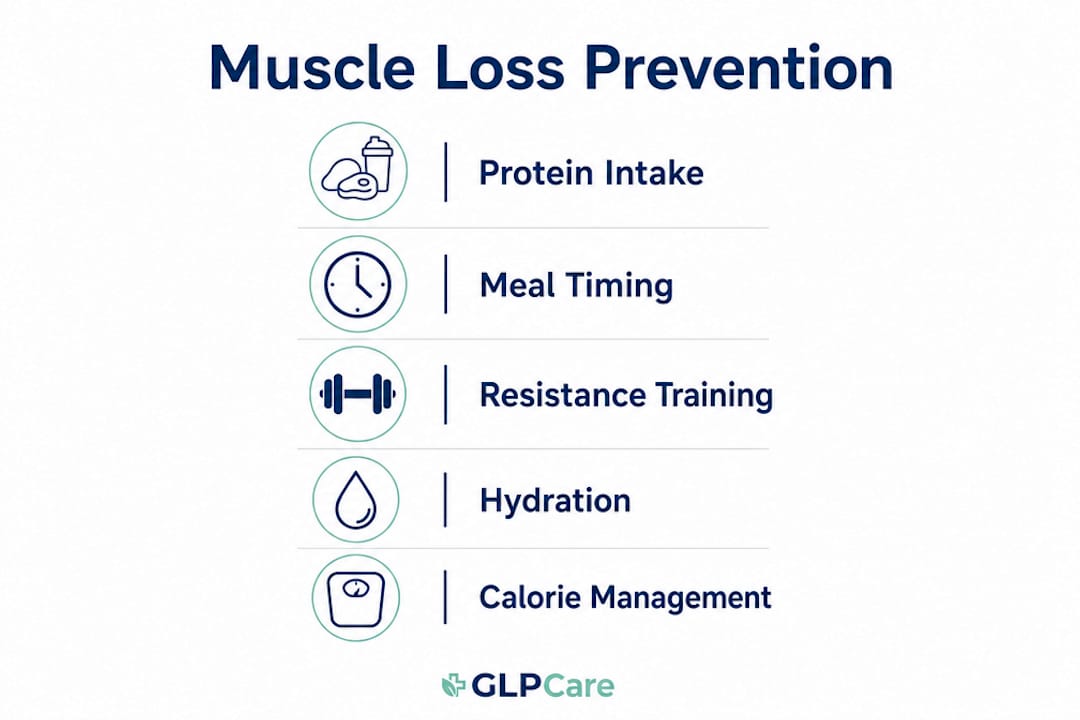
Hydration comes first. Regular hydration supports metabolism and muscle function directly. Muscle tissue is roughly 75% water, and even mild dehydration impairs strength output and recovery. Aim for at least 8 to 10 cups of water daily, more on training days.
Manage your calorie deficit carefully. A deficit of 500 to 750 calories per day is aggressive enough to drive fat loss but moderate enough to protect muscle. GLP-1 medications can push intake far below that range without you noticing, because hunger signals are suppressed. Tracking calories for at least the first few weeks helps you identify when you are eating too little.
Sleep is non-negotiable for muscle repair. Growth hormone, which drives muscle repair and synthesis, releases primarily during deep sleep. Seven to nine hours per night is the target. Cutting sleep to fit in more workouts is counterproductive.
Consider working with a registered dietitian and a certified strength and conditioning specialist. These professionals can build a plan that accounts for your GLP-1 dosage, current fitness level, and food preferences. Integrated management combining medication with nutrition and strength training protocols is the evidence-based standard for reducing muscle loss risk during GLP-1 therapy.
- Prioritize whole-food protein sources at every meal
- Track body weight and body composition separately
- Schedule resistance training sessions like medical appointments
- Drink water consistently throughout the day, not just during workouts
- Communicate changes in appetite or energy to your prescribing clinician
Key Takeaways
Preventing muscle loss on GLP-1 therapy requires protein targets of 1.2 to 1.6 grams per kilogram of body weight daily, resistance training 2 to 3 times per week, and body composition monitoring beyond the scale.
| Point | Details |
|---|---|
| Protein intake target | Aim for 1.2 to 1.6 g/kg of body weight daily, spread across 3 to 4 meals. |
| Resistance training frequency | Complete 2 to 3 full-body sessions per week, prioritizing compound movements. |
| Body composition monitoring | Use DEXA or BIA assessments every 8 to 12 weeks to track muscle vs. fat loss. |
| Calorie deficit management | Keep the deficit moderate (500 to 750 calories) to avoid excessive muscle breakdown. |
| Professional support | Work with a dietitian and trainer to build a plan specific to your GLP-1 protocol. |
Why muscle health deserves more attention than the number on your scale
I have watched too many people celebrate rapid weight loss on GLP-1 medications without realizing they were losing muscle alongside fat. The scale rewarded them. Their body composition told a different story.
The research is clear: muscle wasting worsens insulin resistance and increases long-term health risk. Losing muscle while on GLP-1 therapy does not just affect how you look. It undermines the metabolic improvements the medication is supposed to deliver. That is the part most people miss.
What I find most encouraging is that this is a solvable problem. The combination of structured resistance training and adequate protein intake is not complicated. It does not require an elite gym or a personal chef. It requires consistency and a willingness to track the right numbers. People who treat protein and lifting as part of their GLP-1 protocol, not optional extras, consistently achieve better long-term outcomes than those who rely on the medication alone.
My honest recommendation: get a DEXA scan before you start GLP-1 therapy and repeat it every three months. That baseline changes how you interpret every pound you lose. It shifts your focus from weight to body composition, which is where the real health story lives.
— Dominique
How Glpcare supports your muscle health on GLP-1 therapy
Losing fat while keeping muscle requires more than a prescription. It requires a plan that adapts as your body changes.

Glpcare was built specifically for people navigating GLP-1 therapy. The program pairs personalized nutrition coaching with continuous clinician support, so your protein targets and training guidance adjust as your dosage and appetite change. Glpcare’s screenless fitness band tracks your activity, sleep, and heart rate in real time, giving your care team the data they need to catch muscle loss early. If you want a structured, monitored approach to GLP-1 weight management that treats muscle preservation as a priority, Glpcare gives you the tools and the team to do it right.
FAQ
What percentage of weight lost on GLP-1 is muscle?
Research shows that without deliberate intervention, a meaningful portion of weight lost on GLP-1 medications can come from lean mass rather than fat alone. Combining resistance training and adequate protein significantly reduces this risk.
Can you prevent muscle loss on GLP-1 completely?
You can minimize muscle loss substantially with structured resistance training and protein intake of 1.2 to 1.6 grams per kilogram of body weight daily. Clinical trials show this combination can preserve or even increase lean soft tissue during GLP-1-induced weight loss.
How much protein do I need on semaglutide?
Medical guidance recommends 1.2 to 1.6 grams of protein per kilogram of body weight per day. Spreading intake across meals in roughly 30-gram portions maximizes muscle synthesis.
Is cardio enough to stop muscle loss on GLP-1?
Cardio alone is not enough. Resistance training is the most effective nonpharmacological method for preventing muscle wasting during a caloric deficit. Cardio supports cardiovascular health but does not provide the same muscle-preserving stimulus as strength training.
How do I know if I am losing muscle on GLP-1?
A standard scale cannot tell you. Body composition tools like DEXA scans or bioelectrical impedance analysis (BIA) are the only reliable way to distinguish fat loss from muscle loss and monitor your progress accurately.