Muscle Loss Prevention: Your Evidence-Based Guide
Muscle Loss Prevention: Your Evidence-Based Guide
Protecting your muscle mass comes down to three non-negotiables: enough protein spread across every meal, consistent resistance training at least twice a week, and a weight loss pace that doesn’t outrun your body’s ability to adapt. Clinical guidelines recommend sufficient protein intake daily, spread across meals to reliably stimulate muscle protein synthesis. Resistance training multiple times per week is the most effective single intervention for preserving lean mass, across adult ages. Beyond those two pillars, sleep quality, vitamin D, and managing inflammation all play supporting roles that most people underestimate.
Key strategies at a glance:
- Protein intake: 1.2–1.6 g/kg body weight daily, distributed across meals
- Resistance training: 2–3 full-body sessions per week, pushing close to muscle fatigue
- Weight loss pace: 0.5–1 pound per week to limit lean mass loss
- Micronutrients: Vitamin D, magnesium, omega-3s, and antioxidants
- Lifestyle: 7–9 hours of sleep, stress management, and staying active beyond the gym
- Integrated support: Glpcare combines GLP-1 therapy, nutrition coaching, and wearable biometric tracking to personalize every one of these factors
Table of Contents
- Why your muscles start shrinking earlier than you think
- What to eat to protect your muscle mass
- How to train to keep the muscle you have
- Protecting muscle while using GLP-1 medications
- Muscle weakness with aging is not inevitable
- Key Takeaways
- Glpcare supports your muscle preservation from day one
- FAQ
Why your muscles start shrinking earlier than you think
Sarcopenia, the age-related progressive loss of muscle mass and strength, begins as early as age 30. Without lifestyle intervention, adults lose 3%–5% of muscle mass per decade, and the rate accelerates after 60. That’s not a distant concern — it’s a process already underway for most adults reading this.
Several biological mechanisms drive it:
- Hormonal shifts: Declining testosterone, estrogen, and growth hormone reduce the anabolic signals that tell muscles to rebuild after use.
- Anabolic resistance: Older muscle tissue responds less efficiently to protein and exercise stimuli, requiring more of both to achieve the same effect.
- Chronic low-grade inflammation: Elevated inflammatory markers like IL-6 and TNF-α suppress muscle protein synthesis and accelerate breakdown, a process researchers call “inflammaging.”
- Nutritional deficits: Low vitamin D, magnesium, and inadequate protein intake each independently contribute to muscle decline.
- Sedentary behavior: Even brief periods of inactivity, such as bed rest during illness or recovery from surgery, can cause rapid muscle loss that takes months to recover.
The consequences extend well beyond appearance. Sarcopenia raises fall risk, slows metabolism, and erodes the functional independence that most people take for granted until it’s gone.
What to eat to protect your muscle mass
Protein is the foundation, but it’s not the whole structure. Dr. Frank Hu of the Harvard T.H. Chan School of Public Health puts it plainly: “Getting enough protein is necessary for health, but it’s not sufficient.” A varied, high-quality dietary pattern matters just as much.
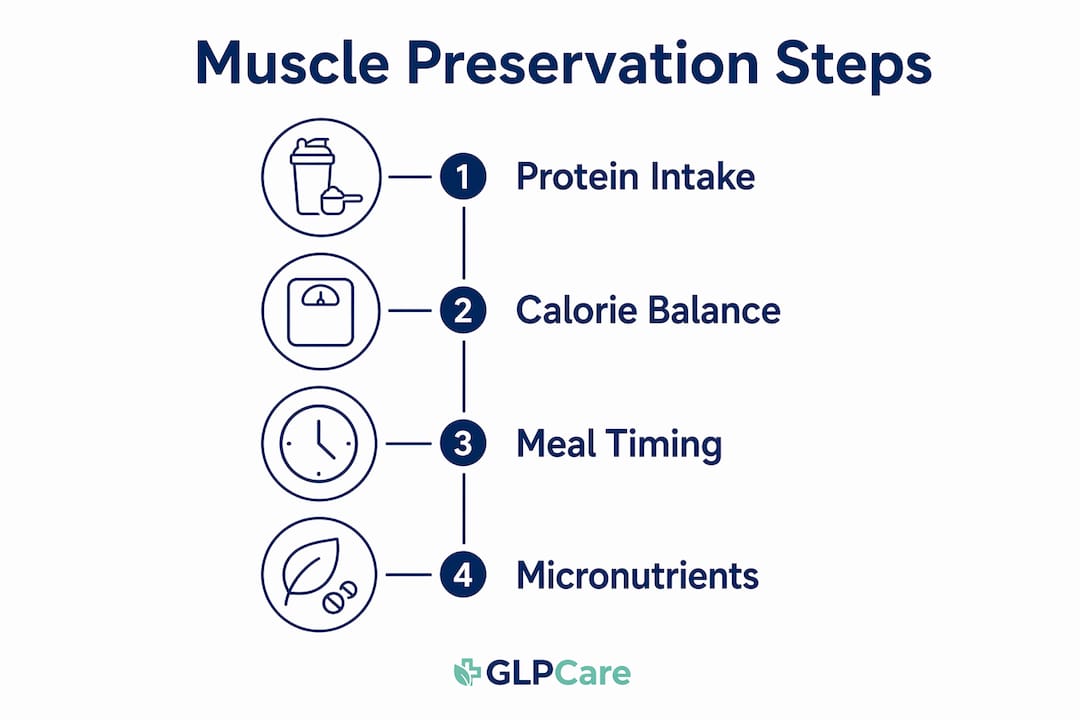
Protein specifics: Aim to consume adequate high-quality protein daily, distributed reasonably across meals. Spreading intake across meals matters because your body can only process so much protein at once. Leucine-rich sources — eggs, chicken, Greek yogurt, salmon, edamame — are particularly effective at triggering muscle protein synthesis.
Micronutrients that most people miss:
- Vitamin D: Muscle cells contain vitamin D receptors. Low levels consistently link to weaker muscles and higher fall risk. Most Americans need supplementation, especially as absorption declines with age.
- Omega-3 fatty acids: Their anti-inflammatory properties help counter the chronic inflammation that drives sarcopenia. Including fatty fish regularly is a practical target.
- Magnesium: Involved in muscle contraction, protein synthesis, and recovery. Leafy greens, nuts, and legumes are reliable sources.
What to avoid: Severe calorie restriction forces your body to break down muscle for energy. Rapid weight loss beyond a moderate rate significantly increases lean mass loss alongside fat.
Pro Tip: If your appetite is suppressed — common with GLP-1 medications — eat protein first at every meal before filling up on other foods. This simple habit helps you hit your daily protein target even when overall intake is lower.
How to train to keep the muscle you have
Resistance training 2–3 times per week is the gold standard for muscle preservation, confirmed across systematic reviews of adults 60 and older. The key variable most people get wrong is intensity. Finishing a set feeling like you had 2–3 reps left in the tank is what signals your body to hold onto muscle during a calorie deficit. Going through the motions at low effort doesn’t send that signal.

Effective exercises include squats, lunges, push-ups, planks, dumbbell rows, and chest presses. For older adults or those with limited mobility, resistance band training activates muscle similarly to machine training and is accessible at home. Lower-load, higher-volume approaches can produce strength gains similar to heavier lifting, offering a practical option without a gym.
A few practical guidelines:
- Warm up for 5–10 minutes before each session and stretch afterward to reduce injury risk. For more on injury prevention for older adults, structured warm-up protocols make a real difference.
- Progress gradually: add reps before adding weight.
- Combine aerobic activity with resistance work. Aerobic exercise supports cardiovascular health and aids recovery, but it doesn’t replace the muscle-preservation signal that strength training provides.
Protecting muscle while using GLP-1 medications
GLP-1 receptor agonists like semaglutide and tirzepatide can drive significant weight loss, but that speed creates a specific risk. Rapid GLP-1-induced weight loss increases the proportion of lean mass lost alongside fat. Managing this requires a deliberate, multi-part approach.
Priority steps for GLP-1 users:
- Hit your protein target daily. The 1.2–1.6 g/kg recommendation applies directly here. Use Glpcare’s protein intake calculator to find your personalized number.
- Strength train at least twice a week. Combine free weights or machines with resistance bands for variety and accessibility.
- Control your weight loss rate. Aim for 0.5–1 pound per week to give your body time to preserve lean tissue.
- Prioritize sleep. Poor sleep elevates cortisol and disrupts the hormonal environment needed for muscle repair.
- Optimize micronutrients. Vitamin D and omega-3s are particularly relevant for GLP-1 users managing inflammation and muscle function simultaneously.
A combination of aerobic and resistance exercise three times per week optimizes both weight loss and muscle preservation during GLP-1 therapy. Glpcare’s integrated system tracks your biometrics, sleep, and activity in real time, giving your clinician team the data to adjust your plan before muscle loss becomes a problem. For a deeper look at the full strategy, see Glpcare’s guide on preventing muscle loss on GLP-1s.
Muscle weakness with aging is not inevitable
One of the most persistent and damaging myths in health is that muscle loss is simply what aging looks like. The evidence says otherwise.
can slow, halt, or even partially reverse sarcopenia at any age, including in adults well into their 70s and 80s.
Common myths worth correcting:
- “Strength training is dangerous for older adults.” With proper form and appropriate load, resistance training is safe and specifically recommended by clinical guidelines for this population.
- “You can’t build muscle after 60.” Research consistently shows older adults gain meaningful muscle mass and strength with consistent training, though it takes longer than it did at 30.
- “Muscle loss during illness is permanent.” Disuse atrophy from bed rest or illness is largely reversible with a structured return to exercise and adequate nutrition.
Staying active beyond formal workouts matters too. Prolonged sitting accelerates muscle loss independent of whether you exercise. Breaking up sedentary time throughout the day, even with short walks, supports the metabolic environment that keeps muscle intact.
Key Takeaways
Consistent resistance training combined with adequate protein intake is the most evidence-supported strategy for muscle loss prevention across every life stage.
| Point | Details |
|---|---|
| Daily protein target | Consume 1.2–1.6 g/kg body weight daily, with 20–30 g per meal to stimulate muscle protein synthesis. |
| Resistance training frequency | Train 2–3 times per week, pushing close to muscle fatigue to signal your body to preserve lean mass. |
| Safe weight loss pace | Losing 0.5–1 pound per week limits lean mass loss during calorie restriction or GLP-1 therapy. |
| Anti-inflammatory nutrition | Vitamin D, omega-3s, and polyphenols combat the chronic inflammation that drives sarcopenia. |
| Glpcare’s integrated approach | Glpcare combines GLP-1 therapy, nutrition coaching, and real-time biometric tracking to personalize muscle preservation. |
Glpcare supports your muscle preservation from day one
Weight loss and muscle preservation aren’t competing goals — but managing both at once requires more than a prescription. Glpcare is built specifically for this challenge. You get GLP-1 medication (semaglutide or tirzepatide) shipped to your door, personalized nutrition coaching focused on hitting your protein targets, and a wearable fitness band with medical-grade sensors that tracks sleep, heart rate, and activity in real time. Your AI companion surfaces personalized insights daily, and licensed clinicians monitor your progress between visits.

Most weight loss programs hand you a medication and a pamphlet. Glpcare gives you a connected system where every variable — dose, diet, movement, recovery — is tracked and adjusted together. If you’re ready to find out whether GLP-1 therapy is right for you, take the readiness quiz and get a personalized assessment in minutes.
FAQ
How much protein do I need to prevent muscle loss?
Aim for 1.2–1.6 grams of protein per kilogram of body weight daily, with 20–30 grams per meal. Spreading intake across meals is more effective than concentrating it in one sitting.
How often should I do resistance training to preserve muscle?
Two to three full-body resistance training sessions per week is the clinically supported minimum. Pushing close to muscle fatigue during each set is what triggers the preservation signal.
Does GLP-1 medication cause muscle loss?
GLP-1 medications can increase muscle loss risk by accelerating weight loss. Combining strength training, adequate protein intake, and a gradual weight loss rate of 0.5–1 pound per week significantly reduces that risk.
Can older adults actually rebuild lost muscle?
Yes. Research consistently shows that resistance training and protein-rich nutrition can slow or reverse sarcopenia even in adults in their 70s and 80s. Muscle weakness is not an unavoidable outcome of aging.
What micronutrients matter most for muscle health?
Vitamin D, magnesium, and omega-3 fatty acids are the three most consistently linked to muscle function and sarcopenia prevention, alongside adequate overall caloric and protein intake.