The Best High-Protein Snacks for GLP-1 Medication Users
The Best High-Protein Snacks for GLP-1 Medication Users
Greek yogurt, cottage cheese, hard-boiled eggs, edamame, jerky, string cheese, turkey slices, and a clean protein bar or shake belong in your rotation right now. The rule behind the list matters more than the list itself: aim for 10 to 15 grams of protein per snack, and skip anything padded with sugar alcohols, chicory root or inulin, or seed oils.
That single rule does most of the work for you. GLP-1 medications shrink your appetite and slow digestion, which means every bite has to work harder to protect the muscle you’re working to keep. A snack that misses the protein target, or one loaded with ingredients your gut can’t tolerate right now, isn’t just a wasted opportunity. It can trigger the bloating and nausea that make GLP-1 side effects worse.
- Greek yogurt (12–18 g per cup)
- Cottage cheese (20–24 g per cup)
- Hard-boiled eggs (6 g each)
- Edamame (8–9 g per half cup)
- Jerky or meat sticks (9–12 g per ounce)
- String cheese or turkey slices (6–8 g per serving)
- Clean protein bars or shakes (check the label, not just the marketing claim)
Protein target snapshot: most nutrition guidance for people on GLP-1 medications lands on 10 to 20 grams of protein per snack, with the lower end of that range working fine for a between-meal bite and the upper end useful when a snack is standing in for a missed meal.
Scheduling matters as much as the food choice. Waiting until you feel hungry rarely works once appetite signals go quiet, so treating snacks as fixed appointments protects your protein intake even on days your appetite disappears entirely.
Key Takeaways
High-protein snacks work on GLP-1 medications when they hit 10 to 15 grams of protein per serving and avoid sugar alcohols, chicory root fiber additives, and seed oils.
| Point | Details |
|---|---|
| Hit the protein target | Aim for 10 to 15 grams of protein per snack, up to 15 grams or more if it’s replacing a meal. |
| Screen the label | Avoid sugar alcohols, chicory root or inulin, IMO, polydextrose, and seed oils in packaged snacks. |
| Stock every format | Keep a shelf-stable, refrigerated, and liquid protein option on hand for unpredictable appetite. |
| Schedule, don’t wait | Set fixed snack times rather than waiting for hunger cues, which GLP-1 medications suppress. |
| Get clinician-backed support | GLPCare pairs prescription GLP-1 medication with nutrition coaching, a wearable band, and a protein calculator to personalize your daily targets. |
Table of Contents
- High Protein Snacks for GLP-1 Users, Organized by Format
- How to Choose Packaged Protein Snacks That Won’t Trigger GI Side Effects
- When to Eat Protein Snacks on GLP-1 Medications
- Ready-to-Rotate Snack Combos You Can Prep in Minutes
- Why Protein Matters More Than Ever on GLP-1 Medications
- Sources
- FAQ
High Protein Snacks for GLP-1 Users, Organized by Format
Not every protein source fits every day. Some mornings you want something cold and spoonable. Other days you’re out the door with nothing but a bag and a water bottle. Building your rotation around format, not just protein count, is what keeps you consistent when taste fatigue and unpredictable appetite make eating feel like a chore.
Refrigerated whole foods
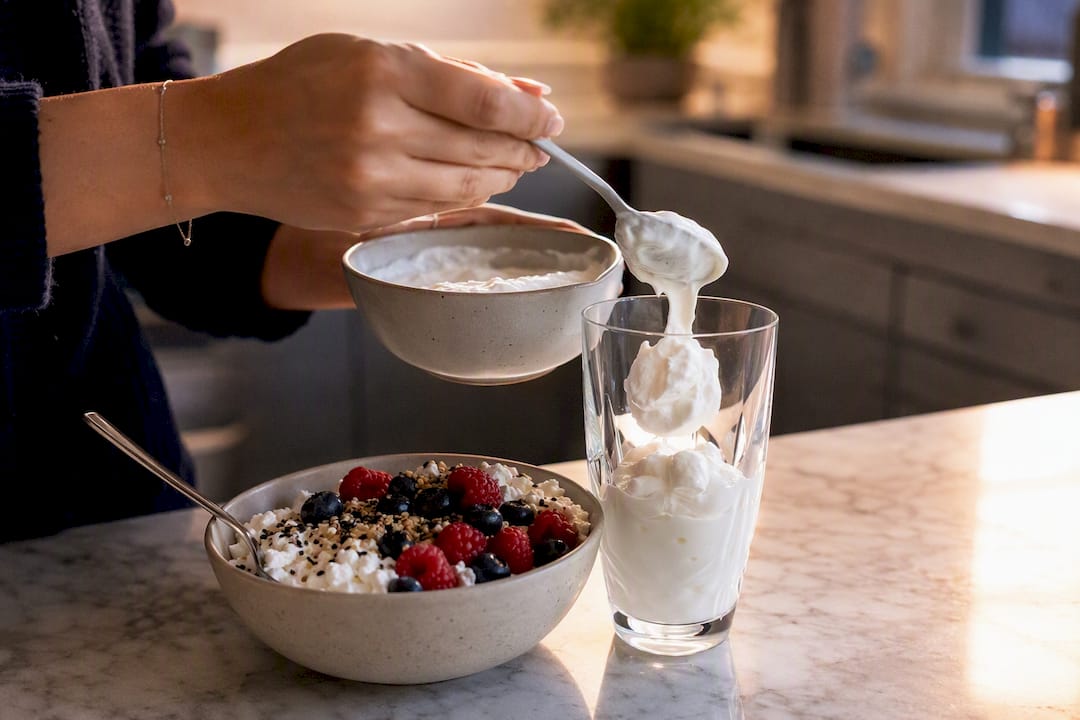
Greek yogurt and cottage cheese are the two easiest wins in this entire category. A single cup of plain Greek yogurt delivers 12 to 18 grams of protein, depending on brand and fat content, and its soft texture makes it one of the gentlest options when your stomach is still adjusting to a GLP-1 medication. Cottage cheese runs even higher, often landing between 20 and 24 grams per cup, and its mild flavor pairs well with fruit, a drizzle of honey, or a sprinkle of everything-bagel seasoning if you want variety without added sugar.
Hard-boiled eggs deserve a permanent spot in your refrigerator. One egg carries about 6 grams of protein, so two eggs gets you to 12 grams with almost zero digestive complexity. Because eggs are low volume and easy to chew slowly, they’re often one of the best-tolerated options in the early weeks of treatment, when gastric emptying is at its slowest and larger meals feel uncomfortable.
Shelf-stable and portable
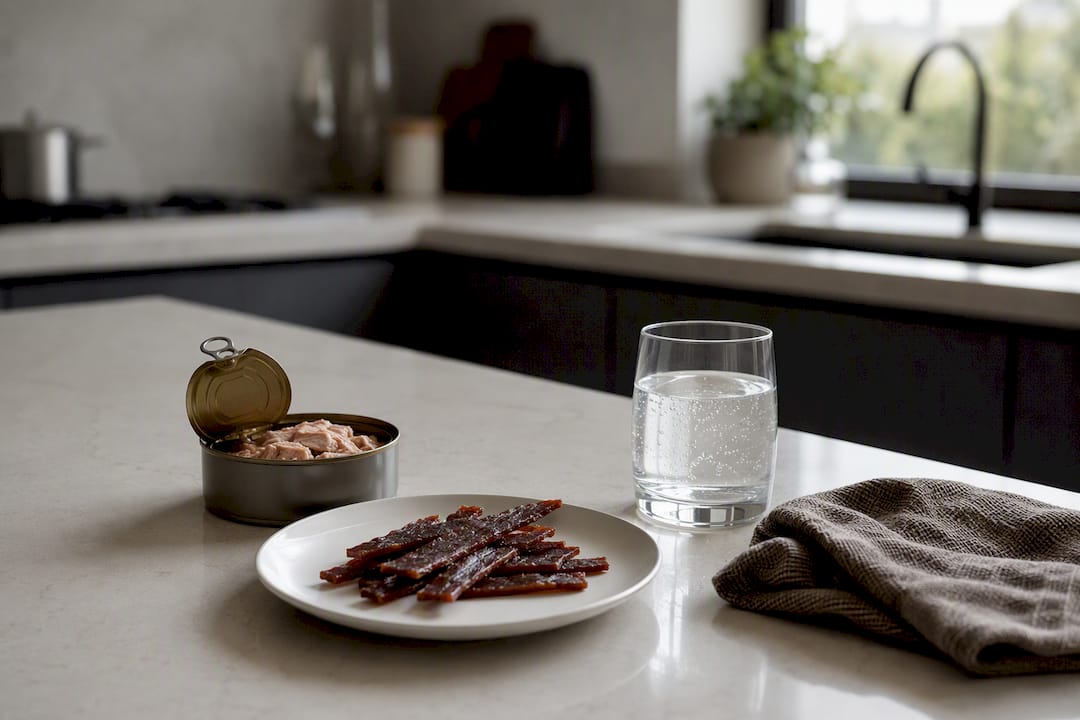
Jerky and meat sticks solve the problem refrigerated foods can’t: they travel. A single ounce typically delivers 9 to 12 grams of protein, but read the label closely. Many mainstream jerky brands pack in added sugar and sodium levels that add up fast if jerky becomes a daily habit rather than an occasional convenience. Canned fish, particularly tuna or salmon packed in water, and pre-sliced turkey breast round out the shelf-stable category and both hit double-digit protein grams without much fuss.
Plant-based protein
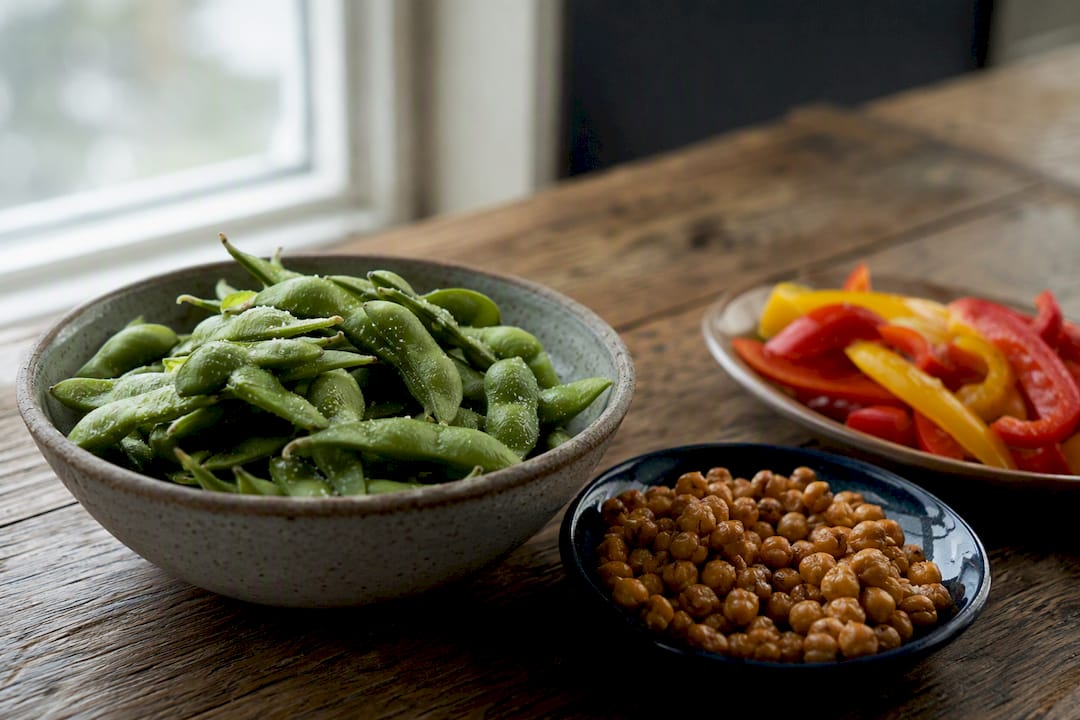
Edamame is the standout here. A half cup delivers 8 to 9 grams of protein along with fiber, which slows digestion in a way that can actually work with a GLP-1 medication rather than against it. Roasted chickpeas offer a similar profile with a satisfying crunch, and pairing a small serving of nut butter with apple slices or celery adds both protein and healthy fat to a snack that would otherwise skew toward carbohydrates alone. The protein-plus-fiber combination matters clinically, too: high-protein meals raise circulating levels of PYY and GLP-1, the same satiety hormones your medication mimics, according to a randomized crossover trial published in a peer-reviewed nutrition journal.
Bars and shakes
Protein bars and shakes are the fallback option for the days when nothing sounds appealing but your body still needs fuel. The problem is that “protein bar” has become a marketing category stretched to cover everything from genuinely clean products to candy bars wearing a health halo. A clean bar has a short, recognizable ingredient list, skips sugar alcohols and chicory root fiber, and lists real protein sources like whey, milk protein isolate, or egg white near the top of the label. Shakes work well as a liquid fallback on low-appetite days, since they require no chewing and go down easily even when solid food feels unappealing.
Pro Tip: Keep at least one option from each format category stocked at all times. Appetite and texture preferences shift day to day on GLP-1 medications, and having a shelf-stable, a refrigerated, and a liquid option on hand means you’re never stuck without something that works.
How to Choose Packaged Protein Snacks That Won’t Trigger GI Side Effects
Reading labels takes thirty seconds once you know what you’re looking for. Most packaged snack failures on a GLP-1 medication come down to two things: not enough protein to justify the calories, or ingredients that irritate a digestive system already working slower than usual.
- Check the protein number first. Look for at least 10 grams per serving, and bump that threshold to 15 grams or more if the snack is replacing a full meal rather than bridging the gap between two.
- Scan for sugar alcohols. Maltitol, erythritol, sorbitol, and xylitol show up constantly in “low sugar” protein bars and can cause gas, bloating, or diarrhea, effects that compound with the digestive slowdown GLP-1 medications already cause.
- Watch for hidden fiber additives. Chicory root, inulin, IMO (isomalto-oligosaccharide), and polydextrose are added to boost the fiber count on the label, but they ferment in the gut and are a common trigger for bloating in people already dealing with slowed gastric emptying.
- Skip seed oils where you can. Canola, sunflower, soybean, and safflower oil aren’t dangerous in small amounts, but a snack relying on them instead of whole-food fats is usually a sign the rest of the formulation is cutting corners too.
- Count the ingredients. A snack with fewer than ten recognizable ingredients is almost always a safer bet than one with a paragraph-long list you’d need a chemistry degree to parse.
Pro Tip: Trying a new bar or shake for the first time? Eat half a serving first. It’s the easiest way to test tolerance without wasting an entire package if your stomach reacts poorly to an unfamiliar ingredient.
When to Eat Protein Snacks on GLP-1 Medications
Hunger cues get unreliable fast once a GLP-1 medication takes hold, so building a schedule around the clock rather than around your stomach is the more reliable strategy. A simple template works for most people: one protein snack mid-morning, one mid-afternoon, and a smaller one after a workout if you’re active. Ten to fifteen grams of protein at each of those windows adds up to a meaningful daily total even on days your appetite barely registers.
Portion control matters just as much as timing. Smaller bites, eaten slower, reduce the odds of nausea, especially in the first hour after your dose. On days appetite is close to zero, switch to a liquid or soft fallback, a shake, yogurt, or cottage cheese, rather than forcing down something dense.
- Pair protein with a small source of fiber or produce whenever possible; it slows digestion further and adds micronutrients you’d otherwise miss with a smaller food volume.
- Treat snack times as fixed appointments, not optional extras, especially in the first eight weeks of treatment when appetite suppression tends to be strongest.
- If nausea spikes after a snack, downsize the portion before cutting the snack entirely. Half a serving of protein still beats none.
Ready-to-Rotate Snack Combos You Can Prep in Minutes
Variety keeps a protein-first routine from collapsing under its own repetition. These combos are built for speed, and most require less than five minutes of hands-on prep.
- Two hard-boiled eggs — about 12 grams of protein, zero prep beyond boiling a batch ahead of time.
- Greek yogurt with one tablespoon of almond butter — roughly 15 grams of protein plus healthy fat for staying power.
- Half a cup of cottage cheese with berries — about 12 grams of protein, portioned into containers for the week.
- One string cheese with a handful of edamame — combines two formats for close to 14 grams.
- Two turkey slices rolled with a slice of cheese — a low-effort 10 to 12 grams.
- A single-serving protein shake — the fastest option for a low-appetite morning, often 20 grams or more.
- One ounce of jerky with a small apple — 9 to 12 grams of protein alongside fiber.
- Roasted chickpeas, quarter cup — around 6 to 7 grams, best paired with a cheese stick to hit target.
- Canned tuna, half a can, over crackers — roughly 12 grams of protein in a shelf-stable format.
- Cottage cheese with a drizzle of honey and cinnamon — a sweeter option without added sugar alcohols.
Batch prep on a Sunday changes everything: boil a dozen eggs at once, portion cottage cheese into grab-and-go containers, and pre-make a few shake jars with just water or milk to add before you head out. Keep a shelf-stable option in your bag, a refrigerated one at your desk, and a liquid one in the freezer for emergencies. That kind of redundancy is what actually survives a busy week, not a single “perfect” snack you eventually get tired of eating.
Why Protein Matters More Than Ever on GLP-1 Medications
Rapid weight loss on a GLP-1 medication doesn’t distinguish between fat and muscle unless you give your body a reason to hold onto lean tissue, and protein intake is that reason. Because total food volume typically drops once appetite suppression kicks in, clinical guidance on GLP-1 nutrition points to protein density, not just protein quantity, as the lever that protects muscle mass while the scale moves.
High-protein meals raise circulating GLP-1 and PYY, the same appetite-regulating hormones many GLP-1 medications are designed to mimic, according to a peer-reviewed randomized crossover study. The effect works with your medication rather than against it.
Tolerability still varies. Slowed gastric emptying means some people react poorly to specific ingredients even when the protein count looks perfect on paper, so if nausea, bloating, or reflux continue despite clean snack choices, that’s a conversation for your prescribing clinician rather than a trial-and-error project. GLPCare’s protein calculator can help translate these snack-level targets into a personalized daily number based on your weight and treatment stage, and clinician support is available for anyone whose side effects need more than a snack swap.
One habit that keeps snacking consistent
Stock exactly three go-to snacks and place one where you already reach for food out of habit, your desk drawer, your car console, your gym bag. Patients who do this report fewer skipped snacks and fewer GI surprises, mostly because the decision gets made once, at the grocery store, instead of twenty times a week when willpower is lowest. GLPCare’s coaching can help you build that specific list around what you actually tolerate well.
— Dominique
Turn This Snack List Into a Personalized Plan
A snack list gets you started, but it doesn’t tell you how much protein your body actually needs each day, how your medication dose should shape your nutrition plan, or when it’s time to loop in a clinician about side effects that aren’t improving. That’s the gap GLPCare’s integrated program is built to close: prescription GLP-1 medication delivered to your door, personalized nutrition coaching, a wearable band that tracks activity and recovery alongside your dosing, and an AI companion that turns your daily habits into specific guidance instead of generic advice.
If you’re curious whether a clinician-supervised program fits your situation, the GLP-1 Readiness Quiz takes a few minutes and gives you a clear next step, whether that’s starting medication, adjusting your current plan, or simply getting your protein targets dialed in with the protein calculator. Any changes to your medication or dosing should always go through your prescribing clinician first.
Sources
- UC Davis Health examines systemic impact of GLP-1-based therapies (news coverage)
- High Protein Intake Stimulates Postprandial GLP1 and PYY Release (PMC)
- Beyond the hype: High-protein snacks that actually satisfy
This article is general information, not a substitute for advice from a qualified doctor. Consult a qualified healthcare professional about your own circumstances before acting on anything here.
FAQ
What are the best protein snacks for GLP-1 users?
Greek yogurt, cottage cheese, hard-boiled eggs, edamame, jerky, string cheese, turkey slices, and clean protein bars or shakes each deliver 6 to 24 grams of protein per serving with minimal digestive strain.
How do you eat more protein while on a GLP-1 medication?
Schedule two to three small, protein-forward snacks throughout the day instead of waiting for hunger, and aim for 10 to 15 grams of protein at each one so smaller portions still add up.
What snacks can you eat on a GLP-1 medication?
Any snack with a clear protein source and a short ingredient list works well, including dairy like Greek yogurt and cottage cheese, lean proteins like eggs and turkey, and plant options like edamame, as long as you avoid sugar alcohols and seed oils that can worsen bloating.
What high-protein snacks work well while taking tirzepatide?
The same protein-first snacks apply: Greek yogurt, cottage cheese, hard-boiled eggs, and jerky all deliver strong protein per serving, though slower gastric emptying on tirzepatide makes smaller, well-tolerated portions and gradual introduction of new foods especially important.
Do I need clinician approval before changing my snack routine?
Snack choices generally don’t require sign-off, but persistent nausea, bloating, or appetite loss should be discussed with your prescribing clinician, and GLPCare’s coaching team can help adjust your nutrition plan alongside your treatment.