GLP-1 Meal Plan: Protein-First Guide for Real Results
GLP-1 Meal Plan: Protein-First Guide for Real Results
TL;DR:
- A GLP-1 meal plan emphasizes adequate protein intake, smaller portions, and sufficient fiber to manage side effects and support weight loss. Medications like semaglutide suppress appetite and slow digestion, requiring smaller, soft-textured meals and early protein focus, especially on shot days. Consistent protein consumption, resistance exercise, and mindful food choices are essential for preserving muscle and achieving gradual, sustainable weight loss.
A practical GLP-1 meal plan centers on three non-negotiables: adequate protein intake per meal, smaller concentrated portions that work with your reduced appetite, and enough fiber and hydration to keep GI side effects manageable. Get those three right, and the rest of the plan falls into place.
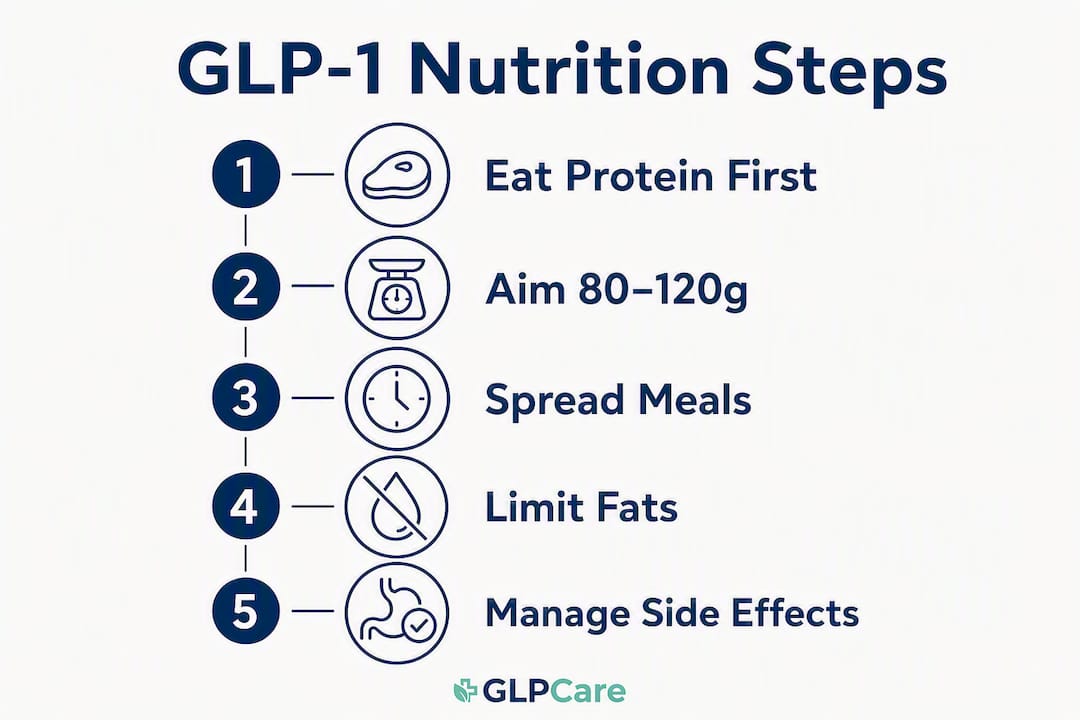
- Daily protein target: 80–120 g per day, spread across 3–4 meals or snacks, to protect lean muscle during rapid weight loss
- Foods to prioritize: lean protein, high-fiber vegetables, soft textures, and calorie-dense but low-volume options on low-appetite days
- Foods to limit: high-fat fried foods, sugar-sweetened beverages, heavy creamy sauces, and large portions of anything — all of which worsen nausea and slow digestion
The single most important habit on any semaglutide diet plan: eat your protein first, every meal, every day — even when your appetite is nearly gone.
Table of Contents
- How do GLP-1 medications change the way you eat?
- What are the right daily nutrition targets on GLP-1 therapy?
- Which foods should you choose on a GLP-1 meal plan?
- What foods should you limit or avoid on GLP-1 medications?
- Sample GLP-1 meal plan: a 7-day template you can actually use
- How should you handle shot days and very low appetite?
- How do you manage nausea, constipation, and other GI side effects?
- How do you protect lean muscle while losing weight on GLP-1 therapy?
- Key Takeaways
- What most people get wrong about eating on GLP-1 medications
- How Glpcare supports your GLP-1 nutrition plan
- Useful sources
- FAQ
How do GLP-1 medications change the way you eat?
GLP-1 medications like semaglutide (Wegovy, Ozempic) and tirzepatide (Mounjaro) suppress appetite and slow gastric emptying, which means food stays in your stomach longer and hunger signals arrive later and less intensely. That combination changes not just how much you eat, but what you can comfortably tolerate.
Early appetite changes can appear within the first few days, but the full therapeutic effect typically takes several weeks as your dose escalates. Most people notice meaningful appetite suppression somewhere between weeks 1 and 4, with the strongest effects building over months as the dose reaches its maintenance level.
What this means for your plate:
- Smaller portions become necessary, not optional — your stomach empties more slowly, so overeating triggers nausea quickly
- Meal timing matters more; large meals late in the day are harder to tolerate
- Textures shift: soft, moist foods (scrambled eggs, yogurt, soups) are better tolerated than dry, dense, or very fibrous foods during the early weeks
Clinical trials on semaglutide reported average weight loss around 15% of baseline body weight by week 68, which underscores that results are gradual. Expecting dramatic changes in the first two weeks sets you up for frustration; expecting steady, compounding progress over months is clinically accurate.
Pro Tip: If nausea spikes after a meal, the most common culprit is portion size or fat content, not the medication itself. Try halving your portion and removing the highest-fat item before assuming the medication needs adjusting.
What are the right daily nutrition targets on GLP-1 therapy?
Registered dietitians working with GLP-1 patients consistently recommend 80–120 g of protein per day, which translates to roughly 25–40 g per meal across three meals. Calorie targets vary by individual, but most GLP-1 users eating in a moderate deficit land between 1,200 and 1,600 calories per day — though your prescriber or dietitian should set your personal range based on your starting weight, activity level, and rate of loss.
| Meal | Protein target | Example foods |
|---|---|---|
| Breakfast | 25–40 g | 3 eggs + ½ cup Greek yogurt; or 1 scoop protein powder in oatmeal |
| Lunch | 25–40 g | 5 oz canned tuna on greens; or 4 oz grilled chicken + ½ cup cottage cheese |
| Dinner | 25–40 g | 5 oz salmon + ½ cup lentils; or 5 oz lean ground turkey + roasted vegetables |
| Snack (optional) | 10–20 g | String cheese + hard-boiled egg; or 1 scoop protein shake |
Portion sizes shrink on GLP-1 therapy, so protein density per bite matters more than volume. A 3-oz serving of chicken breast delivers about 26 g of protein in a compact portion your reduced appetite can handle. Use the Glpcare Protein Intake Calculator to get a number specific to your body weight and activity level rather than relying on a generic range.

Pro Tip: Track protein grams, not just calories. Many GLP-1 users hit their calorie target easily but fall short on protein because small portions of carbohydrate-heavy foods fill them up first.
Which foods should you choose on a GLP-1 meal plan?
The best foods for a semaglutide meal plan are protein-dense, easy to digest, and high enough in fiber to support gut motility without causing bloating. Think of your plate as having two non-negotiable zones: protein first, then fiber-rich plants.
Protein-focused choices:
- Eggs (scrambled or soft-boiled for easy tolerance)
- Greek yogurt (plain, 2% fat, 15–17 g protein per ¾ cup)
- Canned fish (tuna, salmon, sardines — portable, shelf-stable, high protein)
- Lean poultry (chicken breast, ground turkey, rotisserie chicken without skin)
- Cottage cheese (mild flavor, soft texture, 14 g protein per ½ cup)
- Tofu and edamame (plant-based options that are gentle on digestion)
- Protein powders (whey or plant-based; blend into smoothies on low-appetite days)
High-fiber plant choices that support digestion:
- Berries (blueberries, raspberries) — high fiber, low volume, easy to eat
- Leafy greens (spinach, arugula) — add to smoothies or sauté to reduce volume
- Legumes (lentils, chickpeas) — pair with protein for a filling, fiber-rich meal
- Oats (rolled, not instant) — soluble fiber that supports gut motility
Preparation tips for better tolerance:
- Steam or roast vegetables rather than eating them raw — cooked textures are gentler on a slowed digestive system
- Blend protein into smoothies when chewing a full meal feels like too much
- Use broth-based soups as a vehicle for protein (add shredded chicken or silken tofu)
- Keep portable snacks ready: string cheese, hard-boiled eggs, individual nut-butter packets, or a pre-made protein shake
If you’re working with a personal trainer alongside your GLP-1 therapy, coordinating your meal plan with your training schedule helps align protein timing with resistance sessions for better muscle retention.
What foods should you limit or avoid on GLP-1 medications?
Clinical guidance consistently points to high-fat, fried, and heavily processed foods as the primary triggers for worsened nausea and constipation on GLP-1 therapy. The reason is physiological: fat slows gastric emptying further, and GLP-1 medications already slow it significantly. Stack the two together and nausea becomes almost inevitable.
Limit or avoid these:
- High-fat fried foods (french fries, fried chicken, donuts) — the single biggest nausea trigger; fat content compounds slowed gastric emptying
- Heavy creamy sauces and dressings (Alfredo, ranch, cream-based soups) — high fat density in a small volume
- Large fatty cuts of meat (ribeye, pork belly, lamb shoulder) — difficult to digest in the quantities needed to hit protein targets
- Sugar-sweetened beverages (soda, juice, sweetened coffee drinks) — add calories without protein or fiber, and carbonation worsens bloating
- Highly processed snacks (chips, crackers, pastries) — low protein, high refined carbohydrate, and easy to overeat even with suppressed appetite
- Heavy alcohol — alcohol interacts with GLP-1 medications and can intensify side effects; check with your prescriber before drinking
Individual tolerance varies. Some people handle moderate amounts of healthy fats (avocado, olive oil, nuts) without issue; others find even small amounts worsen symptoms early in treatment. Pay attention to your own patterns and discuss any concerns with your clinician.
Sample GLP-1 meal plan: a 7-day template you can actually use
Practitioner-designed meal plans for GLP-1 users share a consistent structure: protein-first, smaller concentrated portions, repeatable menus, and clear swaps for low-appetite days. The 7-day template below follows that structure, with a shot-day swap column for days when nausea is highest.
| Day | Breakfast (25–30 g protein) | Lunch (25–35 g protein) | Dinner (30–40 g protein) | Shot-day swap |
|---|---|---|---|---|
| Mon | 3 scrambled eggs + ½ cup Greek yogurt | 5 oz tuna + greens + olive oil | 5 oz salmon + ½ cup lentils | Protein shake + yogurt |
| Tue | Oatmeal + 1 scoop protein powder | Grilled chicken wrap (small) | Ground turkey + roasted zucchini | Cottage cheese + berries |
| Wed | Greek yogurt parfait + berries | Cottage cheese + cucumber + egg | Baked cod + steamed broccoli | Smoothie: protein + spinach |
| Thu | 2 eggs + smoked salmon (2 oz) | Lentil soup + shredded chicken | Chicken thigh (skinless) + quinoa | Bone broth + protein shake |
| Fri | Protein smoothie (25 g protein) | Tuna salad on romaine leaves | Shrimp stir-fry + cauliflower rice | Soft scrambled eggs + yogurt |
| Sat | Cottage cheese pancakes (2 small) | Edamame + hard-boiled eggs + greens | Turkey meatballs + zucchini noodles | Protein shake + banana |
| Sun | 3-egg veggie omelet | Chicken and vegetable soup | Baked salmon + roasted asparagus | Warm broth + soft tofu |
Seven-day plans built for small appetites work best when you allow yourself to repeat safe meals. If Wednesday’s Greek yogurt parfait worked well, eat it Thursday too. Variety is a nice-to-have; hitting your protein target is non-negotiable.
Portion notes: Most meals above fit into a 6–8 oz total volume. If even that feels like too much on a given day, eat the protein portion first and stop when you’re full. The rest of the plate can wait.
How should you handle shot days and very low appetite?
Shot days — the day of your injection and sometimes the day after — often bring the lowest appetite and the highest nausea risk. The goal on those days is not a full three-course meal. It’s hitting your protein minimum without triggering symptoms.
Shot-day timing and food choices:
- Eat a small, protein-rich meal 1–2 hours before your injection if your schedule allows; an empty stomach tends to amplify nausea
- If you inject in the evening, keep dinner light and protein-forward (yogurt, a small shake, soft eggs)
- Sip fluids consistently throughout the day rather than drinking large amounts at once
Easy swaps when appetite drops:
- Protein shakes: 20–30 g protein in 8–12 oz liquid; choose low-sugar, low-fat formulas
- Smoothies: blend Greek yogurt, protein powder, spinach, and frozen berries for 25–30 g protein in a drinkable format
- Broth-based soups with shredded chicken or soft tofu
- Cottage cheese eaten plain or with a small amount of fruit
- Nut-butter packets (2 tbsp almond or peanut butter) for calorie density in a small volume
Pro Tip: Front-load your protein earlier in the day on shot days. Appetite tends to drop further as the day progresses, so a protein-rich breakfast or mid-morning snack locks in 25–30 g before nausea peaks.
How do you manage nausea, constipation, and other GI side effects?
GI side effects are the most common reason people struggle to stay consistent with their semaglutide diet plan. The good news: most are manageable with specific dietary and behavioral adjustments, not medication changes.
For nausea:
- Reduce portion size before anything else — overeating is the primary trigger
- Avoid high-fat meals entirely on symptomatic days; stick to low-fat, soft-texture options
- Eat slowly; aim for 20–30 minutes per meal and put your fork down between bites
- Separate liquids from solids if drinking during meals worsens symptoms — try sipping fluids 30 minutes after eating instead
- Gentle movement (a 10-minute walk) after meals can support gastric motility
For constipation:
- Increase soluble fiber gradually: oats, berries, lentils, and psyllium husk are reliable sources
- Adequate hydration is non-negotiable; aim for at least 64–80 oz of water daily, more if you’re active
- Dietary fiber supports gut motility; increase intake slowly to avoid bloating
- Warm liquids in the morning (herbal tea, warm water with lemon) can stimulate bowel movement
Call your prescribing clinician if you experience: severe or persistent vomiting, inability to keep liquids down for more than 24 hours, signs of dehydration (dark urine, dizziness, rapid heart rate), or severe abdominal pain. These are not typical side effects and need clinical evaluation.
How do you protect lean muscle while losing weight on GLP-1 therapy?
Rapid weight loss on GLP-1 medications carries a real risk of muscle loss alongside fat loss. Preserving lean mass requires two things working together: consistent protein intake and resistance exercise. Neither alone is sufficient.
The clinical rationale is straightforward. Muscle protein synthesis requires an adequate amino acid supply at each meal, which is why the 80–120 g daily protein target is distributed across meals rather than consumed in one or two large servings. Hitting 25–40 g per meal keeps muscle protein synthesis elevated throughout the day.
Action steps to protect lean mass:
- Eat protein first at every meal, even on low-appetite days, so you hit your target before filling up on lower-protein foods
- Aim for resistance training 2–3 times per week; bodyweight exercises, resistance bands, or free weights all count
- Use the Glpcare Protein Intake Calculator to set a target based on your actual body weight, not a generic range
- Track your protein daily for at least the first 4–6 weeks to build awareness of where you typically fall short
- Consider a structured muscle-loss prevention plan that integrates protein timing with your training schedule
Pro Tip: Distribute protein evenly across meals rather than loading it all at dinner. Research on muscle protein synthesis consistently shows that spreading intake across 3–4 meals produces better lean-mass outcomes than the same total consumed in one or two sittings.
GLP-1 medications are a biological tool that must be paired with behavior change to reduce the risk of weight regain and preserve muscle. The medication creates the conditions; your protein intake and exercise habits determine the outcome.
Key Takeaways
A protein-first GLP-1 meal plan targeting 80–120 g of protein daily, combined with resistance training and strategic shot-day swaps, gives you the best chance of losing fat while protecting lean muscle.
| Point | Details |
|---|---|
| Daily protein target | Aim for 80–120 g of protein per day, split evenly across meals, to support muscle preservation. |
| Shot-day strategy | Front-load protein earlier in the day; use shakes, smoothies, or soft foods when appetite drops. |
| Foods to avoid | High-fat fried foods, sugar-sweetened drinks, and heavy creamy sauces worsen nausea and slow digestion. |
| GI side-effect management | Reduce portion size first, increase soluble fiber gradually, and drink 64–80 oz of water daily. |
| Glpcare support | Glpcare’s integrated program combines nutrition coaching, wearable tracking, and clinician oversight to personalize your plan. |
What most people get wrong about eating on GLP-1 medications
The most common mistake people make when starting a GLP-1 medication is treating reduced appetite as a problem to push through rather than a signal to work with. When food noise quiets down, many people either under-eat dramatically (skipping meals entirely) or default to whatever requires the least effort, which is rarely protein-dense.
What actually helps is simpler than most articles suggest: pick four or five meals that hit your protein target, feel tolerable, and require minimal preparation. Repeat them. Variety is not the goal in the first few months. Consistency is. A Greek yogurt parfait eaten five times a week is more useful than a diverse meal plan you abandon by Wednesday because it required too much cooking.
The psychological shift that matters most is reframing eating as a deliberate act of muscle preservation rather than a response to hunger. Your hunger cues are suppressed. That means you have to eat by intention, not by feeling. Tracking protein, even loosely, is the most reliable way to stay accountable to that intention without obsessing over every calorie.
How Glpcare supports your GLP-1 nutrition plan
Knowing what to eat is one thing. Having a system that tracks whether you’re actually doing it is another. Glpcare’s integrated GLP-1 program gives you both: personalized nutrition coaching from clinicians who understand GLP-1 therapy, a proprietary wearable band that monitors sleep, heart rate, and activity in real time, and an AI-driven app where you log doses, meals, and progress in one place.
The Glpcare Protein Intake Calculator sets your daily protein target based on your actual body weight and activity level, not a generic range. The wearable tracks the biometric data your clinician needs to adjust your plan as your weight and activity change. And when you have a rough shot day or a week where nothing sounds appetizing, your care team is there to help you adapt, not just wait for your next appointment.
Ready to see if you qualify? Take the GLP-1 Readiness Quiz to assess your eligibility and get a personalized starting point. This article is for general informational purposes only and is not a substitute for professional medical advice. Always consult your prescriber or a registered dietitian before making changes to your nutrition plan.
Useful sources
The guidance in this article draws on clinical trials, professional society recommendations, and registered dietitian resources. For individualized advice, consult your prescriber or a registered dietitian.
- NEJM clinical trial on semaglutide (Wilding et al., 2021)
- Endocrine Society — clinical guidance on GLP-1 therapy and protein targets
- Cleveland Clinic — GLP-1 appetite suppression and dietary guidance
- Mayo Clinic — dehydration symptoms and causes
- Mayo Clinic — dietary fiber overview
- Medical News Today — Wegovy nutrition guidance
FAQ
What is the best diet while on GLP-1 medications?
A protein-first diet with 80–120 g of protein per day, high-fiber vegetables, and limited high-fat or fried foods is the approach most consistently recommended by registered dietitians for GLP-1 users. Whole grains, lean proteins, vegetables, and fruits form the foundation of a well-tolerated, nutrient-dense plan.
How long does it take for semaglutide to start working?
Appetite changes can appear within the first few days to weeks, but the full effect typically builds over several months as the dose escalates. Clinical trials reported meaningful weight loss outcomes at week 68, so patience through the dose-escalation period is clinically appropriate.
How many meals should I eat per day on GLP-1 therapy?
Three smaller meals plus one optional snack works well for most people, as it spreads protein intake across the day and prevents the nausea that comes with larger, less frequent meals. The priority is hitting your daily protein target of 80–120 g, distributed as 25–40 g of protein per meal, not a specific meal count.
Why do eggs and other high-fat foods sometimes cause nausea on Ozempic or Wegovy?
GLP-1 medications slow gastric emptying, and high-fat foods slow it further. The combination means food sits in your stomach longer, which triggers nausea. Eggs themselves are not the problem; it’s the preparation (fried in butter or oil) or eating them alongside other high-fat items that tends to cause symptoms. Soft-scrambled eggs with minimal added fat are usually well tolerated.
How long does it take to lose 20 pounds on a GLP-1 medication?
The timeline varies by starting weight, dose, diet, and activity level. Clinical trial data shows average weight loss of around 15% of baseline body weight by week 68. A significant weight loss is achievable for many people within several months, but individual results depend heavily on adherence to protein targets and consistent physical activity.