GLP-1 Tracker: Your 2026 Guide to Better Results
GLP-1 Tracker: Your 2026 Guide to Better Results
TL;DR:
- A GLP-1 tracker is an app that centralizes medication doses, injection sites, nutrition, and side effects for better therapy management. It helps prevent injection site issues, aligns diet with pharmacokinetic cycles, and improves adherence through reminders and data sharing. Using such tools enhances patient confidence and provides clinicians with detailed reports for personalized care.
A GLP-1 tracker is a specialized app or digital tool designed to centralize every aspect of GLP-1 therapy management, from dose logging and injection site rotation to nutrition monitoring and side effect recording. Medications like semaglutide and tirzepatide follow precise weekly dosing cycles, and managing them with a general notes app or paper log leaves too much room for error. A dedicated GLP-1 monitoring app connects your medication schedule, dietary habits, and symptom patterns into one clear picture, giving you and your clinician the data needed to make real decisions.
What features make an effective GLP-1 monitoring app?
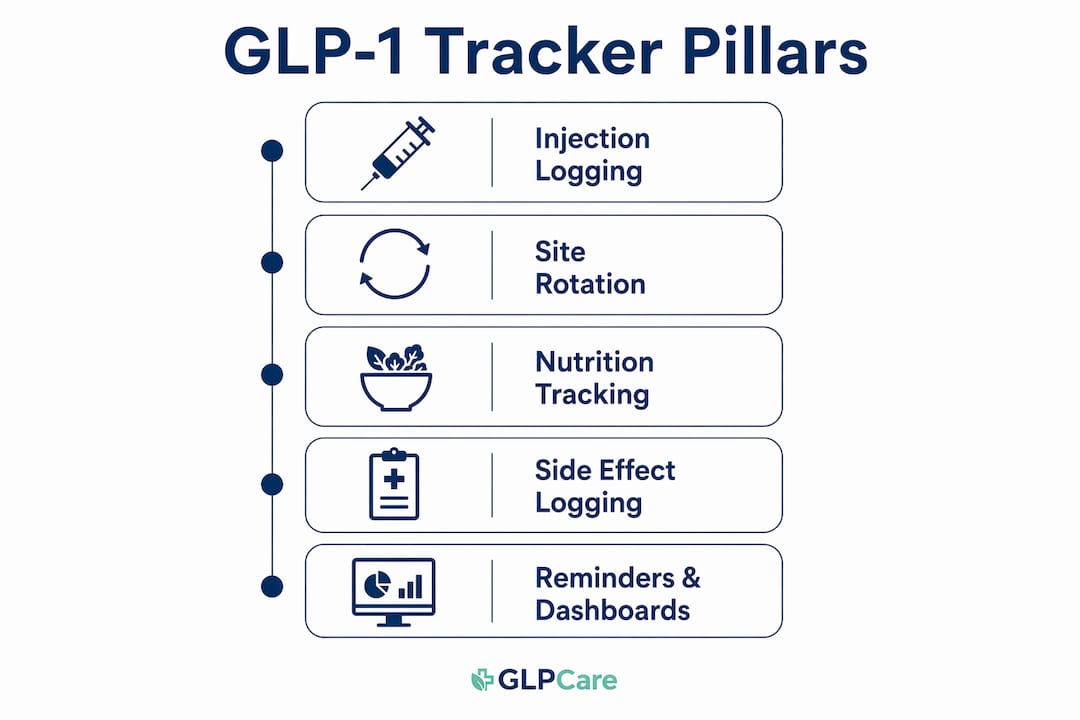
The best GLP-1 trackers are built around five core pillars: injection logging, site rotation, nutrition tracking, side effect monitoring, and pharmacokinetic visualization. Each pillar addresses a specific failure point in self-managed GLP-1 therapy.
Dose and injection site logging
Every dose entry should capture the date, time, dose amount, and injection site. Body maps showing the abdomen, thigh, and upper arm let you rotate sites systematically. Documented site rotation is the only reliable way to prevent lipohypertrophy, a condition where repeated injections in the same spot cause fatty tissue buildup that reduces drug absorption. Most people do not realize they are repeating sites until absorption problems show up as unexplained plateaus.
Nutrition tracking linked to your medication phase
A GLP-1 dosage tracker should do more than count calories. Dietary targets like protein and hydration shift depending on whether you are at peak medication levels or in the trough before your next dose. At peak, appetite suppression is strongest, so hitting protein targets takes deliberate effort. At trough, hunger returns and food choices matter more. Generic calorie counters ignore this cycle entirely.
Side effect monitoring and pharmacokinetic visualization
Logging nausea, fatigue, or GI discomfort with a severity rating and timestamp creates a pattern you can actually use. Pharmacokinetic charts visualize estimated medication build-up, peak, and taper across the week. When you see that nausea spikes 24–48 hours after injection and fades by day four, it stops feeling random and starts feeling manageable.
Reminders, adherence dashboards, and data export
Reminders reduce missed doses. Adherence dashboards show streaks and gaps at a glance. Data export, especially doctor-ready PDF reports, consolidates your dose history, symptom timing, and side effect logs into a format clinicians can actually use during appointments.
Free vs. subscription features
Core tracking features are typically free. Premium subscriptions around $6 per month unlock advanced AI meal scanning, unlimited food logging, PDF clinical report generation, and lab result imports. For people in active titration phases, the subscription tier pays for itself in better data.
Pro Tip: Start with the free tier to build the logging habit. Upgrade to premium once you have two to three weeks of consistent data and want to share reports with your provider.
How to set up and use a GLP-1 dosage tracker for best results
Setting up a GLP-1 tracker takes under 2–5 minutes when you have your medication name, current dose, and injection day ready. The setup process activates the features that matter most, so skipping steps costs you functionality.
- Enter your medication protocol. Input your medication type, current dose, and weekly injection day. This activates the injection site map, dose reminders, and titration schedule.
- Log your first injection with a site selection. Choose your starting site on the body map. The app records it and flags which sites to avoid next week.
- Set your nutrition targets. Enter your body weight and protein goal. Most GLP-1 therapy guidelines recommend 0.7–1.0 grams of protein per pound of body weight to preserve muscle during weight loss.
- Enable daily reminders. Set reminders for your injection day, daily food log, and water intake. Consistency in logging is more valuable than perfection in any single entry.
- Log your first side effect entry. Even if you feel fine, record a baseline. This makes future comparisons meaningful.
- Review your weekly summary before your next dose. Check adherence, nutrition averages, and any symptom patterns before injecting again.
- Export a report before clinical appointments. Generate a PDF or summary covering the past four to eight weeks. Bring it to every provider visit.
Pro Tip: Log your injection within 30 minutes of administering it. Waiting until the end of the day increases the chance of forgetting the exact site, which defeats the rotation system.
The Glpcare AI tracking app follows this same setup logic, pairing dose and nutrition logging with an AI companion that interprets your data and flags patterns worth discussing with your care team.
Why medication context changes everything in weight management
Generic health apps treat every day the same. GLP-1 therapy does not work that way. Medication context links diet needs and side effects directly to where you are in your dosing cycle, and that distinction changes what you should eat, how you should train, and what symptoms to expect.
How pharmacokinetics shape your week
Semaglutide and tirzepatide both follow a weekly injection schedule with predictable build-up and taper curves. Pharmacokinetic tracking charts this curve visually, showing when drug levels peak and when they fall. Most people experience peak appetite suppression and peak side effect risk in the 24–72 hours after injection. Understanding this timing helps you plan meals, workouts, and rest days around your actual biology rather than guessing.
| Medication phase | Typical experience | Tracking focus |
|---|---|---|
| Peak (day 1–3 post-injection) | Strong appetite suppression, possible nausea | Protein intake, hydration, side effect severity |
| Mid-cycle (day 3–5) | Moderate suppression, energy stabilizing | Balanced nutrition, activity levels |
| Trough (day 6–7) | Hunger returning, lower drug levels | Calorie quality, portion awareness |
How symptom trends improve adherence
People who quit GLP-1 therapy early often do so because side effects feel unpredictable. Tracking symptom timing against the pharmacokinetic curve shows that most GI symptoms follow a pattern tied to injection day, not random bad luck. Seeing that pattern in your own data builds confidence that symptoms are temporary and manageable. That confidence directly supports long-term adherence.
Clinicians also benefit from this data. Detailed reports consolidating dose, symptom, and side effect history lead to more productive appointments and better-personalized dose adjustments than verbal summaries ever could.
What to track for complete GLP-1 therapy management
Effective GLP-1 therapy management requires tracking more than just your injection day. The following data points give you and your provider a complete picture.
- Injection timing and dose: Date, time, dose amount, and any dose changes during titration
- Injection site: Specific location on the body map, rotated each week across abdomen, thigh, and upper arm
- Daily protein intake: Grams consumed versus your target, logged at each meal
- Fiber and water intake: Both support GI comfort and reduce constipation, a common side effect
- Side effects: Type, severity on a 1–10 scale, and time since last injection
- Weight trends: Weekly weigh-ins at the same time of day, ideally in the morning before eating
- Energy and mood: Brief daily ratings that reveal how medication phases affect your mental state
- Sleep quality: Tracked passively by a wearable or logged manually, since poor sleep disrupts weight loss
- Bowel movements: Frequency and consistency, especially relevant during dose increases
Glpcare’s screenless fitness band captures sleep, heart rate, and activity data passively, feeding that information directly into the tracking system without requiring manual entry for every metric. That combination of passive wearable data and active food and dose logging covers the full picture.
Pro Tip: Use your protein intake calculator to set a daily target before you start logging. Knowing your number makes every meal log faster and more purposeful.
Key Takeaways
A GLP-1 tracker works best when it connects dose history, nutrition, symptom timing, and wearable data into one record that both you and your clinician can act on.
| Point | Details |
|---|---|
| Five core pillars | Effective trackers cover injection logging, site rotation, nutrition, side effects, and pharmacokinetics. |
| Setup takes minutes | Entering your medication protocol activates site maps, reminders, and titration tracking immediately. |
| Medication context matters | Dietary and symptom needs shift across the dosing cycle; generic apps miss this entirely. |
| Rotation prevents lipohypertrophy | Documented site rotation is the only reliable way to avoid absorption-reducing tissue buildup. |
| Clinical reports improve outcomes | Consolidated PDF reports make provider appointments more productive than verbal summaries. |
Tracking data is only as useful as what you do with it
I have watched a lot of people start GLP-1 therapy with real motivation and then quietly fall off the rails by week six. The pattern is almost always the same. They stop logging food because it feels tedious. They forget which injection site they used last week. They show up to their provider appointment and say “I think things are going okay” without a single data point to back it up.
The mental load of managing a weekly injectable medication, adjusting nutrition, and monitoring side effects is genuinely high. That is not a character flaw. It is a design problem. A good GLP-1 monitoring app solves that design problem by making the right behavior the easy behavior.
What I find most underrated is the pharmacokinetic visualization feature. Most people on semaglutide or tirzepatide have no idea why they feel terrible on Tuesday and fine by Friday. Seeing that mapped against their injection day is often the first moment the therapy starts to feel controllable rather than chaotic. That shift in perception matters more for long-term adherence than any single dietary tweak.
The one mistake I see consistently is people treating the tracker as a passive record rather than an active tool. Your weekly summary is not just a log. It is a conversation starter with your clinician. Bring the data. Ask specific questions. The week-by-week breakdown of how GLP-1 therapy progresses gives you the framework to interpret what your numbers actually mean.
AI companions in GLP-1 management are still early, but the direction is right. The goal is not to replace clinical judgment. It is to make sure that when you sit down with your provider, you are not starting from zero.
— Dominique
Glpcare’s tools for GLP-1 therapy management
Glpcare combines an AI-powered tracking app with a screenless fitness band and direct clinician support to give you a complete GLP-1 management system. The app logs doses, nutrition, and side effects while the band captures sleep, heart rate, and activity data passively.
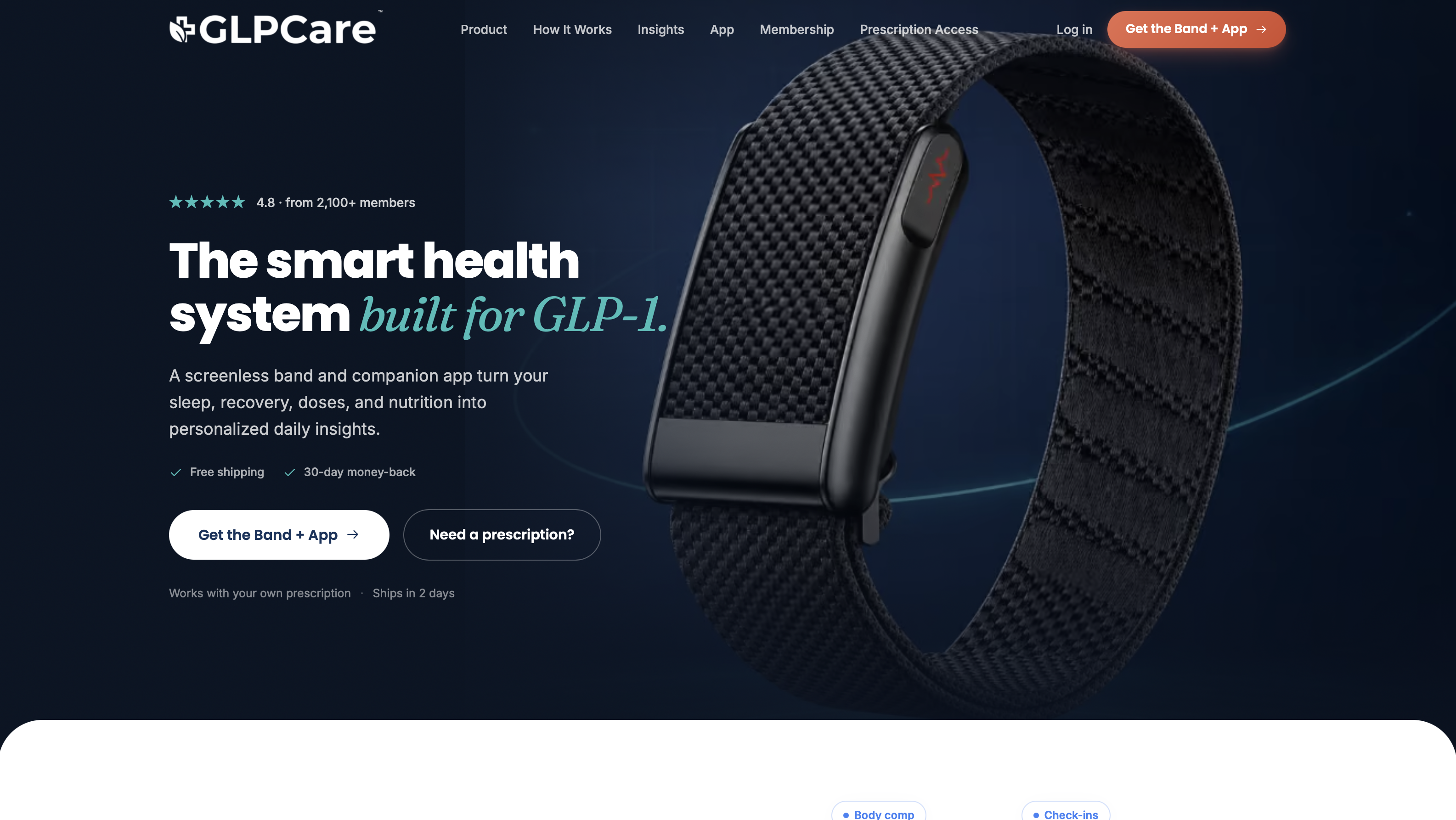
Free tools including the calorie deficit calculator and protein intake calculator help you set targets before your first log entry. If you are not yet sure whether GLP-1 therapy fits your health profile, the GLP-1 readiness quiz walks you through the key criteria in under three minutes. Glpcare’s approach puts real data behind every decision, so your care team has what they need to support you effectively.
FAQ
What is a GLP-1 tracker?
A GLP-1 tracker is a specialized app or tool that logs GLP-1 medication doses, injection sites, nutrition, and side effects in one place to support adherence and clinical reporting.
How does injection site rotation work in a GLP-1 dosage tracker?
The tracker records each injection site on a body map and flags which areas to avoid next time, preventing lipohypertrophy caused by repeated injections in the same location.
Do GLP-1 monitoring apps require a subscription?
Core features like dose logging and reminders are typically free. Advanced features such as AI meal scanning and PDF clinical report generation are available through premium subscriptions, generally around $6 per month.
How does pharmacokinetic tracking help with side effects?
Pharmacokinetic charts visualize estimated medication levels across the week, showing when drug levels peak and taper. This helps people recognize that side effects like nausea follow a predictable pattern tied to injection timing.
Can a GLP-1 medication log improve clinical appointments?
Yes. Consolidated reports covering dose history, symptom timing, and nutrition data give clinicians specific information to act on, leading to better-personalized dose adjustments than verbal summaries alone.