Best High-Protein Meal Plans for GLP-1 Patients
Best High-Protein Meal Plans for GLP-1 Patients
The single most effective approach for preserving lean mass on prescription GLP-1 therapy is a clinician-guided meal plan that front-loads approximately 20–30 g of high-quality protein at every eating occasion and targets at least 1.2 g/kg/day, individualized to your weight, kidney function, and activity level. JAMA Internal Medicine guidance confirms that starting each meal with protein and using 20 g+ protein shakes when appetite drops are standard clinical interventions for muscle preservation on semaglutide or tirzepatide.
Before your next clinician visit, run the Glpcare Protein Intake Calculator to get a personalized daily and per-meal target. Then bring that number to your prescriber or registered dietitian nutritionist (RDN) for review.
Your three immediate action items:
- Use a protein intake calculator to establish your starting target (g/day and per meal)
- Ask your clinician or RDN to confirm your individualized protein goal and energy floor
- Begin front-loading protein at every meal, starting with breakfast
Key Takeaways
Clinician-guided, protein-first meal plans that target at least 1.2 g/kg/day and front-load 20–30 g per meal are the most effective approach for preserving lean mass during GLP-1 therapy.
| Point | Details |
|---|---|
| Daily protein target | Aim for ≥1.2 g/kg/day, up to ~1.6 g/kg/day for active adults without CKD, individualized by your clinician. |
| Per-meal pacing | Target ~0.3–0.4 g/kg per meal (roughly 25–40 g) across 3–4 eating occasions to meet the leucine threshold for muscle protein synthesis. |
| Exercise pairing | Resistance training at least 3 times per week plus about 150 minutes per week of aerobic activity is consensus-recommended alongside protein plans. |
| Monitoring essentials | Baseline and follow-up labs (renal function, vitamin D, B12, iron) plus body composition checks protect against lean mass loss and micronutrient shortfalls. |
| Glpcare tools | Use the Glpcare Protein Intake Calculator and wearable to personalize targets and give your clinician real biometric data between visits. |
Table of Contents
- What does a complete high-protein GLP-1 meal plan include?
- How do clinicians set your protein target safely?
- Sample high-protein meal templates for GLP-1 patients
- What to do when appetite drops on GLP-1 therapy
- How to pair exercise with your protein plan to protect muscle
- What labs and monitoring does your clinician need to track?
- How to work effectively with your clinician and RDN
- Which tools help you track protein and biometrics on GLP-1 therapy?
- The part most patients underestimate about protein and GLP-1 therapy
- Glpcare gives you clinician-led protein planning and real-time tracking
- Sources
- FAQ
What does a complete high-protein GLP-1 meal plan include?
A plan is only as strong as its weakest component. Clinicians and RDNs building the best high-protein meal plans for GLP-1 patients typically address seven elements together.
| Component | Clinical rationale | Responsible party |
|---|---|---|
| Individualized protein target (≥1.2 g/kg/day) | Preserves lean mass during caloric deficit | Prescriber + RDN |
| Per-meal protein pacing (20–30 g/meal) | Meets leucine threshold for muscle protein synthesis | RDN + patient |
| Energy floor (minimum daily calories) | Prevents micronutrient shortfalls | Prescriber + RDN |
| Fiber target (25–35 g/day) | Supports GI comfort and satiety | RDN + patient |
| Micronutrient monitoring (vitamin D, B12, iron) | Addresses deficiency risk in caloric restriction | Prescriber |
| Strength training (≥3× weekly) | Signals muscle retention alongside protein intake | RDN + patient |
| GI tolerability strategies | Maintains adherence during dose escalation | RDN + patient |
A multidisciplinary advisory from the American College of Lifestyle Medicine, the American Society for Nutrition, the Obesity Medicine Association, and The Obesity Society recommends prioritizing nutrient-dense foods, adequate fiber, and structured exercise alongside GLP-1 therapy. When solid food intake is consistently insufficient during dose escalation, high-protein oral nutrition supplements (≥20 g protein per serving) are a clinically recognized adjunct, not a fallback.
How do clinicians set your protein target safely?
Starting framework: Most clinicians use ≥1.2 g/kg/day as the floor, with targets up to approximately 1.6 g/kg/day for adults without chronic kidney disease (CKD) who are doing resistance training or in an aggressive energy deficit. Older adults generally need the higher end of that range to offset age-related muscle protein synthesis blunting.
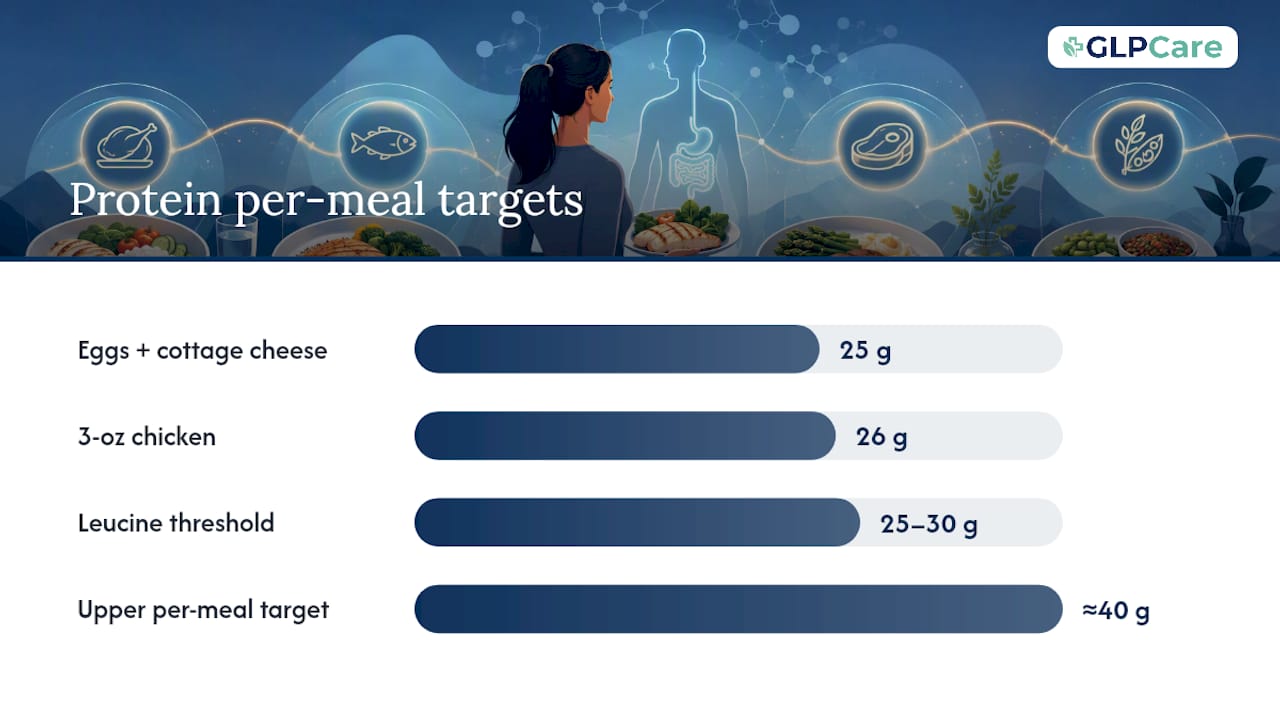
Per-meal pacing: Distribute protein across 3–4 eating occasions, targeting approximately 0.3–0.4 g/kg per meal. Research on muscle protein synthesis identifies a leucine threshold around 2.5–3.0 g per meal, roughly equivalent to 25–30 g of high-quality animal protein or a larger portion of plant protein.
Key adjustments and red flags:
- CKD: Lower protein targets may apply; nephrology referral is warranted before exceeding 1.2 g/kg/day
- Extreme caloric restriction: Avoid dropping below a clinician-set energy floor without a micronutrient plan in place
- Dose escalation side effects: Nausea or early satiety may require temporary reliance on protein shakes and soft foods
- Lab monitoring: Baseline and follow-up checks for vitamin D, B12, iron, and renal function are standard
Pro Tip: For most adults, 0.3–0.4 g/kg per meal translates to roughly 25–40 g of protein per eating occasion. A 3-oz serving of cooked chicken breast delivers about 26 g; two large eggs plus ½ cup cottage cheese delivers about 25 g. These are practical reference points your RDN can adjust to your exact weight.
Sample high-protein meal templates for GLP-1 patients
Three sample days below show exact portions and protein estimates. All are designed for low volume and high protein density, which matters when GLP-1 therapy reduces how much you can eat at one sitting.
Day 1: Mixed-protein omnivore
- Breakfast: 3 scrambled eggs + ½ cup 2% cottage cheese = ~28 g protein
- Lunch: 4 oz canned salmon + ½ cup edamame = ~32 g protein
- Dinner: 4 oz grilled chicken breast + ½ cup lentils = ~35 g protein
- Snack: 1 cup plain Greek yogurt (2%) = ~17 g protein
- Daily total: ~112 g
Day 2: Pescatarian/egg-forward
- Breakfast: 2 eggs + 1 oz smoked salmon + ½ cup Greek yogurt = ~30 g protein
- Lunch: 5 oz canned tuna + ½ cup white beans = ~34 g protein
- Dinner: 4 oz shrimp + ½ cup quinoa = ~28 g protein
- Snack: 1 scoop whey protein shake (water) = ~25 g protein
- Daily total: ~117 g
Day 3: Plant-forward
- Breakfast: ½ cup firm tofu scramble + 2 tbsp hemp seeds = ~22 g protein
- Lunch: 1 cup edamame + ½ cup black beans + 2 tbsp nutritional yeast = ~28 g protein
- Dinner: ¾ cup tempeh + ½ cup lentils = ~32 g protein
- Snack: 1 cup soy milk + 2 tbsp peanut butter = ~15 g protein
- Daily total: ~97 g
Plant-forward days often fall short of leucine thresholds per meal. Adding leucine-rich sources like edamame, soy protein, or a plant-based protein powder with ≥2.5 g leucine per serving closes that gap.
| Meal option | Portion | Protein (g) | Best for |
|---|---|---|---|
| Greek yogurt (plain, 2%) | 1 cup | 17–20 | Normal appetite or snack |
| Cottage cheese | ½ cup | 13 | Low appetite, soft texture |
| Whey/casein protein shake | 1 scoop in water | 20–25 | Very low appetite, dose escalation |
| Canned salmon or tuna | 4 oz | 26–30 | Meal prep, quick lunch |
| Firm tofu | ½ cup | 10 | Plant-forward, soft texture |
| Fortified smoothie (protein powder + soy milk) | 12 oz | 25–30 | Nausea, liquid tolerance |
What to do when appetite drops on GLP-1 therapy
Low appetite is expected, especially during dose escalation. The goal is not to push through large meals but to meet protein and micronutrient targets in smaller, more frequent eating occasions.
- Front-load protein first at every meal before eating anything else; this protects your target even if you stop eating early
- Eat 3–6 smaller occasions rather than 2–3 large meals; smaller volume is easier to tolerate
- Set phone alarms at regular intervals (every 3–4 hours) to prompt eating when hunger cues are absent
- Use protein-dense liquids: fortified smoothies, Greek yogurt thinned with milk, or protein shakes with ≥20 g protein per serving
- Adjust texture and temperature: cold or room-temperature foods often cause less nausea than hot meals during peak GI side effects
- Choose oral nutrition supplements with ≥20 g protein per serving when solid food is consistently insufficient; discuss timing and duration with your RDN
Pro Tip: Combining protein with 5–10 g of soluble fiber per meal (chia seeds, psyllium, or oats) slows gastric emptying gently and supports GI comfort. Pair with adequate fluid (at least 8 oz per meal) to reduce constipation risk, which is common on GLP-1 therapy.
How to pair exercise with your protein plan to protect muscle
Protein alone does not preserve lean mass. The AJCN advisory and expert consensus both recommend resistance training at least 3 times per week plus at least 150 minutes per week of moderate aerobic activity. These targets are starting points; your clinician should individualize based on your current capacity and any orthopedic limitations.
- Resistance training: 3–4 sessions per week, full-body or split, with progressive overload (increase weight or reps every 1–2 weeks as tolerated)
- Aerobic activity: 150+ minutes per week of moderate intensity (brisk walking, cycling, swimming); can be accumulated in 10-minute bouts
- Post-training protein: Consume a protein-anchored meal or shake within 1–2 hours after resistance training to capitalize on muscle protein synthesis signaling
- Leucine timing: That post-training meal should meet the ~2.5–3.0 g leucine threshold, roughly 25–30 g of high-quality protein
For practical strategies on preventing muscle loss on GLP-1 medications, your clinician can adapt the frequency and session structure to your current fitness level.
What labs and monitoring does your clinician need to track?
Monitoring is not optional on a high-protein GLP-1 plan. It is how your clinician confirms the plan is working and catches problems before they become serious.
Baseline labs (before or at program start):
- Comprehensive metabolic panel (renal function, electrolytes, glucose)
- Vitamin D (25-OH), B12, iron studies, CBC
- Body weight and, when available, body composition (DXA or bioelectrical impedance analysis)
Follow-up schedule:
- First review: 2–4 weeks after any dose change
- Comprehensive review: 12 weeks after program start
- Body composition check: at clinician discretion, typically every 3–6 months
Safety callouts:
Warning: Extreme caloric restriction without a micronutrient plan accelerates lean mass loss and increases deficiency risk. Your clinician should set an explicit energy floor before you begin.
Warning: Persistent insufficient protein intake despite optimization (nausea, early satiety, food aversion) warrants a plan change, not continued encouragement to push through. Escalate to your RDN or prescriber promptly.
CKD patients require nephrology input before protein targets exceed 1.2 g/kg/day. Hydration and fiber adequacy should be assessed at every visit to reduce constipation, a common GLP-1 side effect.
How to work effectively with your clinician and RDN
Preparation makes every visit more productive. Bring the following to your first appointment:
- Current GLP-1 medication name, dose, and how long you have been on it
- Recent lab results (within 3 months if available)
- A 3-day food log or typical daily eating pattern
- Current activity level and any exercise limitations
- List of supplements you are already taking
Questions to ask your RDN or prescriber:
- What is my individualized protein target in grams per day and per meal?
- Do I need an energy floor, and what is it?
- Which supplements do I need, and at what doses?
- When should I use a protein shake instead of a whole-food meal?
Realistic visit timeline:
- Week 0: Baseline assessment, labs, individualized protein target set, meal template provided
- Weeks 2–4: First check-in after dose change; review tolerability, protein adherence, GI symptoms
- Week 12: Comprehensive review; labs repeated, body composition assessed if available, plan adjusted
- Ongoing: Quarterly reviews or after any significant dose change
An AJCN advisory confirms that pairing GLP-1 therapy with RDN support improves medication adherence, reduces GI side effects, and protects nutrient adequacy.
Which tools help you track protein and biometrics on GLP-1 therapy?
The right tools close the gap between what your plan says and what you actually do.
- Glpcare wearable band: Tracks activity, sleep, and heart rate continuously; the data feeds into your clinician’s review so adjustments are based on real biometrics, not self-report
- Glpcare AI tracking app: Logs dose timing, symptoms, and dietary habits; generates personalized insights and flags patterns your clinician can act on
- Food-logging apps with nutrient alerts: Any validated app that tracks protein, fiber, and micronutrients daily helps you catch shortfalls before your next visit
- Validated oral nutrition supplements: Choose products with ≥20 g protein per serving and a complete micronutrient profile for rescue intake during dose escalation
Bring your wearable and app data to every clinician visit. A week of sleep, step count, and activity trends gives your prescriber a clearer picture than a verbal summary alone.
The part most patients underestimate about protein and GLP-1 therapy
Most people starting semaglutide or tirzepatide focus on the scale. The harder, more consequential question is how much of that weight loss is fat versus muscle. Aggressive caloric restriction without a structured protein plan and resistance training can mean losing lean mass alongside fat, which slows metabolism and makes long-term weight maintenance harder.
The evidence is consistent: individualized protein targets, per-meal pacing, and resistance training are not optional add-ons. They are the mechanism by which GLP-1 therapy produces durable results rather than temporary ones. What I see most often is patients who are doing everything right on medication but eating far too little protein because their appetite is suppressed and no one has given them a concrete gram target. That single gap, addressed early with a clinician-set number and a practical meal template, changes the trajectory of the whole program. Continuous monitoring, the kind that Glpcare’s integrated wearable and app make possible between visits, is what keeps that plan on track when appetite and side effects shift week to week.
Glpcare gives you clinician-led protein planning and real-time tracking
Most high-protein meal plans are built for general fitness. Glpcare is built specifically for adults on GLP-1 therapy, with clinician supervision, a Protein Intake Calculator that personalizes your gram targets, and a wearable that tracks the biometrics your prescriber actually needs between visits.
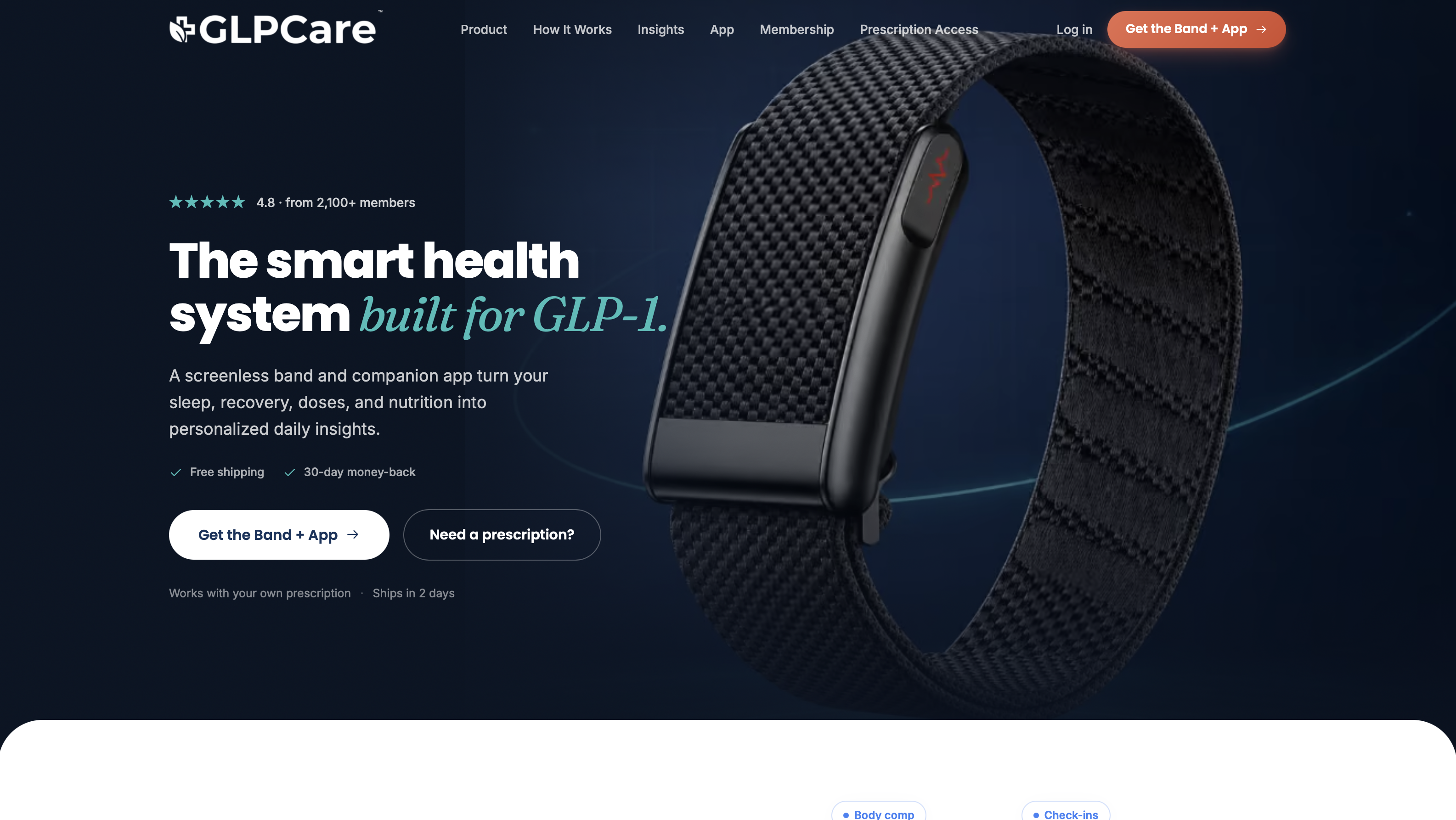
The Glpcare system connects your dose timing, activity data, sleep, and dietary habits into one continuous picture, so your clinician can make adjustments based on what is actually happening, not what you remember from last month. You get telehealth follow-up, an AI-driven app for daily tracking, and a medical-grade wearable band, all coordinated around your GLP-1 program.
Take the Glpcare readiness quiz now to see whether you qualify and get your personalized protein target before your next clinician visit.
Sources
These are the highest-priority references for clinicians and RDNs building or reviewing GLP-1 nutrition plans:
- I Am Taking a GLP-1 Weight-Loss Medication—What Should I Know? | Lifestyle Behaviors | JAMA Internal Medicine | JAMA Network
- Nutritional priorities to support GLP-1 therapy for obesity: a joint Advisory from the American College of Lifestyle Medicine, the American Society for Nutrition, the Obesity Medicine Association, and The Obesity Society - The American Journal of Clinical Nutrition00240-0/fulltext)
- Medical nutrition in the glucagon-like peptide-1 (GLP-1) era: Protein strategies, micronutrient monitoring, and lean mass preservation
- Muscle protein synthesis has a per-meal leucine threshold; per‑meal guidance for preserving lean mass
This article is general information, not a substitute for advice from a qualified doctor. Consult a qualified healthcare professional about your own circumstances before acting on anything here.
FAQ
How much protein do I need per day on GLP-1 therapy?
Most clinical guidelines recommend at least 1.2 g/kg/day, with targets up to approximately 1.6 g/kg/day for active adults without CKD. Your prescriber or RDN should set your individualized target based on your weight, kidney function, and activity level.
What are the best high-protein foods for low appetite on GLP-1s?
Greek yogurt, cottage cheese, canned fish, eggs, and protein shakes with at least 20 g protein per serving are the most practical options. They are high in protein, low in volume, and easy to tolerate during dose escalation.
How does per-meal protein pacing work?
Distribute protein across 3–4 eating occasions, targeting approximately 0.3–0.4 g/kg per meal. This approach meets the leucine threshold (~2.5–3.0 g per meal) needed to stimulate muscle protein synthesis, which a single large protein meal later in the day does not reliably achieve.
Can I follow a plant-based high-protein meal plan on GLP-1 therapy?
Yes, but plant proteins are generally lower in leucine per gram, so portions need to be larger or leucine-rich sources (edamame, soy protein, tempeh) should anchor each meal. A plant-based protein powder with ≥2.5 g leucine per serving is a practical supplement when whole-food portions are limited by low appetite.
How does Glpcare support protein tracking between clinician visits?
Glpcare’s Protein Intake Calculator generates a personalized daily and per-meal target, while the wearable and AI app track activity, sleep, and dose timing continuously. That data feeds into clinician reviews so your plan can be adjusted based on real biometrics rather than recall alone.