Add Fiber Safely for GLP-1 Users: Start 3–5 g Every 3–7 Days
Add Fiber Safely for GLP-1 Users: Start 3–5 g Every 3–7 Days
Yes, fiber generally supports people on GLP-1 medications, easing constipation and complementing metabolic goals, but it has to be added gradually. GLP-1 drugs already slow gastric emptying, so a sudden jump in fiber intake can backfire into bloating, gas, or worse nausea. Before making any real change to your diet or adding a supplement, talk to your prescriber or a nutrition clinician who knows your medication and dose.
TL;DR:
- Adding fiber while on GLP-1 medications requires a slow, gradual increase to avoid bloating, gas, and nausea caused by delayed gastric emptying.
- Soluble fibers like psyllium support bowel regularity without excessive fermentation, making them preferable for managing constipation.
- Fermentable fibers can cause initial gas and bloating and should be increased carefully, especially in the first weeks of GLP-1 therapy.
- Monitoring stool consistency and symptoms daily helps determine each individual’s tolerance and guides safe fiber adjustments.
- Clinician oversight and personalized plans are essential, as fiber responses vary widely based on fiber type, dose, and individual gut response.
Table of Contents
- How Fiber and GLP-1 Medications Interact
- Does Fiber Help With GLP-1 Side Effects Like Bloating and Constipation?
- A Step-by-Step Plan to Add Fiber Safely on GLP-1
- Which Type of Fiber Is Best for You?
- When and How to Use Fiber Supplements Safely
- How GLPCare Helps You Add Fiber Without the Guesswork
- Why a Slow, Individualized Approach Beats a Perfect Protocol
- Ready to Build a Fiber Plan That Actually Fits Your Body?
- Sources
- FAQ
How Fiber and GLP-1 Medications Interact
Fiber and GLP-1 drugs work on overlapping pathways, which is exactly why the timing matters. Viscous soluble fibers, like the kind in psyllium or oats, thicken the contents of your gut and slow down how fast nutrients move through it. That delay pushes more undigested material toward the distal ileum, triggering what researchers call the ileal brake, a feedback loop that stimulates your gut’s own GLP-1 and PYY release.
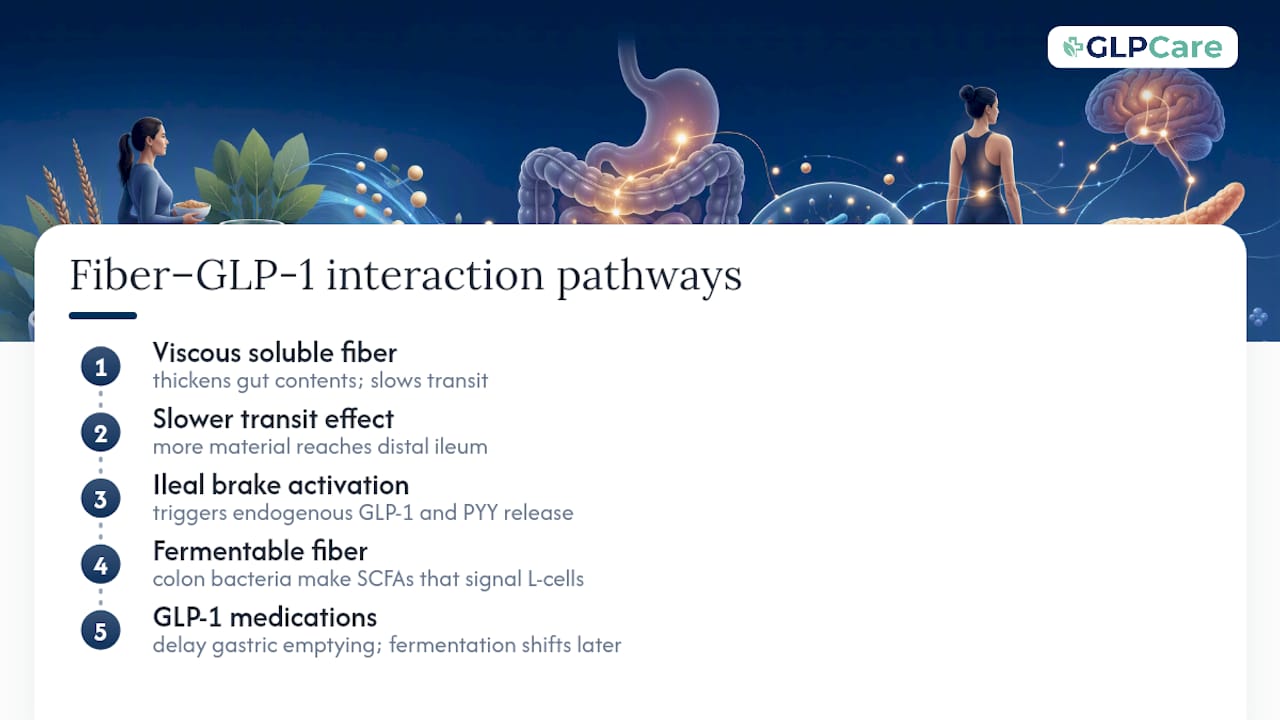
Fermentable fibers add a second layer. Bacteria in your colon break them down into short-chain fatty acids (SCFAs), and those SCFAs signal the L cells lining your gut to release more endogenous GLP-1, on top of whatever your medication is already doing.
Here’s the complication: GLP-1 drugs like semaglutide and tirzepatide slow gastric emptying on their own. Food sits in your stomach longer, which shifts when and where fermentation happens in your gut. Practitioners increasingly recognize that fiber tends to ferment later and more slowly in people on these medications, which is one reason clinicians recommend a slower titration pace than they would for someone not on GLP-1 therapy. The mechanisms are compelling, but a scoping review of human trials found outcomes vary widely by fiber type, dose, and study length. The biology makes sense; the clinical proof is still catching up.
Does Fiber Help With GLP-1 Side Effects Like Bloating and Constipation?
Fiber’s effect on GLP-1 side effects depends entirely on which symptom you’re dealing with and which fiber you reach for.
Constipation responds best to viscous soluble fibers like psyllium husk, paired with real fluid intake and some daily movement. Reviews on fiber and GLP-1 therapy point to psyllium specifically for supporting bowel regularity without the fermentation load that triggers gas. If you’re dealing with this now, our guide to GLP-1 constipation relief walks through the fast-acting steps.
Bloating and gas almost always show up first when fermentable fibers (inulin, resistant starch) enter your diet too fast. Expect a temporary uptick, pace your increases, and consider leaning on lower-fermentation foods for a week or two while your gut adjusts.
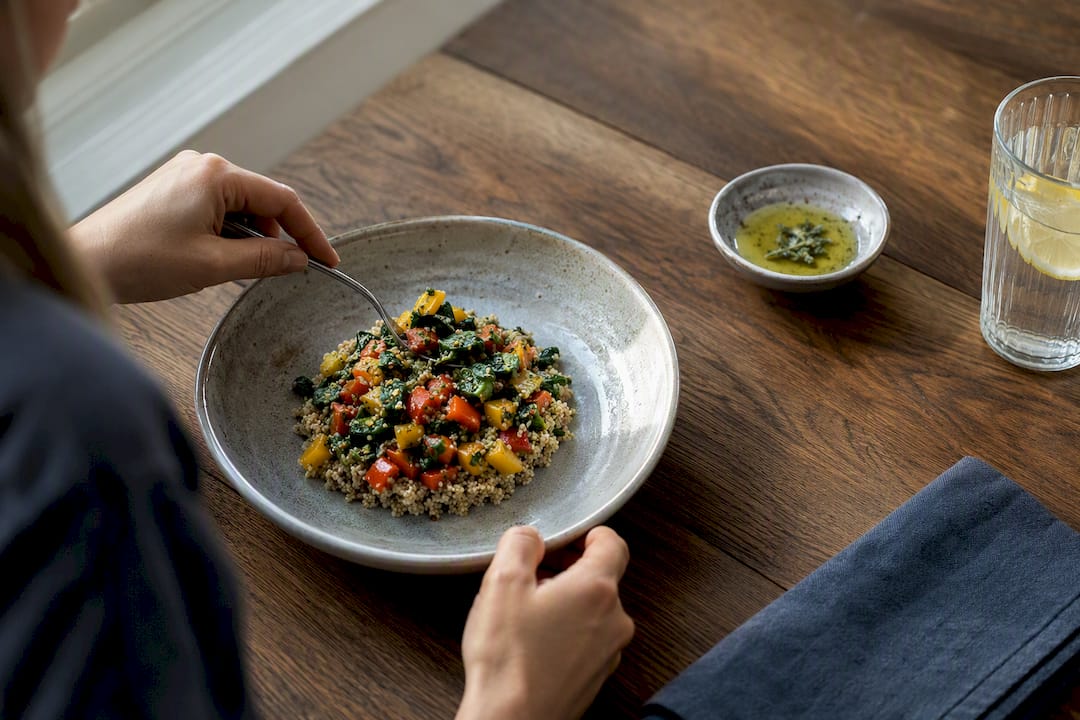
Nausea and delayed emptying respond better to smaller, spread-out fiber doses across meals rather than one large serving at dinner.
Contact your clinician if you notice:
- Severe abdominal pain or a hard, distended belly
- No bowel movement for several days despite home measures
- Persistent vomiting or inability to keep fluids down
A Step-by-Step Plan to Add Fiber Safely on GLP-1
Adding fiber on GLP-1 works best as a deliberate process, not a New Year’s resolution.
- Establish your baseline. Track your current fiber intake for a few days and note your stool pattern. If you have a history of bowel obstruction, severe IBS, or other GI disease, loop in your clinician before changing anything.
- Titrate slowly. A common approach is adding 3 to 5 grams every three to seven days, sourced from food first, not supplements.
- Pair every increase with water and movement. Fiber without adequate fluid can make constipation worse, not better, especially when gastric emptying is already slowed.
- Split fiber across meals. Three smaller fiber-containing meals tend to be gentler than one large fiber-heavy dinner.
- Watch for symptoms and adjust. If bloating, cramping, or nausea spike, drop back to your last tolerated intake and pause further increases until things settle.
- Never self-treat with laxatives or high-dose fiber supplements without checking with your clinician first, especially if you’re also managing blood sugar medications.
Pro Tip: Keep a simple daily note of stool consistency using the Bristol Stool Scale alongside your fiber grams. This one habit often reveals your tolerance threshold weeks before the scale or your labs would.
If constipation is your main issue right now, our step-by-step relief guide breaks this same process down with more granular timing.
Which Type of Fiber Is Best for You?
Not all fiber behaves the same way in your gut, and picking the wrong type for your symptom can make things worse before they get better.
- Viscous soluble fiber (psyllium, beta-glucan, glucomannan): found in oats, barley, and psyllium husk. This is your best bet for regularity and for blunting post-meal blood sugar spikes.
- Fermentable fiber and prebiotics (inulin, resistant starch, dextrins): found in cooled potatoes, green bananas, and chicory root. These feed your gut bacteria and support SCFA production, but they’re also the most likely to cause early gas.
- Insoluble fiber (wheat bran, cellulose): found in whole wheat bran and many raw vegetables. It adds bulk, but it can feel rough going down if your gastric emptying is already slow.
A gentle food-first swap looks like this: trade white toast for oatmeal at breakfast, swap chips for a small serving of berries as a snack, and add a scoop of cooked lentils to dinner instead of extra rice. Pairing these swaps with adequate protein matters too. Our protein-first meal plan guide shows how to balance both without overloading your gut in one sitting.
When and How to Use Fiber Supplements Safely
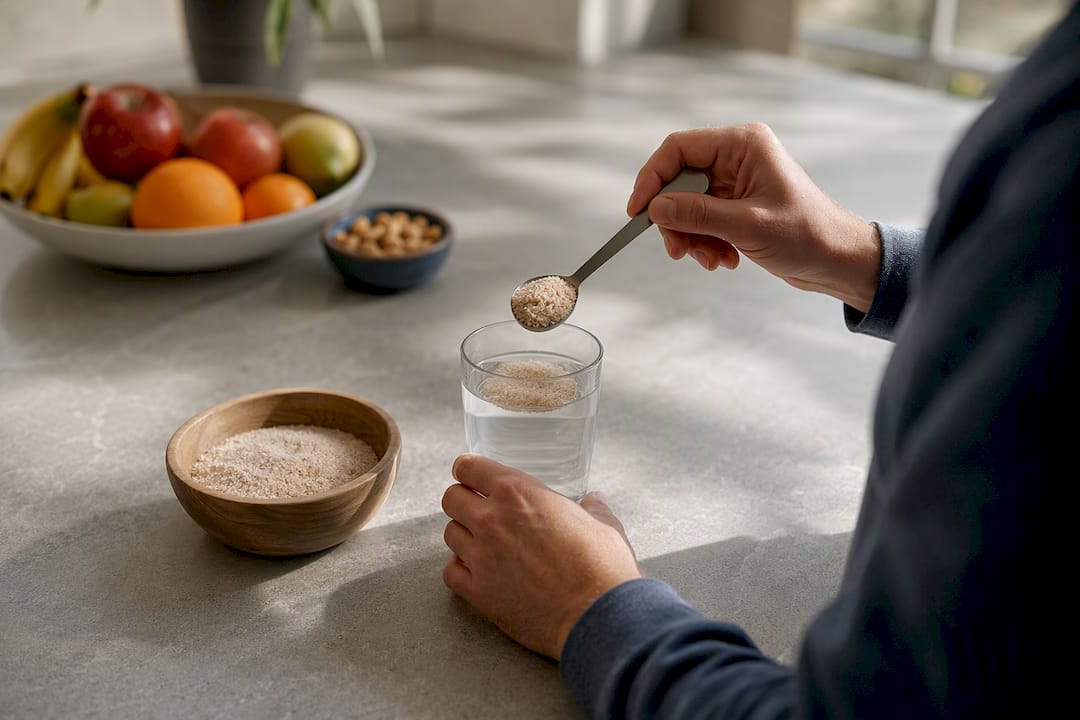
Food-first is the better default, but supplements have a place when whole foods aren’t cutting it. Psyllium or another viscous fiber supplement is a reasonable option, starting at 3 to 5 grams once daily rather than jumping to a 10 to 16 gram dose right out of the gate.
Take supplements at a different time than oral medications if your clinician advises it, since fiber can interfere with absorption of some drugs. This matters more if you’re managing multiple glucose-lowering medications alongside your GLP-1 prescription. Check with your prescriber before combining supplements, especially if you’re on other medications that could interact.
How GLPCare Helps You Add Fiber Without the Guesswork
Ramping fiber on your own means guessing at symptoms and hoping you’re reading them right. GLPCare pairs licensed clinician oversight with personalized nutrition coaching, so your fiber increases get adjusted based on your actual tolerance, not a generic chart. The GLP Care Band tracks activity and sleep patterns that shift alongside GI changes, giving your care team a fuller picture between visits. Combined with the protein calculator and readiness quiz, you get a plan built around your dose, your symptoms, and your goals.
Why a Slow, Individualized Approach Beats a Perfect Protocol
The research on fiber and GLP-1 is mechanistically solid but clinically messy. Trials disagree on dose, duration, and fiber type, and that inconsistency isn’t a flaw in the science. It reflects how differently people’s guts respond to the same intervention.
In practice, the people who tolerate fiber increases best are the ones who move slowly and track symptoms honestly, not the ones who chase the “ideal” gram target from a chart. A cautious ramp with real monitoring beats a textbook-perfect protocol applied blindly. If something feels off, that’s information, not failure. Bring it to your clinician instead of pushing through.
— Dominique
Ready to Build a Fiber Plan That Actually Fits Your Body?
Figuring out your fiber tolerance alone usually means a lot of trial, error, and uncomfortable days you didn’t need to have. GLPCare gives you clinician support built directly into your GLP-1 program, so fiber increases get personalized to your dose, your symptoms, and your progress instead of a one-size-fits-all chart.

Your GLP Care Band tracks the activity and recovery signals that shift as your gut adjusts, giving your care team real data between check-ins instead of guesswork. Pair that with nutrition coaching that actually accounts for what GLP-1 does to digestion, and you get a plan that adapts instead of one you have to force yourself into.
Not sure where you stand or whether you qualify for clinician-led GLP-1 care? Take the GLP-1 Readiness Quiz to see what a personalized plan could look like for you, or explore Precision GLP-1 Care to see how the wearable and clinician support work together.
Sources
For deeper detail, review the Advances in Nutrition review on fiber and GLP-1 receptor agonists, the Frontiers scoping review on fiber and endogenous GLP-1, and NIDDK’s obesity resources for broader background. The UCHealth nutrition guidance and Daylahealth’s diet guide offer additional practical context.
This article is general information, not a substitute for advice from a qualified doctor. Consult a qualified healthcare professional about your own circumstances before acting on anything here.
- Dietary Fiber and Glucagon-Like Peptide-1 Receptor Agonists in Obesity Management: Converging Mechanisms, Interactions, and Strategies for Durable Weight Control (Advances in Nutrition, 2026)
- Dietary fibers to boost endogenous GLP-1 secretion and satiety: a scoping review (Frontiers in Endocrinology, 2026)
- The Effects of Soluble Dietary Fibers on Glycemic Response: An Overview and Futures Perspectives (PMC)
FAQ
Should I take fiber while on GLP-1?
Most people on GLP-1 medications benefit from fiber for bowel regularity and gut support, but it needs to be added gradually and ideally with clinician input given how these drugs already slow digestion.
Should I take fiber while on Zepbound?
Yes, the same gradual, food-first approach applies whether you’re on Zepbound, semaglutide, or another GLP-1 medication, since all of them slow gastric emptying to some degree.
Is it safe to eat too much fiber while on GLP-1 medication?
Increasing fiber too quickly, especially fermentable types, can worsen bloating, gas, and nausea in people on GLP-1 drugs, so a slow, gradual ramp up over several days is safer than a big jump.
How much fiber should I eat a day on GLP-1?
There’s no single universal target, but reviews on GLP-1 and fiber generally support building toward standard adult fiber recommendations gradually, prioritizing food sources and adjusting based on your personal tolerance and clinician guidance.