Semaglutide Drug Interactions: Your Safety Guide
Semaglutide Drug Interactions: Your Safety Guide
Semaglutide does cause clinically meaningful drug interactions, and the single most important action you can take is sharing your complete medication and supplement list with your clinician before starting or adjusting your dose. The highest-risk combinations involve drugs that also lower blood sugar or oral medications with narrow therapeutic windows whose absorption can be altered by semaglutide’s effect on gastric emptying.
Check these drug classes with your clinician right away:
- Insulin and insulin secretagogues (sulfonylureas such as glipizide or glimepiride, meglitinides): additive blood-sugar lowering raises hypoglycemia risk significantly
- Warfarin and other anticoagulants: delayed gastric emptying can shift INR unpredictably
- Levothyroxine, phenytoin, digoxin: narrow therapeutic index drugs whose absorption timing matters
- Other GLP-1 or dual incretin agents: combining them increases side-effect burden without added benefit
If you are currently on insulin or a sulfonylurea, increase your glucose monitoring frequency when starting semaglutide. If you take warfarin, schedule an INR check within the first two weeks of starting or titrating your dose.
Pro Tip: Before your first semaglutide dose, photograph your full medication list, including OTC drugs and supplements, and send it to your prescribing clinician or pharmacist for a formal medication reconciliation.
Key Takeaways
Semaglutide’s most clinically significant interactions involve additive hypoglycemia with insulin and sulfonylureas, and delayed gastric emptying affecting oral drugs with narrow therapeutic windows, both of which are manageable with structured monitoring and dose adjustments.
| Point | Details |
|---|---|
| Highest-risk combinations | Insulin and sulfonylureas carry major interaction risk due to additive blood-sugar lowering; monitor glucose closely and consider dose reduction. |
| Oral drug absorption | Warfarin, levothyroxine, phenytoin, and digoxin absorption can shift; check INR, TSH, or drug levels after starting or titrating semaglutide. |
| Rybelsus timing rule | Take oral semaglutide on an empty stomach with no more than 4 oz of water; wait 30 minutes before food or other oral medications. |
| CYP enzyme risk is low | Semaglutide does not meaningfully inhibit or induce major CYP enzymes, so metabolic drug-drug interactions are rarely a primary concern. |
| Glpcare’s approach | Glpcare includes medication reconciliation at intake, clinician oversight through titration, and wearable monitoring to catch interaction signals early. |
Table of Contents
- How does semaglutide interact with other medications?
- Which drug classes carry the highest interaction risk?
- What are the special rules for oral semaglutide (Rybelsus)?
- How do alcohol, supplements, and food affect semaglutide safety?
- How should you monitor for interactions and when should you call your clinician?
- How are semaglutide interactions classified by severity?
- Which medical conditions change your interaction risk?
- What do clinicians typically do when starting semaglutide alongside other medications?
- The part of semaglutide safety that most guides underemphasize
- Clinician-supervised semaglutide care with built-in monitoring
- Sources
- FAQ
How does semaglutide interact with other medications?
Most semaglutide drug interactions fall into two categories: pharmacodynamic and pharmacokinetic. Understanding the difference helps you prioritize which conversations with your clinician matter most.
Pharmacodynamic interactions occur when two drugs produce overlapping effects. The clearest example is combining semaglutide with insulin or a sulfonylurea. All three lower blood glucose, so their combined effect can push glucose too low, causing hypoglycemia, even when each drug is within its normal dose range. Medscape Reference explicitly recommends close monitoring and dose adjustments when semaglutide is coadministered with insulin or insulin secretagogues because of this pharmacodynamic synergism.
Pharmacokinetic interactions with semaglutide are mostly indirect. Semaglutide slows gastric emptying, which means oral drugs spend more time in the stomach before reaching the small intestine where absorption occurs. This can delay peak drug levels or, in some cases, reduce the total amount absorbed. The FDA prescribing information specifically flags this mechanism and notes that concomitant use with insulin or insulin secretagogues may require dose adjustments or increased monitoring.
Critically, Drugs confirms that semaglutide has very low potential to inhibit or induce major CYP liver enzymes. This means the classic metabolic drug-drug interactions seen with many other medications are largely not a concern here. The practical implication: most clinically relevant semaglutide interactions are about hypoglycemia risk and oral drug timing, not enzyme-level metabolism.
- Pharmacodynamic: additive glucose lowering (insulin, sulfonylureas, meglitinides)
- Pharmacokinetic/absorption: delayed gastric emptying affecting narrow therapeutic index oral drugs
- CYP enzyme interactions: low risk, not a primary clinical concern
Pro Tip: When your clinician reviews your medication list, ask specifically about drugs with narrow therapeutic windows. These are the ones where even a small absorption delay can shift levels enough to matter clinically.
Which drug classes carry the highest interaction risk?
The table below covers the drug classes that most commonly require action when you start semaglutide, based on FDA label guidance, RxList prescribing information, and Drugs.com interaction data.
| Drug Class | Example Drugs | Severity | Mechanism | Recommended Action |
|---|---|---|---|---|
| Insulin | Regular, glargine, lispro | Major | Pharmacodynamic (additive glucose lowering) | Increase glucose monitoring; consider insulin dose reduction |
| Sulfonylureas / meglitinides | Glipizide, glimepiride, repaglinide | Major | Pharmacodynamic (additive glucose lowering) | Reduce sulfonylurea dose; monitor glucose closely |
| Vitamin K antagonists | Warfarin | Moderate | Delayed gastric emptying alters absorption timing | Check INR after initiation and each dose titration |
| Thyroid hormone | Levothyroxine | Moderate | Delayed absorption | Separate timing; recheck TSH after dose changes |
| Antiepileptics / cardiac glycosides | Phenytoin, digoxin | Moderate | Delayed absorption (narrow therapeutic index) | Monitor drug levels; watch for toxicity or loss of effect |
| Fluoroquinolone antibiotics | Ciprofloxacin, levofloxacin | Minor–Moderate | Pharmacodynamic (blood sugar effects) | Monitor glucose during antibiotic course |
| Other GLP-1 / dual incretin agents | Any concurrent GLP-1 agonist | Major | Additive GI and pharmacodynamic effects | Avoid combination; use one agent at a time |
Key actions by class:
- Insulin users: increase self-monitoring of blood glucose (SMBG) to at least twice daily during the first two weeks; your clinician may reduce your basal or bolus insulin dose preemptively
- Sulfonylurea users: discuss a proactive dose reduction before starting semaglutide, particularly if your A1c is already near target
- Warfarin users: schedule an INR check within 7–14 days of starting or titrating semaglutide; share results with your prescribing clinician
- Levothyroxine users: take levothyroxine at least 30 minutes before semaglutide or separate the two by the timing your clinician recommends; recheck TSH at your next scheduled visit
Combining semaglutide with another GLP-1 receptor agonist or a dual incretin agent generally increases nausea, vomiting, and hypoglycemia risk without added therapeutic benefit, and most clinical guidelines discourage this combination.
What are the special rules for oral semaglutide (Rybelsus)?
Oral semaglutide (Rybelsus) has strict administration requirements that directly affect both its own absorption and the absorption of other oral drugs you take in the morning. Getting this timing wrong can reduce semaglutide’s effectiveness or shift the levels of co-administered medications.
Mayo Clinic states that oral semaglutide must be taken on an empty stomach with no more than 4 ounces (120 mL) of plain water, and you must wait at least 30 minutes before eating, drinking anything else, or taking other oral medications. This is not a general guideline; it is a label requirement that directly affects how much semaglutide your body absorbs.
Morning timing checklist for Rybelsus users:
- Wake up and take Rybelsus with a small sip of plain water (no more than 4 oz)
- Wait a full 30 minutes before any food, coffee, juice, or other beverages
- Take all other oral medications after the 30-minute window has passed
- If you take levothyroxine, phenytoin, or digoxin, confirm the exact separation interval with your clinician, as these drugs may need additional spacing
Failure to follow this sequence can lower Rybelsus absorption substantially, which means you may not get the full glucose-lowering or weight-management effect. It can also shift the absorption timing of narrow therapeutic index drugs taken in the same window.
Pro Tip: If you recently started Rybelsus and your INR or thyroid levels have shifted unexpectedly, review your morning medication timing before assuming a dose change is needed. A simple timing correction often resolves the issue.

How do alcohol, supplements, and food affect semaglutide safety?
No foods are known to chemically interact with semaglutide directly, but slowed gastric emptying can change how some oral drugs are absorbed, as Mayo Clinic’s subcutaneous semaglutide page notes. The more practical concerns involve alcohol and certain supplements.
Alcohol has no direct chemical interaction with semaglutide, but it affects blood glucose in ways that complicate therapy. Alcohol can cause blood sugar to drop, particularly in people already on insulin or sulfonylureas, and it can worsen dehydration and nausea, two side effects semaglutide already produces. Medical News Today emphasizes that alcohol can complicate semaglutide therapy by affecting blood sugar and that disclosing all substances to your prescriber is critical. Moderate, occasional alcohol use is generally manageable with extra glucose monitoring; heavy or binge drinking carries real hypoglycemia risk.
Supplements to discuss with your clinician:
- Chromium: may lower blood glucose and increase hypoglycemia risk when combined with semaglutide
- Alpha-lipoic acid: has glucose-lowering properties; additive effect possible
- Bitter melon, berberine, and other herbal glucose-lowering agents: can produce meaningful blood sugar reductions; disclose all of these
- Weight-loss supplements: many contain stimulants or diuretics that can worsen semaglutide’s GI side effects or affect heart rate
A note on oral cannabis (edibles): Semaglutide’s delayed gastric emptying can alter the absorption timing of edibles, potentially delaying onset or shifting peak effect unpredictably. If you use oral cannabis, inform your clinician.
Semaglutide already suppresses appetite significantly. Adding other appetite-suppressing agents or extreme caloric restriction without clinical oversight raises the risk of nutrient deficiency and muscle loss. If you are managing your nutrition alongside semaglutide therapy, a structured approach matters.
How should you monitor for interactions and when should you call your clinician?
Monitoring is where most interaction risks get caught early. The goal is not to avoid all concurrent medications but to build a schedule that catches problems before they become serious.
Baseline and early monitoring checklist:
- Before starting semaglutide: record fasting glucose, A1c, INR (if on warfarin), TSH (if on levothyroxine), and any relevant drug levels (phenytoin, digoxin)
- Week 1–2 after initiation: increase SMBG to at least twice daily if you are on insulin or a sulfonylurea; recheck INR if you are on warfarin
- At each dose titration: repeat INR check for warfarin users; reassess insulin or sulfonylurea dose with your clinician
- Ongoing: recheck TSH at your next scheduled thyroid visit; monitor for GI symptoms that might signal absorption changes
Red flags that require urgent clinician contact:
- Shakiness, sweating, confusion, or loss of consciousness (signs of severe hypoglycemia)
- Sudden dizziness or fainting, especially after a dose change
- Unexplained bruising or bleeding if you are on warfarin or another anticoagulant
- Severe nausea, vomiting, or inability to keep fluids down for more than 24 hours
- Signs of pancreatitis: persistent, severe abdominal pain radiating to the back
Pro Tip: If you use a continuous glucose monitor (CGM), share your trend data with your clinician at each visit. Patterns, not just single readings, reveal interaction-related glucose shifts that a standard glucometer check can miss. Glpcare’s wearable and app are designed to capture exactly this kind of longitudinal data.
How are semaglutide interactions classified by severity?
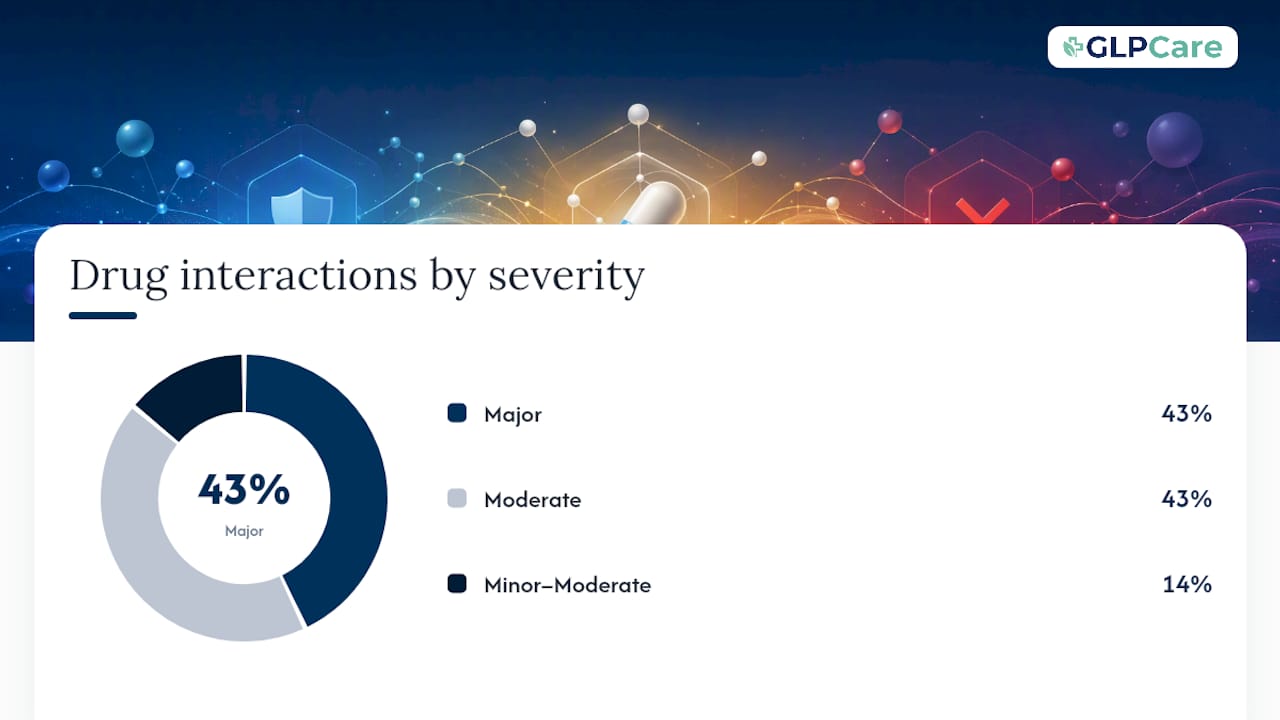
Clinical interaction databases, including Drugs.com, classify drug interactions into three tiers. Knowing what each label means helps you interpret a long interaction list without overreacting to every entry.
- Major: the combination can cause serious harm and is typically avoided or requires immediate clinical management. For semaglutide, the clearest major interactions are with insulin and insulin secretagogues due to additive hypoglycemia risk, and with other GLP-1 or dual incretin agents.
- Moderate: the combination warrants monitoring or dose adjustment but is not automatically contraindicated. Warfarin, levothyroxine, phenytoin, and digoxin fall here for most patients because the risk is real but manageable with appropriate checks.
- Minor: the interaction exists but rarely produces clinically meaningful effects under normal conditions. Many of the hundreds of listed interactions for semaglutide fall into this category.
Individual relevance always depends on your specific doses, your underlying health conditions, and whether the drug in question has a narrow therapeutic index. A moderate interaction in a healthy patient with stable INR is a different clinical situation than the same interaction in a patient with fluctuating anticoagulation. Interaction checkers tend to overcall clinical importance; interpreting the list requires assessing the mechanism and your personal risk profile.
Which medical conditions change your interaction risk?
Certain health conditions alter how semaglutide behaves in your body or make specific interactions more dangerous. These are not reasons to avoid semaglutide automatically, but they do require an upfront conversation with your clinician.
- History of medullary thyroid carcinoma (MTC) or Multiple Endocrine Neoplasia syndrome type 2 (MEN 2): the FDA label carries a boxed warning for this; semaglutide is contraindicated in these patients
- Gastroparesis: semaglutide already slows gastric emptying, and adding it to pre-existing gastroparesis can worsen delayed emptying significantly, affecting both symptom control and oral drug absorption
- Pancreatitis history: semaglutide has been associated with pancreatitis risk; a prior episode warrants careful risk-benefit discussion before starting
- Diabetic retinopathy: rapid improvements in blood glucose control can temporarily worsen retinopathy; patients with pre-existing retinopathy need ophthalmology follow-up when starting semaglutide
- Renal impairment: while semaglutide itself does not require dose adjustment for renal impairment per current labeling, dehydration from GI side effects can worsen kidney function, which in turn affects the clearance of co-administered drugs (metformin, certain antibiotics, digoxin)
- Hepatic impairment: limited data exist for severe hepatic impairment; drug levels of co-administered hepatically metabolized drugs may shift unpredictably
If you have any of these conditions, bring them up before your first dose. The interaction risk profile changes meaningfully, and your monitoring plan should reflect that.
What do clinicians typically do when starting semaglutide alongside other medications?
Rather than avoiding semaglutide for patients on multiple medications, clinicians typically follow a structured reconciliation process. Here is what that looks like in practice, and what you can expect or ask for.
- Collect a complete medication list: every prescription, OTC drug, vitamin, and supplement, with doses and timing
- Run a formal interaction check: using clinical databases to flag major and moderate interactions
- Order baseline labs: fasting glucose, A1c, INR (warfarin users), TSH (levothyroxine users), relevant drug levels if indicated
- Pre-emptively adjust high-risk drugs: reduce insulin or sulfonylurea dose before the first semaglutide dose if A1c is near target or hypoglycemia risk is elevated
- Set a recheck schedule: INR within 7–14 days, SMBG log review at 2 weeks, TSH at next thyroid visit
- Notify the pharmacy: flag the new prescription so the dispensing pharmacist can independently review for interactions
- Document for downstream providers: ensure any specialist (endocrinologist, cardiologist, neurologist) is aware of the new medication
Medical News Today confirms that clinicians typically manage semaglutide interaction risk through medication reconciliation, targeted extra monitoring, and conservative dose adjustments rather than blanket avoidance of concurrent medications.
Glpcare builds medication reconciliation into its intake process, with clinician review of your full medication list before your first prescription is issued. The GLP Care Band and companion app provide continuous biometric data, including glucose trends and activity patterns, that give your care team early signals of interaction-related problems between scheduled visits.
Pro Tip: Keep your medication list as a note on your phone, updated every time a drug is added, changed, or stopped. Share it at every clinician visit, not just the first one.
The part of semaglutide safety that most guides underemphasize
Most interaction guides for semaglutide focus on listing drug classes and severity ratings. That is useful, but it misses the more important clinical reality: the vast majority of semaglutide interactions are manageable, not prohibitive.
The CYP enzyme finding changes the conversation entirely. Because semaglutide does not meaningfully inhibit or induce major metabolic enzymes, the dramatic multi-drug interaction cascades seen with some other medications simply do not apply here. What you are actually managing is a narrower set of risks: hypoglycemia from additive glucose lowering, and absorption timing for a handful of oral drugs with narrow therapeutic windows.
That framing matters for patients. It means semaglutide is not inherently incompatible with a complex medication regimen. It means the work is in the monitoring and the timing, not in choosing between semaglutide and your other medications. Clinicians who understand this distinction prescribe more confidently and patients who understand it ask better questions.
What concerns me more than the interaction list itself is the gap in follow-up. Many patients start semaglutide, get a brief interaction check at initiation, and then go weeks without a glucose or INR recheck during titration. That is where the real risk lives. The monitoring schedule is not a formality; it is the mechanism by which manageable interactions stay managed.
Clinician-supervised semaglutide care with built-in monitoring
Managing semaglutide interactions well requires more than a one-time prescription. It requires a system: medication reconciliation at intake, baseline labs, a recheck schedule, and a way to catch problems between visits.

Glpcare’s integrated GLP-1 program includes clinician-prescribed semaglutide with a full medication review before your first dose, ongoing clinician support through dose titration, and the GLP Care Band for continuous biometric tracking that surfaces glucose trends, sleep, and activity data your care team can actually use. You are not managing interactions alone between appointments. Take the GLP-1 Readiness Quiz to see whether you qualify and to start a supervised assessment with a licensed clinician.
Sources
- Drugs
- Semaglutide oral-route description — Mayo Clinic
- Ozempic (Semaglutide) drug interactions and prescribing information — RxList
- Wegovy interactions: What to avoid to stay safe — Medical News Today
- Semaglutide drug monograph — Medscape Reference
FAQ
What medications should not be taken with semaglutide?
Insulin and sulfonylureas (such as glipizide or glimepiride) carry the highest risk because they add to semaglutide’s blood-sugar lowering and can cause hypoglycemia. Warfarin, levothyroxine, phenytoin, and digoxin require monitoring because semaglutide’s effect on gastric emptying can shift their absorption.
Can you take semaglutide with other GLP-1 medications?
Combining semaglutide with another GLP-1 receptor agonist or dual incretin agent is generally discouraged. The combination increases GI side effects and hypoglycemia risk without meaningful additional benefit.
What should you avoid while on semaglutide?
Heavy alcohol use, glucose-lowering supplements (chromium, alpha-lipoic acid, berberine), and other appetite-suppressing agents should be discussed with your clinician. None of these are absolute prohibitions, but all can complicate blood sugar management or worsen side effects.
Does semaglutide interact with common medications through liver enzymes?
No. Clinical pharmacology data confirms semaglutide has very low potential to inhibit or induce major CYP liver enzymes, so the metabolic drug interactions common with many other medications are not a primary concern with semaglutide.
What medications interfere with GLP-1 therapy?
Drugs that also lower blood glucose (insulin, sulfonylureas, certain antibiotics like fluoroquinolones) and oral drugs with narrow therapeutic windows (warfarin, digoxin, phenytoin, levothyroxine) are the main categories to review with your clinician when starting any GLP-1 therapy including Ozempic, Wegovy, or Rybelsus.
This article provides general health information and is not a substitute for professional medical advice. Always confirm current drug interaction guidance and monitoring recommendations with your prescribing clinician or pharmacist.