Acid Reflux With Semaglutide: What You Need to Know
Acid Reflux With Semaglutide: What You Need to Know
Does semaglutide cause acid reflux?
Yes, semaglutide causes acid reflux in a meaningful portion of patients. The core reason is delayed gastric emptying: semaglutide slows how quickly your stomach moves food into the small intestine, which raises pressure inside the stomach and pushes acid up toward the esophagus. This is the same mechanism that makes the medication effective for blood sugar control and weight loss, but it comes with a digestive trade-off.

Acid reflux with semaglutide shows up across all three branded forms of the drug. Ozempic (the injectable approved for type 2 diabetes), Wegovy (the higher-dose injectable for weight management), and Rybelsus (the oral tablet) all carry this risk because they share the same active compound. The injectable forms, particularly Wegovy at its higher maintenance doses, tend to produce more pronounced GI effects.
Key facts about semaglutide and acid reflux:
- Many patients starting GLP-1 receptor agonists report new acid reflux symptoms during therapy, with some meeting GERD diagnostic criteria.
- Symptoms are dose-dependent and typically most intense during dose escalation phases.
- Most cases are mild to moderate and improve within 4 to 8 weeks as the body adjusts.
- Pre-existing GERD is not an absolute contraindication to semaglutide use, but it requires proactive management.
- Acid reflux is not a reason to stop treatment in most cases; it can be managed effectively.
Understanding this from the start puts you in a much better position to stay on track with your therapy.
Why does semaglutide cause acid reflux?
The mechanism comes down to one key process: delayed gastric emptying. GLP-1 receptor agonists like semaglutide activate receptors in the gut that slow the movement of food out of the stomach. That slowing is intentional. It blunts post-meal blood sugar spikes and extends the feeling of fullness, both of which support weight loss and glycemic control.
The problem is that a fuller, slower-emptying stomach generates more pressure. When that pressure builds, it pushes against the lower esophageal sphincter (LES), the ring of muscle that separates the stomach from the esophagus. If the LES doesn’t hold tight, stomach acid travels upward. Semaglutide may also reduce LES tone directly through its effects on gut motility, compounding the risk.
Delayed gastric emptying prolongs the time stomach acid stays in contact with the esophageal lining. Even small amounts of acid, if they reach the esophagus repeatedly, cause the burning, pressure, and regurgitation that define reflux.
One distinction worth knowing: semaglutide-related reflux is not the same as gastroparesis, though both involve slowed stomach motility. Gastroparesis is a more severe, chronic condition marked by persistent nausea, vomiting, and an inability to empty the stomach adequately. If you are experiencing relentless nausea and vomiting rather than occasional heartburn, that warrants a separate diagnostic conversation with your provider. Reflux from semaglutide is typically intermittent and tied to meals and dose changes, not a constant state.
Symptoms also tend to worsen during titration periods, when your dose is actively increasing, because the gastric slowing effect intensifies before your body has time to compensate.
How long does acid reflux last on semaglutide?
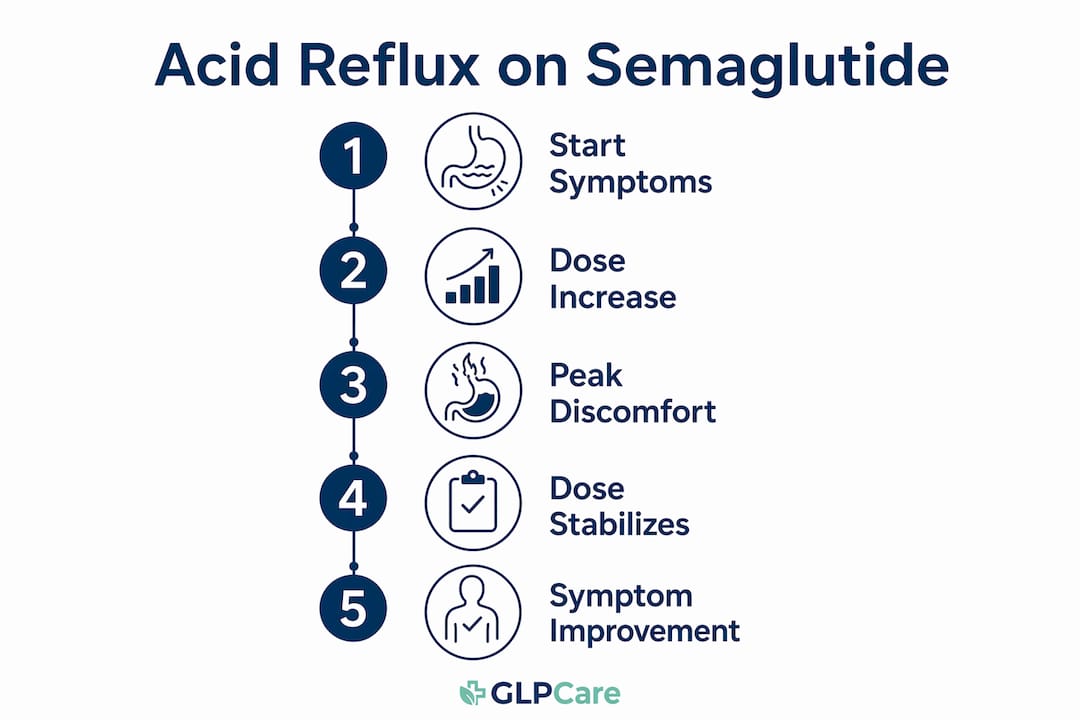
For most people, reflux symptoms appear in the first few weeks of starting semaglutide or after a dose increase. The body is adapting to a new level of gastric slowing, and that adjustment period is when discomfort peaks. Clinical data shows that symptoms typically improve within 4 to 8 weeks as the body adjusts to the medication.
Dose stabilization is the turning point. Once your dose holds steady and your stomach adapts to the new motility pattern, reflux usually becomes less frequent and less severe. Research supports this: 70% of patients report a reduction in reflux symptoms within 4 weeks of a dose reduction, confirming how tightly symptom severity tracks with dosing changes.
If your reflux persists beyond 8 weeks at a stable dose, or if it worsens rather than improves, that is a signal to contact your prescriber. Dose adjustment, a slower titration schedule, or adding an acid-suppressing medication may be the right next step. Waiting it out indefinitely is not the answer when symptoms are affecting your ability to eat, sleep, or stay on the medication.
Weight loss itself tends to work in your favor over time. As body weight decreases, abdominal pressure on the stomach drops, which can reduce reflux frequency even while you remain on semaglutide. The early weeks are typically the hardest part of the reflux picture.
Lifestyle and dietary changes to manage acid reflux on semaglutide
Lifestyle adjustments are not optional extras here. They are the foundation of reflux management on semaglutide, and they work directly with how the medication affects your digestive system. Because your stomach empties more slowly, what you eat, how much you eat, and when you eat all have a larger-than-normal impact on acid exposure.
Practical changes that reduce reflux on semaglutide:
- Eat smaller, more frequent meals. Large meals amplify stomach pressure. Splitting your daily intake into 4–5 smaller portions keeps gastric volume lower throughout the day.
- Avoid lying down for 2–3 hours after eating. Gravity helps keep acid in the stomach. Lying flat after a meal removes that advantage entirely.
- Elevate the head of your bed by 6 to 8 inches. This is the most effective non-medication intervention for nighttime reflux.
- Sleep on your left side. The stomach’s anatomy means left-side sleeping positions the gastric opening above the acid pool, reducing nighttime exposure.
- Cut or reduce reflux trigger foods: high-fat meals, chocolate, caffeine, citrus, alcohol, peppermint, and carbonated drinks all relax the LES or increase acid production.
- Eat slowly and chew thoroughly. Rushed eating introduces more air and volume into an already slow-emptying stomach.
Pro Tip: Use bed risers under the head-side legs of your bed frame rather than stacking extra pillows. Pillows bend your body at the waist, which can actually increase abdominal pressure. Raising the entire mattress keeps your torso at a consistent angle throughout the night.
Diet changes work best when they are gradual and consistent. Cutting every trigger food overnight is hard to sustain. Start with a few changes that match your biggest reflux triggers and build from there. You can explore how GLP-1 affects digestion week by week to better time these adjustments with your dose schedule.

Over-the-counter medications and when to consult a healthcare provider
Most people managing acid reflux on semaglutide can get meaningful relief from over-the-counter options, at least in the early weeks. The right choice depends on how often symptoms occur and how severe they are.
OTC options for reflux relief:
- Antacids (calcium carbonate, magnesium hydroxide): Fast-acting neutralizers for occasional heartburn. They work within minutes but wear off quickly and are best for infrequent symptoms.
- H2 blockers (famotidine): Reduce acid production for several hours. Better for predictable reflux, such as after meals or at night, than antacids alone.
- Proton pump inhibitors (omeprazole, lansoprazole): The strongest OTC option for frequent or moderate reflux. PPIs reduce acid production at the source and work best when taken consistently, typically 30 minutes before a meal.
- Sodium alginate formulations (Gaviscon): Form a physical barrier on top of stomach contents to prevent acid from reaching the esophagus. Particularly useful after meals and before bed.
Semaglutide and acid reflux medications generally have a low interaction risk. PPIs and H2 blockers do not meaningfully interfere with semaglutide’s absorption or efficacy. That said, always confirm any new medication with your prescriber, especially if you are on Rybelsus, since the oral tablet’s absorption depends on specific stomach conditions.
When to contact your healthcare provider without delay:
- Persistent vomiting that does not resolve between doses
- Heartburn that does not respond to PPIs after two weeks of consistent use
- Difficulty swallowing or a sensation of food getting stuck
- Chest pain (always rule out cardiac causes first)
- Unintended weight loss beyond what semaglutide would explain
Severe reflux esophagitis caused by repeated vomiting from semaglutide has been documented in clinical literature, with endoscopy confirming esophageal ulceration in serious cases. These outcomes are rare, but they underscore why red-flag symptoms require prompt evaluation rather than self-management. Clinicians in these cases discontinue semaglutide and treat with PPIs, with most patients showing healing within weeks.
What does recent clinical research say about semaglutide and acid reflux?
The clinical picture on semaglutide and reflux is more nuanced than a simple “it causes heartburn” headline. A 2024 study found that GLP-1 receptor agonists actually lowered new GERD diagnosis odds in patients with obesity following sleeve gastrectomy, with an odds ratio of 0.51 for new GERD diagnosis and 0.37 for new PPI use. That finding suggests weight loss from GLP-1 therapy can offset reflux risk over time, even if early symptoms point the other direction.
Expert consensus supports continuing semaglutide through reflux symptoms rather than stopping the medication. Pre-existing GERD is not an absolute contraindication, and clinicians typically manage symptoms with acid suppression and dietary guidance rather than discontinuation. The weight loss benefits of staying on therapy are considered clinically significant enough to warrant working through the side effects.
Clinicians often slow the titration schedule when reflux is problematic, extending the time between dose increases to give the gut more time to adapt. This approach, combined with proactive acid suppression, keeps most patients on track without sacrificing the medication’s effectiveness. For a broader look at how GLP-1 side effect profiles compare across medications, the Glpcare blog covers the latest clinical updates.
One finding worth noting: semaglutide carries the highest nausea and vomiting risk among GLP-1 receptor agonists, with the majority of GI events occurring within the first month of initiation. Dose-dependent vomiting is the pathway to the most serious reflux complications, which is why dose management and early symptom reporting matter so much.
How acid reflux affects your ability to stay on semaglutide
Acid reflux is one of the leading reasons people reduce their semaglutide dose or stop treatment early. When heartburn disrupts sleep, makes eating uncomfortable, or causes persistent nausea, staying motivated to continue is genuinely hard. The medication’s benefits, including weight loss and improved metabolic markers, depend on consistent use over months, not weeks.
The connection between symptom burden and adherence is direct. Patients who experience unmanaged reflux are more likely to miss doses, request dose reductions, or discontinue entirely. Each of those outcomes reduces the long-term effectiveness of the therapy. Proactive acid suppression and gradual dose titration improve tolerability and keep more patients on track through the adjustment period.
Tracking your symptoms alongside your doses gives your care team the data they need to intervene early. Glpcare’s AI-driven app lets you log doses, meals, and symptoms in one place, so patterns become visible before they become problems. That kind of continuous monitoring is what separates a managed side effect from a reason to quit.
What should you do before starting semaglutide to reduce reflux risk?
If you know you are prone to acid reflux or have a GERD diagnosis, a few steps before your first dose can meaningfully reduce your early symptom burden. Starting with a lower baseline acid load gives your stomach more room to adapt to the slowing effect of semaglutide.
Talk to your provider about starting a PPI two to four weeks before your first dose if you have a history of GERD, frequent heartburn, or risk factors like elevated BMI, older age, or tobacco use. Research on GLP-1 therapy suggests prophylactic acid suppression may be advisable for patients with these characteristics. Getting ahead of the problem is easier than managing a flare after it starts.
Adjust your diet before you begin. Cutting back on high-fat foods, alcohol, and carbonated drinks in the week before your first injection reduces the baseline demand on your LES. Set up your sleep environment with bed elevation in place from day one. And if you are weighing semaglutide against other weight loss approaches, the GLP-1 vs. bariatric surgery comparison is worth reviewing, since surgical options carry their own distinct reflux profiles.
Finally, take the Glpcare GLP-1 readiness quiz to assess your candidacy and flag any pre-existing conditions that your care team should factor into your starting plan.

Key Takeaways
Semaglutide causes acid reflux by delaying gastric emptying, but symptoms typically peak in the first 4 to 8 weeks and improve with dose stabilization, lifestyle changes, and appropriate acid suppression.
| Point | Details |
|---|---|
| Reflux is dose-dependent | Symptoms peak during dose escalation and ease once your dose stabilizes. |
| Symptoms usually improve within 4 to 8 weeks | Most patients see improvement as the body adapts; many report relief shortly after a dose reduction. |
| Lifestyle changes are foundational | Smaller meals, left-side sleeping, and elevating the bed by 6–8 inches reduce acid exposure without medication. |
| PPIs are the strongest OTC option | Omeprazole and lansoprazole reduce acid at the source and complement semaglutide safely. |
| Red-flag symptoms need prompt care | Persistent vomiting, dysphagia, or chest pain require medical evaluation, not self-management. |
FAQ
Why is my acid reflux so bad on semaglutide?
Semaglutide slows gastric emptying, which raises stomach pressure and pushes acid toward the esophagus. Symptoms are typically worst during dose escalation phases and tend to improve once your dose stabilizes.
How do you get rid of acid reflux from GLP-1 medications?
Smaller meals, avoiding lying down after eating, and elevating the head of your bed as recommended address the root causes. OTC options like famotidine or omeprazole provide additional relief for frequent symptoms.
How do you stop acid reflux on Ozempic?
Ask your provider about slowing your titration schedule if reflux is severe, and start a proton pump inhibitor consistently before meals. Cutting trigger foods like caffeine, alcohol, and high-fat meals reduces symptom frequency alongside medication adjustments.
Can I take Tums while on semaglutide?
Yes, antacids like Tums are generally safe to use with semaglutide for occasional heartburn. For frequent symptoms, an H2 blocker or PPI is more effective, and you should confirm any new medication with your prescriber.