Tirzepatide Side Effects: What You Need to Know

Tirzepatide Side Effects: What You Need to Know

Tirzepatide side effects are defined as adverse reactions caused by the drug’s action on GIP and GLP-1 receptors, with gastrointestinal symptoms accounting for the majority of reported cases. Sold under the brand names Mounjaro and Zepbound, tirzepatide is FDA-approved for type 2 diabetes management and chronic weight management in adults. Most people who take it experience some degree of nausea, diarrhea, or vomiting, particularly during the dose escalation phase. Serious adverse reactions, including pancreatitis and severe allergic responses, are rare but require immediate medical attention. Understanding what to expect before you start gives you a real advantage in managing your treatment safely.
What are the most common side effects of tirzepatide?
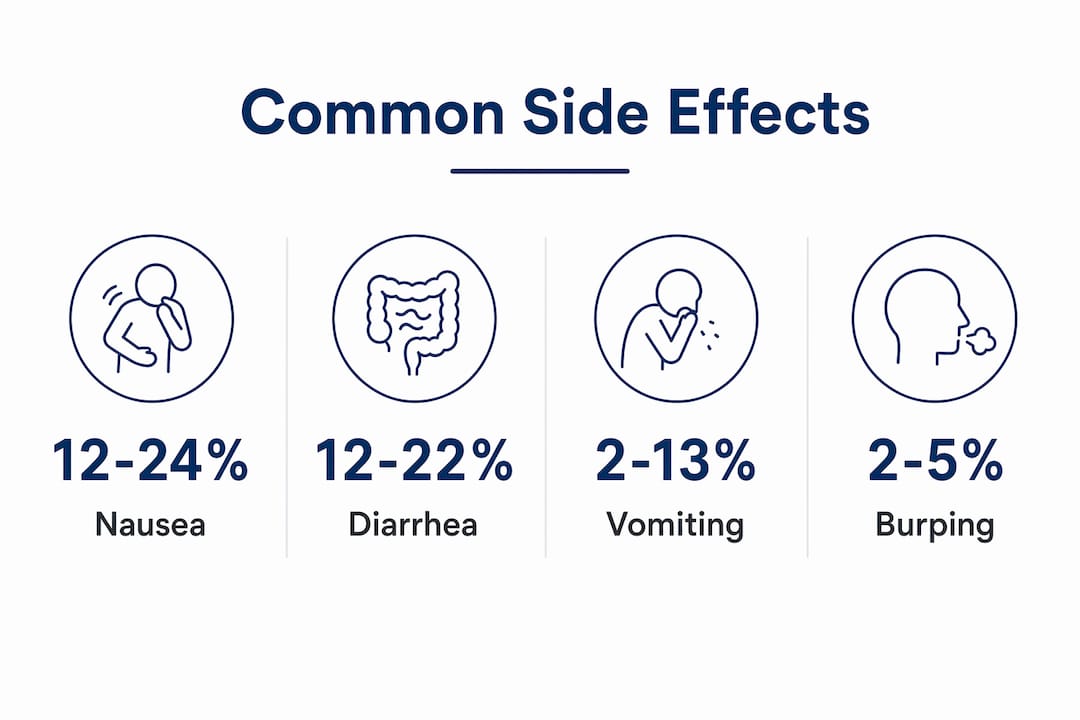
The most frequently reported tirzepatide side effects are gastrointestinal. Nausea affects 12–24% of patients, diarrhea affects 12–22%, and vomiting occurs in 2–13%. These numbers come from clinical trial data and reflect the range across different doses and patient populations. Higher doses tend to produce more frequent symptoms.

These effects are generally mild to moderate in severity and transient. Most patients see significant improvement within the first few weeks as their body adjusts to the medication. The initiation and titration phases carry the highest symptom burden.
Less common but still notable reactions include burping, decreased appetite, constipation, and abdominal pain. Injection site reactions are also common non-serious adverse events, typically mild and manageable with proper technique.
| Side effect | Approximate incidence |
|---|---|
| Nausea | 12–24% |
| Diarrhea | 12–22% |
| Vomiting | 2–13% |
| Burping (eructation) | 2–5% |
| Constipation | Reported; less frequent |
| Injection site reactions | Common; mild |
Pro Tip: Keep a simple symptom log during your first eight weeks on tirzepatide. Note the time of day symptoms occur, what you ate beforehand, and their intensity. This record helps your provider make faster, better-informed dose decisions.
What are the serious side effects and when should you call a doctor?
Serious tirzepatide adverse reactions are uncommon, but they are not theoretical. Pancreatitis, gallbladder problems, and severe allergic reactions all require you to stop the medication immediately and contact your healthcare provider or go to an emergency room.
Pancreatitis presents as severe upper abdominal pain that may radiate to your back, often accompanied by vomiting. Gallbladder disease can cause sharp pain in the upper right abdomen, fever, and yellowing of the skin or eyes (jaundice). These symptoms should never be dismissed as ordinary stomach upset.
Severe allergic reactions are identifiable by swelling of the face, lips, tongue, or throat, along with difficulty breathing or a rapid drop in blood pressure. These are medical emergencies. Animal studies have also raised questions about thyroid C-cell tumor risk, which is why tirzepatide carries a boxed warning for patients with a personal or family history of medullary thyroid carcinoma.
Warning signs that require urgent medical attention:
- Severe, persistent abdominal pain radiating to the back
- Yellowing of the skin or eyes
- Fever with upper right abdominal pain
- Swelling of the face, lips, or throat
- Difficulty breathing or swallowing
- Rapid or irregular heartbeat
- Signs of severe dehydration: extreme thirst, little to no urination, dizziness
Pro Tip: Save your prescribing provider’s after-hours contact number in your phone before you take your first dose. Early recognition and reporting of severe symptoms like pancreatitis can prevent serious outcomes. Do not wait until your next scheduled appointment if something feels wrong.
Why does tirzepatide cause burping and digestive symptoms?
Tirzepatide slows gastric emptying, meaning food stays in your stomach longer than usual. That delay creates conditions where gut bacteria ferment undigested food, producing hydrogen sulfide gas. The result is the sulfur burps that many patients report, particularly those taking Zepbound for weight management.
Burping on Zepbound occurs in 2–5% of patients, with rates reaching 4–5% at certain doses. That figure is low in absolute terms, but the symptom is distinctive and can feel alarming if you are not expecting it. Burping Zepbound patients experience is directly tied to slowed gut motility, not to any sign that the medication is or is not working.
Sulfur burps are not an indicator of treatment effectiveness. They typically diminish over time as your digestive system adapts to the drug’s mechanism. Most patients find these symptoms peak during the first few weeks at a new dose and then fade.
Practical steps to reduce digestion-related symptoms:
- Eat smaller meals, spaced evenly throughout the day, to reduce the volume of food sitting in your stomach at once.
- Avoid high-fat and heavily processed foods, which slow gastric emptying further.
- Cut back on carbonated beverages, which add gas to an already slower digestive system.
- Eat slowly and chew thoroughly to reduce the amount of air you swallow.
- Avoid lying down within two to three hours after eating.
- Stay well hydrated between meals, not during, to avoid diluting digestive enzymes.
What precautions help manage tirzepatide symptoms safely?
Hydration is the most underestimated safety measure in tirzepatide treatment. Severe dehydration from GI symptoms can cause acute kidney injury, a serious complication that is entirely preventable with consistent fluid intake. If you are vomiting or experiencing significant diarrhea, replacing fluids and electrolytes is not optional.
Dose titration protocol adherence matters just as much. Tirzepatide is started at a low dose and increased gradually, typically every four weeks, to give your body time to adjust. Skipping ahead in the titration schedule dramatically increases the likelihood and severity of gastrointestinal symptoms. Your provider sets that schedule for a reason.
Precautions and monitoring practices worth following:
- Drink at least 64 ounces of water daily, more if you are experiencing vomiting or diarrhea.
- Watch for dehydration signs: dark urine, dizziness, dry mouth, and reduced urination.
- Never adjust your dose without provider guidance, even if side effects feel manageable.
- Report any new or worsening symptoms to your provider before your next scheduled visit.
- Avoid alcohol during the initiation phase, as it can worsen nausea and dehydration.
- Tell your provider about all other medications you take, since tirzepatide drug interactions can affect how other drugs are absorbed due to slowed gastric emptying.
How do side effect risks vary by patient and what does research say about long-term safety?
Not every patient experiences tirzepatide symptoms at the same rate. Patients with type 2 diabetes report more GI side effects than those using the drug for weight management alone. Sex-specific differences in adverse event reporting also exist, though the clinical significance of those differences is still being studied.
A systematic review published in BMC Medicine found that tirzepatide does not increase the risk of serious adverse events, including all-cause mortality or cardiovascular events. That is meaningful reassurance for patients with existing heart disease or metabolic conditions. The same review confirmed that non-serious GI events are the primary safety concern.
Long-term safety data remains limited. Current evidence is promising, but ongoing studies are needed to confirm tirzepatide’s safety profile over multi-year treatment periods. Pancreatitis incidence and thyroid tumor risk remain areas of active monitoring.
| Patient subgroup | Notable side effect pattern |
|---|---|
| Type 2 diabetes patients | Higher GI adverse event rates |
| Weight management patients | Lower GI event rates overall |
| Female patients | Higher reporting rates in some categories |
| Higher-dose patients | Greater GI symptom frequency |
Key Takeaways
Tirzepatide’s most significant safety concern is gastrointestinal, and proactive hydration, dose adherence, and open communication with your provider are the three most effective tools for managing it safely.
| Point | Details |
|---|---|
| GI symptoms dominate | Nausea, diarrhea, and vomiting affect the majority of patients but are typically mild and temporary. |
| Serious reactions are rare | Pancreatitis, gallbladder disease, and severe allergic reactions require stopping the drug immediately. |
| Burping has a clear cause | Slowed gastric emptying causes fermentation and sulfur burps; symptoms improve with time and diet changes. |
| Hydration prevents complications | Dehydration from GI symptoms can cause kidney injury; consistent fluid intake is a critical safety step. |
| Subgroups differ in risk | Diabetes patients report more GI effects than weight management patients; long-term data is still emerging. |
My honest assessment after years of watching patients navigate this
The conversation around tirzepatide side effects tends to go one of two ways. Either patients are so focused on the weight loss results that they dismiss symptoms until something serious happens, or they read a forum post about sulfur burps and abandon treatment before giving it a real chance. Both extremes are avoidable.
What I have seen work consistently is treating the first eight weeks as a calibration period. Gastrointestinal symptoms are real, but they are also predictable. Patients who eat smaller meals, stay hydrated, and stick to the titration schedule almost always report that symptoms ease significantly by week six or eight. The ones who struggle most are those who try to push the dose faster than prescribed.
The dehydration risk genuinely concerns me more than most people realize. Vomiting and diarrhea together can deplete fluids faster than you expect, and kidney stress can develop quietly. I would rather a patient call their provider three times in a week about symptoms than wait and end up in urgent care.
The long-term safety picture is still developing. Current data is reassuring on cardiovascular outcomes, but I would not tell anyone this drug is fully characterized yet. Ongoing monitoring and honest conversations with your provider are not optional extras. They are the foundation of safe treatment.
— Dominique
Glpcare and your tirzepatide treatment
Managing tirzepatide symptoms is easier when you have clinical support built into your treatment plan, not bolted on after something goes wrong.

Glpcare combines licensed clinician oversight, personalized nutrition coaching, and AI-driven health monitoring through a wearable fitness band to give patients real-time feedback during treatment. That means side effect patterns get caught early, dose decisions are informed by actual health data, and you are never left guessing whether a symptom warrants a call. If you are considering tirzepatide for weight management and want a support system that goes beyond a prescription, visit Glpcare to learn how the program works and whether it fits your needs.
FAQ
What are the most common tirzepatide side effects?
Nausea, diarrhea, and vomiting are the most frequently reported tirzepatide side effects, affecting 12–24%, 12–22%, and 2–13% of patients respectively. These symptoms are generally mild to moderate and improve as your body adjusts to the medication.
Does tirzepatide cause burping and sulfur burps?
Yes. Burping on Zepbound and other tirzepatide formulations occurs in 2–5% of patients due to slowed gastric emptying, which causes food fermentation and hydrogen sulfide gas production. These symptoms typically decrease over time and are not a sign that the medication is failing.
When should I seek emergency care for tirzepatide symptoms?
Seek emergency care immediately if you experience severe abdominal pain radiating to your back, swelling of the face or throat, difficulty breathing, or signs of jaundice. These may indicate pancreatitis, a severe allergic reaction, or gallbladder disease.
Is tirzepatide safe for long-term use?
Current research shows tirzepatide does not increase the risk of serious adverse events like cardiovascular events or all-cause mortality. Long-term safety data is still being gathered, so ongoing monitoring with your provider remains important.
Can tirzepatide interact with other medications?
Tirzepatide drug interactions are possible because the drug slows gastric emptying, which affects how other oral medications are absorbed. Tell your prescribing provider about every medication you take before starting tirzepatide.