HIPAA and Telehealth Weight Loss: What Is Actually Protected
HIPAA and Telehealth Weight Loss: What Is Actually Protected

HIPAA protects your health information in telehealth weight loss when the provider is a covered entity, or works for one as a business associate. It does not automatically cover every app, band or website that touches your data. The label “HIPAA-compliant” is a starting point. The questions that matter are who holds your information, what they may do with it, and what you can ask them to do.
This guide explains how the rules work for online GLP-1 care, where the gaps are, and how to read a privacy notice before you hand over your weight, medications and sleep data.
GlpcareUnderstand How Weight Care Uses Your DataGLPCare combines clinician support, nutrition coaching, and wearable health insights as part of its weight management approach.Visit GLPCareTL;DR
- HIPAA covers telehealth visits, messages and related billing when they are handled by a covered entity or its business associate, and HHS enforces it through its Office for Civil Rights.
- Apps and wearables you buy and use on your own generally fall outside HIPAA. Protection depends on who provides the tool and the contract behind it.
- Cash-pay GLP-1 programs can sit in a gray area, so read the notice of privacy practices and the website privacy policy separately.
- You have rights to access, correct and restrict how your records are used. Use them.
- Look for clinician oversight, clear data-sharing controls and a plain way to opt out of selling or sharing your data.
Table of Contents
- What HIPAA protects when you get weight-loss care online
- When HIPAA applies, and when it does not
- Why the gaps matter
- How a weight-loss service may use or share your information
- What to check before you enroll
- Your rights if a HIPAA-covered provider holds your records
- Our perspective
- How GLPCare fits into this
- Related reading before you decide
- A practical way to protect yourself
- FAQ
- Sources
What HIPAA protects when you get weight-loss care online
HIPAA is the federal privacy law for health information. According to the Telehealth.HHS.gov privacy guidance, telehealth appointments, messages and related health and billing information fall under HIPAA, and the HHS Office for Civil Rights enforces it.
In practice, for a weight-loss program that prescribes medication, that means information such as:
- Your intake questionnaire, medical history and current medications
- Notes from video or phone visits with a clinician
- Messages with your care team
- Lab results and prescription records
- Billing and payment records tied to your care
HIPAA does not work like a blanket on everything a company knows about you. It attaches to protected health information held by particular kinds of organizations. That is where most confusion starts.
When HIPAA applies, and when it does not
Covered entities and business associates
The HIPAA Rules apply to covered entities (health plans, most health care providers and clearinghouses) and to their business associates. HHS explains that when a covered entity engages a business associate, it must have a written contract or other arrangement that sets out what the associate does and requires it to protect the privacy and security of protected health information.
So a telehealth clinician who treats you is typically a covered entity. A software vendor that hosts the visit platform or stores your records for that clinician is typically a business associate, bound by contract.
Apps and wearables
This is the part many people miss. HHS states that the HIPAA Rules generally do not protect information stored on your personal phone or tablet, and that in most cases they do not protect data you enter into an app for personal use unless the app is provided by a covered entity or its business associate.
The same logic applies to wearables. A fitness tracker you buy off the shelf is usually outside HIPAA. Per a summary from AccountableHQ, HIPAA can reach wearable data when a covered entity or its business associate deploys the device for clinical care. The question is not whether the device is a band or a phone. It is whether the device and app are part of your clinician’s care program.

Cash-pay GLP-1 programs
Many online GLP-1 companies sell directly to consumers and skip insurance. A 2025 law review article on the topic notes that such cash-pay models may not be covered by HIPAA. Coverage turns on how the business is structured: whether licensed providers are treating you, how they transmit information, and who handles the data on their behalf.
The same caution applies to anything sold around the edges of weight loss. Newer compounds get their own marketing language, for example in explainers about what retatrutide actually targets. Whatever the product, the privacy question stays the same: who is the entity holding your data, and what duties does it have?
Why the gaps matter
Weight, eating habits, sleep, heart rate and medication doses add up to a detailed health profile. The American Medical Association’s privacy principles use a digital weight management app as an example: the data may seem harmless at first, but over time it looks more like a medical record, and a marketer, insurer or employer could use it in ways the user never imagined.
HHS makes a related point. Without protections like those required by HIPAA, the risk that unauthorized people obtain health information rises, with harms that include identity theft, embarrassment, bias and discrimination.
The concern is not hypothetical. A University of Illinois Chicago Law Review article notes that because many devices and apps sit outside HIPAA, the data they collect can be shared or sold legally to third parties. Reporting on a Yale study of GLP-1 telehealth websites also describes how customer data may be shared with advertisers and social media companies, and how the FTC has taken action against a telehealth company over exactly this.
None of this means you should avoid medical weight management. It means you should choose a program that treats your data like medical data.
How a weight-loss service may use or share your information
When a HIPAA covered entity is involved, the Privacy Rule lets it use and share protected health information for treatment, payment and health care operations. HHS describes this in its guidance on uses and disclosures for treatment, payment and health care operations. For example, a provider may consult with another provider about your treatment or send information to a payer as part of a claim. Any such use must be consistent with the provider’s notice of privacy practices.
That gives you a practical way to read any program’s documents:
- Treatment. Sharing with the prescribing clinician, the pharmacy that fills your medication and your care team is expected.
- Payment. If you use insurance or reimbursement, billing information moves to payers.
- Operations. Quality review, training and administration are normal, but they should be described.
- Everything else. Marketing, advertising and sale of data are a different category. Look for plain language about whether the company does these things and how you can say no.
If the service is not a covered entity, its website privacy policy and state privacy laws, not HIPAA, set the limits. That is why you should read both documents.
What to check before you enroll
Use this checklist when comparing telehealth weight-loss programs.
| What to check | Why it matters | Where to look |
|---|---|---|
| Who prescribes and supervises | Licensed clinicians treating you are typically covered entities | Provider page, intake flow |
| Notice of privacy practices | Describes how protected health information is used and your rights | Footer, sign-up, patient portal |
| Website privacy policy | Covers data that HIPAA may not reach, like site analytics | Footer |
| Opt-out of sale or sharing | Lets you limit advertising use of your data | A “Do Not Sell or Share” page |
| Device and app ownership | Determines whether the app is part of clinical care | Terms, device FAQ |
| Security basics | Authentication, encryption and updates reduce risk even outside HIPAA | App settings, security page |
| Contact for privacy requests | You need a named channel for access and correction requests | Privacy notice |
A few additional habits help. Decide what information you are comfortable sharing, as the American Academy of Dermatology advises, since sharing sensitive details carries risk. Prioritize devices with strong authentication, encryption in transit and at rest, timely patches and transparent data-sharing controls, which AccountableHQ notes reduce risk even when HIPAA does not apply.
HHS also suggests simple steps on your side: keep device software updated and position your screen so others cannot see it during a visit.
Your rights if a HIPAA-covered provider holds your records
When HIPAA applies, you have rights over your records. HHS’s consumer guidance explains that covered entities must have procedures limiting who can view and access your health information and must train employees on protecting it. Under the Privacy Rule you can generally:
- Ask to see and get a copy of your records
- Ask for corrections to information that is wrong
- Request restrictions on certain uses and disclosures
- Ask for confidential communications, such as contact by a specific phone number
- Receive a notice of privacy practices
- Be told if your information is breached
- File a complaint with the provider or with the HHS Office for Civil Rights
Timelines and details are set in the regulations and in HHS’s materials, so use the provider’s privacy contact and the HHS site for current specifics. If a service says it does not fall under HIPAA, ask what comparable rights it offers in writing.
Our perspective
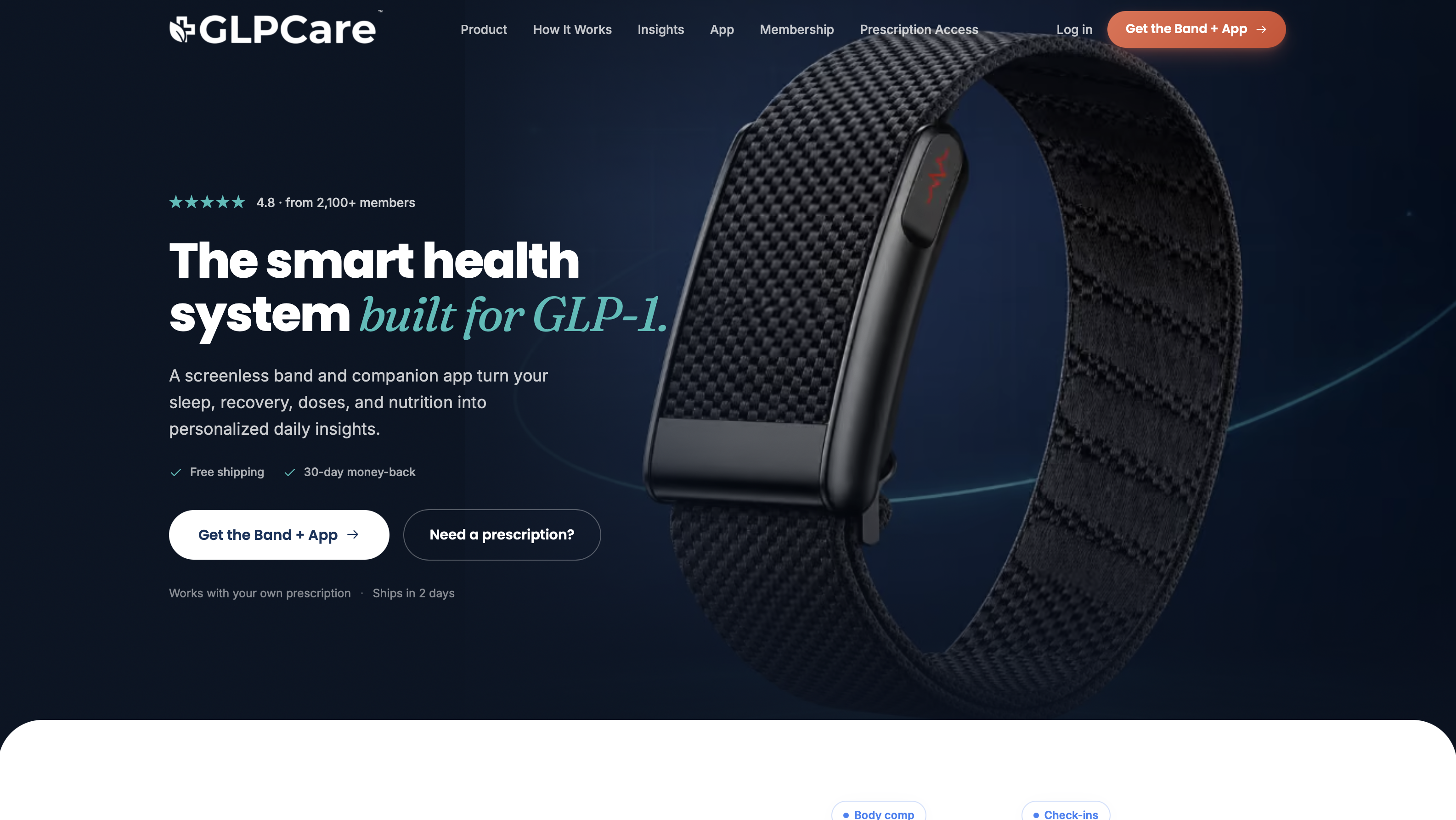
We built GLPCare around a simple idea: weight management with GLP-1 medication works best as one connected system, not a scattered set of apps and prescriptions. That means mandatory clinician oversight of medication, personalized nutrition coaching, a screenless band that tracks sleep, heart rate and activity, and an app where you log your doses and meals.
A connected system also means connected data, and that raises the standard for how it is handled. When you share your dose, your habits and your biometrics, you should know who sees them and why. We believe the right way to approach this is to give you clear information, a visible way to manage your choices, and a care team that uses your data to help you, for example to support you in minimizing muscle loss and to give your clinician a clearer picture between visits.
Our advice is the same whether you choose us or not: read the privacy notice, look for plain answers about sharing, and choose a program where a licensed clinician stays involved in your care. Our own sharing choices are described on our Do Not Sell or Share My Personal Information page.
Dominique
How GLPCare fits into this
If you want a program that combines prescription GLP-1 care with a wearable and coaching, here is what we offer. GLPCare Membership is $199 per year. Semaglutide Care starts from $209 per month, and Tirzepatide Care starts from $299 per month. Plans are available whether or not you already have a GLP-1 prescription, and our system pairs clinician support with personalized nutrition coaching, the screenless band and an AI-driven app.
To see where you stand, take the GLP-1 readiness quiz, or explore the GLPCare membership.
We also back our program with a money-back guarantee on results, so you can start with a clear picture of what you are getting. For plan details, see our plan comparison.
Related reading before you decide
Privacy is one part of choosing a program. These guides cover the rest:
- How telehealth weight loss programs work with GLP-1 and a wearable
- Who qualifies for GLP-1 therapy and what to prepare
- What to know about GLP-1 insurance coverage
- The evidence behind GLP-1 therapy for weight loss
- A holistic approach to weight management
Insurance matters here for another reason. If a plan pays for part of your care, a health plan becomes a covered entity in the picture, and billing information moves between you, the provider and the payer. If you pay cash, fewer parties see your billing data, but the program’s own privacy documents become even more important.
A practical way to protect yourself
You do not need a law degree to protect your health data. Run through this routine before you sign up for any program.
- Read the first screen of the privacy notice. It should say who the provider is and how to contact a privacy officer or support team.
- Find the sharing language. Look for how the company describes advertising, analytics and third-party tools on its website and app.
- Locate the opt-out. A clear page for limiting sale or sharing of personal information is a good sign.
- Check your device settings. Use a strong, unique password, turn on multi-factor authentication if offered, and keep the app and your phone updated.
- Share what the care requires. Your clinician needs accurate medical history and medication information. Optional extras are yours to decide.
- Keep a record. Save the notice and policy versions you agreed to, and note the date.
- Use your rights. Ask for a copy of your records or a correction when something looks wrong.
An employer wellness program deserves special attention. The AMA’s privacy principles describe how a weight management app recommended through an employer’s benefits program could send information back to the employer, with risks of bias or discrimination. If you are enrolling on your own, with a clinician you chose, that pathway is different, and you should still confirm what is shared.
FAQ
Is every telehealth weight-loss program HIPAA-compliant?
No. HIPAA applies to covered entities such as health care providers and their business associates. A program built around licensed clinicians who treat you is typically in that category, but a company that only sells an app or product may not be. Read the notice of privacy practices to see how the service describes itself.
Does HIPAA protect the data from my fitness band or weight-loss app?
Only in some cases. HHS says HIPAA generally does not protect data you enter in an app for personal use unless the app is provided by a covered entity or its business associate. When a band and app are deployed as part of clinical care, HIPAA can apply to that data. Ask the program which category its tools fall into.
Can a weight-loss company sell my health data?
It depends on who holds the data and what law applies. HIPAA limits how covered entities use protected health information, and marketing uses are tightly controlled. Data outside HIPAA is governed by the company’s privacy policy and other laws. Look for a clear opt-out page and read the sharing language before you sign up.
What can I do if I think my information was exposed?
Start by contacting the provider’s privacy contact in writing. If a HIPAA-covered provider is involved, you can also file a complaint with the HHS Office for Civil Rights. Change passwords on related accounts and keep copies of any notices you receive.
Sources
- Privacy laws and policy guidance | Telehealth.HHS.gov
- Covered Entities and Business Associates | HHS.gov
- Protecting the Privacy and Security of Your Health Information When Using Your Personal Cell Phone or Tablet | HHS.gov
- Does HIPAA Protect Health Information in Apps, Wearables and Employer Wellness Programs | AccountableHQ
- The GLP-1 Telehealth Boom: Can HIPAA Keep Up with Consumer Privacy Risks?
- AMA Privacy Principles | AMA
- Resource for Health Care Providers on Educating Patients | HHS.gov
- Monetizing Your Health: Why HIPAA’s Gaps are Putting Personal Data at Risk | UIC Law Review
- Telehealth companies keep exposing their customers’ medical data
- Uses and Disclosures for Treatment, Payment, and Health Care Operations | HHS.gov
- How to protect your online health information | American Academy of Dermatology
- Your Rights Under HIPAA | HHS.gov
- Retatrutide’s 3 Targets Debunk “GLP-3”