Holistic Weight Management: Your GLP-1 Telehealth Guide

Holistic Weight Management: Your GLP-1 Telehealth Guide

TL;DR:
- Holistic weight management combines medication, personalized nutrition, behavioral support, exercise, and biometric monitoring supervised by clinicians. It emphasizes baseline assessments, continuous data tracking, and integrated care to address obesity’s complex causes effectively. The program implementation, like Glpcare, includes FDA-approved drugs, wearable sensors, and expert oversight for sustainable results.
Holistic weight management is a clinician-supervised, multidisciplinary program that combines FDA-approved GLP-1 receptor agonists (such as semaglutide or tirzepatide), personalized nutrition and behavior coaching, and wearable biometric monitoring to address obesity’s metabolic and behavioral root causes. Glpcare is built on exactly this model. Your most important priorities from day one: complete a baseline assessment with labs and body composition, work with your clinician on medication titration, sync your wearable data before every visit, and pair GLP-1 therapy with mindful eating and protein-focused resistance training.
Your first three steps:
- Take the GLP-1 readiness quiz to confirm eligibility and identify any contraindications before your first visit.
- Schedule a baseline assessment covering medical history, advanced labs, and bioelectrical impedance analysis (BIA) for body composition.
- Attend your first clinician visit to review results, set realistic goals, and begin a supervised titration schedule.
Table of Contents
- What does a complete weight management program include?
- How does GLP-1 therapy fit into a whole-person plan?
- Which biometric metrics actually matter for your care?
- What should your baseline assessment and monitoring schedule look like?
- How do nutrition, mindful eating, and exercise support your results?
- What are realistic timelines and how do you handle plateaus?
- How do you choose a telehealth weight management program?
- Key Takeaways
- Why an integrated approach changes everything
- Glpcare brings this integrated model to telehealth
- Authoritative sources and further reading
- FAQ
What does a complete weight management program include?
A high-quality, integrated weight loss program is not a single service. It is a coordinated team of clinical disciplines working from a shared data set about your body.
Core components every program should include:
- Clinician oversight: A licensed physician or advanced practice provider directs your care, adjusts medications, and monitors safety.
- FDA-approved GLP-1 medication management: Semaglutide or tirzepatide, prescribed and titrated based on your labs and tolerance.
- Registered dietitian (RD) support: Prevents muscle loss, guides protein targets, and adapts meal plans to your cultural preferences and budget.
- Behavioral and mental health support: Addresses emotional eating, stress-driven intake, and cognitive patterns that undermine adherence.
- Exercise prescription: Resistance training to preserve lean mass, especially critical during pharmacologic weight loss.
- Wearable biometric integration: Real-time data on sleep, heart rate, activity, and body composition fed directly to your care team.
- Advanced labs and BIA: Hormone panels, cortisol, thyroid, fasting glucose, HbA1c, and body composition scans that guide personalization.
Advanced diagnostics, particularly hormone and cortisol testing, are what separate a generic plan from one that actually explains why your weight has been resistant to change. Labs give your clinician a roadmap; without them, adjustments are guesswork.
Pro Tip: Ask your intake clinician whether they assess cortisol and gut health markers at baseline. Programs that skip these often miss the metabolic contributors that make standard calorie-restriction approaches fail.

How does GLP-1 therapy fit into a whole-person plan?
GLP-1 receptor agonists work by slowing gastric emptying, reducing appetite signals, and improving insulin sensitivity. They are powerful tools, but they are not a standalone solution. Without nutrition coaching, resistance training, and behavioral support, patients often lose lean muscle alongside fat, and weight returns when medication stops.
Realistic expectations matter. Most patients on a clinician-supervised GLP-1 program see meaningful progress within the first 12 weeks, with the most significant changes typically occurring after the titration phase stabilizes. Not everyone tolerates GLP-1s, and individualized plans account for that.
Safety checklist for GLP-1 therapy:
- Common side effects: Nausea, constipation, and reduced appetite, especially during dose increases.
- Monitoring needs: Regular labs (liver enzymes, kidney function, glucose), weight trends, and body composition checks.
- Contraindications: Personal or family history of medullary thyroid carcinoma or multiple endocrine neoplasia syndrome type 2; active pancreatitis.
- Contact your clinician immediately if you experience: Severe abdominal pain, persistent vomiting, signs of dehydration, or rapid unexplained weight loss.
Titration timeline: Weeks 1–4 focus on the lowest effective dose to minimize side effects. Most patients reach a therapeutic maintenance dose by weeks 8–12, with weight trends becoming more consistent after that window. Learn more about week-by-week medication effects so you know what to expect at each stage.
Which biometric metrics actually matter for your care?
Not every number your wearable generates is equally useful. Clinicians focus on a specific set of signals that inform real decisions.
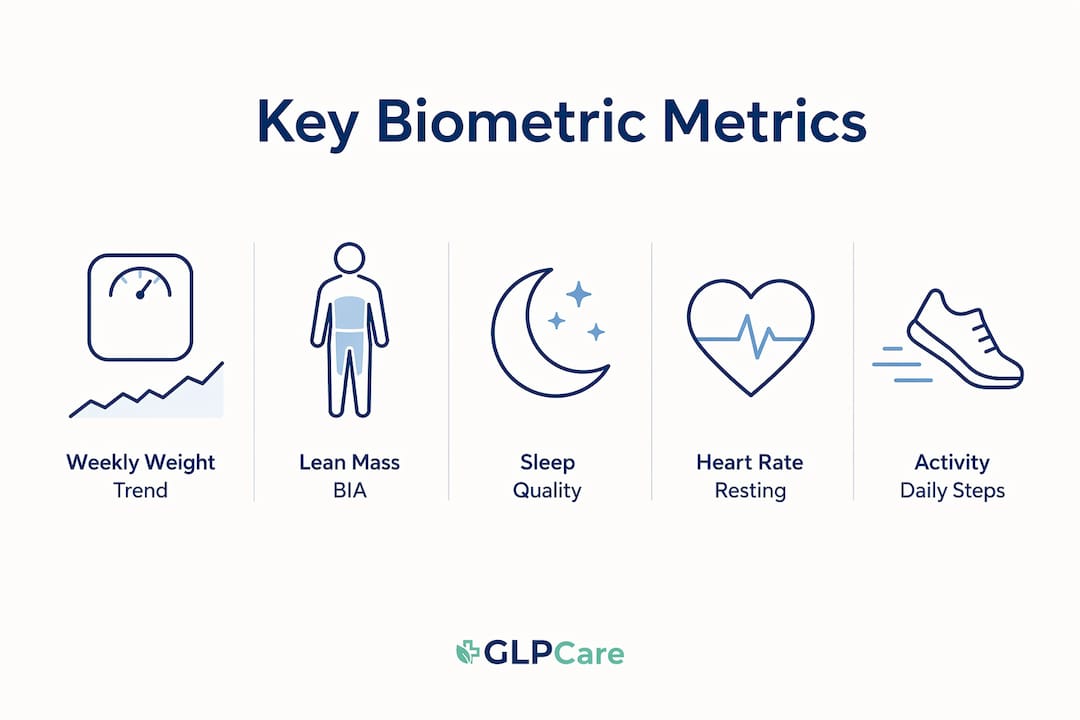
| Metric | Why it matters | Clinician use |
|---|---|---|
| Weekly weight trend | Filters daily fluid noise | Guides dose timing and plateau response |
| BIA lean mass | Tracks muscle preservation | Triggers protein/exercise adjustments |
| Sleep duration and quality | Affects ghrelin and cortisol | Flags metabolic recovery issues |
| Resting heart rate and HRV | Reflects recovery and stress load | Informs exercise intensity guidance |
| Daily step count and activity | Measures energy expenditure | Supports calorie balance estimates |
Patient checklist for biometric tracking:
- Sync your wearable data at least 48 hours before each clinician visit.
- Log meals and medication doses daily in your app, even on difficult days.
- Note any symptoms (nausea, fatigue, mood changes) alongside your biometric entries.
- Share a 2–4 week trend summary, not just your most recent reading, at each visit.
The Glpcare app consolidates all of this into a single dashboard your clinician can review before your appointment, so visits focus on decisions rather than data collection.
Pro Tip: Clinicians use 2–8 week trend windows, not single-day readings, to make titration decisions. If your weight spikes on a Monday, that is almost always hydration or sodium, not fat gain. Resist the urge to adjust anything based on one data point.
What should your baseline assessment and monitoring schedule look like?
A thorough baseline is the foundation of a personalized plan. The 2026 AHA/ACC/ADA/ASN guideline supports comprehensive baseline assessment including BIA and advanced metabolic panels as the starting point for individualized care.
Baseline checklist:
- Complete medical history and current medication review
- Metabolic panel (liver enzymes, kidney function, electrolytes)
- Fasting glucose and HbA1c
- Thyroid panel (TSH, free T3/T4)
- Hormone and cortisol levels where clinically indicated
- BIA body composition scan (fat mass, lean mass, visceral fat, hydration)
- Resting vitals and blood pressure
Monitoring cadence for telehealth:
- Weeks 1–4: Weekly or biweekly clinician check-ins during titration.
- Months 2–3: Every 2–4 weeks, with lab review at the 3-month mark.
- Month 4 onward: Every 4–12 weeks depending on stability and goals.
Red flags that require urgent clinician contact:
- Severe or worsening abdominal pain (possible pancreatitis)
- Persistent vomiting or inability to keep fluids down
- Signs of dehydration (dizziness, dark urine, rapid heart rate)
- Rapid symptomatic weight loss with fatigue or weakness
How do nutrition, mindful eating, and exercise support your results?
GLP-1 therapy reduces appetite, but what you eat and how you move determines whether you lose fat or muscle. These behaviors are where patients have the most direct control.
Mindful eating practices backed by Harvard Health guidance include using a plate no larger than 9 inches, aiming for 20–40 chews per bite, removing all screens during meals, and pausing before eating to assess actual hunger. These are low-cost strategies your clinician can coach remotely, and mindful eating training has been shown to reduce emotional and external eating patterns.
For patients dealing with stress-driven eating or emotional triggers, hypnotherapy for weight loss is an evidence-informed complement to standard behavioral coaching, available online nationwide.
Protein targets for muscle preservation:
| Goal | Daily protein target |
|---|---|
| Preserve lean mass on GLP-1 | Aim for a daily protein intake individualized to your body weight and goals, typically recommended as at least 1.0–1.2 grams per kilogram per day. |
| Active resistance training | Those engaging in regular resistance training may benefit from targets up to 1.6 grams per kilogram per day. |
| Per meal minimum | Aim for at least 25–30 grams of protein per meal to maximize muscle preservation. |
Affordable, culturally flexible protein sources include eggs, canned fish, Greek yogurt, lentils, edamame, and cottage cheese. Use the Glpcare protein calculator to find your personal daily target. For detailed guidance on preventing muscle loss during GLP-1 therapy, Glpcare’s clinical blog covers the specifics.
Behavioral adherence tips:
- Stack new habits onto existing ones (log your dose right after your morning coffee).
- Design your environment so healthy food is visible and accessible; processed snacks stay out of sight.
- Use brief CBT-based reframing: when a craving hits, name the emotion driving it before acting on it.
What are realistic timelines and how do you handle plateaus?
Safe, sustainable weight loss on a GLP-1 program typically runs at a rate that supports long-term maintenance rather than rapid loss. A common early milestone is an early milestone of modest body weight reduction within the first few months, with continued progress through 12 months as titration stabilizes. Clinicians often reframe success around blood pressure, glucose control, and energy levels, not just the scale.
Plateaus are normal and expected. When weight stalls:
- Review protein intake and resistance training frequency with your RD.
- Request a lab review to check for thyroid changes or cortisol elevation.
- Increase clinician contact frequency temporarily rather than waiting for your next scheduled visit.
- Reassess sleep quality, since poor sleep directly elevates hunger hormones.
Obesity is best understood as a chronic, relapsing condition that requires ongoing clinical support, not a problem solved by a single intervention. Maintenance planning starts on day one, not after you reach your goal weight.
How do you choose a telehealth weight management program?
Evaluation checklist:
- Licensed clinician oversight with documented titration protocols
- Access to RDs and behavioral health support (not just a medication prescription)
- Baseline labs included, not optional add-ons
- Body composition testing (BIA) at intake and follow-up
- Wearable biometric integration with clinician dashboard access
- Transparent pricing with no hidden fees
- Clear emergency and safety protocols
Questions to ask during intake:
- Who manages my medication if I have a side effect at 10 PM on a Saturday?
- Where is the medication sourced and compounded, if applicable?
- How is my biometric data stored and who can access it?
- What does success look like at 3 months, and how do you measure it?
Common telehealth pricing models:
| Model | What’s included | Typical structure |
|---|---|---|
| Medication-included subscription | GLP-1 Rx, clinician visits, app | Monthly membership |
| BYO-medication membership | Clinician oversight, wearable, app | Lower monthly fee |
| One-time device fee | Wearable hardware | Upfront purchase |
Key Takeaways
Effective GLP-1–based care requires baseline testing, clinician-led titration, continuous biometric tracking, and protein-focused nutrition working together from the start.
| Point | Details |
|---|---|
| Start with a full baseline | Labs, BIA, and medical history personalize your plan before medication begins. |
| Clinician-led titration is non-negotiable | Dose adjustments based on biometric trends and labs drive safe, steady results. |
| Protein and resistance training protect muscle | Aim for a protein intake of at least 1.0–1.2 grams per kilogram daily, with higher targets (up to 1.6 g/kg) for active individuals engaged in resistance training, to preserve lean mass on GLP-1 therapy. |
| Mindful eating amplifies medication effects | Small plates, 20–40 chews per bite, and screen-free meals reduce overeating. |
| Glpcare integrates all of this in one program | Wearable tracking, clinician oversight, RD support, and FDA-approved medication options in a single connected system. |
Why an integrated approach changes everything
Obesity is a chronic, relapsing disease. Framing it that way is not discouraging; it is clarifying. It means the goal is not a 90-day sprint but a sustained clinical relationship where your data drives every decision. Willpower is not the variable that determines long-term success. The quality of your care team, the completeness of your baseline, and the consistency of your monitoring are. Patients who receive data-driven adjustments from a clinician who can see their sleep, activity, and body composition trends in real time are working with a fundamentally different level of support than those who step on a scale once a month. That partnership, built on continuous feedback rather than periodic check-ins, is what makes the difference between losing weight and keeping it off.
Glpcare brings this integrated model to telehealth
Most GLP-1 programs send you a prescription and a pamphlet. Glpcare is built differently. You get FDA-approved medication options (semaglutide or tirzepatide) shipped to your door, a proprietary screenless fitness band with medical-grade sensors, an AI-powered app that logs your doses and biometrics, and licensed clinicians who review your data before every visit. RD coaching and behavioral support are part of the program, not upsells.
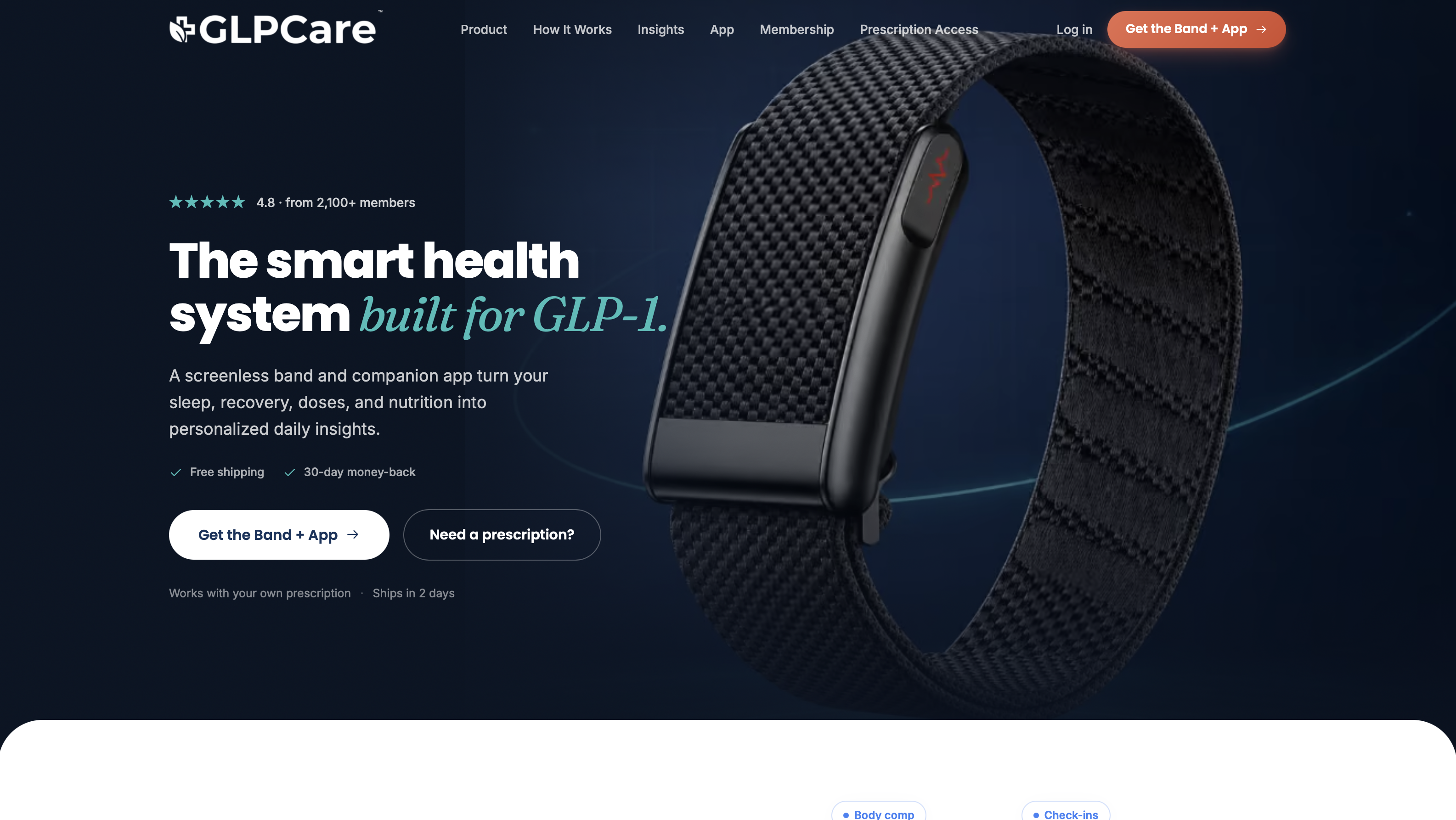
Pricing is structured around what you need: a medication-included subscription for patients starting fresh, or a lower-cost membership tier if you already have a GLP-1 prescription. Either way, the wearable, the app, and the clinician oversight come with it.
Ready to find out if you qualify? Take the GLP-1 readiness quiz and get your personalized starting point in minutes.
Authoritative sources and further reading
- AHA/ACC/ADA/ASN 2026 Guideline — baseline assessment and metabolic management
- Harvard Health — 8 steps to mindful eating
- World Health Organization — obesity as a chronic disease
- PubMed — holistic weight management definition and multidisciplinary components
- Glpcare GLP-1 tracker guide
- Glpcare wearable technology guide
- Glpcare free tools and calculators
This article is general health information, not medical advice. Confirm current clinical guidelines and your personal eligibility with a licensed clinician before starting any weight management program.
FAQ
What is holistic weight management?
Holistic weight management is a multidisciplinary clinical approach that combines medication (such as GLP-1 receptor agonists), nutrition coaching, behavioral support, exercise guidance, and biometric monitoring to address the metabolic and psychological root causes of obesity.
How does GLP-1 therapy fit into a holistic plan?
GLP-1 medications reduce appetite and improve insulin sensitivity, but they work best when paired with an RD, behavioral coaching, and resistance training to preserve muscle and support long-term maintenance.
Which biometric metrics should I track on a GLP-1 program?
Weekly weight trends, BIA lean mass, sleep quality, resting heart rate, and daily activity are the most clinically actionable metrics. Sync them to your care team at least 48 hours before each visit.
How do I know if a telehealth program is high quality?
Look for licensed clinician oversight, baseline labs and BIA at intake, RD and behavioral health access, wearable integration, and transparent pricing. Glpcare includes all of these in a single connected program.
When should I contact my clinician between scheduled visits?
Contact your care team immediately if you experience severe abdominal pain, persistent vomiting, signs of dehydration, or rapid unexplained weight loss with fatigue.