GLP-1 Wearable Technology: Your 2026 Guide
GLP-1 Wearable Technology: Your 2026 Guide
TL;DR:
- Wearable GLP-1 devices track body composition, heart rate, and activity to support weight management and prevent muscle loss. Monitoring wearables with bioelectrical impedance analysis provide critical data that can guide personalized treatment, while drug delivery devices like implants and patches are still in early development. Using appropriate wearable technology enhances therapy outcomes by promoting adherence and early detection of adverse effects.
A GLP-1 wearable is a health technology device that tracks biometric and behavioral data to improve the safety and effectiveness of GLP-1 therapy during weight management. These devices sit at the intersection of digital health and obesity medicine, and their role is expanding fast. Platforms like Oura and LillyDirect have already partnered to connect wearable data with GLP-1 treatment, and clinical studies are now testing whether devices like the Galaxy Watch 8 can prevent muscle loss during therapy. If you are researching how wearable technology fits into a GLP-1 program, this guide covers the full picture.
How do GLP-1 wearables support weight management?
A GLP-1 wearable does more than count steps. The most clinically relevant devices track body composition, heart rate, sleep quality, and activity levels, giving both patients and clinicians a continuous stream of data that a weekly clinic visit simply cannot provide.

The most important metric to watch during GLP-1 therapy is body composition, not just body weight. Muscle mass loss is a known side effect of GLP-1 treatment, and it carries real consequences: reduced metabolic rate, increased cardiovascular risk, and a higher chance of weight regain after stopping medication. A wearable that tracks lean mass over time gives clinicians the data they need to intervene before the problem becomes serious.
Samsung and Massachusetts General Hospital are running a clinical study in 2026 to test exactly this. The study enrolls 100 adults monitored via BIA (Bioelectrical Impedance Analysis) sensors in the Galaxy Watch 8, with clinical-grade DXA scans used to verify the results. BIA sends a low electrical current through the body to estimate fat mass versus lean mass. The fact that a consumer wearable is now being validated against a gold-standard clinical tool signals how seriously the medical community is taking this technology.
Heart rate and activity tracking add another layer. Continuous biometric data empowers clinicians to adjust exercise prescriptions based on real behavior, not self-reported estimates. A patient who logs six hours of sleep and a resting heart rate of 90 beats per minute tells a very different story than one who logs eight hours and a resting rate of 58.
Pro Tip: Prioritize wearables with built-in BIA sensors over basic fitness trackers when you are on GLP-1 therapy. Step counts tell you little about whether you are losing fat or muscle. Body composition data tells you everything.
The Oura and LillyDirect partnership shows how this data loop works in practice. More than 50% of Oura users self-identify as overweight or obese, making the platform a natural fit for GLP-1 therapy support. The integration lets patients log medication doses and biometric readings in one place, which clinicians can then review to personalize care. Integrating daily habit data with real-time biometrics creates a support system that improves not just weight loss but overall wellbeing during treatment.
What are the emerging GLP-1 drug delivery devices?
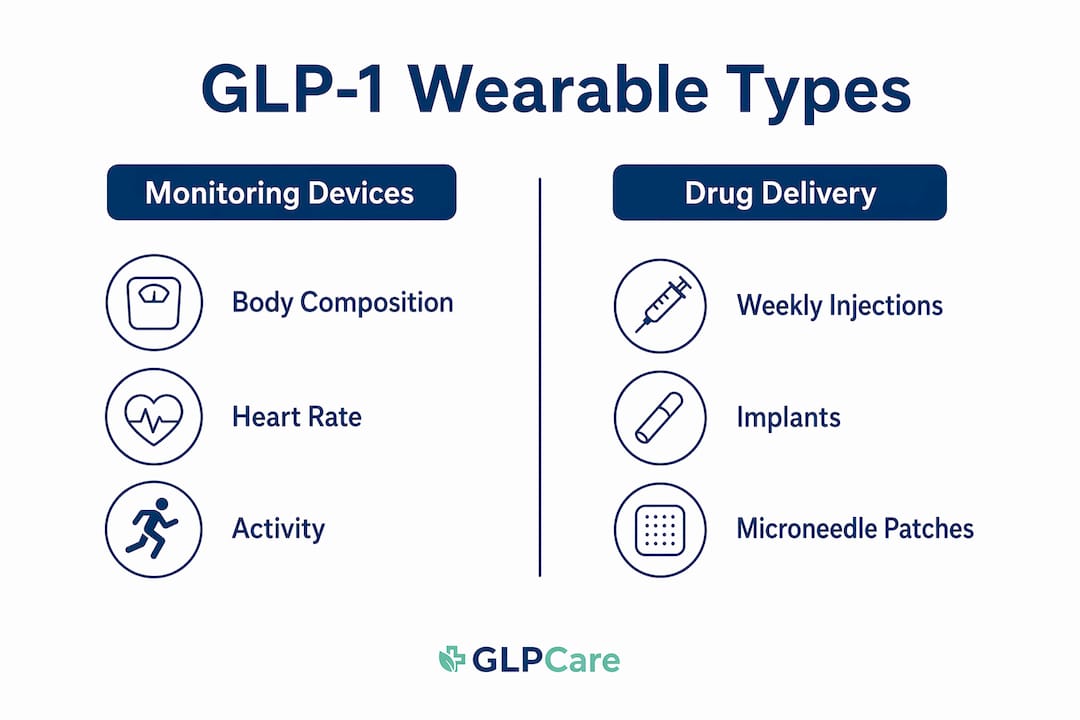
The term “GLP-1 wearable” covers two distinct categories that people often confuse. The first is monitoring wearables, which track biometrics. The second is drug delivery devices, which administer the medication itself. Both categories are advancing rapidly, but they work in completely different ways.
Weekly injections are still the standard delivery method for GLP-1 medications like semaglutide. The problem is that injection fatigue affects about 50% of patients, leading to missed doses and reduced effectiveness. Two technologies are working to solve this: subdermal implants and microneedle patches.
Vivani Medical and Novo Nordisk are evaluating a subdermal semaglutide implant called NPM-139, designed for once- or twice-yearly dosing. The device sits under the skin and releases medication steadily over months. The appeal is obvious: one minor procedure replaces 26 or 52 weekly injections. The challenge is equally obvious. Implants face manufacturing difficulties and regulatory setbacks, and balancing consistent drug dosage with safe removability is a genuine engineering problem. These devices are in clinical trials as of 2026 and are not commercially available.
Microneedle patches take a different approach. They use an array of tiny needles, too small to feel, applied to the skin surface to deliver medication transdermally. Early human trials are underway, and the technology promises improved adherence through steady drug release without the friction of a needle injection.
Pro Tip: Do not expect implants or patches at your pharmacy soon. Both technologies are in early trial phases and require a minor medical procedure for application. Plan your current therapy around what is available now, and revisit these options in 2–3 years.
The table below compares the four main GLP-1 delivery formats on the dimensions that matter most to patients.
| Delivery method | Frequency | Current status | Key advantage | Key limitation |
|---|---|---|---|---|
| Weekly injection | Weekly | Standard of care | Proven, adjustable | Injection fatigue |
| Subdermal implant | Once or twice yearly | Clinical trials | Eliminates injections | Removal complexity |
| Microneedle patch | TBD (trial phase) | Early human trials | Painless application | Dosing not yet established |
| Oral pill | Daily | Approved (select markets) | No needles | Lower bioavailability |
What challenges do GLP-1 therapy patients face, and how can wearables help?
GLP-1 therapy produces real weight loss results, but it comes with challenges that wearables are uniquely positioned to address. The three most clinically significant issues are muscle loss, medication adherence, and side effect management.
Muscle loss during treatment
Muscle mass loss during GLP-1 therapy is not a minor inconvenience. It raises cardiovascular risk and slows the metabolic rate, which means the body burns fewer calories at rest. Without active monitoring, this loss is invisible until it becomes a clinical problem. Wearables with BIA sensors catch the trend early, giving clinicians a window to adjust protein targets, resistance training recommendations, or dosing schedules before the damage compounds.
Adherence barriers
Adherence is the single biggest predictor of long-term GLP-1 success. Missing doses disrupts the steady-state drug levels that drive appetite suppression. Monitoring wearables paired with medication logging apps create a record that makes gaps visible. Implantable devices, once available, will remove the adherence variable entirely by delivering medication automatically.
Side effect tracking
Nausea, fatigue, and gastrointestinal discomfort are the most commonly reported side effects of GLP-1 medications. Apps integrated with wearables let patients log symptoms alongside biometric data, creating a timeline that clinicians can use to correlate side effects with dosing patterns or activity levels. The benefits of this approach are clear:
- Early muscle loss detection through weekly BIA readings flags lean mass decline before it affects metabolic rate.
- Medication logging within connected apps creates an adherence record that supports clinical review.
- Side effect correlation links symptom reports to biometric data, helping clinicians identify patterns and adjust treatment.
- Activity and sleep tracking reveals recovery quality and energy levels, which often predict how well a patient tolerates dose increases.
How can you integrate GLP-1 wearables into your weight management routine?
Using a GLP-1 wearable effectively requires more than strapping on a device. The data only becomes useful when it connects to a clear plan and a clinical team that knows how to act on it. Here is how to build that system.
-
Choose a device with the right sensors. A basic step counter will not serve you during GLP-1 therapy. Select a wearable with BIA body composition tracking, continuous heart rate monitoring, and sleep analysis. These three data streams give clinicians the most useful picture of your metabolic health.
-
Log your medication alongside your biometrics. Biometric data without medication context is hard to interpret. Use an app that lets you record dose timing and amount in the same place as your health metrics. Glpcare’s AI tracking app connects wearable data with medication logs and delivers personalized feedback through an AI companion.
-
Track body composition weekly, not just body weight. The scale does not distinguish between fat loss and muscle loss. A weekly BIA reading gives you a trend line that tells you whether your therapy is working the way it should.
-
Share your data with your clinician at every appointment. Continuous biometric monitoring enables timely intervention to counteract muscle loss and other side effects. Bring a summary of your wearable data to each visit so your care team can make informed adjustments.
-
Set goals beyond the scale. Track resting heart rate trends, sleep quality scores, and activity consistency. These markers often improve before the scale moves significantly, and they tell a more complete story about your health progress. Glpcare’s weight loss tools include calculators for body weight goals, calorie deficit, and protein intake that complement wearable data.
-
Reassess your device every six months. Wearable technology is advancing quickly. A device that was the best option at the start of your therapy may not be the best option a year later. Stay current with what clinical studies are validating.
Key Takeaways
A GLP-1 wearable works best when it tracks body composition, medication adherence, and activity together, giving clinicians the data they need to personalize therapy and prevent muscle loss.
| Point | Details |
|---|---|
| Body composition over step counts | Choose wearables with BIA sensors to track fat versus muscle loss during therapy. |
| Two distinct device categories | Monitoring wearables and drug delivery devices serve different roles and should not be confused. |
| Implants and patches are not yet available | Both technologies are in early clinical trials as of 2026 and require medical procedures for use. |
| Adherence drives outcomes | Logging medication doses alongside biometric data creates the accountability loop that sustains results. |
| Clinician data sharing is non-negotiable | Wearable data only improves care when your clinical team can see and act on it. |
Why I think most people are using GLP-1 wearables wrong
After following the GLP-1 wearable space closely, the pattern I see most often is this: people buy a fitness tracker, start their medication, and assume the two are working together. They are not. A standard fitness tracker measures movement. It does not measure what GLP-1 therapy actually changes, which is body composition.
The Samsung and Massachusetts General Hospital study is significant precisely because it validates BIA as a clinical tool in a consumer device. That is the standard worth holding wearables to. If your device cannot tell you whether you are losing fat or muscle, it is not giving you the information that matters during GLP-1 treatment.
The drug delivery side of this space is genuinely exciting, but I would caution against waiting for implants or patches before committing to a monitoring strategy. Those technologies are years from wide availability. The monitoring tools that exist today, paired with a connected app and an engaged clinician, already produce meaningful improvements in therapy outcomes.
The most underused resource in this space is the GLP-1 blog at Glpcare, which translates clinical research into practical guidance. Most people on GLP-1 therapy are navigating it with far less information than they need. The wearable is only as useful as the knowledge behind it.
— Dominique
Glpcare tools that work alongside your GLP-1 wearable
Glpcare builds its entire program around the insight that weight management requires more than a prescription. The Glpcare system pairs a screenless fitness band with an AI companion app that tracks sleep, heart rate, activity, and dietary habits in one place.
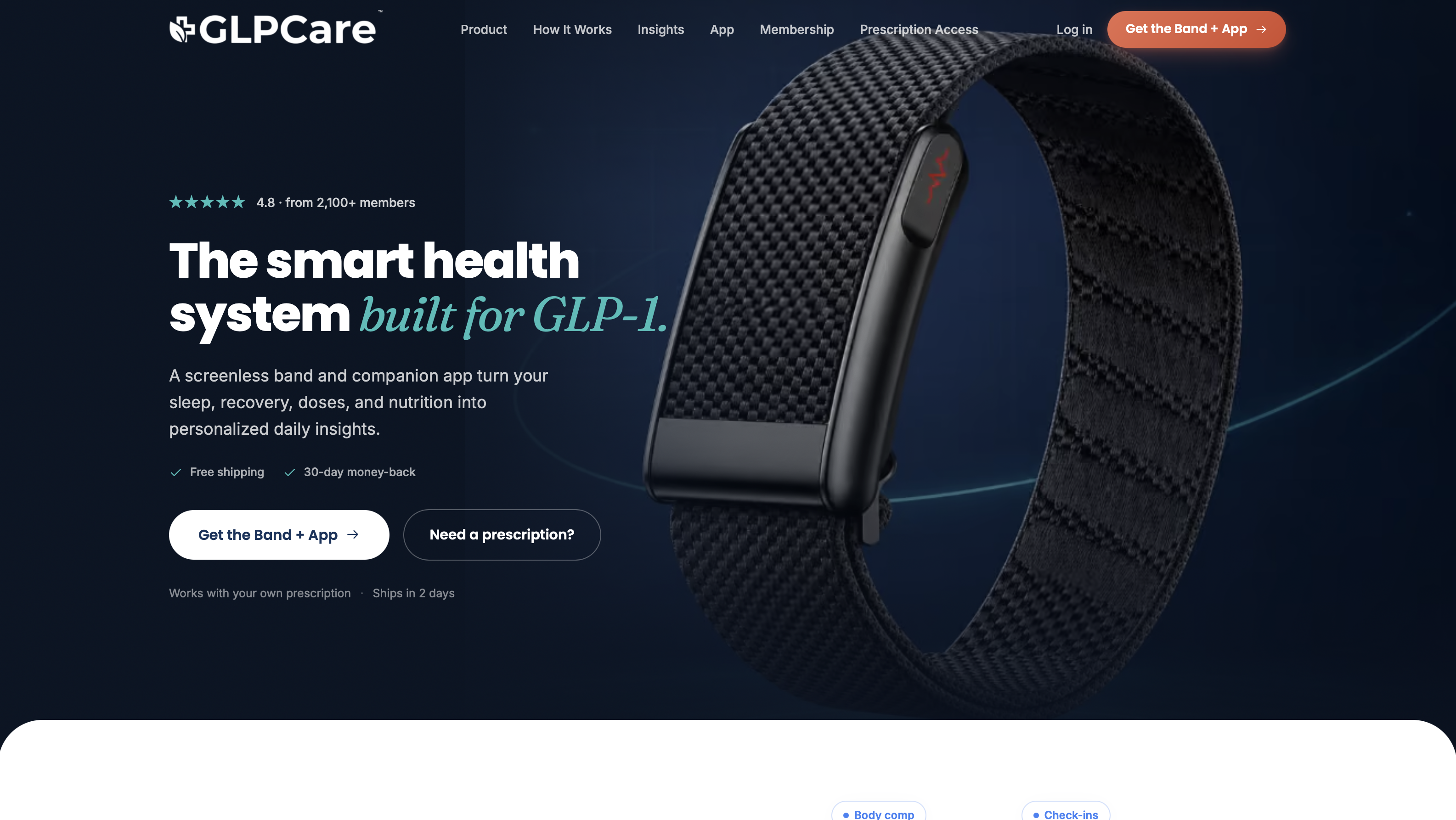
If you are not sure whether GLP-1 therapy is right for you, the GLP-1 readiness quiz takes a few minutes and gives you a clear starting point. For those already on therapy, the Glpcare band is currently available at $89 (reduced from $179) and is built specifically to support GLP-1 patients with the biometric tracking that generic fitness trackers miss. Continuous clinician support is included, so your data connects directly to people who can act on it.
FAQ
What does a GLP-1 wearable actually track?
A GLP-1 wearable tracks biometric data including body composition, heart rate, sleep, and activity levels. The most clinically useful devices use BIA sensors to distinguish fat loss from muscle loss during therapy.
Are GLP-1 drug delivery implants available to buy?
No. Subdermal semaglutide implants and microneedle patches are in clinical trials as of 2026 and are not commercially available. Both require a minor medical procedure for application.
How does a wearable help prevent muscle loss on GLP-1 medications?
Wearables with BIA sensors track lean mass over time, alerting clinicians to muscle loss early. That data supports timely adjustments to exercise prescriptions and protein targets before metabolic damage accumulates.
Can I use any fitness tracker with GLP-1 therapy?
Basic fitness trackers that only count steps provide limited value during GLP-1 therapy. Devices with body composition analysis, continuous heart rate monitoring, and sleep tracking give clinicians the data they need to personalize your care.
What is the difference between a monitoring wearable and a drug delivery wearable?
A monitoring wearable tracks health metrics like body composition and activity. A drug delivery wearable administers medication directly, such as through an implant or microneedle patch. The two categories are complementary but serve entirely different functions.