Telehealth Weight Loss Programs: GLP-1 + Wearable Guide
Telehealth Weight Loss Programs: GLP-1 + Wearable Guide
TL;DR:
- Medically supervised GLP-1 programs combined with biometric monitoring and AI coaching offer comprehensive weight management. Glpcare integrates clinician oversight, lab tests, wearable tracking, and personalized support into a single membership. Continuous biometric data enhances safety and decision-making, leading to more durable weight loss outcomes.
For U.S. adults who want medically supervised GLP-1 therapy combined with continuous biometric monitoring and AI-driven coaching, Glpcare is the most integrated option available. It pairs licensed clinician access, lab monitoring, a medical-grade wearable band, and an AI companion into a single membership. Clinical evidence shows that 10% body weight reduction can produce measurable improvements in metabolic health markers, and Glpcare’s model is built to get you there with full oversight at every step.
On day one, here’s what to expect:
- A clinician eligibility consult to review your health history and confirm GLP-1 candidacy
- Baseline lab orders (metabolic panel, thyroid, A1c if indicated) reviewed by your care team
- Wearable band shipment and app activation so biometric tracking starts before your first dose
Table of Contents
- What does a high-quality telehealth GLP-1 program include?
- How do GLP-1 medications work, and what timeline should you expect?
- How does Glpcare’s integrated telehealth system work?
- What safety monitoring should you insist on?
- What do costs and plan types look like?
- How do you choose the right program?
- What real-world outcomes can you realistically expect?
- Key Takeaways
- Why integrated care is the only model worth choosing
- Glpcare gives you the full integrated program
- Useful sources
- FAQ
What does a high-quality telehealth GLP-1 program include?
Not all telehealth weight loss programs are built the same. The gap between a safe, supervised program and a prescription mill often comes down to six non-negotiables.
- Licensed prescribers with real access. Your program should include an MD, DO, NP, or PA who reviews your case, not just an automated questionnaire. Multidisciplinary care that combines clinician visits with dietitian and behavioral support is the standard worth demanding.
- Baseline and periodic lab monitoring. A quality program orders labs before prescribing and at scheduled intervals afterward. This means a comprehensive metabolic panel (CMP), TSH, and A1c if you’re diabetic or prediabetic, with documented clinician review of results.
- Registered dietitian and behavioral coaching. Medication alone doesn’t preserve muscle or build lasting habits. RD access and behavioral support are what separate programs that produce durable results from those that don’t.
- Medical-grade wearable monitoring. Heart rate, sleep, and activity data fed into a clinician dashboard gives your care team real-time context for dosing and safety decisions.
- Transparent medication logistics. Know whether medication is included in your plan fee or billed separately, how prescriptions are issued, and where they ship from.
- HIPAA-compliant platform. Encrypted communication and secure in-app records are baseline requirements, not premium features.
How do GLP-1 medications work, and what timeline should you expect?
GLP-1 receptor agonists like semaglutide and tirzepatide reduce appetite and slow gastric emptying, which means you feel full sooner and stay full longer. Weight loss follows, but the timeline matters for setting realistic expectations.
- Weeks 1–4 (Initiation). You start at a low dose to minimize side effects. Nausea and mild GI symptoms are common and usually manageable with dietary adjustments.
- Weeks 4–12 (Dose titration). Your clinician increases the dose gradually. Most patients notice appetite suppression becoming more pronounced and begin seeing measurable weight change.
- Months 1–3 (Early response). Many patients report noticeable changes in hunger patterns and early weight reduction. This is when GLP-1 therapy evidence shows the clearest early signal.
- Months 3–6 (Benchmark window). Clinically meaningful progress typically becomes visible here. Your care team reviews labs and adjusts the plan based on your biometric trends and lab results.
- Month 12 (Realistic outcome). With consistent adherence, nutrition support, and clinician oversight, sustained weight loss is achievable. Individual results vary based on metabolism, comorbidities, and lifestyle factors.
Side effects worth knowing: nausea, constipation, and occasional vomiting are most common during titration. Contact your clinician if you experience severe abdominal pain, signs of dehydration, or unexplained rapid heart rate.
Pro Tip: Calculate your protein targets early. Adequate protein intake during GLP-1 therapy is one of the most effective ways to preserve lean muscle mass while losing fat rapidly.
How does Glpcare’s integrated telehealth system work?
Glpcare combines GLP-1 prescribing, lab monitoring, RD and behavioral coaching, a medical-grade wearable, and an AI companion into a single membership. That means your clinician isn’t making dosing decisions in a vacuum. They’re looking at your sleep quality, resting heart rate, and activity trends alongside your lab results.
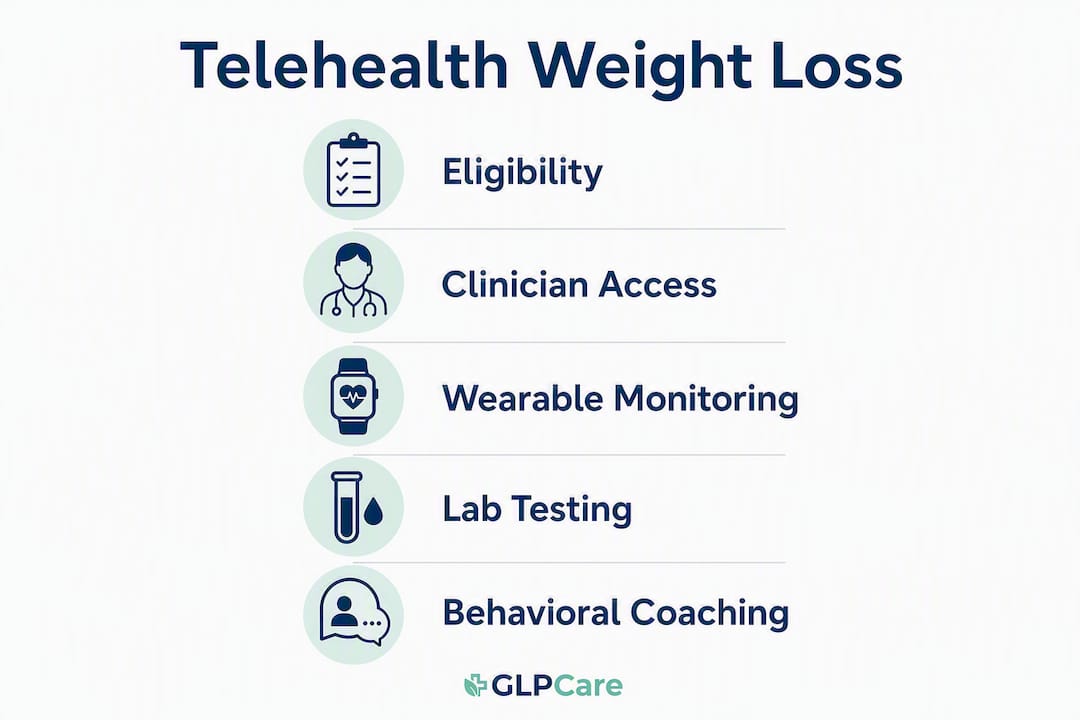
| Service Element | What You Receive |
|---|---|
| Clinician access | Licensed MD/NP consultations for prescribing and ongoing review |
| Lab monitoring | Baseline and follow-up metabolic panels reviewed by your care team |
| Wearable band | Screenless fitness band tracking HR, sleep, HRV, and activity |
| AI companion | Personalized daily insights based on your biometric and dose data |
| Nutrition coaching | Registered dietitian guidance to minimize muscle loss |
| Medication logistics | GLP-1 prescription (semaglutide or tirzepatide) shipped to your home |
The Glpcare wearable band feeds continuous biometric data directly into your care dashboard. When your resting heart rate trends upward or your sleep quality drops during a dose increase, your clinician sees it. That’s a fundamentally different level of oversight than a monthly check-in questionnaire.

Take the GLP-1 readiness quiz to assess your eligibility and see which plan fits your situation.
What safety monitoring should you insist on?
Safety on GLP-1 therapy isn’t optional, and the monitoring cadence matters as much as the medication itself. Lab analysis that uncovers metabolic roadblocks before prescribing is a standard that quality programs meet consistently.
Baseline labs to require before starting:
- CMP (liver and kidney function)
- TSH (thyroid)
- A1c (if diabetic or prediabetic)
- Pregnancy test (for patients who can become pregnant)
- Baseline vitals and BMI documentation
Monitoring cadence: Baseline labs before initiation, follow-up labs at 4–12 weeks after each titration step, then periodic checks every 3–6 months. Your wearable’s continuous HR and sleep data fills the gaps between scheduled visits.
Red flags that require pausing medication or in-person evaluation:
- Severe or persistent abdominal pain (possible pancreatitis)
- Signs of rapid dehydration (dizziness, dark urine, inability to keep fluids down)
- Unexplained tachycardia or palpitations
- Severe vomiting lasting more than 48 hours
Statistic: As little as 10% body weight loss can produce clinically meaningful improvements in metabolic health markers for patients with weight-related conditions.
What do costs and plan types look like?
Program fees and medication costs are almost always separate line items. Subscription fees as low as $59/month cover clinical visits and platform access, while GLP-1 medications can run substantially higher without insurance coverage. Always ask for a first-year cost estimate that includes medication, shipping, and lab fees before committing.
| Plan Type | What’s Typically Included | Medication Cost |
|---|---|---|
| One-time consult | Single prescriber visit, prescription issued | Separate (pharmacy or mail) |
| Subscription (BYOM) | Ongoing clinician access, coaching, platform | Patient sources separately |
| Subscription (med-included) | Full care plus medication delivery | Bundled in plan fee |
| Hardware + app | Wearable band, AI companion, tracking | Not included |
Telehealth GLP-1 providers range from one-time prescription visits to all-in-one memberships with medication delivery and dosing adjustments. The sign-up to first-dose timeline typically runs 5–10 business days: initial consult, lab orders, clinician review, prescription issued, then shipment or pharmacy pickup. Glpcare’s shipping and returns policy covers hardware delivery details.
How do you choose the right program?
The range of telehealth models spans chat-based platforms to obesity-specialist-driven services with very different levels of clinician access and scope. Use this checklist to compare them objectively.
- Confirm clinician credentials. Ask: “Who will prescribe, and who reviews my labs?” A licensed MD, DO, NP, or PA should be named, not a generic “provider.”
- Verify lab protocols. Ask: “What labs do you order at baseline, and how often are they reviewed?” No labs before prescribing is a hard red flag.
- Check multidisciplinary access. Ask: “Is a registered dietitian included, and how do I access behavioral support?” Medication without nutrition guidance increases muscle loss risk.
- Ask how wearable data is used. Ask: “How do biometric metrics influence dosing or safety decisions?” If the answer is “they don’t,” the wearable is decorative.
- Get total cost clarity. Ask for a sample first-year estimate including medication, labs, and shipping. Advertised subscription prices frequently exclude medication costs.
- Confirm HIPAA compliance. Encrypted messaging and secure records are non-negotiable for a health platform.
Red flags during screening calls: auto-prescribe questionnaires with no clinician review, no lab orders before starting, no RD or behavioral access, and vague answers about medication sourcing.
For patients exploring behavioral adjuncts alongside medical care, online hypnotherapy is one non-clinical option some people add to their support plan.
What real-world outcomes can you realistically expect?
Medically supervised GLP-1 programs combined with nutrition coaching and behavioral support consistently outperform medication alone. The clinical benchmark is clear: 10% body weight loss produces measurable metabolic improvements, and many patients exceed that threshold with consistent adherence over 6–12 months.
Individual results vary based on starting weight, metabolic health, comorbidities, and how consistently nutrition and resistance training are prioritized. Use the weight loss goal calculator to set a realistic personal benchmark before you start.
This article is general health information, not medical advice. Confirm your eligibility and treatment plan with a licensed clinician.
Key Takeaways
Medically supervised GLP-1 telehealth programs that combine clinician oversight, lab monitoring, wearable biometrics, and nutrition coaching produce the most durable weight-loss outcomes available through remote care.
| Point | Details |
|---|---|
| Multidisciplinary care is non-negotiable | Programs must include an MD/NP, registered dietitian, and behavioral support, not just a prescription. |
| Labs before prescribing | Baseline CMP, TSH, and A1c should be ordered and reviewed before any GLP-1 is issued. |
| 10% weight loss benchmark | As little as 10% body weight reduction can produce clinically meaningful metabolic improvements. |
| Total cost clarity | Always request a first-year estimate covering medication, labs, and shipping, not just the subscription fee. |
| Glpcare’s integrated model | Glpcare combines GLP-1 prescribing, wearable monitoring, AI coaching, and RD support in one membership. |
Why integrated care is the only model worth choosing
The most common mistake people make when evaluating telehealth weight loss programs is treating the prescription as the product. It isn’t. The prescription is one component inside what should be a medical partnership, and the programs that produce lasting results treat it that way.
What changed my perspective on this was seeing how continuous biometric data shifts clinical decision-making. When a clinician can see that a patient’s resting heart rate has been elevated for five days and their sleep quality has dropped during a dose titration, that’s not a questionnaire finding. That’s a real signal that changes the plan. Wearable integration isn’t a marketing feature; it’s the mechanism that makes remote care genuinely safe.
The programs worth your time and money are the ones where a real clinician reviews your labs, a dietitian adjusts your nutrition plan as your weight changes, and the AI companion gives you personalized feedback between visits rather than generic reminders. Anything less is a prescription service with a wellness veneer.
Glpcare gives you the full integrated program
Most telehealth programs give you a prescription and a portal. Glpcare gives you a connected care system: GLP-1 medication shipped to your door, a medical-grade wearable band that feeds real-time biometric data to your clinician, an AI companion that personalizes daily insights, and a registered dietitian keeping your nutrition plan aligned with your progress.
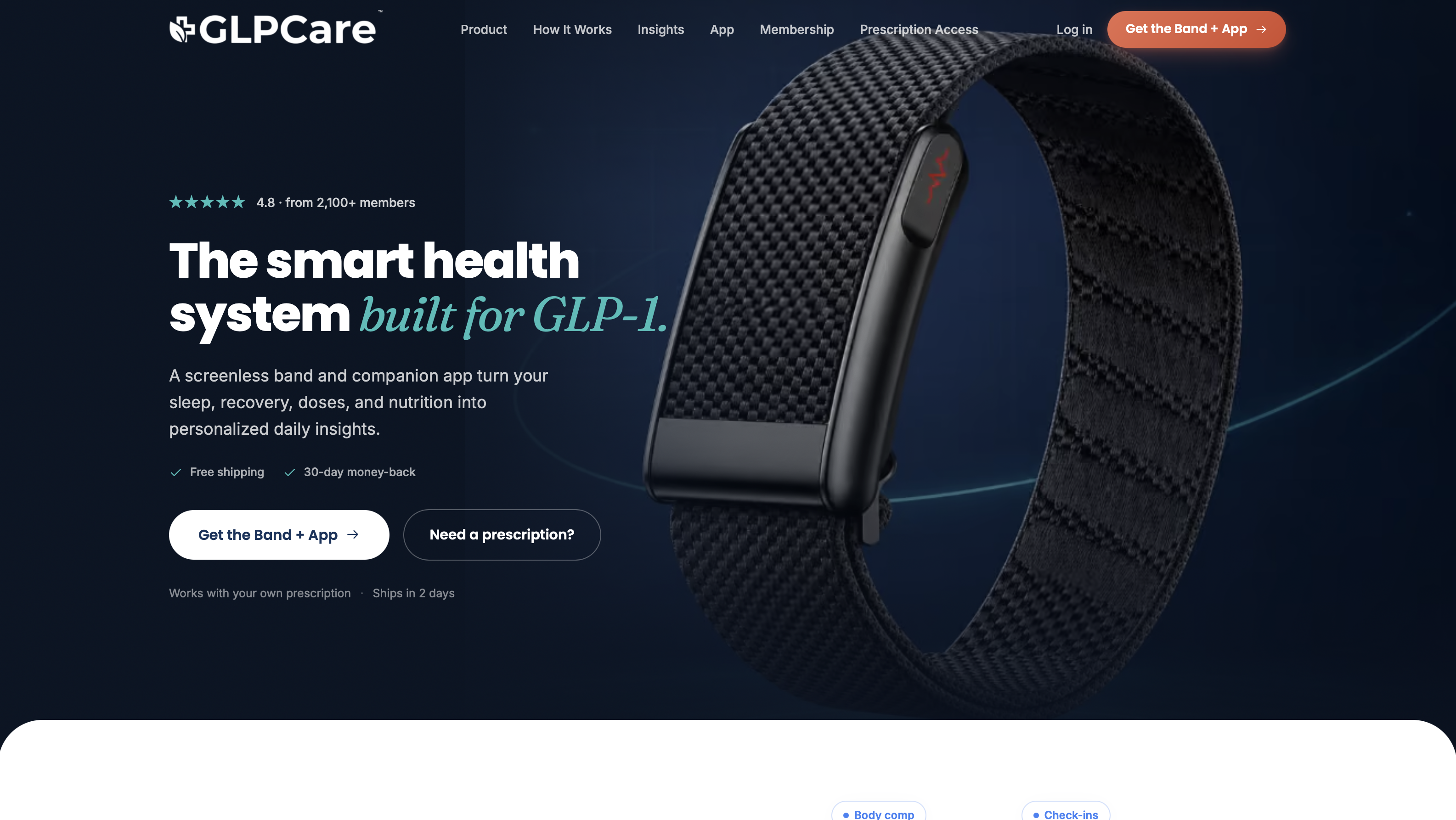
New members receive a clinician eligibility consult, baseline lab orders, the Glpcare wearable band, AI companion access, and ongoing coaching support. The GLP-1 readiness quiz takes a few minutes and tells you immediately whether you qualify. For a full week-by-week breakdown of what to expect, visit the program overview page.
Useful sources
- Rush Medical Weight Management Telemedicine — Clinical standards for virtual multidisciplinary weight management programs, including the 10% weight-loss health benchmark.
- Nava Health Telehealth Weight Loss — Details on pre-prescribing lab analysis and metabolic roadblock identification.
- Sesame Care Online Weight Loss — Transparent breakdown of subscription fees versus medication costs and pricing model variability.
- Eden Telemed GLP-1 Program — Overview of one-time consult versus membership models and HIPAA-compliant platform features.
- Forbes Health: Best Online Weight Loss Medication Providers — Industry-level categorization of telehealth provider models by clinician access and service scope.
FAQ
What qualifies you for a GLP-1 telehealth program?
Most programs require a BMI above the overweight threshold or a qualifying weight-related health condition such as type 2 diabetes or hypertension. A clinician reviews your health history and baseline labs before any prescription is issued.
Are telehealth weight loss programs covered by insurance?
Coverage varies widely by plan and medication. GLP-1 medications for weight loss are covered by some commercial insurers but not Medicare for most patients. Always confirm your specific coverage before enrolling.
How long does it take to get started with Glpcare?
Most patients complete their eligibility consult, receive lab orders, and have their wearable band and prescription shipped within 5–10 business days of sign-up. The GLP-1 readiness quiz is the fastest way to check your eligibility.
What’s the difference between a subscription and a one-time consult?
A one-time consult issues a prescription after a single visit with no ongoing support. A subscription membership includes continuous clinician access, scheduled lab reviews, dietitian coaching, and in Glpcare’s case, wearable monitoring and AI-driven insights throughout your program.
How do wearables actually improve GLP-1 outcomes?
Continuous biometric data, including heart rate, sleep quality, and activity levels, gives your clinician real-time context for dosing and safety decisions between scheduled visits, rather than relying solely on self-reported symptoms during check-ins.