GLP-1 Drugs May Curb Alcohol Cravings: Trial Results at 26 Weeks
GLP-1 Drugs May Curb Alcohol Cravings: Trial Results at 26 Weeks

Recent randomized trials and large registry studies show that GLP-1 receptor agonists, particularly semaglutide, can reduce heavy drinking days and alcohol cravings in some patients, especially when paired with behavioral therapy. The evidence is promising but still early: trial results are mixed across endpoints, and no GLP-1 medication currently carries an FDA indication for alcohol use disorder.
TL;DR:
- Across 26 weeks, heavy drinking days fell 41.1 percentage points with semaglutide and 26.4 with placebo, a significant gap of 13.7 percentage points.
- A registry of 227,866 people reported adjusted hospitalization hazard ratios of 0.64 for semaglutide and 0.72 for liraglutide, without proving causation.
- The clearest trial enrolled adults with obesity and paired semaglutide with cognitive behavioral therapy, so it does not show medication works alone or for everyone.
- Anyone considering these medications for drinking should involve a clinician; alcohol can compound nausea and dehydration, while diabetes medicines call for blood sugar monitoring.
GlpcareExplore Clinician-Supported GLP-1 CareGLPCare combines GLP-1 therapy, personalized nutrition coaching, and clinician support for people pursuing weight management.Explore GLPCare
Table of Contents
- Quick Evidence Snapshot: The Headline Results From Top Trials and Reviews
- Randomized Trials in Detail: Who Was Studied and What Changed
- Observational and Registry Evidence: Large-Scale Associations and Their Limits
- How GLP-1 Medications May Reduce Cravings: The Neuroscience
- Safety, Side Effects, and Clinical Cautions for People Who Drink or Have AUD
- Clinical Implications and Next Steps: For Patients, Clinicians, and Researchers
- GLPCare Perspective: How an Integrated GLP-1 Care Model Supports Safety and Monitoring
- Dosage and Administration Protocols Specific to Alcohol Craving Research
- Impact of GLP-1 Therapy on Alcohol Metabolism and Craving Intensity Over Time
- Patient Experiences With Alcohol Cravings on GLP-1 Treatment
- What the Evidence Actually Supports, and What It Doesn’t Yet
- If You Want Clinician-Managed GLP-1 Care: GLPCare Options and Next Steps
- FAQ
- Sources
Quick Evidence Snapshot: The Headline Results From Top Trials and Reviews
If you want the short version before the details, here it is. The strongest signal so far comes from a 2026 randomized, double-blind, placebo-controlled trial that tested once-weekly semaglutide in people with both alcohol use disorder and obesity. Over 26 weeks, the semaglutide group cut heavy drinking days by 41.1 percentage points compared with 26.4 percentage points for placebo, a mean difference of 13.7 percentage points that reached statistical significance. Participants also reported fewer drinks per drinking day and lower craving scores on standardized measures, according to the Lancet trial.

That trial paired medication with up to ten sessions of cognitive behavioral therapy, which matters for how you read the results. Clinical benefit in this study reflected medication plus structured support, not semaglutide alone.
Registry data tells a complementary story from a different angle. A large register-based cohort study followed 227,866 individuals with alcohol use disorder and found that periods of semaglutide use were associated with an adjusted hazard ratio of 0.64 for alcohol-related hospitalization, while liraglutide use carried an adjusted hazard ratio of 0.72. Both point toward meaningfully lower rates of alcohol-related hospital visits during GLP-1 exposure.
Not every study agrees on the size or consistency of the effect. The picture across trial types looks like this:
- Randomized controlled trials show real but inconsistent reductions in heavy drinking days, drinks per drinking day, and craving scores, with the clearest wins in people who also had obesity.
- Observational and registry studies show a more consistent pattern: lower rates of alcohol-related hospitalizations and events among people using GLP-1 medications for diabetes or weight management.
- A commentary in JAMA Psychiatry notes that while observational associations are consistent, only larger and longer randomized trials can confirm causality and pin down the right dose and duration for alcohol use disorder specifically.
The directionality across study types leans the same way: less heavy drinking, fewer alcohol-related hospital visits, lower self-reported craving. The magnitude and statistical reliability vary more, which is the honest caveat behind the headline.
The NIH research summary on this topic reaches a similar conclusion: GLP-1 medication combined with therapy reduced heavy drinking in a recent trial, and the agency has called for larger studies before anyone treats this as settled science.
Randomized Trials in Detail: Who Was Studied and What Changed
Randomized trials are the gold standard for separating a real drug effect from coincidence, so it is worth understanding exactly what these studies tested and who was in them.
- The 2026 semaglutide and alcohol use disorder trial. This 26-week, double-blind, placebo-controlled study enrolled treatment-seeking adults who had both alcohol use disorder and comorbid obesity. Participants received once-weekly semaglutide injections alongside standardized cognitive behavioral therapy sessions. The primary endpoint, heavy drinking days, dropped by 41.1 percentage points in the semaglutide arm versus 26.4 percentage points in the placebo arm, a statistically significant gap of 13.7 percentage points, as reported in the Lancet. Secondary measures, including drinks per drinking day and craving intensity, also moved in favor of semaglutide.
- Earlier phase 2 work with oral semaglutide. A separate phase 2 trial tested oral semaglutide in adults with alcohol use disorder and reported reductions in heavy drinking days and drinks per drinking day, along with lower naturalistic craving and fewer alcohol-related consequences compared with placebo. Not every craving measure reached statistical significance, which is a pattern that shows up across this research: some endpoints respond clearly, others barely move.
- Formulation and dosing differences. The trials to date have tested both injectable and oral semaglutide, at doses modeled on approved weight management and diabetes regimens rather than a dose designed specifically for craving reduction. Duration has ranged from roughly 12 to 26 weeks, which is short by addiction-treatment standards where relapse risk often extends well beyond six months.
- Subgroups with stronger signals. People with a body mass index of 30 or higher appear to show larger reductions in drinking outcomes than those without obesity, though trial sizes are not yet large enough to call this a settled subgroup effect. This pattern lines up with the idea that metabolic status may influence how strongly GLP-1 medications act on the brain’s reward pathways.
- The role of concurrent therapy. Nearly every positive trial result so far has come from a design that combined medication with behavioral support, usually cognitive behavioral therapy. That combination makes it hard to isolate how much of the benefit comes from the drug alone versus the structured accountability of therapy sessions.
Trial endpoints also vary in ways that matter. Some studies measure heavy drinking days, others measure drinks per drinking day, others use craving scales like the Penn Alcohol Craving Scale, and still others track shifts in World Health Organization drinking risk levels. The endpoint a trial chooses materially affects whether the study reports a positive result, which is one reason future phase 3 trials will need to agree on a small set of clinically meaningful measures before regulators can act on this evidence.
Taken together, the randomized evidence is real but narrow: short trial windows, modest sample sizes, and a near-universal pairing with therapy. That is a meaningfully different picture from a drug that reduces drinking on its own.
Observational and Registry Evidence: Large-Scale Associations and Their Limits
While randomized trials test cause and effect under controlled conditions, registry studies look at what actually happens to large populations already using these medications for diabetes or weight management. The numbers from this type of research are striking, and so are their limits.
- The cohort of 227,866 people with alcohol use disorder found an adjusted hazard ratio of 0.64 for alcohol-related hospitalization during semaglutide use and 0.72 during liraglutide use, according to the register-based study, both suggesting a substantially lower rate of serious alcohol-related events.
- A broader systematic review combining three randomized trials (430 participants total) with six observational studies (roughly 2.74 million people combined) found that pooled RCT results for alcohol consumption were not statistically significant, while the observational hazard ratio for alcohol-related events, around 0.64, was.
- That split, modest or inconsistent RCT findings alongside a strong observational signal, is one of the more important nuances in this entire field of research.
Registry data has real strengths. The sample sizes are enormous, the follow-up periods are often years rather than months, and the outcomes, hospitalizations, are hard to misreport. But this kind of study cannot prove that the medication caused the reduction in drinking-related harm.
Several confounders could explain part of the association. People who get prescribed and stay on a GLP-1 medication may simply be more engaged with their health overall, a pattern researchers call healthy-user bias. Confounding by indication is another concern: clinicians may be more likely to prescribe GLP-1 drugs to patients who already show other signs of better treatment engagement or less severe alcohol use disorder. Differences in how alcohol use disorder severity was defined across studies and countries add another layer of uncertainty.
The evidence does not settle the question on its own, but its components point in the same direction.
How GLP-1 Medications May Reduce Cravings: The Neuroscience
The leading explanation for why a medication designed for blood sugar and weight management might also affect drinking behavior centers on the brain’s reward system rather than the gut alone.
GLP-1 receptors are not limited to the pancreas and stomach. They are also expressed in reward-related brain regions, including areas tied to dopamine signaling. Mechanistic research summarized by Stanford Medicine suggests that GLP-1 receptor agonists modulate activity in the nucleus accumbens, a hub for motivation and reward, in ways that plausibly reduce the pull toward alcohol and other substances.
Neuroimaging and cue-reactivity work adds another layer to this picture. Some studies point to lower brain activation when people on GLP-1 medication are shown alcohol-related images or cues, compared with their response before treatment or compared with a placebo group. Patients sometimes describe this shift in plain terms: less of what researchers call reward noise, or a quieter pull toward a drink after a stressful day.
It is worth separating two distinct effects that can both influence drinking behavior. Central reward modulation, the dopamine and brain-circuit story above, is one pathway. Peripheral effects are another: these medications slow gastric emptying and commonly cause nausea, which can independently make drinking less appealing simply because alcohol feels worse on an already slower, queasier stomach. Current evidence supports both mechanisms operating at once, and researchers have not yet determined how much of the craving reduction comes from each pathway. That distinction matters for future dosing decisions, since a medication optimized purely for appetite suppression might not be the same dose or formulation that best targets reward circuitry.
Safety, Side Effects, and Clinical Cautions for People Who Drink or Have AUD
Any medication that affects appetite, digestion, and brain reward circuitry needs careful oversight, and that oversight becomes more important, not less, for people who drink regularly or have a history of alcohol use disorder.
The most consistently reported side effects in alcohol use disorder trials were gastrointestinal: nausea, reduced appetite, and occasional vomiting, generally mild to moderate and more common early in treatment or after a dose increase. Dropout due to side effects was low in several trials, which is reassuring, but it does not mean these effects are trivial for every patient.
A few practical safety points matter specifically for people who drink:
- Alcohol and GLP-1 medications can both slow gastric emptying, so nausea and dehydration risk can compound rather than simply add up.
- People taking diabetes medications alongside a GLP-1 drug need blood sugar monitoring, since alcohol itself affects glucose levels and can mask or worsen hypoglycemia symptoms.
- Liver enzyme and pancreatic function checks are a standard part of responsible GLP-1 care for anyone with heavier drinking patterns, since both alcohol and these medications place load on the same organs.
- Dose titration, starting low and increasing gradually under clinician guidance, reduces the odds of severe gastrointestinal side effects compared with jumping straight to a higher dose.
For a deeper look at how alcohol interacts with semaglutide specifically, our guide on drinking alcohol on semaglutide walks through clinician-backed practical rules, and our drug interactions guide covers monitoring needs in more detail.
Pro Tip: Bring a full list of your current medications and your typical weekly drinking pattern to any conversation about starting a GLP-1 medication, since both affect dosing and monitoring decisions.
None of this evidence supports self-directed use of a GLP-1 medication to manage drinking. The trials that showed benefit paired the medication with clinician oversight and, in most cases, structured therapy, which is the model that current safety data actually supports.
Clinical Implications and Next Steps: For Patients, Clinicians, and Researchers
Where does this leave someone who read the trial results and wants to know what to actually do next? A few concrete steps make sense depending on where you sit.
- If you’re a patient curious about this option, bring your full drinking history, any current medications, and your weight and metabolic health history to a clinician conversation. These medications are not approved for alcohol use disorder specifically, so any use for that purpose would be an off-label clinical decision made jointly with a prescriber who knows your full picture.
- If you have significant obesity alongside heavy drinking, the subgroup data suggesting a stronger signal in that population is worth raising directly with your clinician, since it may shift how they weigh the potential benefit against the gastrointestinal and monitoring considerations above.
- If you want the highest-quality evidence available to you personally, ask your clinician or a nearby academic medical center about active clinical trial enrollment rather than off-label prescribing. A registered trial gives you structured monitoring, defined endpoints, and often free access to the medication and behavioral support together.
- If you’re tracking this field as a clinician or researcher, the open questions are clear: larger and longer randomized trials, better agreement on which endpoint matters most for regulatory purposes, and dedicated subgroup studies on who responds best. The JAMA Psychiatry commentary makes the same point: observational associations are consistent enough to justify the investment, but causality and optimal dosing remain open.
In every one of these paths, the common thread is oversight. The trials that produced the clearest benefit combined medication with monitoring and, usually, behavioral therapy. That combination, not the medication in isolation, is what the evidence actually supports.
GLPCare Perspective: How an Integrated GLP-1 Care Model Supports Safety and Monitoring
The trials above share a common thread: benefit showed up when medication was paired with monitoring and behavioral support, not when it was used alone. That is the exact model our integrated care system is built around.
We pair prescription GLP-1 medication with licensed clinician oversight, personalized nutrition coaching, and use of a screenless wearable band that tracks sleep, heart rate, and activity in real time. For someone managing both weight and drinking patterns, that kind of continuous tracking gives your clinician a fuller picture between visits rather than a snapshot taken once a month.
Dose titration is one of the clearest places where this matters. Because gastrointestinal side effects and dehydration risk can compound when alcohol is part of the picture, having a clinician review your biometric trends and self-reported intake helps catch problems early rather than after they escalate. Our AI companion logs your dosing and daily inputs alongside your wearable data, which means your care team sees changes in sleep, recovery, and activity that might signal a dose adjustment is needed.
We built this system around the idea that a prescription alone is not a care plan. Continuous clinician access, paired with objective tracking rather than memory or guesswork, supports the kind of safe, monitored use that the strongest trials to date have relied on.
Dosage and Administration Protocols Specific to Alcohol Craving Research
Trials studying GLP-1 medications for alcohol use disorder have generally used dosing schedules modeled on existing weight management and diabetes protocols rather than a dose designed from scratch for craving reduction. Once-weekly injectable semaglutide in the Lancet trial followed a standard titration schedule, starting at a low dose and increasing gradually over several weeks to reduce gastrointestinal side effects before reaching a maintenance dose.
Oral semaglutide trials followed a similar gradual titration approach, since starting at a full dose tends to trigger more nausea and vomiting than a slower ramp-up. Treatment duration in the alcohol-focused trials has run from around 12 to 26 weeks, shorter than typical addiction treatment timelines, which is one reason researchers are calling for longer studies.
No dosing protocol has been specifically validated or approved for targeting alcohol cravings as a standalone indication. Any titration schedule used for this purpose today follows the same gradual, clinician-supervised approach used for weight management and diabetes, adjusted based on tolerability and, where relevant, concurrent alcohol use. Our GLP-1 therapy guide covers standard dosing and monitoring schedules in more depth.
Impact of GLP-1 Therapy on Alcohol Metabolism and Craving Intensity Over Time
GLP-1 receptor agonists slow gastric emptying, which affects how quickly alcohol enters the bloodstream and may change how intoxication feels, though trial data has not isolated exactly how much this peripheral effect contributes to reduced drinking versus the central reward changes described earlier.
Craving intensity in the trials that measured it, using scales like the Penn Alcohol Craving Scale, tended to decrease over the treatment period rather than drop immediately, which matches the gradual dose titration schedule most trials used. The 26-week Lancet trial reported craving reductions alongside the heavy drinking day improvements, suggesting the two outcomes move together rather than independently.
It is worth noting that not every craving measure showed significant change in earlier phase 2 work, a pattern that shows up across multiple trials. This suggests the relationship between dose, duration, and craving intensity is not yet fully mapped, and that the timeline for meaningful craving reduction likely varies by individual rather than following a fixed curve.
Patient Experiences With Alcohol Cravings on GLP-1 Treatment
Published clinical trial reports describe aggregate outcomes rather than individual patient stories, and the strongest evidence available right now comes from those structured trial results rather than from testimonials. The Lancet trial and the phase 2 oral semaglutide study both report reductions in heavy drinking days and craving measures across their participant groups, which is the closest thing to a verified account of how people respond.
Some mechanistic research notes that patients describe a subjective shift, less of what researchers call reward noise around alcohol, after starting treatment, though this description comes from research commentary rather than a specific named case. We do not have individual case studies or testimonials to share on this specific use, since alcohol craving reduction remains an off-label and actively researched application rather than an area with established clinical case documentation. Readers looking for firsthand accounts of craving management more broadly may find value in resources focused specifically on behavioral strategies for cravings, such as trigger management coaching for people navigating early sobriety.
What the Evidence Actually Supports, and What It Doesn’t Yet
The honest read on this field is that GLP-1 medications show a real signal for reducing drinking, but the conventional framing, that these are becoming an alcohol use disorder treatment, runs ahead of the data. The strongest trial so far paired semaglutide with cognitive behavioral therapy, and the observational hazard ratios, while consistent, come from populations who were never randomized and may differ from the typical person asking about this.
What gets underestimated is how much the combination matters. Readers searching for a single drug answer are asking the wrong question; the trials that worked combined medication, monitoring, and therapy together. What gets overestimated is the idea that effect sizes seen in people with comorbid obesity will generalize to everyone with alcohol use disorder.
If you take one thing from this research, prioritize finding a clinician willing to monitor you closely and pair medication with behavioral support, rather than searching for the single best drug. The evidence we have points toward the care model mattering as much as the prescription itself.
— Dominique
If You Want Clinician-Managed GLP-1 Care: GLPCare Options and Next Steps
If the trial evidence above has you wondering whether supervised GLP-1 care makes sense for your own health goals, we built our program around exactly the kind of oversight that research keeps pointing toward.
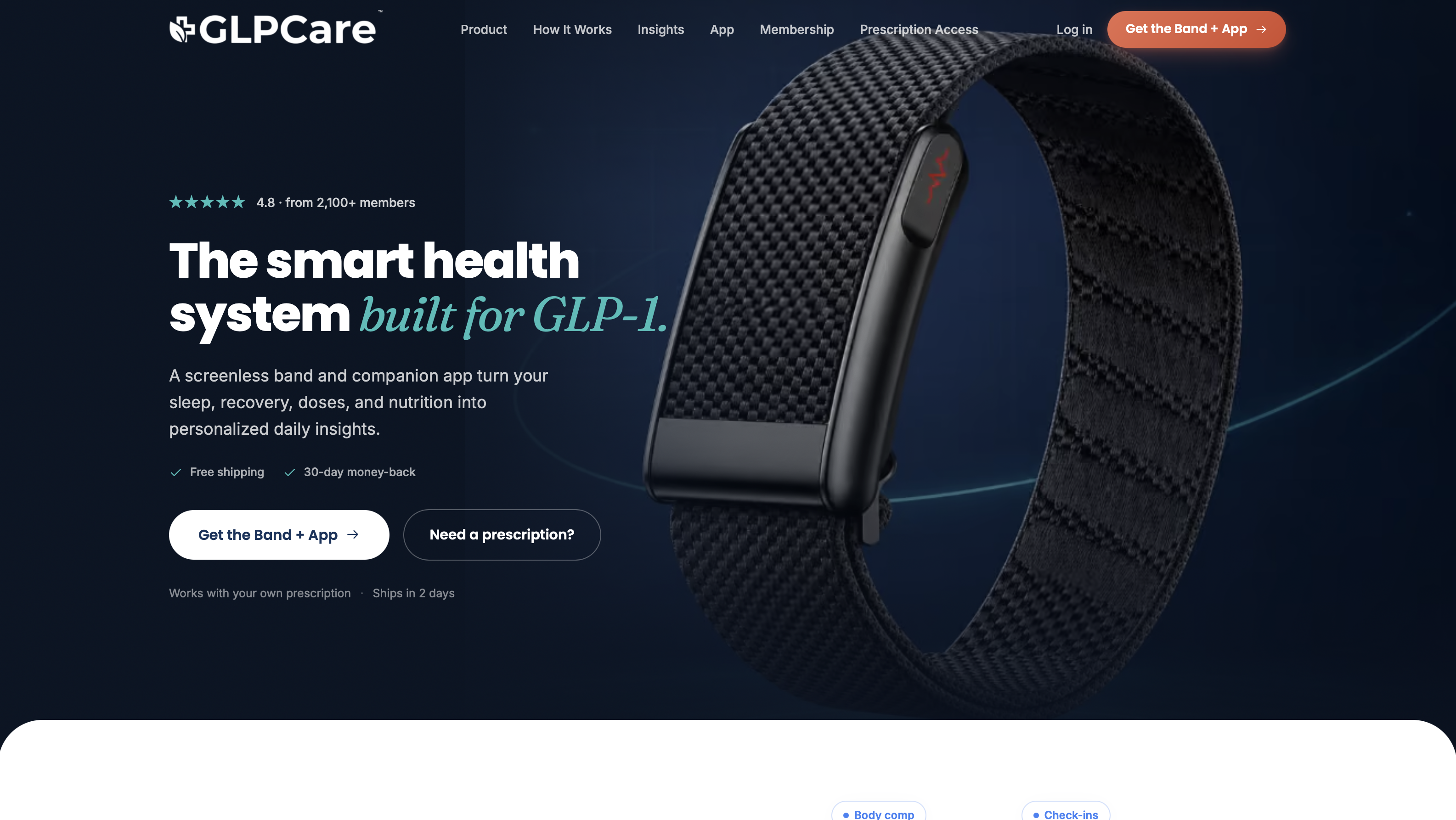
Our plans include GLPCare Membership at $199 per year, Semaglutide Care starting from $209 per month, and Tirzepatide Care starting from $299 per month, each pairing prescription medication with licensed clinician support rather than leaving you to manage dosing alone. Here’s what that looks like day to day:
- Clinician oversight of your medication and dose titration, with check-ins between visits rather than a once-a-month snapshot.
- A screenless wearable band that tracks sleep, heart rate, and activity, giving your care team real data to work from.
- Personalized nutrition coaching and an AI companion that logs your dosing and daily habits in one place.
Since the trials that showed the clearest benefit for drinking outcomes combined medication with structured therapy, we’d encourage you to ask about integrated behavioral support alongside any medication plan, whichever provider you choose. If you want to see whether you qualify, our GLP-1 readiness quiz is a quick first step, followed by a full clinical evaluation before any prescription begins.
This article is general information, not a substitute for advice from a qualified doctor. Consult a qualified healthcare professional about your own circumstances before acting on anything here.
FAQ
Does Zepbound stop alcohol cravings?
No medication has been shown to stop alcohol cravings outright, and Zepbound (tirzepatide) has not been tested in the same randomized alcohol use disorder trials as semaglutide. Early signals from related GLP-1 medications suggest craving reduction is possible, but tirzepatide-specific evidence for this use is not yet established.
What medication reduces alcohol cravings?
Naltrexone and acamprosate are the medications with established evidence and approval for reducing alcohol cravings and supporting abstinence. GLP-1 medications like semaglutide have shown reductions in heavy drinking days and craving scores in a 2026 randomized trial, but they are not yet approved for this specific use.
Which GLP-1 is best for alcohol consumption?
Semaglutide has the most direct randomized trial evidence for reduced heavy drinking days and alcohol-related hospitalizations, including an adjusted hazard ratio of 0.64 in a large registry study. Liraglutide shows a similar but slightly smaller association, with an adjusted hazard ratio of 0.72 in the same research, while other GLP-1 medications lack comparable alcohol-specific trial data.
Does Ozempic help you quit drinking alcohol?
Ozempic contains semaglutide, the same medication shown in a randomized controlled trial to reduce heavy drinking days when combined with behavioral therapy, but it is not approved or indicated for quitting alcohol. Any use for this purpose would be an off-label decision made with a clinician who can monitor you closely.
Sources
- Once-weekly semaglutide versus placebo in patients with alcohol use disorder and comorbid obesity: a randomised, double-blind, placebo-controlled trial - The Lancet
- GLP-1 plus therapy can reduce heavy drinking — NIH Research Matters
- Register-based cohort study reporting lower alcohol-related hospitalizations during GLP-1 use (PMC)