Trial Proven GLP-1 for Non Diabetics: 13.9%–20% Weight Loss, Risks
Trial Proven GLP-1 for Non Diabetics: 13.9%–20% Weight Loss, Risks
GLP-1 medications are appropriate for many non-diabetic adults, and the evidence backs it: patients meeting FDA weight-management thresholds see clinically meaningful, often dramatic weight loss. The tradeoff is real too. Nausea and other GI side effects are common early on, rare but serious risks exist, and a boxed thyroid warning limits who should start treatment at all.
TL;DR:
- Most non-diabetic adults qualify for GLP-1 therapy only if they have a BMI of 30 or higher, or 27 with a weight-related health condition, based on trial populations.
- Significant weight loss of up to 13.9% to 20% has been observed, with results scaling with dose and individual adherence, especially when combined with behavioral changes.
- Cardio-protective benefits are most relevant for those with established cardiovascular disease, with modest or uncertain benefits for metabolically healthy individuals.
- Common side effects are gastrointestinal and usually transient, but serious risks like thyroid tumors and pancreatitis require careful screening and symptom monitoring.
- Out-of-pocket costs are high and insurance coverage is inconsistent, making long-term adherence challenging without financial planning.
GlpcareManage GLP-1 Weight Loss With SupportGLPCare combines GLP-1 therapy, nutrition coaching, wearable health insights, and continuous clinician support for personalized weight management.Explore GLPCare
Table of Contents
- Who Qualifies for GLP-1 Therapy Without Diabetes?
- How Do GLP-1 Drugs Work and What Results Should You Expect?
- Does GLP-1 Therapy Improve Heart and Kidney Health?
- What Are the Side Effects and Safety Risks of GLP-1 Drugs?
- How Do Doctors Manage GLP-1 Dosing, Monitoring, and Long-Term Use?
- How Much Does GLP-1 Therapy Cost Without Insurance?
- What Should You Ask Your Doctor Before Starting GLP-1 Therapy?
- Is It Ethical to Use GLP-1 Drugs Off-Label for Weight Loss?
- GLP-1 vs. Diet, Exercise, and Behavioral Therapy: Which Works Better?
- Does GLP-1 Change How You Think About Food?
- Can You Combine GLP-1 With Other Weight Loss Medications or Supplements?
- An Editorial Take on Where GLP-1 Fits
- How GLPCare Supports Non-Diabetic Patients on GLP-1 Therapy
- Sources
- FAQ
Who Qualifies for GLP-1 Therapy Without Diabetes?
GLP-1 receptor agonists are not a general-purpose weight loss shortcut. The FDA restricts chronic weight-management indications to adults with a BMI of 30 or higher, or a BMI of 27 or higher paired with a weight-related condition like hypertension, dyslipidemia, obstructive sleep apnea, cardiovascular disease, or metabolic dysfunction-associated steatotic liver disease, according to Yale Medicine. Those thresholds aren’t arbitrary. They mirror the populations enrolled in the major trials that generated the efficacy data you’ll read about in the next section, which matters for how confidently those results apply to you.
Most participants in trials like STEP and SURMOUNT were adults with obesity or overweight status plus at least one metabolic complication, not otherwise healthy people chasing a few vanity pounds. That’s the population where the risk-benefit math clearly favors treatment. If your BMI sits in the high 20s with no comorbidities, you may not meet criteria, and a clinician may recommend nutrition and activity changes first.
Certain factors take GLP-1 therapy off the table entirely, or at minimum call for a specialist consult before starting:
- Pregnancy or plans to become pregnant soon, since animal and limited human data raise fetal risk concerns
- A personal or family history of medullary thyroid carcinoma or multiple endocrine neoplasia syndrome type 2
- A history of pancreatitis or active gallbladder disease that hasn’t been evaluated
- Severe gastrointestinal motility disorders, including a prior diagnosis of gastroparesis
If you’re unsure where you fall, a pre-visit eligibility checklist can help you organize your history before you ever sit down with a clinician.
How Do GLP-1 Drugs Work and What Results Should You Expect?
GLP-1 receptor agonists mimic a gut hormone that your body releases naturally after eating. That hormone signals your brain that you’re full, slows the rate food leaves your stomach, and adjusts insulin and glucagon release in ways that stabilize blood sugar. Human trials confirm the appetite effect isn’t subjective. Participants on GLP-1 therapy report genuinely reduced hunger and eat less at meals without consciously restricting themselves, based on experimental satiety research. That’s a meaningfully different mechanism than willpower-based dieting, which fights hunger signals rather than dialing them down.
The numbers back up the mechanism of semaglutide preparation and handling.
Weight loss by agent:
- Semaglutide 2.4 mg produced up to roughly 13.9% weight loss over about 68 to 72 weeks in non-diabetic adults across the STEP trial program
- Tirzepatide, a dual GLP-1/GIP agonist, reported weight loss as high as 16.5% to 20% at its highest studied doses
- Results scale with dose. Lower starting doses produce smaller effects, which is why titration schedules matter as much as the drug itself
Those figures come from randomized controlled trials, not marketing copy, and a network meta-analysis ranks tirzepatide and subcutaneous semaglutide among the most effective options currently available for non-diabetic weight loss. Dual and triple agonists in earlier-phase development have posted even larger numbers in small studies, but those results need confirmation in bigger, longer trials before anyone should treat them as settled.
Individual response varies widely. Baseline metabolic health, adherence to dose escalation, and how consistently you pair the medication with dietary changes all shift where you land within these ranges. Two people starting the same dose on the same day can post noticeably different results six months in, and that’s expected, not a sign something is wrong.
It’s worth understanding the class distinctions here. Single GLP-1 agonists (semaglutide, liraglutide) act on one receptor pathway. Dual agonists like tirzepatide hit both GLP-1 and GIP receptors, which appears to explain their larger average effect. This isn’t a case of one being “better” for everyone. It’s a case of different mechanisms producing different average magnitudes, with individual tolerance and response still deciding the real-world outcome.
Does GLP-1 Therapy Improve Heart and Kidney Health?
Weight loss was never the only benefit clinicians were chasing when they studied these drugs in non-diabetic patients. The SELECT trial tested once-weekly semaglutide 2.4 mg in overweight or obese adults who had existing cardiovascular disease but no diabetes. The result: a reduced risk of the composite endpoint of cardiovascular death, nonfatal heart attack, or nonfatal stroke, with a hazard ratio around 0.80 compared to placebo. That’s a meaningful signal in a population that already carries elevated cardiac risk.
Other trial programs have extended the picture toward kidney outcomes and broader cardiometabolic markers. Reviews of this evidence note that GLP-1 receptor agonists show cardiometabolic benefits beyond the scale, including improvements in blood pressure, inflammatory markers, and lipid profiles that track alongside weight loss but don’t appear fully explained by it.
Context matters before you extrapolate this to your own situation:
- SELECT enrolled patients with established cardiovascular disease, not healthy adults hoping to prevent a first cardiac event
- The magnitude of cardiac benefit likely scales with your baseline risk. Someone with no cardiac history and normal blood pressure shouldn’t expect the same relative protection
- Renal outcome data is still maturing relative to the cardiovascular findings, and much of it remains specific to patients with elevated baseline risk
If you have known cardiovascular disease and you’re also overweight, the SELECT findings are directly relevant to your case. If you’re metabolically healthy aside from carrying excess weight, the takeaway is more modest: expect the metabolic improvements that typically accompany significant weight loss, without assuming the same cardiac risk reduction shown in a sicker trial population.
What Are the Side Effects and Safety Risks of GLP-1 Drugs?
The tolerability story for GLP-1 medications is mostly predictable, and mostly gastrointestinal. Nausea, vomiting, diarrhea, and constipation show up most often during the early titration phase, when your dose is climbing toward its target. These effects are usually transient, and most people find they fade or become manageable within a few weeks of reaching a stable dose, according to safety profile reviews of the GLP-1 class.
The rarer risks deserve equal attention, even though they affect a small minority of patients:
- Acute pancreatitis, though uncommon, has been reported and warrants immediate medical attention if you develop severe abdominal pain
- Gallbladder disease and gallstones appear at somewhat elevated rates in some observational data, likely tied to rapid weight loss itself rather than the drug’s mechanism directly
- Intestinal obstruction signals have surfaced in post-marketing reports, particularly in patients with prior abdominal surgery
- Delayed gastric emptying can occasionally become clinically significant, which matters for anyone with pre-existing motility issues
The boxed warning is the one piece of safety information that should never get skipped. GLP-1 receptor agonists carry an FDA boxed warning for medullary thyroid carcinoma and multiple endocrine neoplasia syndrome type 2, based on thyroid tumor findings in rodent studies. Anyone with a personal or family history of either condition should not start this class of medication, full stop, and pregnancy is a contraindication as well.
Pro Tip: Keep a simple symptom log during your first eight weeks on any GLP-1 medication, noting nausea severity, meal size, and hydration. That log turns a vague “I feel off” into specific, useful information your clinician can act on quickly.
Practical mitigation makes a real difference in how tolerable treatment feels day to day. Clinicians routinely recommend a slower titration pace than the label minimum for patients who struggle with nausea, along with small, low-fat meals during dose increases and consistent hydration, drawing on clinical guidance for managing GLP-1 side effects. If symptoms escalate to severe abdominal pain, persistent vomiting, or signs of dehydration, that’s a reason to contact your prescriber immediately rather than waiting out the next dose.
How Do Doctors Manage GLP-1 Dosing, Monitoring, and Long-Term Use?
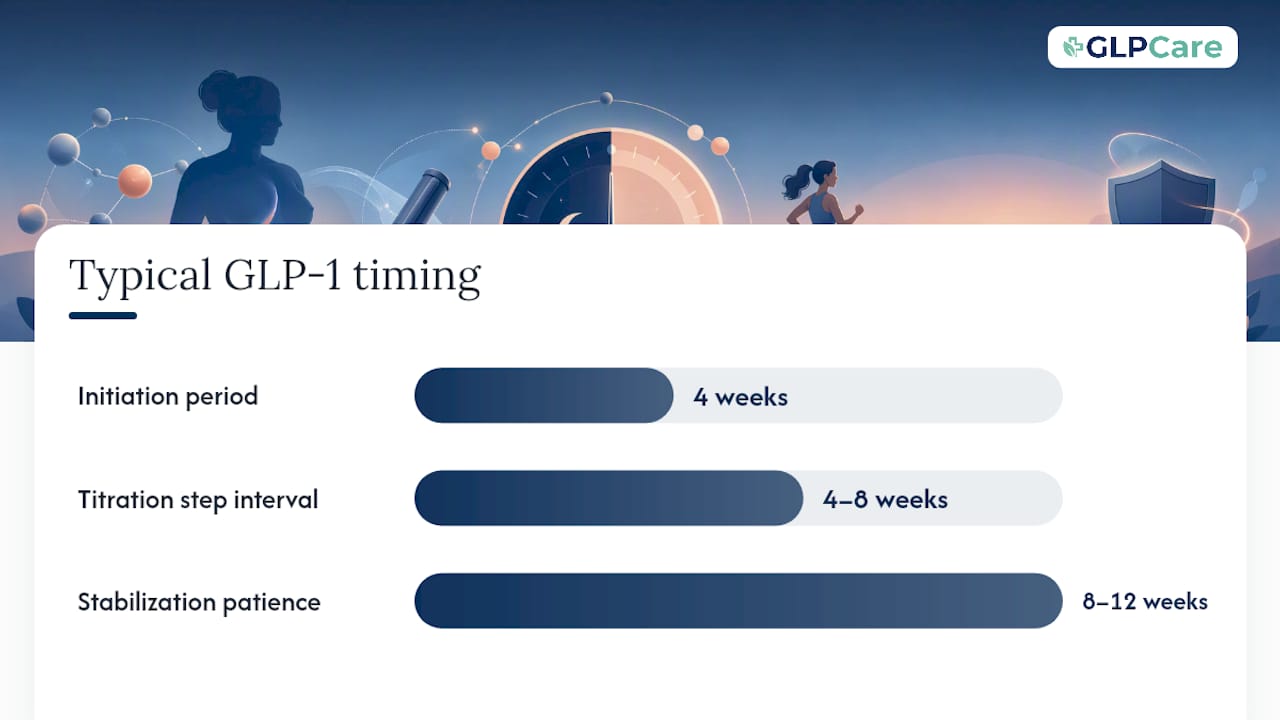
Starting a GLP-1 medication follows a fairly standardized pattern across agents, even though exact doses and timelines differ by drug: begin at a low dose, hold it for several weeks, then step up gradually toward the target maintenance dose. Rushing this schedule is the single most common cause of severe nausea and early discontinuation, so patience during the first two to three months pays off later.
- Initiation. Your clinician starts you on the lowest available dose, typically for four weeks, to let your gastrointestinal system adjust.
- Titration. Dose increases happen every four to eight weeks depending on tolerance, continuing until you reach either the target therapeutic dose or the highest dose you tolerate well.
- Monitoring. Regular check-ins track weight trend, GI symptoms, and, when clinically indicated, relevant labs. This isn’t a “prescribe and forget” medication.
- Maintenance. Once you reach a stable dose with acceptable side effects, that dose typically continues long-term rather than being reduced once weight goals are met.
- Duration planning. You and your clinician should discuss upfront whether this is intended as long-term therapy or a bridge to a different maintenance plan.
That last point matters more than most people expect going in. Evidence on weight regain after stopping GLP-1 therapy shows that a substantial share of lost weight returns once the medication stops, absent an active maintenance plan. This is closer to how blood pressure or cholesterol medications work than how a course of antibiotics works. Treating it as a temporary fix sets up disappointment.
Preserving lean muscle mass deserves specific attention, since rapid weight loss pulls from both fat and muscle stores. Clinical guidance generally points to higher protein intake, often in the range of 1.0 to 1.2 grams per kilogram of body weight daily, combined with progressive resistance training two to three times a week, based on clinical recommendations for lean mass preservation during GLP-1 therapy. Nutrition coaching that adapts alongside your changing appetite, rather than a fixed meal plan handed out on day one, tends to produce better adherence over months of treatment.
Pro Tip: Ask your clinician to set a specific protein gram target rather than a vague “eat more protein” instruction. A number you can track against your actual meals is far more useful than a general reminder.
Coordinate with a specialist, such as an endocrinologist or bariatric medicine physician, if you have complex comorbidities, a history of eating disorders, or if standard dose escalation isn’t achieving meaningful progress after several months.
How Much Does GLP-1 Therapy Cost Without Insurance?
Out-of-pocket costs for brand-name GLP-1 medications commonly run into the hundreds of dollars per month, and the exact figure swings based on your specific drug, dose, pharmacy, and whether you qualify for a manufacturer savings program. There’s no single fixed price, which frustrates a lot of first-time patients expecting a clear answer.
Insurance coverage is inconsistent at best. Many payers only cover GLP-1 prescriptions when the diagnosis code reflects diabetes, or when strict BMI and comorbidity documentation supports a weight-management indication, often requiring prior authorization before approval. Medicare Part D has historically excluded coverage for weight-loss-only indications, which leaves a meaningful share of eligible older adults paying full price regardless of medical need.
A few access realities worth knowing before you shop around:
- Manufacturer savings cards can meaningfully lower costs for commercially insured patients, though eligibility rules vary
- Compounded versions from unregulated or non-licensed sources carry real safety risk and should be avoided regardless of price appeal
- Legitimate telehealth prescribing through licensed clinicians remains the safest access pathway if your local options are limited
- Real-world adherence data shows average persistence around 51% at one year, with only about 27% of patients hitting 80% or higher days-covered, and cost is a commonly cited driver of discontinuation
That adherence gap is worth sitting with. A medication that works brilliantly in a trial setting only helps you if you can actually stay on it, which makes cost planning a clinical consideration, not just a financial one.
What Should You Ask Your Doctor Before Starting GLP-1 Therapy?
Walking into your appointment prepared saves time and produces a better care plan. A short pre-visit checklist covers most of what your clinician needs to know upfront:
- Family and personal history. Note any thyroid cancer diagnoses in your family, prior pancreatitis, gallbladder disease, or eating disorder history.
- Pregnancy status and plans. Be upfront about current pregnancy, breastfeeding, or plans to conceive within the next year.
- Current medications and supplements. Bring a full list, including anything over-the-counter, since interactions and overlapping GI effects matter.
- Prior weight-loss attempts. Share what’s worked, what hasn’t, and why previous efforts stalled.
- Your specific questions. Ask about expected timeline to see results, how side effects will be managed, what monitoring looks like, and whether this is framed as short-term or long-term therapy.
Depending on your answers, your clinician may clear you to start immediately, refer you to a specialist first, or explain why you’re not currently a candidate. All three outcomes are useful information, even the third one.
Is It Ethical to Use GLP-1 Drugs Off-Label for Weight Loss?
Off-label prescribing of GLP-1 medications for weight loss in adults who don’t meet strict FDA BMI criteria has become widespread, driven largely by demand outpacing formal indication boundaries. This is not automatically improper. Physicians legally prescribe FDA-approved drugs off-label across many specialties when clinical judgment supports it.
The ethical friction shows up in a few specific places. Supply constraints during periods of high demand have occasionally limited access for patients with diabetes who need these drugs to manage blood sugar, raising fairness concerns when the same medication gets prescribed to patients pursuing modest cosmetic weight loss. Prescribing without adequate monitoring, particularly through low-touch online platforms that skip meaningful clinical evaluation, has also drawn scrutiny from medical organizations concerned about safety oversight.
None of that means off-label use is inherently wrong. A patient with a BMI of 26 and significant metabolic dysfunction that doesn’t neatly fit the approved criteria may still be a reasonable candidate in a physician’s clinical judgment. The distinction that matters is whether a licensed clinician is genuinely evaluating your case, monitoring your response, and adjusting care accordingly, rather than issuing a prescription based on a five-minute questionnaire. Legitimate telehealth models with real clinician oversight look very different from prescription mills, even when both operate online.
GLP-1 vs. Diet, Exercise, and Behavioral Therapy: Which Works Better?
Comparing GLP-1 medications against diet and exercise alone misses the point somewhat, because the strongest evidence supports combining them rather than choosing one path. Lifestyle intervention alone, meaning structured diet changes plus exercise and behavioral coaching, typically produces weight loss in the range of 5% to 10% of body weight for most participants who stick with it. That’s meaningful, but it falls well short of the 13.9% to 20% ranges seen with pharmacotherapy.
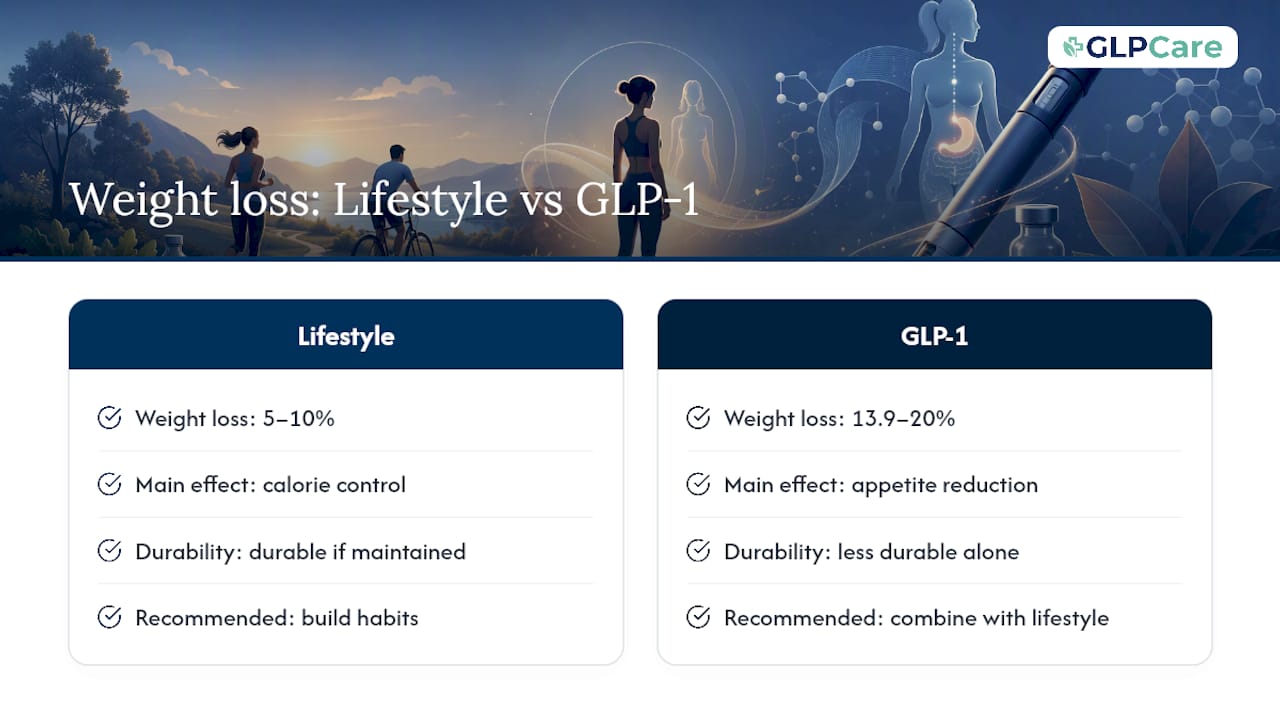
The reason isn’t that willpower fails and drugs succeed. It’s that GLP-1 medications address a physiological drive, appetite signaling, that behavioral strategies alone struggle to override consistently over months and years. A clinical perspective on integrated obesity care makes the point directly: GLP-1 therapy mainly reduces appetite rather than increasing how many calories you burn, so pairing it with nutrition guidance and activity still matters enormously for body composition and long-term results.
Behavioral therapy earns its place for a different reason. It builds the habits and self-monitoring skills that determine whether weight loss holds once medication doses stabilize or eventually taper. Patients who treat GLP-1 therapy as a total replacement for behavior change often see less durable results than those who use the appetite reduction as a window to build sustainable habits. The medication buys you an easier starting point. What you do with that window still counts.
Does GLP-1 Change How You Think About Food?
Beyond the physical hunger reduction, many patients report a shift in how food occupies their mental space. Food noise, the near-constant background thoughts about what to eat next, when to eat, or what you’re craving, often drops noticeably on GLP-1 therapy. Patients frequently describe this as one of the most unexpected and welcome effects, distinct from simply eating less.
This shift carries real psychological weight, and not always in a simple positive direction. Some patients describe genuine relief from years of preoccupation with food decisions. Others, particularly those with a history of disordered eating, need closer monitoring, since dramatically reduced appetite and altered food relationships can interact with prior eating disorder patterns in complicated ways.
There’s also a behavioral adjustment period worth naming honestly. Structured mealtimes can start to feel less appealing when your appetite has dropped substantially, which sometimes leads patients to under-eat rather than simply eat appropriately smaller portions. That’s part of why ongoing nutrition coaching matters throughout treatment, not just during the initial ramp-up. A coach or clinician who checks in regularly can catch under-eating patterns before they undermine the muscle-preservation goals discussed earlier, and can help you recognize the difference between “not hungry” and “not eating enough to stay healthy.”
Can You Combine GLP-1 With Other Weight Loss Medications or Supplements?
Combining GLP-1 therapy with other prescription weight-loss medications is an area your clinician should manage directly rather than something to experiment with on your own. Some combination approaches are actively studied in clinical trials, and dual and triple agonist drugs represent one version of that idea built into a single molecule rather than a mix of separate prescriptions.
Over-the-counter supplements marketed for weight loss deserve real skepticism alongside GLP-1 therapy. Many supplement ingredients carry their own gastrointestinal effects, and stacking them with a medication that already slows gastric emptying can amplify nausea, dehydration risk, or nutrient absorption issues. There’s also minimal quality evidence that most weight-loss supplements add meaningful benefit on top of an already effective prescription medication.
The safest approach is straightforward: disclose everything you’re taking, prescription or not, at every visit. If you’re curious about a specific supplement or an additional medication a friend mentioned worked for them, ask before adding it rather than after. Your clinician can tell you quickly whether something poses an interaction risk or simply won’t add value given what you’re already on.
An Editorial Take on Where GLP-1 Fits
GLP-1 medications are genuinely powerful tools, and treating them as either a miracle or a shortcut misses what the trial data actually shows: strong average results with real individual variation, meaningful side effects that require active management, and outcomes that depend heavily on what happens around the prescription, not just the prescription itself. The clinicians who get the best results for patients are the ones who treat dosing as one piece of a larger plan rather than the whole plan.
That’s the gap most coverage of this topic skips. A prescription without nutrition support, activity guidance, and real monitoring is a weaker version of what these drugs can deliver. An effective approach pairs prescribing with coaching and a wearable that tracks biometric trends like sleep and activity between visits, reflecting the principle that the medication matters, but so does everything happening around it.
— Dominique
How GLPCare Supports Non-Diabetic Patients on GLP-1 Therapy
Continuous oversight offers more than a single monthly prescription refill. Instead of a one-time telehealth visit and a bottle shipped to your door, ongoing clinician support, personalized nutrition coaching that adjusts as your appetite changes, and a wearable that tracks sleep, heart rate, and activity between check-ins provide a fuller picture than just your weight on a scale.

That continuous data matters most during the exact periods this article covered: dose titration, when GI tolerance needs close attention, and the muscle-preservation window, when protein intake and resistance activity determine how much of your weight loss stays fat versus lean mass. The GLP Care Band feeds that information directly to your care team rather than leaving you to self-report and hope you remember the details by your next appointment. If you’re weighing whether a bring-your-own-medication plan or a medication-included plan fits your situation better, a clinical team can help you make that decision rather than leaving you to guess.
If you’re not sure whether you meet the BMI and comorbidity thresholds discussed earlier, the GLP-1 readiness quiz gives you a fast, concrete starting point before your first consultation.
This article is general information, not a substitute for advice from a qualified doctor. Consult a qualified healthcare professional about your own circumstances before acting on anything here.
FAQ
Can You Take a GLP-1 Medication If You’re Not Diabetic?
Yes. GLP-1 medications are FDA-approved for chronic weight management in non-diabetic adults with a BMI of 30 or higher, or a BMI of 27 or higher with a weight-related condition like hypertension or obstructive sleep apnea.
Which GLP-1 Medication Works Best for Non-Diabetic Adults?
Tirzepatide has produced the largest average weight loss in trials, up to 16.5% to 20% at higher doses, while semaglutide 2.4 mg has reached up to 13.9% over about 68 to 72 weeks. The right choice depends on your health history, tolerance, and clinician guidance, not just the highest average number.
Can People Without Obesity Use GLP-1 Medication?
People with a BMI below 27, without a qualifying comorbidity, generally don’t meet FDA criteria for GLP-1 weight-management therapy, though clinicians sometimes prescribe off-label based on individual clinical judgment. GLPCare’s readiness quiz can help clarify where you stand before booking a consult.
Will Insurance Cover GLP-1 Therapy If You Don’t Have Diabetes?
Coverage varies widely and often requires documented BMI and comorbidity criteria plus prior authorization, and Medicare Part D has historically excluded weight-loss-only indications. Many patients end up paying out-of-pocket or using manufacturer savings programs, which is part of why adherence rates hover around 51% at one year.
Do You Have to Stay on GLP-1 Medication Forever?
Many patients need ongoing therapy to maintain results, since weight regain is common after stopping without an active maintenance plan. Duration should be a specific conversation with your clinician, not an assumption made either way.