Switching to Tirzepatide: Your Safe Step-by-Step Guide
Switching to Tirzepatide: Your Safe Step-by-Step Guide
Yes, switching to tirzepatide from semaglutide is commonly done and can be safe under clinician supervision. The standard approach: take your last scheduled semaglutide dose, wait approximately seven days, then start tirzepatide at 2.5 mg once weekly. Do not overlap the two medications without your prescriber’s explicit approval.
Three safety points to keep in mind before you go further:
- No validated dose equivalence exists. Your dose of Ozempic or Wegovy does not translate to an equivalent tirzepatide dose. Everyone starts at 2.5 mg, regardless of prior semaglutide dose.
- Expect GI re-titration. Your digestive system will likely reset, even if you tolerated semaglutide well. Nausea, loose stools, or constipation may return temporarily.
- Monitor glucose and adjust other diabetes medications. If you take insulin or a sulfonylurea alongside your GLP-1, your clinician may need to reduce those doses to prevent hypoglycemia.
Key Takeaways
Switching from semaglutide to tirzepatide is safe and evidence-supported under clinician supervision, provided you start at 2.5 mg, allow a 7-day gap, and monitor glucose and GI symptoms throughout titration.
| Point | Details |
|---|---|
| Always start at 2.5 mg | No validated dose equivalence exists; every patient starts at 2.5 mg regardless of prior semaglutide dose. |
| Use a 7-day gap | Semaglutide’s ~7-day half-life means waiting one week before starting tirzepatide avoids stacking two active agents. |
| Expect a 12-week adjustment | A prospective study found mean weight loss of 2.15 kg, mean HbA1c reduction of 0.43%, and GI adverse events in 13.2% of patients at 12 weeks after switching to tirzepatide 5 mg. |
| Adjust concomitant meds | Reduce insulin or sulfonylurea doses proactively to prevent hypoglycemia during tirzepatide titration. |
| Glpcare supports the full switch | Glpcare provides clinical assessment, prescription management, wearable monitoring, and titration support to reduce risk at every step. |
Table of Contents
- How do semaglutide and tirzepatide differ, and what does the evidence show?
- When does switching from semaglutide to tirzepatide make clinical sense?
- What does a safe switching plan actually look like, step by step?
- How do you manage side effects and recognize serious warning signs?
- Which patients need extra precautions or should not switch?
- What should you bring to your clinician before switching?
- The case for individualized switching, not just protocol-following
- Glpcare makes the switch safer, from first dose to full titration
- Useful sources
- FAQ
How do semaglutide and tirzepatide differ, and what does the evidence show?
Semaglutide (Ozempic for type 2 diabetes, Wegovy for weight management, both by Novo Nordisk) works by activating the GLP-1 receptor. This slows gastric emptying, reduces appetite, and improves insulin secretion. Tirzepatide (Mounjaro for type 2 diabetes, Zepbound for weight management, both by Eli Lilly) activates two receptors simultaneously: GLP-1 and GIP (glucose-dependent insulinotropic polypeptide). That dual agonism appears to produce stronger appetite suppression and a higher average weight ceiling than GLP-1 activation alone.
In practice, the GIP component likely amplifies insulin release in a glucose-dependent way and may also act on fat tissue directly, which helps explain tirzepatide’s greater average efficacy in trials. Tolerability differs too: some patients who experience persistent nausea on semaglutide find tirzepatide’s side-effect profile more manageable, though individual responses vary considerably.
What the pivotal trials show: In the SURMOUNT program, tirzepatide produced larger average weight loss than semaglutide across comparable trial populations, with greater HbA1c reductions in the SURPASS diabetes series. The SURPASS-1 trial demonstrated robust glycemic and weight outcomes in type 2 diabetes patients, reinforcing tirzepatide’s clinical profile.
Key efficacy comparisons from GLP-1 therapy evidence:
- Tirzepatide typically shows higher average percent body weight loss compared to semaglutide in head-to-head and pivotal trial data.
- HbA1c reductions with tirzepatide in the SURPASS series exceeded those seen with semaglutide comparators in the STEP series.
- Individual response still varies. Some patients do exceptionally well on semaglutide; others plateau and respond strongly after moving to tirzepatide.
- Discontinuation rates for GI adverse events were not consistently higher with tirzepatide versus semaglutide across all trials, despite early GI symptoms being common with both.
The bottom line on efficacy: tirzepatide offers a higher average ceiling for weight loss and glycemic control, but it is not a guaranteed upgrade for every person. Clinician-guided decision-making remains the deciding factor.
When does switching from semaglutide to tirzepatide make clinical sense?
Not every patient on semaglutide needs to switch. The decision should be driven by clear clinical or practical reasons, not just curiosity about a newer medication.
Common evidence-based reasons to consider switching:
- A true weight-loss plateau after reaching the maximum tolerated semaglutide dose and maintaining it for at least 12 weeks, with diet and activity optimized
- Suboptimal glycemic control (HbA1c still above target) despite full titration on Ozempic or Wegovy
- Persistent tolerability issues with semaglutide that have not resolved with slower titration or dietary adjustments
- Formulary changes, insurance coverage shifts, or cost differences that make tirzepatide more accessible than semaglutide
- Patient preference after a shared decision-making conversation with their clinician
How to tell a real plateau from lifestyle drift:
- Weight has been stable for 12+ weeks at the maximum tolerated dose
- Dietary habits and activity levels have remained consistent, not loosened
- Titration was completed per label, not stalled at a lower dose due to side effects
- No recent medication changes, stress events, or sleep disruptions that could explain the stall
Contraindications and cautions — switching to tirzepatide is not appropriate if you have:
- A personal or family history of medullary thyroid carcinoma (MTC) or Multiple Endocrine Neoplasia type 2 (MEN2)
- A history of pancreatitis (acute or chronic) without clinician clearance
- Current pregnancy or active plans to conceive in the near term
- Severe gastrointestinal disease where GI side effects would pose serious risk
If any of these apply, discuss them explicitly with your prescriber before making any change.
What does a safe switching plan actually look like, step by step?
The Pharmaceutical Journal’s practical guidance on switching between weight-loss medications is clear on one point: no national standardized switching protocol exists. Clinicians extrapolate from pharmacokinetics and label guidance. That means your plan should be individualized, but the following framework reflects the most widely used, clinician-aligned approach.
The standard pathway
Semaglutide has an elimination half-life of approximately seven days, as confirmed by pharmacokinetic data. After your last weekly injection, drug levels fall meaningfully over the following week. Starting tirzepatide at 2.5 mg after that gap avoids stacking two active incretin agents and reduces the risk of compounded GI effects or hypoglycemia.
Practical window: 3–7 days after your last semaglutide dose is the accepted range. Seven days aligns cleanly with your existing weekly injection schedule and is the simplest approach for most patients.
Label-directed tirzepatide titration
Per JAMA Internal Medicine guidance on tirzepatide dosing, the label-directed schedule is fixed and non-negotiable as a starting point:
| Week | Dose | What to expect |
|---|---|---|
| 1–4 | 2.5 mg weekly | GI adjustment period; appetite suppression begins; weight loss may be modest |
| 5–8 | — | Appetite suppression strengthens; GI symptoms often stabilize |
| 9–12 | 7.5 mg weekly | Weight loss typically accelerates; glycemic improvements deepen |
| 13–15 | 10 mg weekly | Approaching therapeutic range for most patients |
| 18–20 | — | Near-maximum dose; titrate only if tolerated |
| — | 15 mg weekly | Maximum approved dose; maintain if tolerated and clinically indicated |
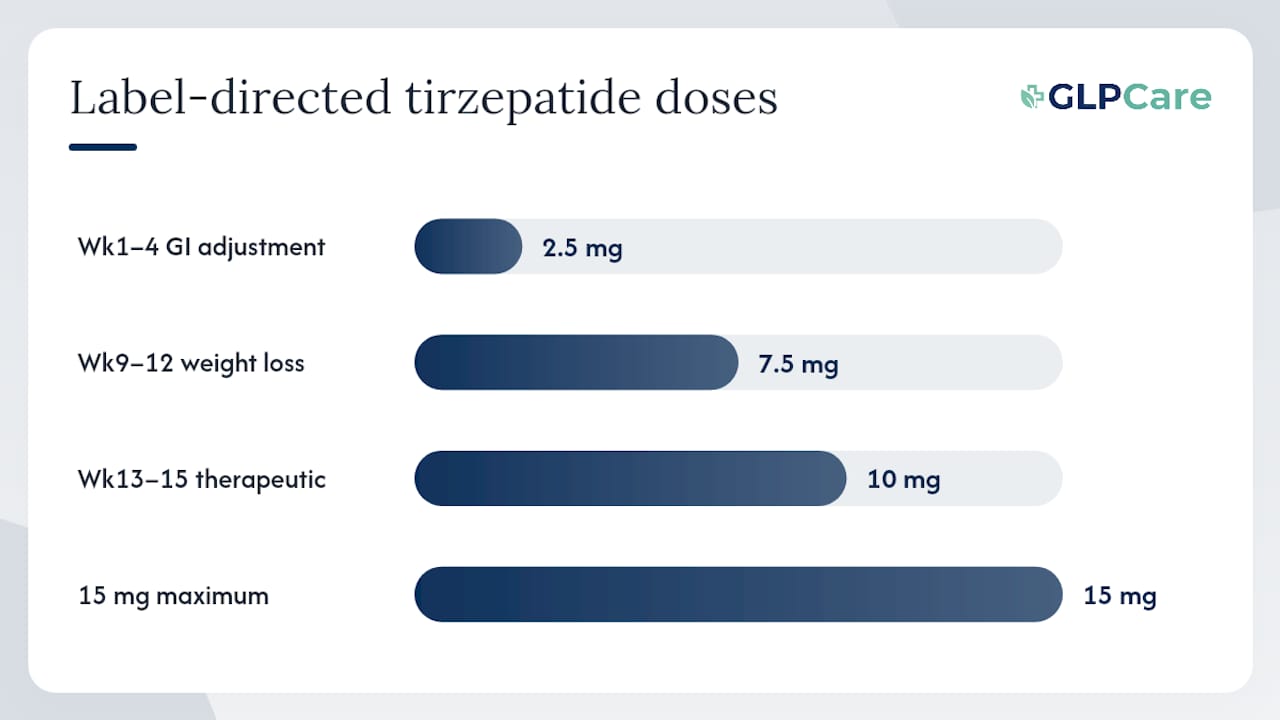
Minimum four weeks between each increase. Tirzepatide reaches steady state at each dose level in approximately 4–5 weeks, which is why rushing titration undermines both safety and efficacy.
Safety rules during titration:
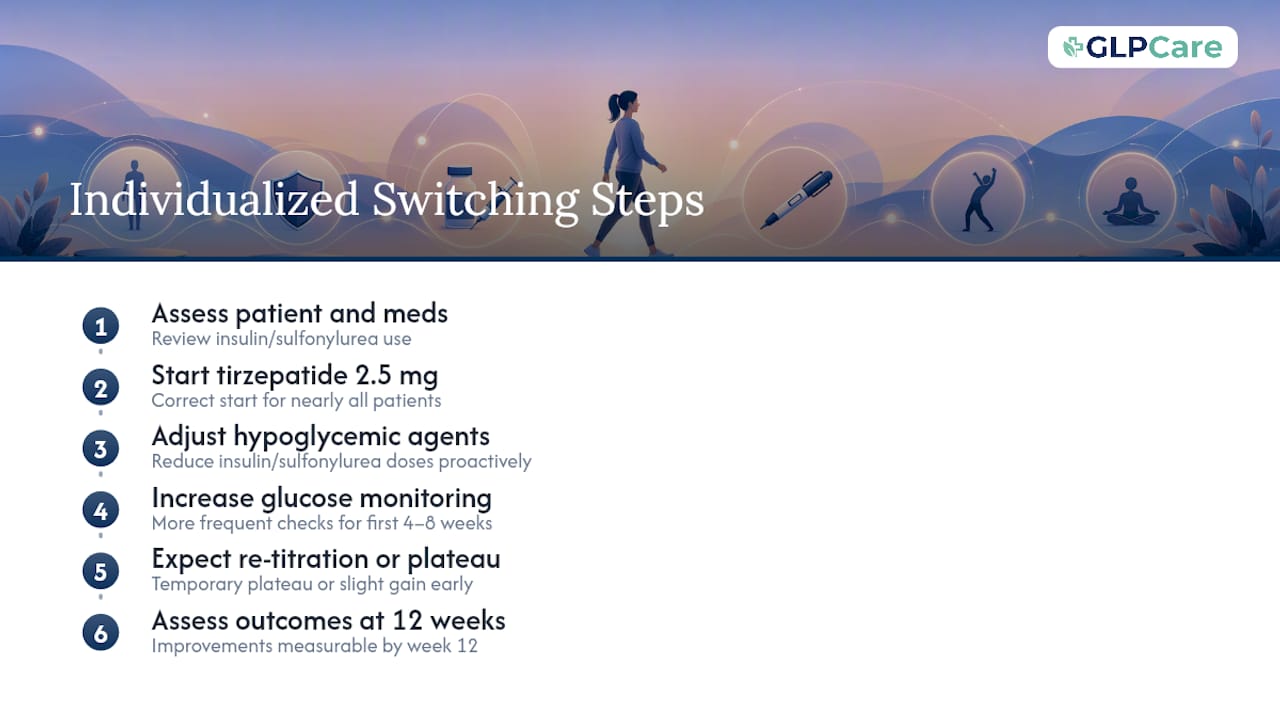
- Never start above 2.5 mg, regardless of your prior semaglutide dose
- Do not inject both medications in the same week
- Hold a dose increase if GI symptoms are still significant at the current dose
- Contact your clinician before skipping more than one scheduled dose
Some clinicians managing type 2 diabetes patients with urgent glycemic needs may escalate slightly faster in selected cases, but this is the exception and requires close monitoring.
Pro Tip: Align your first tirzepatide injection with the day you would have taken your next semaglutide dose. This keeps your weekly rhythm intact, makes the 7-day gap automatic, and removes any guesswork about timing.
How do you manage side effects and recognize serious warning signs?
GI symptoms are the most common adverse effects with tirzepatide, particularly during the first few weeks at each new dose. Most are manageable with practical adjustments.
Everyday GI management strategies:
- Eat smaller, lower-fat meals and avoid high-fiber foods in large quantities during the first week at each new dose
- Stay well-hydrated; nausea-related fluid restriction can quickly lead to dehydration
- Eat slowly and stop before feeling full
- Avoid lying down immediately after eating
- Discuss antiemetic options (such as ondansetron or promethazine) with your clinician if nausea is significantly affecting daily function
Glucose safety and medication interactions:
- If you take insulin alongside your GLP-1, your clinician should consider reducing the insulin dose before or shortly after starting tirzepatide to reduce hypoglycemia risk
- Sulfonylureas (glipizide, glimepiride, glyburide) carry a similar risk; dose reduction is often warranted during titration
- Check fasting blood glucose more frequently during the first 4–8 weeks, especially after each dose increase
- Keep a log of glucose readings to share at follow-up visits
Red-flag symptoms that require stopping the medication and seeking urgent care: Severe, persistent abdominal pain radiating to the back (possible pancreatitis); sudden vision changes or worsening diabetic retinopathy; signs of gallbladder disease including right upper quadrant pain, fever, or jaundice; severe hypoglycemia with confusion or loss of consciousness; and signs of a serious allergic reaction including throat swelling or difficulty breathing. Do not wait for a scheduled appointment if any of these occur.
For a comprehensive breakdown of tirzepatide side effects and how to manage them, Glpcare’s clinical blog covers each in detail.
Documentation matters. Keep a simple log of your dose dates, weight, glucose readings, and any symptoms. This record gives your clinician a clear picture at follow-up and helps identify patterns that might warrant a dose hold or adjustment.
Which patients need extra precautions or should not switch?
Pregnancy and reproductive planning
Tirzepatide is not approved for use during pregnancy. If you are pregnant, planning to conceive, or think you may be pregnant, stop the medication and consult your clinician immediately. Adequate contraception is recommended during treatment and for a period after stopping, given the drug’s half-life and potential fetal effects. Your clinician can advise on the appropriate washout period before attempting conception.
Renal and hepatic impairment
Clinical trial data for tirzepatide in patients with significant renal or hepatic impairment is limited. Dose decisions in these populations must be individualized. More frequent lab monitoring (kidney function, liver enzymes, electrolytes) is appropriate, and titration should proceed more cautiously than in otherwise healthy patients.
Perioperative considerations
If you are scheduled for surgery, coordinate the timing of your tirzepatide doses with your surgical and anesthesia team. Gastric emptying effects from GLP-1/GIP agonists increase aspiration risk under general anesthesia. Many anesthesiologists now recommend holding the medication for one to two weeks before elective procedures, though guidance varies by institution and procedure type.
What should you bring to your clinician before switching?
Walking into your appointment prepared makes the conversation faster and the plan safer. Here is what to bring and what to ask.
Information to bring:
- Current medication list with doses and start dates (Ozempic or Wegovy dose, duration, and any recent changes)
- Weight trend over the past 3–6 months
- Most recent HbA1c and fasting glucose logs
- Relevant medical history: any history of pancreatitis, thyroid conditions, gallbladder disease, or prior GI surgeries
- Insurance card and any prior authorization history for GLP-1 medications
Questions to ask your clinician:
- What is the right timing for my last semaglutide dose and first tirzepatide injection?
- Should I reduce my insulin or sulfonylurea dose before or at the time of switching?
- How often should I check my blood glucose during the first 8 weeks?
- What is the titration plan if I experience significant GI symptoms?
- Does my insurance cover Mounjaro or Zepbound, and what is the prior authorization process?
- Who do I contact between appointments if I have side effects or glucose concerns?
Monitoring and follow-up suggestions:
- Labs at baseline (HbA1c, fasting glucose, kidney function, liver enzymes) and at 12 weeks
- Follow-up visit or telehealth check-in at 4–6 weeks after starting tirzepatide
- Blood glucose self-monitoring at least daily during the first 4 weeks if you take insulin or a sulfonylurea
- Weight check weekly or biweekly to track early response
Pro Tip: Glpcare’s GLP-1 readiness quiz and free tools — including a protein calculator and weight loss goal tracker — can help you document your baseline metrics and arrive at your appointment with organized, clinician-ready data.
The case for individualized switching, not just protocol-following
There is a tendency in online discussions about switching medications to treat it as a simple substitution: stop one, start the other, follow the chart. The clinical reality is more nuanced, and I think that gap between protocol and practice is where most patients run into trouble.
The absence of a validated dose equivalence between semaglutide and tirzepatide is not a technicality. It reflects a genuine pharmacological difference. These are not two versions of the same drug. Tirzepatide’s dual agonism means it engages appetite and glucose regulation through a different mechanism, and the body responds to that differently than it does to a GLP-1 monoagonist. Starting at 2.5 mg is not a conservative formality; it is the correct clinical decision for nearly every patient, regardless of how high their semaglutide dose was.
What I find underappreciated in most switching discussions is the glucose management piece. Patients who are also on insulin or a sulfonylurea face real hypoglycemia risk during the first 4–8 weeks of tirzepatide titration, and that risk is often not addressed until a low blood sugar event prompts the conversation. Proactive dose reduction of those agents, combined with more frequent glucose monitoring, is the standard that should be set at the switching appointment, not after the fact.
The other thing worth saying plainly: a temporary weight plateau or even a slight gain in the first few weeks after switching is not failure. It is re-titration. Patients who understand this in advance are far less likely to abandon the switch prematurely or make unsupervised dose adjustments. The 12-week prospective data supports this framing: meaningful glycemic and weight improvements are measurable by week 12, but they build gradually, not overnight.
Switching medications is a clinical decision that deserves the same care as starting one. The tools exist to do it well.
Glpcare makes the switch safer, from first dose to full titration
If you are ready to move from semaglutide to tirzepatide, the hardest part is not the medication itself. It is coordinating the timing, managing the titration, adjusting other medications, and staying connected to clinical support between appointments. That is exactly where Glpcare’s integrated care model changes the experience.

Glpcare combines prescription GLP-1 medication (including tirzepatide, shipped to your door), licensed clinician oversight, and a proprietary wearable fitness band that tracks your biometrics in real time, including heart rate, sleep, and activity. The companion app logs your doses, symptoms, and dietary habits so your clinician has a clear, continuous picture of how your body is responding during titration, not just a snapshot at your next visit. Nutrition coaching and personalized guidance on protecting lean mass during rapid weight loss are built into the program, not offered as add-ons.
For patients switching from Ozempic or Wegovy, Glpcare’s clinical team can assess your readiness, manage the prescription transition, and set up a monitoring plan tailored to your glucose history and concomitant medications. Take the GLP-1 readiness quiz to see if you qualify and get a personalized starting point, or visit the tirzepatide prescribing page to learn how Glpcare manages the full titration process with clinician support at every step.
Useful sources
The following primary studies and clinical guidance documents informed this article. Each is linked directly for clinicians and motivated readers who want to review the underlying evidence.
| Source | What it covers |
|---|---|
| Switching to Tirzepatide 5mg From GLP-1 RAs — 12-week prospective study | Short-term HbA1c, fasting glucose, weight, and GI event data at 12 weeks post-switch |
| NEJM — pivotal tirzepatide efficacy data | Phase 3 trial results establishing tirzepatide’s weight and glycemic outcomes |
| JAMA Internal Medicine — tirzepatide dosing and label guidance | Label-directed titration schedule and clinical dosing considerations |
| PubMed — semaglutide pharmacokinetics | Semaglutide half-life (~7 days) supporting the 1-week switching gap rationale |
| PubMed — tirzepatide pharmacokinetics | Tirzepatide steady-state timing (~4–5 weeks per dose level) and titration implications |
| ACC — SURPASS-1 trial coverage | SURPASS program glycemic and weight outcomes in type 2 diabetes |
This article provides general clinical information, not personalized medical advice. Confirm your switching plan, dosing, and monitoring schedule with a qualified healthcare provider before making any medication changes.
FAQ
Can you switch directly from a GLP-1 to tirzepatide?
Yes. Switching from a GLP-1 receptor agonist like Ozempic or Wegovy to tirzepatide (Mounjaro or Zepbound) is clinically feasible under prescriber supervision. The standard approach is to take your last semaglutide dose as scheduled, wait approximately seven days, then start tirzepatide at 2.5 mg once weekly.
How long does tirzepatide take to work after switching from semaglutide?
Meaningful weight and glycemic changes typically become measurable by weeks 9–12, once you have escalated to 7.5 mg. A prospective 12-week study found a mean HbA1c reduction of 0.43% and mean weight loss of 2.15 kg at week 12 in patients who switched from GLP-1 agents to tirzepatide 5 mg.
What results can you expect after switching from semaglutide to tirzepatide?
Most patients see gradual improvement in appetite control, fasting glucose, and body weight over the first 12 weeks, with a mean weight loss of 2.15 kg and mean HbA1c reduction of 0.43% observed at week 12 in prospective study data. Individual response varies; some patients experience a brief appetite rebound in the first 1–2 weeks before tirzepatide’s effect establishes.
How long does it take to lose 20 lbs on tirzepatide?
Rate of weight loss depends on starting weight, dose reached, diet, and activity. Tirzepatide’s pivotal trials showed higher average percent body weight loss than semaglutide, but the timeline to any specific weight target varies by individual. Your clinician or Glpcare’s weight loss goal calculator can help set a realistic, personalized projection.
Is there a dose equivalence between semaglutide and tirzepatide?
No validated dose equivalence exists between semaglutide and tirzepatide. Every patient switching to tirzepatide starts at 2.5 mg once weekly, regardless of their prior semaglutide dose, per label-directed guidance confirmed in JAMA Internal Medicine.