Tirzepatide with B12 for Weight Loss: 2026 Guide
Tirzepatide with B12 for Weight Loss: 2026 Guide
TL;DR:
- Tirzepatide combined with B12 promotes significant fat loss and improves energy during weight management. However, compounded tirzepatide with B12 contains impurities of unknown toxicity, posing safety risks. Taking B12 separately and working with licensed providers is the safest way to support weight loss with tirzepatide.
Tirzepatide with B12 for weight loss is a combination where tirzepatide, a dual GLP-1 and GIP receptor agonist, drives clinically significant fat reduction, while vitamin B12 plays a supportive role in energy metabolism and treatment tolerability. Clinical trials show tirzepatide produces 15%–20% average body weight loss over 6–12 months. That result places it among the most effective weight management medications available today. B12 does not cause weight loss on its own, but it can reduce the fatigue that often accompanies calorie restriction and GLP-1 therapy. The critical caveat in 2026: Eli Lilly and the FDA have issued warnings about compounded tirzepatide mixed with B12 due to chemical impurities of unknown toxicity. Understanding both the benefits and the risks is non-negotiable before you start.
How does tirzepatide with B12 work for weight loss?
Tirzepatide works by activating two hormone receptors simultaneously: GLP-1 (glucagon-like peptide-1) and GIP (glucose-dependent insulinotropic polypeptide). This dual activation suppresses appetite, slows gastric emptying, and improves insulin sensitivity. The result is a significant reduction in calorie intake and improved blood sugar regulation, both of which drive fat loss.

The clinical data are striking. In the SURMOUNT-1 trial, participants taking 15 mg tirzepatide lost 20.9% of body weight over 72 weeks, with 57% of participants reaching 20% or more weight loss. That level of reduction rivals bariatric surgery outcomes in some patients. Tirzepatide’s dual receptor mechanism also produces greater weight loss than GLP-1 agonists alone, a finding confirmed in the SURMOUNT-5 trial comparing it to semaglutide at maximum doses.
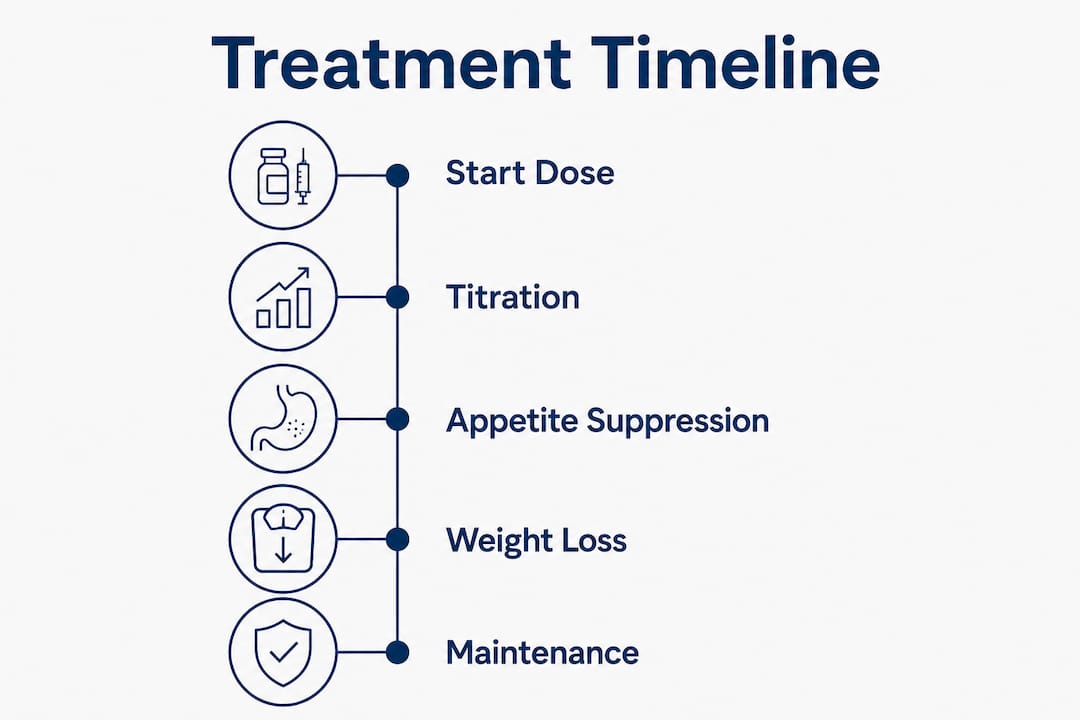
What the patient timeline looks like
Most patients notice appetite suppression within 1–2 weeks of starting tirzepatide injections. Noticeable weight loss typically appears around weeks 4–8, once the dose begins to titrate upward. Significant, sustained fat loss generally becomes clear at the 3–6 month mark.
Key milestones patients commonly report:
- Weeks 1–2: Reduced hunger and smaller portion sizes feel natural
- Weeks 4–8: First measurable weight loss on the scale
- Months 3–6: Consistent fat loss, often 10%+ of starting body weight
- Months 6–12: Maximum results at full therapeutic dose (15 mg weekly)
Titration matters enormously here. Proper dose titration from 2.5 mg up to 15 mg weekly, with medical monitoring, minimizes gastrointestinal side effects and keeps patients on track for maximum results. Skipping titration steps to speed up results is one of the most common mistakes patients make.
What role does B12 play in tirzepatide treatment?
Vitamin B12 is defined as an essential water-soluble nutrient that supports cellular energy production, red blood cell formation, and nervous system function. It is not a weight loss drug. No clinical evidence shows B12 alone causes meaningful fat reduction. Its value in tirzepatide protocols is entirely supportive.
B12 supports energy metabolism and can reduce the fatigue that many patients experience during calorie restriction or in the early weeks of GLP-1 therapy. When your body is eating less and adjusting to a new hormonal environment, energy levels often drop. B12 helps maintain the cellular machinery that converts food into usable energy, which makes daily activity more manageable.
The specific reasons B12 appears in tirzepatide protocols include:
- Fatigue reduction: Patients on calorie-restricted diets often develop suboptimal B12 levels, worsening tiredness
- Nausea management: B12 in compounded formulations aims to reduce nausea during the initial weeks of treatment
- Nervous system support: B12 protects nerve function, which can be stressed during rapid weight loss
- Treatment adherence: Feeling less fatigued and nauseated makes patients more likely to stay on their protocol
Pro Tip: If your provider recommends B12 alongside tirzepatide, ask about separate administration rather than a compounded mixture. Separate injections or oral B12 supplements carry none of the impurity risks associated with combined compounded products.
B12 deficiency is genuinely common in the United States, particularly among adults over 50 and those on plant-based diets. Correcting a deficiency during tirzepatide treatment can meaningfully improve energy and mood, which supports better adherence to diet and exercise habits.
What are the FDA safety warnings about compounded tirzepatide with B12?
The safety picture for compounded tirzepatide mixed with B12 changed significantly in march 2026. Eli Lilly issued a formal public warning stating that compounded tirzepatide mixed with B12 contains chemical impurities of unknown toxicity. This is not a theoretical concern. The impurity identified is a novel chemical entity with unknown pharmacokinetics and toxicology, meaning no one yet knows how it behaves in the human body.
“Compounded tirzepatide mixed with vitamin B12 has been found to contain chemical impurities of unknown toxicity. Patients and providers should avoid these combinations and consult licensed healthcare professionals before using any compounded tirzepatide product.” — Eli Lilly, March 2026
The risks associated with unregulated compounded products extend beyond this specific impurity:
- Contamination: Compounding pharmacies without proper accreditation may introduce bacterial or particulate contamination
- Dosing errors: Compounded products lack the standardized manufacturing controls of FDA-approved drugs
- No adverse event monitoring: Patients using unregulated compounds fall outside the safety reporting systems that catch problems early
- Unknown interactions: Mixing complex peptides with additives without clinical trials creates unpredictable outcomes
The FDA and Eli Lilly both recommend avoiding compounded tirzepatide-B12 combinations and consulting a licensed healthcare provider before using any compounded tirzepatide product. This does not mean all compounded tirzepatide is dangerous. It means the specific combination of tirzepatide and B12 in a single injectable formulation carries documented, unresolved risks.
Adding untested additives to tirzepatide without FDA oversight introduces unknown risks that no patient should accept without full awareness. The cost savings of compounded products, which run $150–$400 per month versus approximately $1,000 per month for brand-name tirzepatide, are real. But cost savings do not offset unknown toxicity.
How to safely use tirzepatide and B12 for weight loss
Safe use of tirzepatide alongside B12 support is achievable. The key is separating the two substances and working within a medically supervised framework. Here is the approach that licensed providers recommend:
-
Start with a licensed healthcare consultation. Confirm you are a candidate for tirzepatide based on your BMI, metabolic health, and medical history. Not every patient is appropriate for GLP-1 therapy.
-
Use FDA-approved tirzepatide or accredited compounding pharmacies. If cost is a barrier, choose a compounding pharmacy accredited by the Pharmacy Compounding Accreditation Board (PCAB). Avoid any pharmacy offering pre-mixed tirzepatide-B12 formulations.
-
Follow the standard titration schedule. Begin at 2.5 mg weekly and increase gradually under medical supervision. Rushing the dose escalation increases nausea, vomiting, and dropout rates.
-
Take B12 separately. Oral methylcobalamin or a separate B12 injection avoids the impurity risk entirely while still delivering the energy and nausea benefits. Separate administration of B12 and tirzepatide under medical supervision remains a safe supportive approach.
-
Integrate diet and exercise. Tirzepatide suppresses appetite, but protein intake and resistance training protect muscle mass during fat loss. Aim for 0.7–1 gram of protein per pound of lean body mass daily.
-
Track progress and communicate openly. Regular check-ins with your provider allow for dose adjustments and early identification of side effects.
Pro Tip: Ask your provider specifically whether the compounding pharmacy they use is PCAB-accredited and whether their tirzepatide formulation contains any additives beyond the active ingredient. A reputable provider will answer both questions without hesitation.
Success with compounded tirzepatide relies heavily on proper titration and working with licensed providers for safety and side effect management. Patients who skip this step consistently report worse outcomes and higher dropout rates.
Key Takeaways
Tirzepatide drives clinically significant weight loss through dual GLP-1 and GIP receptor activation, while B12 supports energy and tolerability best when administered separately, not in a compounded mixture.
| Point | Details |
|---|---|
| Tirzepatide’s clinical results | Patients lost up to 20.9% of body weight over 72 weeks at the 15 mg dose in the SURMOUNT-1 trial. |
| B12’s actual role | B12 reduces fatigue and nausea during treatment but does not cause weight loss on its own. |
| Compounded mixture risk | Eli Lilly confirmed in march 2026 that tirzepatide-B12 mixtures contain impurities of unknown toxicity. |
| Safest B12 approach | Take B12 separately (oral or injection) rather than in a pre-mixed compounded formulation. |
| Medical supervision is required | Proper titration from 2.5 mg to 15 mg weekly with provider oversight maximizes results and minimizes side effects. |
My take on the tirzepatide and B12 conversation
The clinical case for tirzepatide as a weight management drug is genuinely strong. The SURMOUNT-1 data are not marketing copy. A 20.9% average body weight loss over 72 weeks is a result that changes lives, and I have seen that play out in real patient stories repeatedly.
What concerns me is how quickly the conversation around “what to take with tirzepatide for weight loss” has moved into territory that outpaces the evidence. B12 as a supportive nutrient makes sense. Fatigue is real during calorie restriction, and correcting a deficiency helps patients stay active and engaged. I have no objection to B12 supplementation alongside tirzepatide treatment.
The compounded mixture is a different matter entirely. The Eli Lilly warning in march 2026 was not a corporate liability move. A novel chemical impurity with unknown toxicity in an injectable product is a serious finding. Patients deserve to know that the cost savings of a compounded tirzepatide-B12 vial come with a risk that has not been characterized by any clinical trial.
My honest recommendation: work with a provider who separates the two, monitors your progress, and uses accredited pharmacy sources. The weight loss results from tirzepatide alone are impressive enough. You do not need an untested additive to get there.
— Dominique
Glpcare’s approach to safe tirzepatide treatment
Patients who want access to tirzepatide-based weight management without the risks of unregulated compounded products need a provider who takes both efficacy and safety seriously.

Glpcare connects patients with licensed clinicians who prescribe FDA-approved tirzepatide treatments through a telehealth-first model. Every patient receives personalized nutrition coaching, continuous clinician support, and access to Glpcare’s wearable health tracking system, which monitors sleep, heart rate, and activity to keep your progress visible and your provider informed. There are no hidden fees and no pressure to use unapproved formulations. If you are ready to explore tirzepatide treatment options with proper medical oversight, Glpcare is built for exactly that.
FAQ
What does B12 actually do when taken with tirzepatide?
B12 supports cellular energy production and can reduce fatigue and nausea during tirzepatide treatment. It does not cause weight loss on its own and works best as a separate supplement rather than a pre-mixed injectable.
Is compounded tirzepatide with B12 safe?
Eli Lilly issued a warning in march 2026 confirming that compounded tirzepatide mixed with B12 contains chemical impurities of unknown toxicity. Patients should avoid pre-mixed formulations and consult a licensed provider.
How long does tirzepatide take to produce weight loss?
Most patients notice appetite suppression within 1–2 weeks, with measurable weight loss appearing around weeks 4–8. Significant fat loss typically becomes clear at the 3–6 month mark with proper titration.
What can I take with tirzepatide to support weight loss?
Separate B12 supplementation, adequate protein intake, and resistance training are the most evidence-supported additions to a tirzepatide protocol. Avoid unapproved additives or pre-mixed compounded formulations.
How much does tirzepatide cost compared to compounded versions?
Brand-name tirzepatide costs approximately $1,000 per month, while compounded versions range from $150–$400 per month. Cost differences drive demand for compounded products, but patients must weigh savings against documented safety risks.