Mounjaro 2026: Off FDA List but Still Hard to Find for US Patients
Mounjaro 2026: Off FDA List but Still Hard to Find for US Patients
Mounjaro is not on the FDA’s national shortage list in 2026. The agency removed tirzepatide from that list in October 2024 and reaffirmed the decision months later, and Eli Lilly reports all dose strengths in production. What you’ll notice instead is a pharmacy-level gap: your local CVS or independent pharmacy may still say “out of stock” even though the national supply has stabilized. Check the FDA database, call your pharmacy directly, and ask about LillyDirect if you hit a wall.
TL;DR:
- Local pharmacy stockouts may persist even though the FDA and manufacturer confirm no national shortage exists in 2026.
- Higher doses and pen formats are more likely to be out of stock, especially in specific regions or due to manufacturing bottlenecks.
- Checking wholesaler allocation details and real-time pharmacy trackers provides more accurate availability insights than solely relying on national supply lists.
- Avoid turning to unapproved compounded tirzepatide, as safety concerns and legal restrictions have increased since the shortage was officially lifted.
- Strategies like transferring prescriptions, requesting special orders, and working with clinicians can mitigate the impact of local supply gaps.
GlpcareStay Supported Through Treatment ChangesGLPCare combines GLP-1 therapy, nutrition coaching, wearable insights, and ongoing clinician support for personalized weight management.Explore GLPCare
Table of Contents
- Is Mounjaro Still in Shortage in 2026?
- Why Mounjaro Shortages Happened in the First Place
- Which Mounjaro Doses Are Hardest to Find
- How to Check Mounjaro Availability Right Now
- What to Do If You Can’t Get Mounjaro
- What Mounjaro Actually Costs and How to Lower It
- Staying on Track When Refills Get Unpredictable
- The Real Story Behind the Mounjaro Shortage Headlines
- A Continuity Plan Worth Having Before You Need It
- Sources
- FAQ
Is Mounjaro Still in Shortage in 2026?
Officially, no. The FDA removed tirzepatide injection (marketed as Mounjaro for type 2 diabetes and Zepbound for weight loss) from its drug shortage database in October 2024, and the agency held that position through subsequent review. That is the answer to “will Mounjaro be in shortage” that matters most for federal recordkeeping and for compounding pharmacies, which lose broad legal cover to make copycat versions once a drug comes off the list.
The gap between that official ruling and your experience at the counter is where most confusion lives. Three signals are worth checking together, since none of them alone tells the whole story:
- FDA status: the federal shortage list, which reflects national supply, not local stock.
- Manufacturer statements: Eli Lilly’s supply information page says all Mounjaro dose strengths are now available and points patients toward LillyDirect for home delivery or self-pay orders.
- Real-time trackers: Medfinder’s shortage tracker monitors pharmacy-reported in-stock rates and has shown pockets of low availability in specific markets even in 2026, which is the clearest evidence that national resolution and neighborhood reality are two different measurements.
Litigation added a wrinkle to this story. Compounding pharmacy groups challenged the FDA’s shortage-list removal in court, and a federal judge sided with the FDA in 2025, closing off one avenue some patients had used to access cheaper compounded tirzepatide.
Why Mounjaro Shortages Happened in the First Place
Tirzepatide’s supply problems weren’t a single glitch. They stacked up from three directions at once, and understanding them explains why your pharmacy might still hesitate before confirming your refill.
Demand exploded faster than anyone in the supply chain planned for. Tirzepatide treats type 2 diabetes under the Mounjaro name and obesity under the Zepbound name, and word of its weight-loss results spread through social media and physician networks simultaneously. Manufacturing couldn’t keep pace with two overlapping patient populations pulling from the same production lines.
Device manufacturing, not the drug itself, was often the real chokepoint. Building sterile, calibrated auto-injector pens at scale is a slower, more failure-prone process than producing the active pharmaceutical ingredient. Industry analysis points to this pen bottleneck as a major reason national shortages lingered even as raw drug supply improved.
Then there’s the human layer: wholesaler allocation and pharmacy behavior.
- Wholesalers cap how much product each pharmacy can order in a given period, regardless of that pharmacy’s actual patient demand.
- Pharmacies with refrigerated storage limits stock conservatively rather than risk spoilage on slow-moving strengths.
- Patients and prescribers, burned by earlier scarcity, sometimes over-order or request early refills, which tightens supply further in a self-reinforcing loop.
Pro Tip: If your regular pharmacy is out, ask specifically whether it’s a wholesaler allocation issue or a true stockout. The distinction changes how fast a special order can come through.
Which Mounjaro Doses Are Hardest to Find
Higher maintenance doses, generally the 10mg, 12.5mg, and 15mg strengths, have historically been reported tight more often than starter doses like 2.5mg and 5mg. That pattern varies by region and by which wholesaler supplies your pharmacy chain, so a shortage in one zip code doesn’t guarantee the same problem thirty miles away.
Pens and vials behave differently in the supply chain, which matters if your dose is stuck. Pens are prefilled, single-use auto-injectors. Vials require drawing medication with a syringe, a method some clinics use for dose titration or when pen inventory runs thin. Reporting on Zepbound shortages notes that vials often stay easier to source than pens, since the injector device itself is the manufacturing bottleneck, not the drug solution.
If your pharmacy is out of your usual pen:
- Ask the pharmacist to check whether a vial format is available and whether your prescriber authorized that option.
- Confirm refrigeration requirements haven’t lapsed if a pharmacy transferred stock between locations.
- Loop in your prescriber before switching formats. A dose that works in pen form isn’t automatically a clean swap to vial dosing without guidance.
How to Check Mounjaro Availability Right Now
Missed doses usually come down to timing, not true unavailability. Work through these steps in order before assuming you’re stuck:
- Confirm national status. Search tirzepatide on the FDA Drug Shortages database to rule out a fresh national disruption before you start calling around.
- Check Lilly’s own channels. Lilly’s supply information page lists current dose availability and links to LillyDirect, which ships tirzepatide directly and offers self-pay pricing outside insurance.
- Call, don’t just check the app. Ask your pharmacist to check wholesaler allocation, not just shelf stock, and request a special order 2 to 10 days before you need it. Cross-reference with Medfinder’s tracker to see which nearby pharmacies report recent stock.
- Transfer or automate. If one pharmacy keeps coming up empty, transfer your prescription to a chain with better allocation, or enroll in auto-refill so your order queues before you’re down to your last dose.
Pro Tip: Pharmacists can often see wholesaler allocation windows that reset weekly. Asking “when does your next shipment post” gets a more useful answer than “do you have it in stock.”
What to Do If You Can’t Get Mounjaro
Skipping doses or turning to unverified sources is the riskiest response to a refill gap, and it’s also the most common one. The FDA has issued repeated warnings about unapproved compounded tirzepatide, citing quality and dosing concerns tied to products made outside its approval process. Once brand supply stabilizes, FDA compounding guidance also narrows the legal window for compounders to keep producing copies, so a compounded version you found last year may not be a safe or legal option today. If you started on a compounded product during the height of the shortage, talk to your prescriber about transitioning back to brand Mounjaro or Zepbound.
Before changing anything on your own, work through these with your care team:
- Ask your prescriber whether a temporary dose adjustment, staying at your current strength a bit longer rather than titrating up on schedule, is clinically reasonable while you sort out supply.
- Discuss other GLP-1 medication categories or short-term bridging options for diabetes management if your gap stretches beyond a week or two.
- Request a prescription transfer to a pharmacy with confirmed stock rather than waiting on a single location.
- Seek urgent care if you’re managing type 2 diabetes and miss enough doses that your blood sugar becomes unstable. This is not a situation to manage by guesswork.
Pro Tip: Keep a simple log: date, pharmacy name, and what you were told. That record helps your prescriber advocate for you and helps pharmacies document patterns worth escalating to wholesalers.
Our guide on switching to tirzepatide safely walks through what a clinician-guided transition looks like if you’re moving between products or formats. And if side effects come up during any transition, our tirzepatide side effects overview is worth reading before you assume a new formulation is the culprit.
What Mounjaro Actually Costs and How to Lower It
Without insurance, Mounjaro typically runs into the four figures per month, and the exact number shifts by pharmacy, dose, and whether you’re paying cash or through LillyDirect’s self-pay pricing. Insurance coverage depends heavily on your diagnosis: type 2 diabetes indications get approved more consistently than weight-management use, where prior authorization requirements and denials are common even with a valid prescription.
A few paths worth exploring before you accept sticker shock:
- Lilly’s savings card program can cut costs significantly for eligible commercially insured patients.
- Lilly Cares offers assistance for patients who qualify based on income and insurance status.
- LillyDirect’s self-pay option sometimes beats retail pharmacy cash prices, particularly for patients without coverage at all.
Our breakdown of Mounjaro costs and how to lower them covers pricing scenarios in more detail if you want to compare options before your next fill.
Staying on Track When Refills Get Unpredictable
Supply gaps hit hardest when there’s no one watching your progress between pharmacy visits. A model that pairs licensed clinician support with a wearable band that tracks activity, sleep, and heart rate can help ensure a delayed refill doesn’t mean losing sight of how your body is responding.
A few things this kind of continuity support makes possible during a supply gap:
- Remote check-ins with a clinician if a dose delay stretches past a few days, so adjustments happen on purpose rather than by accident.
- Biometric tracking that flags changes in recovery or activity that might signal you need a plan adjustment, not just a reminder to refill.
- Coaching support that keeps nutrition and habit-building steady even when medication timing shifts.
If a supply gap has you rethinking your approach altogether, our diabetes and oral health resource from Starboard Dental is a useful companion read on the self-care side of chronic condition management while medication access stabilizes.
The Real Story Behind the Mounjaro Shortage Headlines
The conventional advice on this topic treats “is Mounjaro in shortage” as a yes or no question, and that framing fails patients. The FDA’s list is a national accounting tool, not a promise about what’s sitting on your pharmacy’s shelf this week. Treating the federal status as the whole answer is exactly why people show up at the counter blindsided.
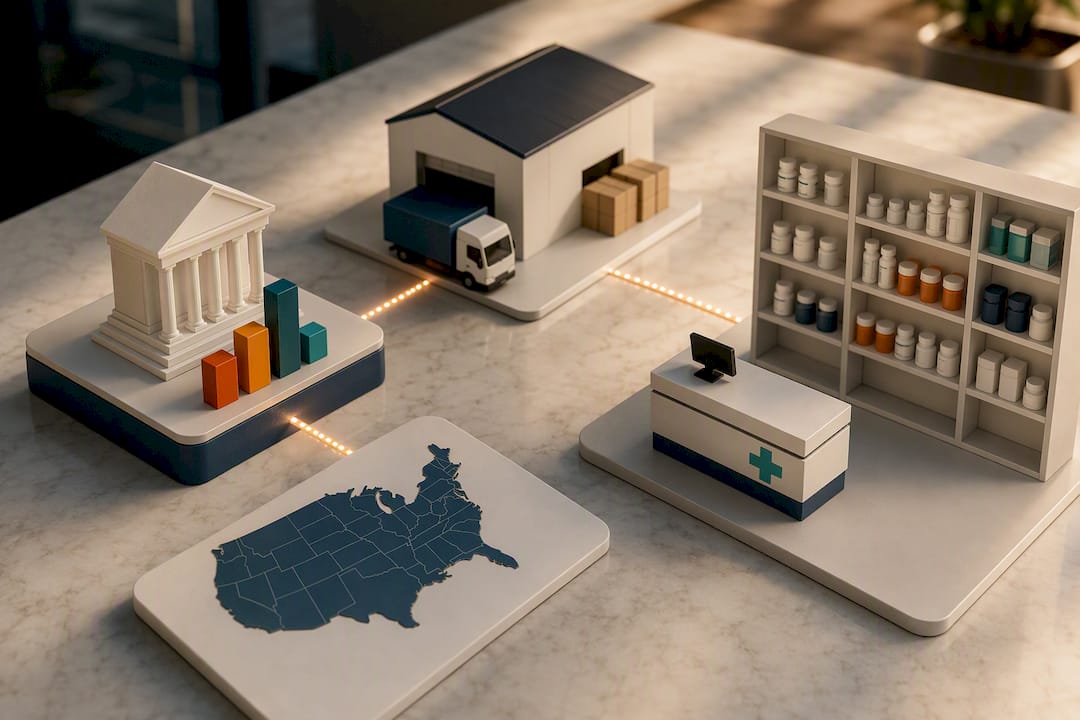
What the evidence actually supports is a more useful mental model: national supply and local access are two separate systems that happen to share a drug name. One resolved in October 2024. The other depends on your specific pharmacy’s wholesaler contract, refrigeration capacity, and ordering habits, none of which the FDA database tracks.
If you take one thing from this, it’s this: stop checking only the shortage list and start checking your own pharmacy’s ordering cycle. Ask about wholesaler allocation timing specifically. That single question surfaces more useful information than any national headline will, and it’s the difference between a missed dose and a five-day heads-up.
— Dominique
A Continuity Plan Worth Having Before You Need It
Glpcare exists for exactly the moment this article describes: the gap between “the shortage is technically over” and “I still can’t get my dose this week.” Rather than leaving you to manage that gap alone with a pharmacy hotline and a hope, An integrated GLP-1 care model pairs prescription management with ongoing clinician support, personalized nutrition coaching, and a wearable band that tracks biometric signals such as sleep, heart rate, and activity levels, helping care teams to identify problems before they become setbacks.

If refill uncertainty has you wondering whether your current plan or provider is giving you enough support between visits, take the GLP-1 readiness quiz to see whether Glpcare’s integrated model fits your situation, or explore the Glpcare wearable band to understand how continuous tracking works alongside your prescription.
This article is general information, not a substitute for advice from a qualified doctor. Consult a qualified healthcare professional about your own circumstances before acting on anything here.
Sources
- FDA clarifies policies as national GLP-1 supply begins to stabilize — FDA
- Lilly Medicine Supply Information | Lilly Supply Info
- Mounjaro Shortage Tracker | Medfinder
FAQ
Is There a Shortage of Mounjaro Right Now?
No. The FDA removed tirzepatide from its national shortage list in October 2024, but local pharmacy stockouts still happen due to wholesaler allocation and device manufacturing limits, not a national supply problem.
What Pharmacies Have Mounjaro in Stock?
Availability varies by chain and by week, which is why checking Medfinder’s live tracker and calling ahead to ask about wholesaler allocation gets more accurate answers than assuming any single chain is reliably stocked.
Is Mounjaro Currently Difficult to Obtain?
It can be, depending on your dose strength and location, even though national supply has stabilized; higher maintenance doses and pen formats are reported tight more often than starter doses or vials.
What Drug Is Currently in Shortage in 2026?
Tirzepatide products like Mounjaro and Zepbound are not on the FDA’s national shortage list in 2026, though the agency’s Drug Shortages database should always be checked directly for the current list, since shortage status for any drug can change.
Can I Use a Compounded Version If My Pharmacy Is Out?
The FDA has warned against unapproved compounded tirzepatide over safety and quality concerns, and legal access to compounded versions has narrowed since the shortage designation was lifted, so talk to your prescriber about brand alternatives instead.