Wegovy Shortage 2026: Current Availability and What to Do
Wegovy Shortage 2026: Current Availability and What to Do
The national Wegovy shortage is over. The FDA declared semaglutide injection products, including Wegovy and Ozempic, officially resolved after determining that supply now meets or exceeds current and projected demand. If your pharmacy still says it’s out, that’s a local stocking gap, not a return of the nationwide crisis. Do this now:
- Call two or three pharmacies in your area, including a mail-order option.
- Check the FDA’s drug shortage tracker for your specific dose.
- Ask your prescriber about a temporary dose adjustment if your exact strength is unavailable.
Quick fact: The FDA’s declaratory order resolving the shortage was issued in February 2025, and it remains the current status heading into 2026.
Key Takeaways
The national Wegovy shortage is resolved as of the FDA’s 2025 declaratory order, but local pharmacy stockouts and insurance barriers still disrupt access for individual patients in 2026.
| Point | Details |
|---|---|
| National shortage resolved | The FDA declared semaglutide injection supply meets or exceeds demand as of its 2025 order. |
| Local gaps still happen | Call multiple pharmacies and check the FDA tracker before assuming your area is stocked. |
| Maintenance doses most affected | The 2.4 mg strength shows the most occasional local stockouts among Wegovy doses. |
| Insurance is the new hurdle | Prior authorization and formulary placement now block access more than supply does. |
| GLPCare adds clinical oversight | Clinician-managed prescribing and wearable tracking help catch problems during any supply shift. |
Table of Contents
- Is There Still a Wegovy Shortage in 2026?
- How Did We Get Here? A Timeline From 2022 to 2026
- Which Wegovy Doses Were Hit Hardest?
- Why Did the Wegovy Shortage Happen in the First Place?
- What Did the Shortage Actually Cost Patients?
- How Do You Check Wegovy Availability Right Now?
- What Should You Do If Your Pharmacy Is Out of Wegovy?
- Does Insurance Cover Wegovy in 2026?
- How Should You Safely Restart or Switch Wegovy Doses?
- Why 2026 Is a Turning Point for GLP-1 Access
- A Note From GLPCare on Staying the Course
- How GLPCare Keeps You on Track When Supply Gets Uncertain
- Where to Verify Wegovy Supply and Policy Facts
- Sources
- FAQ
Is There Still a Wegovy Shortage in 2026?
No, not at the national level. The FDA’s declaratory order closed the books on the semaglutide injection shortage, stating manufacturing output now covers both current prescriptions and projected growth. That’s a significant shift from 2023 and 2024, when Wegovy and Ozempic sat on the FDA’s shortage list for the better part of two years.
What “resolved” doesn’t mean is universal, instant stock at every counter. A national resolution tells you the supply chain overall is healthy. It says nothing about the specific pharmacy three blocks from your house, which might be waiting on a delayed shipment or working through a smaller allocation than a big-box chain gets.
- National status: resolved per FDA declaratory order.
- Local status: varies by pharmacy, chain, and region.
- Dose-specific status: check the active-ingredient shortage page for granular detail.
Pro Tip: Don’t rely on one call. Chain pharmacies often show different inventory across locations even in the same city, so a five-minute round of calls beats guessing.
How Did We Get Here? A Timeline From 2022 to 2026
- 2022: Demand for semaglutide for weight loss surges past what Novo Nordisk’s manufacturing lines were built to handle, triggering the first FDA shortage listing for Wegovy.
- 2023-2024: Shortage persists across most dose strengths; compounding pharmacies step in to fill gaps, operating under FDA rules that permit compounding while a drug is officially short.
- 2025: Novo Nordisk expands production capacity; the FDA issues its declaratory order in February, formally resolving the semaglutide injection shortage.
- 2025 (later): The FDA clarifies enforcement policy for compounders, setting grace periods so patients on compounded versions aren’t cut off overnight.
- 2026: Oral semaglutide adds a new distribution channel, easing pressure on injectable supply chains even further.
Each step mattered. The compounding grace period especially gave patients time to transition back to branded product instead of facing an abrupt stop.
Which Wegovy Doses Were Hit Hardest?
The starting doses (0.25 mg and 0.5 mg) generally recovered fastest, since manufacturing prioritized getting new patients started. The higher maintenance doses, particularly 1.7 mg and 2.4 mg, ran short longest because patients titrating up needed a steady supply just as overall demand kept climbing.
By 2026, most strengths show consistent availability according to the FDA’s active-ingredient detail page, though pharmacy-level gaps on the 2.4 mg pen still surface occasionally.
- 0.25 mg and 0.5 mg (starter): widely available.
- 1.0 mg and 1.7 mg: generally stable, occasional regional gaps.
- 2.4 mg (maintenance): the strength most likely to show local stockouts.
Pro Tip: If your maintenance dose is out of stock, call your prescriber before skipping doses. A short-term step down or a bridging plan is safer than an unplanned gap.
Why Did the Wegovy Shortage Happen in the First Place?
Demand outran manufacturing capacity, plain and simple. Semaglutide isn’t a simple pill to mass-produce. It’s a complex peptide that requires specialized fermentation and purification processes, and scaling that kind of production takes years, not months, a dynamic well documented in analyses of biologic drug supply chains during periods of surging demand.
Compounding pharmacies filled part of the gap legally while Wegovy sat on the shortage list, producing versions of semaglutide under rules that allow compounding during declared shortages. That was a relief valve for patients who couldn’t get the brand-name product. But it also built a large secondary market that had to unwind once the shortage ended.
- Demand surge: GLP-1 prescriptions for weight loss multiplied faster than production lines could scale.
- Manufacturing complexity: peptide synthesis at this volume was unprecedented for Novo Nordisk.
- Compounding expansion: thousands of patients moved to compounded semaglutide as a stopgap.
Key figure: Once the FDA’s declaratory order took effect, compounders lost their legal basis to produce close copies of the resolved drug, forcing many patients back toward branded product.
What Did the Shortage Actually Cost Patients?
The shortage wasn’t an abstraction. It meant real people missing doses, watching progress stall, and in some cases regaining weight they’d worked hard to lose. Pharmacies couldn’t fill scripts on schedule, insurers piled on prior authorization delays even when stock existed, and patients were left juggling waitlists across multiple pharmacies just to stay on track.
- Interrupted treatment led to documented weight regain in some patients forced off therapy for weeks or months.
- Prior authorization backlogs at insurers compounded pharmacy-level shortages, adding delays on top of delays.
- Patients who switched to compounded alternatives faced inconsistent dosing and quality concerns once oversight tightened.
Abruptly stopping semaglutide, or switching to an unregulated substitute without medical guidance, carries real risk. GLP-1 medications affect blood sugar, gastrointestinal function, and appetite regulation, and unmonitored changes can trigger complications a clinician would otherwise catch early.
If you’re in this situation, GLPCare’s evidence guide on GLP-1 therapy walks through what continuous, clinician-guided treatment looks like in practice.
How Do You Check Wegovy Availability Right Now?
- Search the FDA drug shortage tracker for “semaglutide injection” and note the listed status and last update date.
- Call your regular pharmacy and ask specifically about your dose strength, not just “Wegovy” in general.
- Check chain pharmacy apps or websites, many show real-time inventory by location.
- If local options are dry, ask your prescriber about mail-order pharmacy programs tied to Novo Nordisk.
Pro Tip: Call early in the morning right after a pharmacy opens, before the day’s shipment gets allocated to existing fills. And if you travel often, request a 90-day supply ahead of time rather than scrambling at your destination.
What Should You Do If Your Pharmacy Is Out of Wegovy?
- Confirm the stockout is real. Ask the pharmacist whether it’s a temporary delay or a longer supply issue, and get a restock estimate if possible.
- Contact your prescriber immediately. Don’t wait for your next scheduled visit. Ask about a temporary dose adjustment, a short bridge medication, or a transfer to a pharmacy with stock.
- Verify insurance coverage for alternatives before switching anything. A formulary change can mean a new prior authorization from scratch.
- Avoid unregulated compounded semaglutide unless it comes through a licensed clinician who is actively monitoring your care. The FDA’s compounding-during-shortages guidance makes clear that once a shortage resolves, the legal footing for mass-compounded copies disappears, and quality oversight on gray-market products is far weaker than on FDA-approved medication.
- Document everything. Keep a note of which pharmacies you called, when, and what they told you. It helps if you need to escalate to your insurer or switch providers.
- Ask about mail-order transfer. Many patients find more consistent stock through mail-order programs than walk-in retail.
For patients managing this kind of transition, GLPCare’s compounded semaglutide program operates under direct clinician oversight rather than an unmonitored gray market.
Does Insurance Cover Wegovy in 2026?
Supply is no longer the main obstacle for most patients. Insurance is. Prior authorization requirements, step therapy rules that force you to try cheaper drugs first, and inconsistent formulary placement now decide access more often than pharmacy shelves do.
- Ask your insurer directly: what’s the prior authorization code, and what’s the appeal timeline if it’s denied?
- Ask your prescriber’s office if they have a dedicated staff member who handles PA paperwork. Many do.
- Ask about Novo Nordisk’s savings card program if you have commercial insurance, since it can significantly cut out-of-pocket costs.
- Compare mail-order versus retail pricing. Mail-order often runs cheaper for maintenance medications filled every 28 days.
Insurance tip: Formulary tiers change year to year, so a plan that covered Wegovy without hassle in 2025 might add new restrictions for 2026. Recheck your specific plan every January.
How Should You Safely Restart or Switch Wegovy Doses?
If you’ve had a gap in treatment, don’t just resume at your last dose. Semaglutide requires gradual titration, and jumping back in at a maintenance dose after weeks off increases the risk of nausea, vomiting, and other gastrointestinal side effects.
- Discuss a titration schedule with your prescriber rather than restarting cold.
- Ask about monitoring for blood sugar shifts, hydration status, and any interactions with other medications you’ve started or stopped.
- Never make dose changes on your own based on what you read online or hear from another patient.
- Steer clear of unapproved compounded semaglutide as a substitute for medically supervised restart planning.
Pro Tip: A wearable that tracks resting heart rate and sleep can flag early signs of dehydration or GI distress during a restart, giving your care team something concrete to act on instead of guessing.
Why 2026 Is a Turning Point for GLP-1 Access
Manufacturing capacity and product form are converging in a way that changes the math for patients. Novo Nordisk’s capacity investments over the past two years, combined with the arrival of an oral semaglutide pill, mean supply is no longer concentrated entirely in injectable pens that require cold-chain shipping and specialized manufacturing lines.
Manufacturing scale-up and new oral formulations are reshaping how patients access GLP-1 therapy, reducing the field’s dependence on a single injectable supply chain that proved fragile under demand pressure.
That framing comes from public-health analysis describing 2026 as a reshaping point for GLP-1 access broadly. What to watch next:
- Whether insurers add the oral pill to preferred formularies faster than they did injectables.
- How pharmacy stocking behavior shifts once two distribution channels exist instead of one.
- Whether compounding enforcement stays consistent as new formulations enter the market.
A Note From GLPCare on Staying the Course
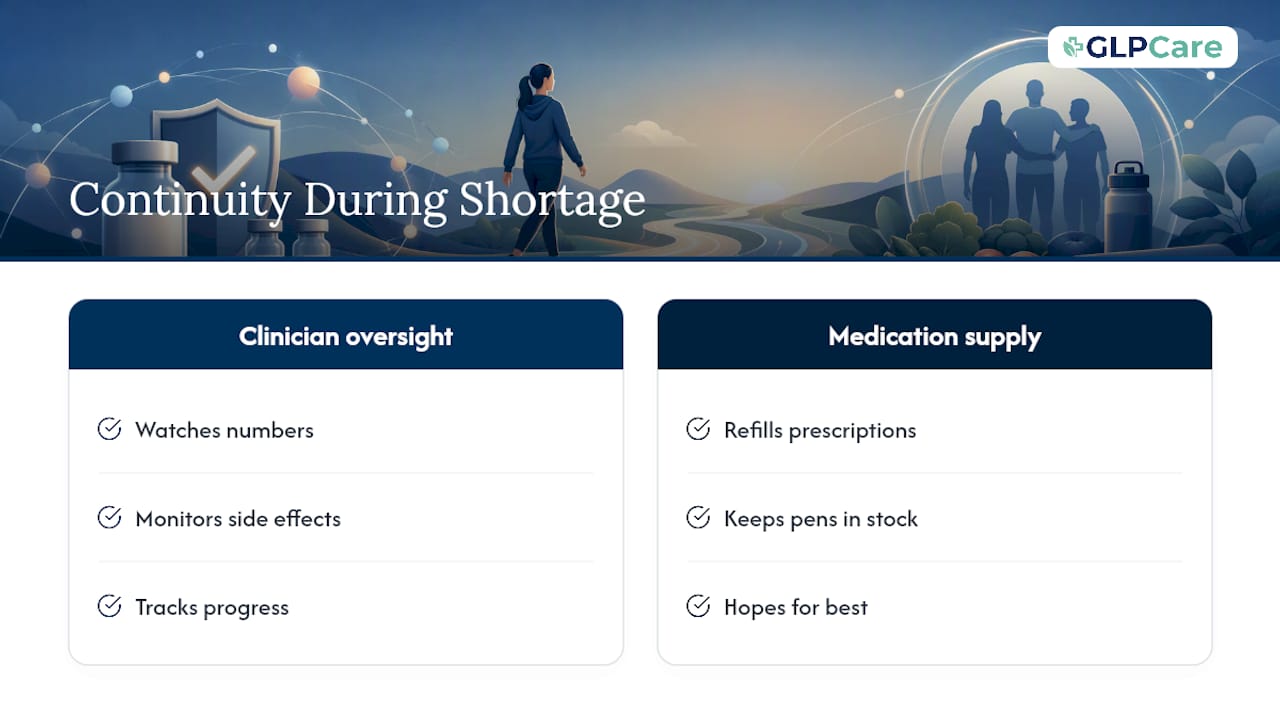
Supply chains recover. Momentum on your own health doesn’t have to depend on them. What we’ve seen matters most during a supply disruption is having a clinician actually watching your numbers, your side effects, and your progress, not just refilling a prescription and hoping for the best. Continuity comes from oversight, not just from having a pen in stock.
How GLPCare Keeps You on Track When Supply Gets Uncertain
Retail pharmacies leave you calling around on your own when a dose runs short. GLPCare is built differently: clinician-managed prescribing paired with mail-order medication delivery means you’re not the one chasing down stock at three different counters. Your care team monitors your dose, your labs, and your progress continuously, so if a substitution or temporary adjustment ever becomes necessary, it happens under medical supervision instead of guesswork.
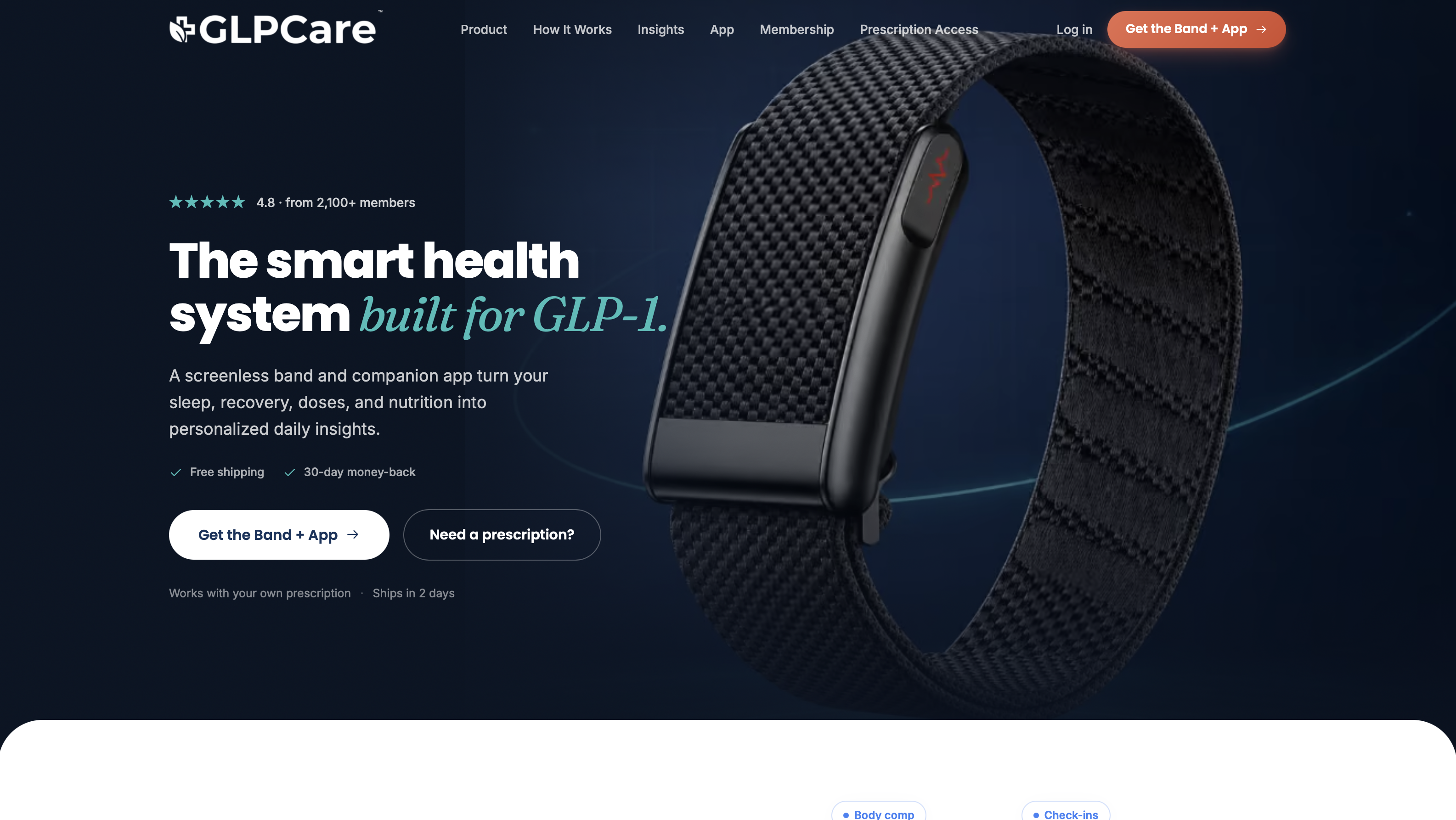
The GLP Care Band adds a layer most standalone prescriptions don’t offer: real-time tracking of sleep, heart rate, and activity that flags issues like dehydration or unusual strain early, feeding directly into the insights your clinician sees. Plans exist whether you already have a prescription or need one, and all clinical intake includes screening before any medication is prescribed. If you want to know whether you qualify, take the GLP-1 readiness quiz and see your options in a few minutes.
Where to Verify Wegovy Supply and Policy Facts
Check these sources directly rather than relying on secondhand summaries:
- FDA declaratory order confirming national resolution.
- FDA’s drug shortage FAQ page for how shortages are declared and lifted.
This article is general information, not a substitute for advice from a qualified doctor. Consult a qualified healthcare professional about your own circumstances before acting on anything here.
Sources
FAQ
Is Wegovy On Backorder in 2026?
Nationally, no. The FDA declared the semaglutide injection shortage resolved, though specific pharmacies may still experience temporary backorders on certain doses.
Is Wegovy Going to Be Covered by Insurance in 2026?
Coverage varies by plan and often requires prior authorization or step therapy; check your specific formulary each year since rules change annually.
Is Wegovy Still on the FDA Shortage List?
No. The FDA issued a declaratory order removing semaglutide injection products from shortage status after confirming supply meets projected demand.
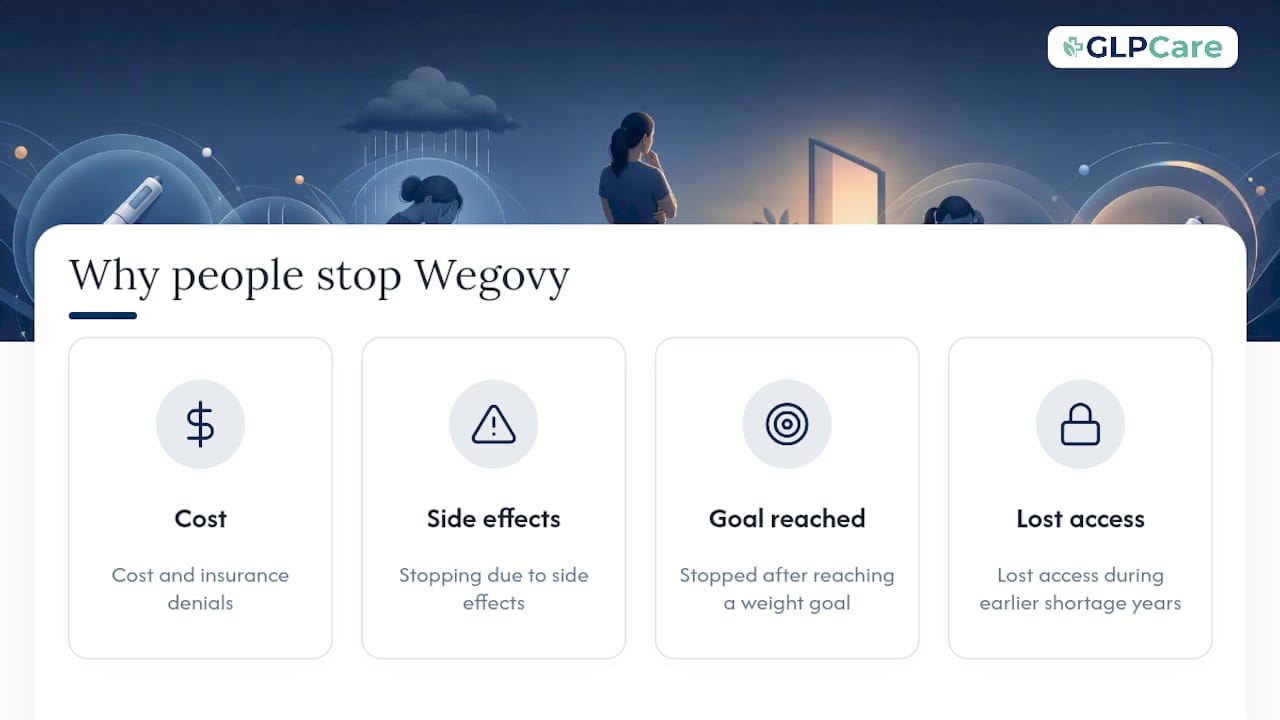
Why Are People Stopping Wegovy?
Common reasons include cost and insurance denials, side effects, reaching a weight goal, or losing access during the earlier shortage years; stopping should always involve your prescriber to manage the transition safely.
What Should I Do If My Exact Wegovy Dose Isn’t Available?
Contact your prescriber about a temporary dose adjustment or bridging plan rather than skipping doses, and ask your pharmacy about transferring the prescription to another location or mail-order service.