63% MASH Resolution With GLP-1: Clinician Steps for Fatty Liver
63% MASH Resolution With GLP-1: Clinician Steps for Fatty Liver
GLP-1 receptor agonists reduce liver fat, lower liver enzymes, and drive measurable rates of MASH resolution in randomized trials. The FDA granted accelerated approval to Wegovy (semaglutide) for MASH with moderate-to-advanced fibrosis based on interim histology, a genuine regulatory milestone. What remains unsettled is whether these drugs reverse fibrosis in advanced cirrhosis, and long-term outcome data on transplant-free survival is still years away.
TL;DR:
- GLP-1 receptor agonists like semaglutide nearly double the rate of MASH resolution without worsening fibrosis, especially in F2–F3 stages, based on interim histology at 72 weeks.
- They work by reducing liver fat production directly and decreasing circulating fatty acids indirectly, with minimal drug interaction concerns due to their non-hepatic metabolism.
- Significant liver improvements typically appear within 6 to 12 months for inflammation and enzymes, but fibrosis regression usually requires longer treatment, with early signals strongest in patients with less advanced fibrosis.
- Most trial data focuses on obese or diabetic populations, and evidence for benefits in lean or non-diabetic MASH patients remains limited; limited data exists for decompensated cirrhosis.
- Adherence and comprehensive lifestyle support, including resistance training and adequate protein intake, are essential to translate pharmacologic benefits into sustained liver health improvements.
GlpcareBuild More Complete Weight SupportGLPCare combines GLP-1 therapy, personalized nutrition coaching, wearable health insights, and continuous clinician support for weight management.Explore GLPCare
Table of Contents
- MASLD and MASH: Why Metabolic Drugs Became the Focus
- How GLP-1 Drugs Actually Change Liver Biology
- The Trial Evidence Behind the FDA Approval
- When Do Liver Improvements Actually Show Up?
- Safety, Side Effects, and What Liver Disease Changes
- Who Benefits Most, and How to Monitor Progress
- Building GLP-1 Therapy Into a Complete Liver Care Plan
- What We Still Don’t Know
- What Actually Changes Outcomes for These Patients
- How GLPCare Supports GLP-1 Therapy for Liver Health
- Sources
- FAQ
MASLD and MASH: Why Metabolic Drugs Became the Focus
Fatty liver disease used to go by a different name. Clinicians now call it MASLD, metabolic dysfunction-associated steatotic liver disease, replacing the older NAFLD label to reflect what actually drives it: insulin resistance, obesity, and dyslipidemia rather than a vague “non-alcoholic” catchall. When fat accumulation in the liver progresses to active inflammation and hepatocyte injury, the diagnosis shifts to MASH (metabolic dysfunction-associated steatohepatitis), the disease’s more dangerous cousin, previously called NASH.
Fibrosis staging (F0 through F4) tracks scarring severity, with F4 representing cirrhosis. This staging matters enormously for treatment decisions and prognosis, because fibrosis stage, not steatosis grade, predicts liver-related mortality most reliably.
The epidemiology explains why GLP-1 drugs entered this conversation at all. MASLD tracks tightly with obesity, type 2 diabetes, and metabolic syndrome, three conditions where GLP-1 receptor agonists already had a proven track record before anyone tested them specifically for liver histology.
That overlap is not a coincidence. It reflects a shared biology:
- Visceral fat accumulation drives free fatty acid delivery to the liver, overwhelming its capacity to safely store or burn fat.
- Insulin resistance promotes hepatic de novo lipogenesis, the liver’s own fat-manufacturing process.
- Chronic low-grade inflammation from excess adiposity accelerates the shift from simple steatosis to steatohepatitis.
Weight loss and improved insulin sensitivity sit at the center of nearly every effective MASLD intervention, pharmacologic or otherwise. A drug class already built to do both was, in retrospect, an obvious candidate for liver trials.
How GLP-1 Drugs Actually Change Liver Biology
GLP-1 receptor agonists work on the liver through two separate routes, one direct, one indirect, and understanding both matters if you want to know what to expect and when.
Direct hepatic effects happen inside liver cells themselves, even though hepatocytes express relatively few GLP-1 receptors compared to the pancreas or brain. The evidence points to downstream signaling that suppresses SREBP-1c, the master transcription factor driving de novo lipogenesis, the process by which the liver manufactures new fat from excess glucose and fructose. At the same time, GLP-1 receptor activity appears to upregulate PPARα, a nuclear receptor that switches the liver toward burning fatty acids for fuel (beta-oxidation) instead of storing them. Modulation of FXR and LXR pathways, both central to bile acid and lipid homeostasis, adds another layer to how these drugs recalibrate hepatic fat handling.
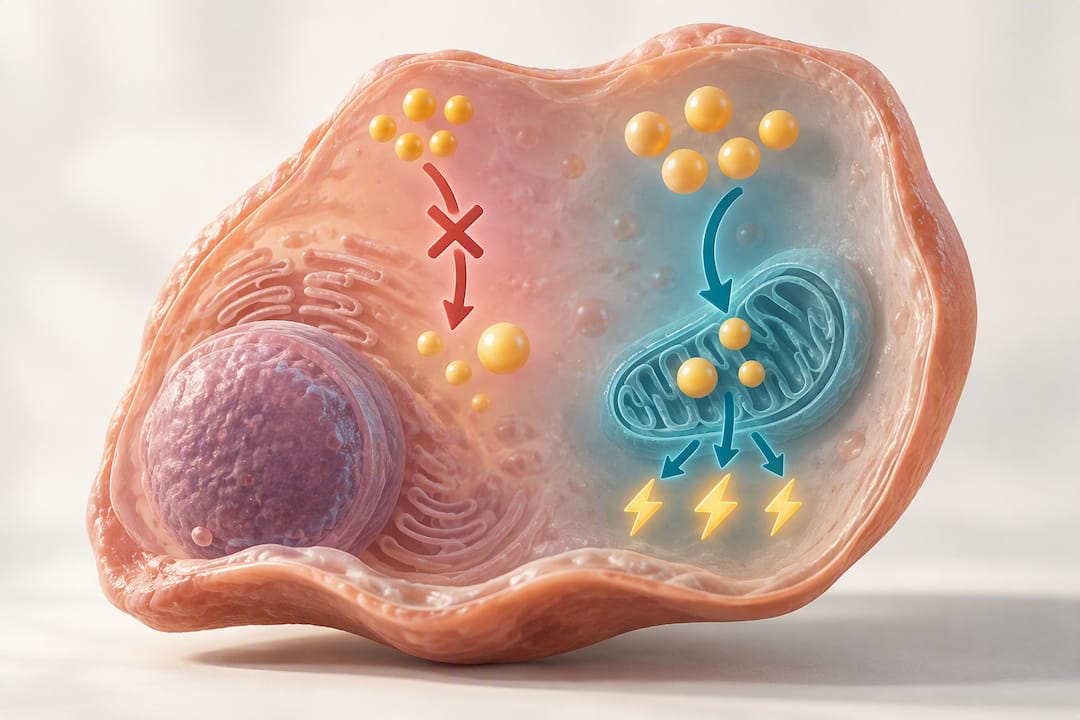
Indirect systemic effects may matter just as much, and possibly more. Weight loss itself reduces the flow of free fatty acids (FFAs) from adipose tissue to the liver, a mechanism sometimes called reducing “FFA flux.” Less fat arriving at the liver means less substrate available for steatosis to worsen. Improved insulin sensitivity compounds this benefit: as peripheral tissues respond better to insulin, the liver faces less pressure to produce and store excess glucose-derived fat. A 2023 review in the International Journal of Molecular Sciences ties these systemic shifts directly to the histologic improvements seen in liraglutide and semaglutide trials.
From a pharmacology standpoint, GLP-1 analogs are convenient drugs for patients with liver disease. They are recombinant polypeptides, broken down mainly through proteolytic cleavage rather than hepatic cytochrome P450 metabolism, according to pharmacology reviews cataloged by NCBI Bookshelf. That matters clinically:
- Minimal CYP involvement means fewer drug-drug interaction concerns compared to many oral hepatic medications.
- Elimination happens largely through renal and proteolytic pathways, not liver-dependent clearance.
- Mild hepatic impairment generally does not require dose adjustment, though moderate-to-severe impairment warrants closer clinical judgment.
Pro Tip: Don’t assume “liver-friendly metabolism” means “zero liver monitoring.” The pharmacokinetics are forgiving, but the whole point of using these drugs here is to track histologic change, so baseline and follow-up liver enzyme panels still matter regardless of how the drug itself is cleared.
The Trial Evidence Behind the FDA Approval
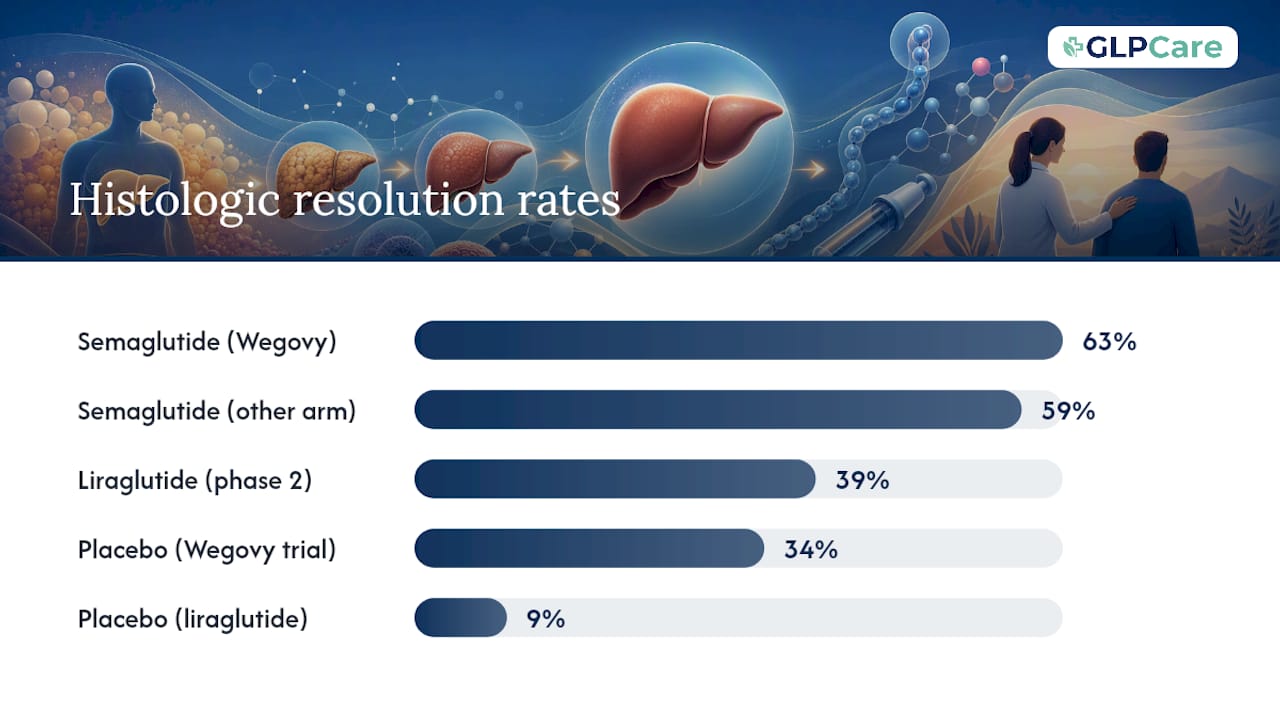
The single most consequential data point in this field came from Wegovy’s MASH trial. At week 72, 63% of semaglutide-treated participants achieved MASH resolution without worsening fibrosis, compared to 34% on placebo. On the fibrosis side, 37% of treated patients showed improvement in liver scarring without worsening MASH, against 22% on placebo. Those interim histologic results, not a completed outcomes trial, formed the basis for the FDA’s accelerated approval of Wegovy for MASH with moderate-to-advanced fibrosis.
Statistic Callout: Semaglutide nearly doubled the rate of MASH resolution compared to placebo (63% vs. 34%) in the trial data supporting FDA approval, one of the clearest histologic signals any drug class has produced for this disease.
That trial did not appear in isolation. Earlier phase 2 data on liraglutide showed 39% histologic resolution of NASH versus 9% on placebo at 48 weeks, and separate semaglutide dosing arms reported resolution rates as high as 59% at 72 weeks in certain cohorts, according to the 2023 IJMS review of GLP-1 receptor agonists in NAFLD. The signal has been consistent across multiple trials and multiple molecules within the class, which is unusual for a disease that has burned through several failed drug candidates over the past decade.
A 2026 systematic review and meta-analysis pooling 20 randomized trials sharpened the picture further. GLP-1 agonists nearly tripled the likelihood of MASH resolution without worsening fibrosis, with a relative risk of 3.03 (p < 0.0001). The same analysis found significant reductions in liver fat content and liver enzyme levels across the pooled trials. Heterogeneity between studies was real, driven by differences in drug, dose, trial duration, and baseline fibrosis severity, so pooled numbers should be read as a directional signal rather than a single precise probability for any individual patient.
The safety side of that meta-analysis deserves equal attention. Overall adverse events were modestly elevated in GLP-1 arms (relative risk 1.10), almost entirely attributable to gastrointestinal symptoms, while serious adverse events did not differ significantly from placebo. That is a reassuring risk profile for a drug class being asked to do double duty: manage metabolic disease and improve liver histology at the same time.
A few points worth flagging when weighing this evidence:
- Fibrosis benefit is inconsistent across trials, and the strongest signals cluster in F2–F3 disease rather than early or very advanced stages.
- Most trial populations skew toward patients with obesity and type 2 diabetes, which limits generalizability to lean or non-diabetic MASH patients.
- Interim histology, the basis for the FDA’s accelerated approval, is not the same evidentiary bar as a completed clinical outcomes trial measuring liver-related mortality or transplant rates.
When Do Liver Improvements Actually Show Up?
Patients and clinicians want a timeline, and the honest answer is that different aspects of liver disease respond at different speeds.
- Liver fat reduction (steatosis) tends to move fastest, often measurable within a few months on imaging like MRI-PDFF, tracking closely with the pace of weight loss itself.
- Inflammation markers, including liver enzymes and histologic inflammation scores, generally follow next, often improving meaningfully by the 6 to 12 month mark once sustained weight loss and improved insulin sensitivity have had time to take effect.
- Fibrosis regression is the slowest-moving target, and the 72 week trial windows used in major studies likely represent the earliest point at which meaningful scarring changes become detectable, not the ceiling of what is achievable with longer treatment.
That staggered timeline lines up with a broader clinical principle that predates GLP-1 drugs entirely: the degree of weight loss required to move each stage of liver disease scales upward. Roughly 5% weight loss tends to reduce hepatic steatosis; 7 to 10% is typically needed to meaningfully reduce inflammation; and 10% or more is usually the threshold associated with fibrosis improvement. Most patients cannot sustain that magnitude of weight loss through lifestyle changes alone, which is precisely the gap GLP-1 pharmacotherapy is designed to close.
Statistic Callout: A weight loss threshold of 10% or greater is the figure most consistently linked to fibrosis improvement in the clinical literature, well beyond what most patients achieve with diet and exercise alone.
Baseline characteristics shift these timelines meaningfully. Patients with earlier-stage fibrosis (F0 to F2) generally show faster and more complete histologic response than those entering treatment at F3. Diabetes status matters too: patients with concurrent type 2 diabetes often see amplified benefit, likely because GLP-1 drugs are correcting insulin resistance that is simultaneously driving both their glycemic disease and their liver disease. None of this means patients with more advanced fibrosis or without diabetes cannot benefit. It means their response curve looks different, and expectations should be calibrated accordingly.
Safety, Side Effects, and What Liver Disease Changes
Gastrointestinal side effects are the most common reason patients stop GLP-1 therapy, and that holds true whether the goal is diabetes control, weight loss, or liver disease treatment. Nausea, vomiting, and diarrhea cluster heavily around dose increases, which is why clinical guidance from the New England Journal of Medicine emphasizes slow, deliberate titration schedules over aggressive dose escalation.
For patients specifically dealing with liver disease, a few additional considerations apply:
- Hepatic metabolism is largely a non-issue. Because GLP-1 analogs are cleared through proteolytic breakdown rather than liver-dependent CYP pathways, mild hepatic impairment typically does not require dose adjustment.
- Renal clearance deserves attention. Some agents in this class rely more heavily on renal elimination, so caution is warranted in patients with moderate-to-severe kidney impairment, a population that often overlaps with advanced MASH.
- Hypoglycemia risk rises in combination therapy. Patients on insulin or sulfonyl ureas alongside a GLP-1 drug face elevated hypoglycemia risk, and dose adjustments to those other medications are often necessary at initiation.
- GI side effects are dose-dependent, not universal. Most patients tolerate the maintenance dose reasonably well once they have moved through the escalation phase.
Pro Tip: If nausea shows up around a dose increase, the fix is almost never to abandon the drug. It is to slow the titration schedule, eat smaller portions before meals shift, and give the gut two to four extra weeks to adjust before stepping up again.
Understanding the full range of what to expect before starting can meaningfully reduce early discontinuation. GLPCare’s breakdown of common GLP-1 side effects walks through what is typical, what warrants a call to a clinician, and how most symptoms resolve with time.
Who Benefits Most, and How to Monitor Progress
The clearest candidates for GLP-1 therapy targeting liver disease are patients with obesity or type 2 diabetes who also have biopsy-confirmed or non-invasively staged MASH at fibrosis stages F0 through F3. This is the population that dominates trial enrollment, and it is the population where the histologic evidence is strongest.
Patients with decompensated cirrhosis represent a different clinical picture entirely. Evidence in that population remains limited, and caution is warranted given the narrower risk-benefit margin in decompensated liver disease. A 2026 press release from UC San Diego describing improved liver scarring in a trial cohort with early cirrhosis is a promising signal worth watching, but it is preliminary, press-release-level data, not a peer-reviewed outcomes study, and should be read that way.
A sensible baseline workup and monitoring cadence looks like this:
Baseline evaluation:
- Full metabolic panel, HbA1c, and fasting lipid profile
- Liver enzymes (ALT, AST, GGT) and a fibrosis risk score (FIB-4 or similar)
- Imaging via FibroScan (transient elastography) or MRI-PDFF where available, with biopsy reserved for cases where staging remains ambiguous
Ongoing monitoring:
- Liver enzymes and weight trend every 8 to 12 weeks during dose titration
- HbA1c and metabolic panel at standard diabetes-care intervals if diabetes is present
- Repeat non-invasive fibrosis assessment (FibroScan or equivalent) at 6 to 12 month intervals to track histologic trajectory
- Body composition or muscle mass assessment periodically, since rapid weight loss without resistance training risks disproportionate lean-mass loss
That last point is not an afterthought. It is a real clinical risk that deserves its own section.
Building GLP-1 Therapy Into a Complete Liver Care Plan
A prescription alone rarely produces the outcomes seen in trials. The trial protocols themselves paired medication with structured lifestyle counseling, and replicating that combination in real-world care is what closes the gap between “drug works in a study” and “patient actually improves.”
- Start with a conservative titration schedule. Slower dose increases reduce GI dropout rates and improve the odds a patient stays on therapy long enough to reach a histologically meaningful dose, a point NEJM’s clinical guidance reinforces repeatedly.
- Pair the medication with a structured diet emphasizing protein. Weight loss that comes disproportionately from muscle rather than fat undermines long-term metabolic health, even if the scale number looks identical.
- Add resistance training, not just cardio. Research from UC Davis Health on the systemic effects of GLP-1 therapy points to progressive resistance exercise combined with adequate protein intake as the most effective way to preserve lean mass during rapid weight loss.
- Use noninvasive testing to document response over time, rather than relying on symptoms or weight alone, since liver improvement can lag behind or outpace how a patient feels.
Pro Tip: Protein targets during GLP-1 therapy are usually higher than what patients ate before starting treatment, precisely because appetite suppression makes it easy to under-eat overall. A protein intake calculator can help translate a general “eat more protein” recommendation into an actual daily gram target. Guidance on preventing muscle loss during GLP-1 treatment covers the specifics of how to structure that combination day to day.
What We Still Don’t Know
The evidence base here is genuinely strong for what it measures, and genuinely thin for what it does not. No trial has yet produced long-term outcome data on liver transplant rates or liver-related mortality in patients treated with GLP-1 drugs for MASH. Every headline statistic in this article, including the FDA approval itself, rests on interim histology at 72 weeks, a meaningful surrogate endpoint but not the same as proof of reduced mortality over years.
Evidence in non-diabetic MASH populations remains comparatively limited, since most large trials enrolled patients with obesity or type 2 diabetes as a primary criterion. Whether the same magnitude of benefit holds for lean or metabolically distinct MASH patients is not yet well established. Advanced cirrhosis is an even bigger open question: the UC San Diego trial signal on early cirrhosis is encouraging but preliminary, and decompensated cirrhosis remains largely outside the current evidence base.
The field’s near-term priorities are fairly clear: confirmatory post-approval trials with longer follow-up, dual and triple agonist combinations tested against histologic endpoints, real-world adherence data outside the controlled trial environment, and structured research into muscle-sparing interventions paired specifically with GLP-1 therapy rather than studied as an afterthought.
What Actually Changes Outcomes for These Patients
The mechanistic and trial data tell a consistent story, but the part clinicians and patients underestimate is how much the delivery of GLP-1 therapy shapes whether that data translates into a real outcome for a real person.
Adherence, not drug potency, is usually the limiting factor. A patient who stops therapy at week 20 because nobody coached them through nausea during dose escalation gets none of the histologic benefit documented in these trials, regardless of how strong the underlying pharmacology is. Continuous monitoring, whether through lab work, imaging, or day-to-day biometric tracking, catches problems early enough to keep patients on therapy long enough to matter.
The muscle-preservation piece is the most underappreciated part of this entire conversation. A patient who loses 15% of body weight but a disproportionate share of it from lean mass has technically hit the fibrosis-relevant weight loss threshold, and may still end up metabolically worse off in ways that don’t show up on a liver panel for years. Pairing GLP-1 therapy with resistance training and real protein targets isn’t a nice-to-have add-on. It is the difference between weight loss that improves liver histology sustainably and weight loss that trades one problem for another.
— Dominique
How GLPCare Supports GLP-1 Therapy for Liver Health
Everything in this article points to the same conclusion: GLP-1 therapy works best when medication, monitoring, and lifestyle coaching move together instead of separately. That is the entire premise behind GLPCare’s integrated model.

GLPCare pairs clinician-managed semaglutide or tirzepatide care with a screenless wearable that tracks activity, sleep, and heart rate alongside the dosing and dietary data you log yourself. That combination is designed to catch the adherence gaps and muscle-loss risks this article covers before they derail progress, with nutrition coaching built around real protein targets rather than generic calorie advice. The Semaglutide Care plan starts from $209 per month, and Tirzepatide Care starts from $299 per month, both detailed on the plan comparison page. If you already have a prescription or want to start with a clinical assessment, the GLPCare Membership, $199 per year, gives you access to the full coaching and wearable system at Glpcare. Every plan begins with a clinical evaluation to confirm GLP-1 therapy is appropriate for your history, so the next step is simply starting that assessment.
Sources
The clinical picture in this article draws on regulatory decisions, randomized trial data, and mechanistic pharmacology reviews rather than any single source:
- FDA approves treatment for serious liver disease known as ‘MASH’ | FDA
- GLP-1 receptor agonists in NAFLD: current evidence and future perspectives (2023) | PMC
- GLP-1 analog pharmacology and metabolism | NCBI Bookshelf (2024)
- GLP-1 receptor agonists: clinical review and practical guidance | NEJM
This article is general information, not a substitute for advice from a qualified doctor. Consult a qualified healthcare professional about your own circumstances before acting on anything here.
FAQ
Should I Take a GLP-1 Drug if I Have Fatty Liver?
GLP-1 therapy is worth discussing with your clinician if you have MASLD or MASH along with obesity or type 2 diabetes, since that is the population trial evidence supports most strongly. It is not automatically the right choice for every fatty liver diagnosis, particularly in decompensated cirrhosis, where evidence remains limited.
Which GLP-1 Is Approved for Fatty Liver Disease?
Wegovy (semaglutide) is the GLP-1 drug with FDA accelerated approval specifically for MASH with moderate-to-advanced fibrosis. Tirzepatide has shown liver benefits in trials but does not currently carry that same MASH-specific approval.
Is a GLP-1 Drug Hard on Your Liver?
No, GLP-1 drugs are not associated with liver toxicity. They are metabolized mainly through proteolytic breakdown rather than liver enzyme pathways, and trial data consistently shows reduced liver fat and enzymes rather than added liver strain.