Fix GLP-1 Fatigue Without Stopping Your Medication: Clinician Steps
Fix GLP-1 Fatigue Without Stopping Your Medication: Clinician Steps
Yes, fatigue is a recognized, usually indirect side effect of GLP-1 medications like semaglutide and tirzepatide. It rarely comes from the drug sedating you directly. Instead, it stems from eating less, dehydration, blood-sugar shifts, or muscle loss during rapid weight loss. Start by checking your hydration, adding protein and modest calories back, and calling your clinician if fatigue is severe or paired with confusion, fainting, or bad abdominal pain.
TL;DR:
- Fatigue during GLP-1 treatment mainly results from calorie restriction, dehydration, blood sugar swings, muscle loss, and micronutrient deficiencies, not the medication itself.
- Most fatigue occurs within the first 4 to 8 weeks of starting or increasing dosage, with symptoms often improving by 8 to 12 weeks once underlying causes are addressed.
- Managing fatigue effectively involves increasing protein intake, rehydration, optimizing sleep, light resistance exercise, and consulting your clinician about potential medication adjustments.
- Persistent or severe fatigue accompanied by symptoms like fainting or confusion requires urgent medical evaluation, as it may signal hypoglycemia, dehydration, or other complications.
- Older adults face higher risks of muscle loss during rapid weight reduction and should prioritize protein, resistance training, and close medical monitoring to prevent sarcopenia.
GlpcareManage Weight With Connected SupportGLPCare combines GLP-1 therapy, nutrition coaching, wearable health insights, and continuous clinician support for personalized weight management.Explore GLPCare
Table of Contents
- What Causes GLP-1 Fatigue in the First Place
- How Long Does GLP-1 Low Energy Usually Last?
- Managing Fatigue Related to GLP-1 Treatment
- When Fatigue Signals an Emergency
- Tests Clinicians Typically Run for Persistent Fatigue
- Older Adults and Rapid Weight Loss Need Extra Caution
- How Glpcare Helps You Manage GLP-1 Fatigue Day to Day
- A Straight Answer on Fatigue and When to Worry
- Get Clinician-Led Support for GLP-1 Fatigue
- Sources
- FAQ
What Causes GLP-1 Fatigue in the First Place
Your energy crash on a GLP-1 almost never comes from the medication acting like a sedative. It comes from what the medication does to your appetite, your gut, and your metabolism all at once.
Caloric deficit is the biggest driver. GLP-1 receptor agonists suppress appetite so effectively that many people drop to 1,200 to 1,400 calories a day without trying. Your body runs on fuel, and when intake falls that fast, energy follows it down. This is the single most common mechanism behind tiredness on Wegovy and similar drugs, according to clinical summaries reviewed by Drugs.com.
Gastrointestinal side effects compound the problem. Nausea, vomiting, and diarrhea, all common during dose increases, pull fluids and electrolytes like sodium and potassium out of your system faster than most people replace them. Dehydration alone can produce the kind of heavy, foggy tiredness people mistake for the drug itself.
Blood sugar swings matter too, especially if you’re also on insulin or a sulfonylurea for diabetes. GLP-1s slow gastric emptying and improve insulin sensitivity, which can push you toward hypoglycemia when combined with other glucose-lowering medications.
Then there’s muscle. Rapid weight loss on a GLP-1 doesn’t only burn fat. Studies and case reports have tied semaglutide to measurable lean-mass loss, or sarcopenia, in some patients, and less muscle means a lower baseline energy reserve for everyday activity.
Sleep disruption from nighttime GI symptoms and micronutrient shortfalls, particularly iron, vitamin B12, and vitamin D, round out the list of contributors. Reduced GI acidity can impair iron absorption, which matters if fatigue lingers past the first few weeks.
Pro Tip: Keep a simple log of what you ate, how much water you drank, and your energy level each day for two weeks. Patterns jump out fast, and that log becomes useful evidence for your clinician if fatigue doesn’t improve.
- Appetite suppression cutting daily calories well below maintenance
- GI losses (nausea, vomiting, diarrhea) driving dehydration and electrolyte loss
- Blood sugar shifts, especially when combined with insulin or sulfonylureas
- Muscle mass loss reducing your baseline energy capacity
- Sleep disruption and micronutrient gaps (iron, B12, vitamin D)
How Long Does GLP-1 Low Energy Usually Last?
Fatigue tends to hit hardest during the first 4 to 8 weeks, especially right after starting the medication or bumping up a dose. That’s when your body is adjusting to both the appetite suppression and any GI symptoms at once.
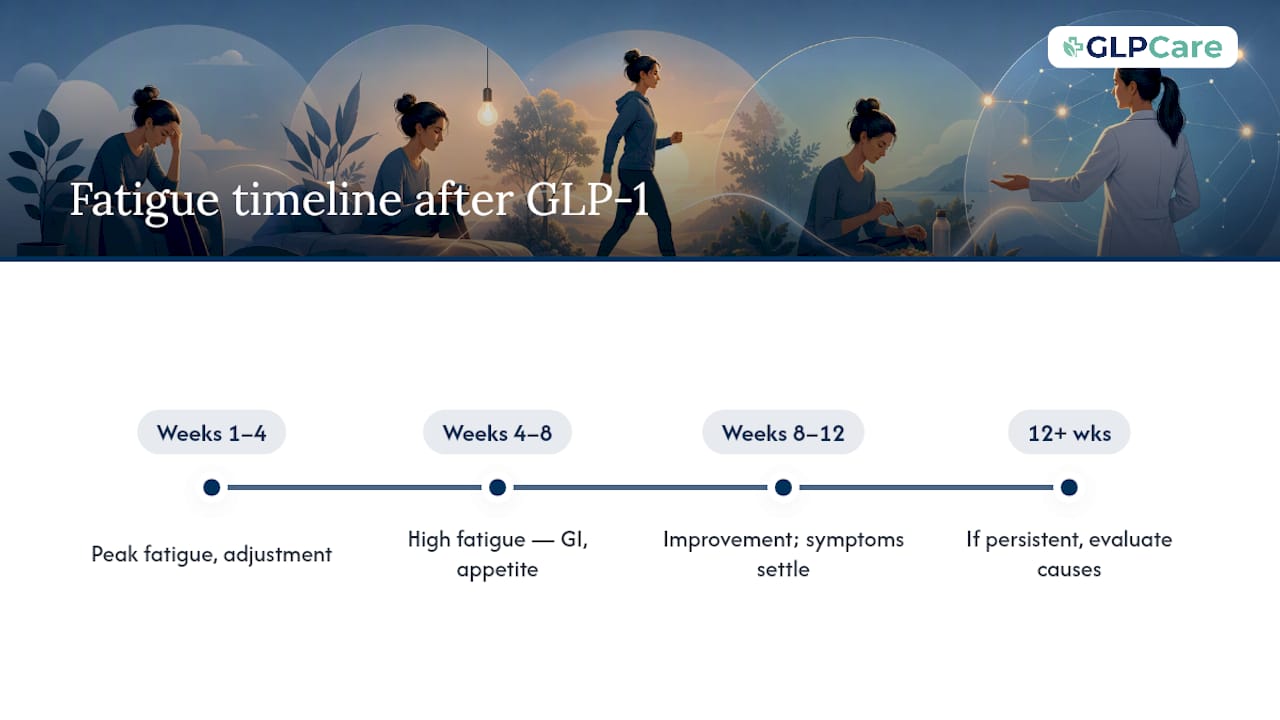
Most people see real improvement by 8 to 12 weeks, once eating patterns stabilize and the GI side effects settle. Fatigue that drags on past that window usually points to an unaddressed cause: ongoing calorie deficits that are too aggressive, untreated anemia, persistent GI losses, or weight loss happening faster than your body can adapt to.
Managing Fatigue Related to GLP-1 Treatment
Most fatigue related to GLP-1 use responds well to targeted changes in food, fluids, sleep, and activity. Fix the mechanism, and the tiredness usually follows.
- Hit a real protein target. Aim for 1.2 to 1.6 grams of protein per kilogram of body weight daily. That’s roughly 90 to 120 grams for someone at 165 pounds, split across three meals: eggs and Greek yogurt at breakfast, chicken or tofu at lunch, fish or lean beef at dinner. Skip empty-calorie fillers like chips or sugary drinks that add calories without nutrients. A protein-first meal plan makes this easier to plan around.
- Replace fluids and electrolytes deliberately. If you’re dealing with nausea or diarrhea, an oral rehydration solution or an electrolyte packet does more than plain water. Broth, salted foods, and potassium-rich options like bananas or potatoes help too.
- Protect your sleep. Eat your last meal at least three hours before bed to reduce nighttime reflux and GI discomfort, and keep a consistent wind-down routine.
- Move, but keep it light and targeted. Two short resistance sessions a week, even just bodyweight squats and rows, help preserve the muscle mass that GLP-1s put at risk. Add a daily 15-minute walk for a low-effort energy boost.
- Talk to your clinician about the medication itself. Slower titration, a temporary dose reduction, or a review of interacting diabetes medications are all reasonable requests if fatigue is disrupting your life.
Pro Tip: If nausea makes it hard to eat enough protein in one sitting, split your target into five or six small servings instead of three big meals. Smaller portions are easier to tolerate and add up to the same daily total.
When Fatigue Signals an Emergency
Most fatigue on a GLP-1 is a nuisance, not a danger. But some symptoms mean you need care now, not next week.
- Severe abdominal pain, which can signal pancreatitis or gallbladder problems
- Fainting or confusion, both possible signs of severe hypoglycemia or dehydration
- Chest pain or shortness of breath
- Signs of severe dehydration: dizziness, very dark urine, or an inability to keep fluids down
Any of these warrants an ER visit or an urgent call to your clinician rather than waiting it out.
Tests Clinicians Typically Run for Persistent Fatigue
If fatigue outlasts the 8 to 12 week adjustment window, a focused workup usually finds the cause.
- CBC with ferritin, to catch iron-deficiency anemia
- A basic metabolic panel checking electrolytes and kidney function
- TSH, vitamin B12, and vitamin D levels
- A strength assessment or body-composition review if sarcopenia is suspected, often paired with a nutrition referral
- A medication review for hypoglycemia risk, especially if you’re on insulin or a sulfonylurea alongside your GLP-1
Older Adults and Rapid Weight Loss Need Extra Caution
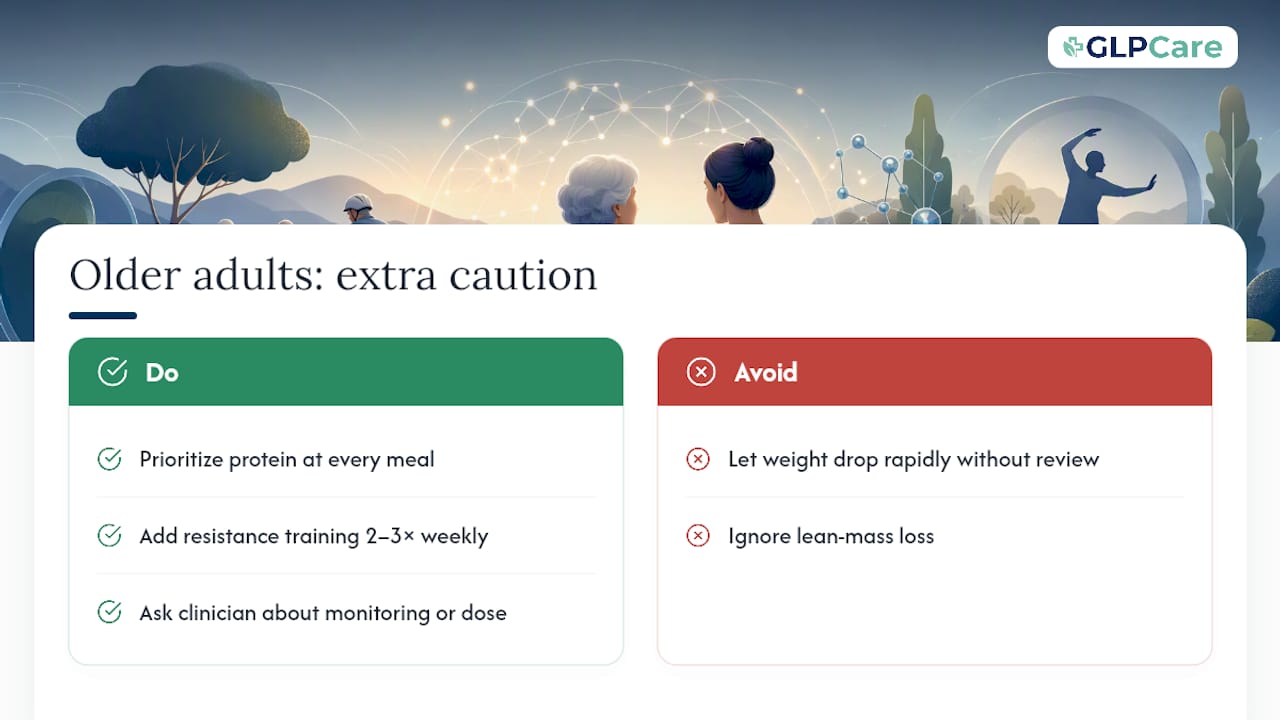
Sarcopenia risk climbs with both age and speed of weight loss. Older adults naturally carry less muscle reserve, so losing lean mass on top of that hits energy and function harder than it would in someone younger.
A published case report documented semaglutide-associated sarcopenia following rapid weight loss, reinforcing why clinicians increasingly monitor lean mass rather than just the number on the scale. Prevention here isn’t complicated: prioritize protein at every meal, add resistance training two to three times a week, and ask your clinician about closer monitoring or dose moderation if weight loss is happening unusually fast.
How Glpcare Helps You Manage GLP-1 Fatigue Day to Day
A model combining clinician oversight with personalized nutrition coaching and a wearable band that tracks sleep, heart rate, and activity in real time. That continuous data, combined with what you log about meals and dosing, helps your care team spot dehydration, poor sleep, or early muscle-loss trends before they turn into weeks of exhaustion. You can start with a protein calculator or a quick readiness assessment to see where your current plan has gaps.
A Straight Answer on Fatigue and When to Worry
Fatigue on a GLP-1 is common, and in almost every case I’ve reviewed, it’s fixable without stopping the medication. The mistake I see most often is treating it as an inevitable cost of weight loss instead of a signal worth investigating. Track your symptoms, bring specifics to your clinician instead of a vague “I’m tired,” and layer protein, hydration, and light resistance work into your routine before assuming the drug itself is to blame.
— Dominique
Get Clinician-Led Support for GLP-1 Fatigue
A generic weight-loss app can’t tell you whether your fatigue comes from too few calories, low sodium, or early muscle loss, because it isn’t tracking any of that. Glpcare is built specifically around GLP-1 care: a clinician reviews your case, a nutrition coach helps you hit real protein targets, and the GLP Care Band tracks sleep, heart rate, and activity continuously so patterns show up before they become weeks of exhaustion.

If you’re on a GLP-1 now or thinking about starting one, take the GLP-1 readiness quiz to see where you stand, then move into a clinical consult that builds a plan around your actual biometrics rather than guesswork. For a deeper look at the wearable-driven approach, the precision GLP-1 care page walks through how the band and app work together, and if you want a companion side-effect checklist alongside your Glpcare plan, our partners at Dayla Health cover practical GLP-1 side effect management in more detail.
Sources
For readers who want to verify the clinical basis for anything above, start with the FDA prescribing information for semaglutide, which lists official adverse events and titration schedules. The semaglutide-associated sarcopenia case report published on PMC covers the muscle-loss evidence in more depth. Healthline’s breakdown of GLP-1 fatigue timelines and Diatribe’s piece on unexpected GLP-1 side effects both offer useful clinical framing for symptom tracking.
This article is general information, not a substitute for advice from a qualified doctor. Consult a qualified healthcare professional about your own circumstances before acting on anything here.
- GLP-1s and Energy Levels: Is Fatigue a Side Effect? — Healthline
- Drugs
- A case report of semaglutide induced sarcopenia — PMC (NIH)
FAQ
Does fatigue from Ozempic go away?
Yes, in most cases. Fatigue typically eases once your body adjusts to lower calorie intake and any GI symptoms resolve, usually within 8 to 12 weeks.
How long does fatigue last on semaglutide?
Fatigue is often most intense during the first 4 to 8 weeks after starting or increasing a dose, with most people noticing improvement by around 8 to 12 weeks if the underlying causes are addressed.
Can GLP-1 medications cause chronic fatigue syndrome?
There’s no established link between GLP-1 therapy and chronic fatigue syndrome. Persistent fatigue on these medications is more often explained by an ongoing calorie deficit, dehydration, anemia, or muscle loss, all of which are treatable.
Is fatigue a sign I should stop my GLP-1 medication?
Not usually. Mild to moderate fatigue is common during adjustment, but severe fatigue with confusion, fainting, or intense abdominal pain warrants an urgent call to your clinician rather than an on-your-own decision to stop.
Can Glpcare help if I’m already experiencing fatigue on a GLP-1?
Yes. A clinician-led model reviews your dosing, nutrition, and biometric data together to identify which mechanism, whether it’s calorie intake, hydration, or muscle loss, is driving your fatigue.