What to Know About Daily Calorie Targets on GLP-1
What to Know About Daily Calorie Targets on GLP-1
Most adults on GLP-1 medications land somewhere between 1,200 and 1,800 calories a day, but that range is a starting point, not a prescription. The pivotal trials for semaglutide and tirzepatide didn’t hand every participant the same number. Instead, STEP-1 and SURMOUNT-1 calculated each person’s total daily energy expenditure and subtracted roughly 500 calories. Your number depends on your body, your activity, and how the medication affects your appetite.
The priority that matters more than hitting a specific calorie figure: protein and safety floors.
- Aim for 1.2 to 1.6 grams of protein per kilogram of body weight (about 0.8 to 1.0 gram per pound)
- Avoid chronically dropping below 1,200 calories if you’re a woman, or 1,500 if you’re a man, without direct clinical supervision
- Treat your calorie number as a range to check against, not a daily ceiling to chase downward
The core risk on GLP-1 medications isn’t overeating. It’s under-eating. Appetite suppression can push intake so low that you lose muscle along with fat, a trade that undermines the whole point of treatment.
Key Takeaways
Safe, sustainable weight loss on GLP-1 medications depends on hitting an individualized calorie target while protecting protein intake and never dropping below clinical minimums.
| Point | Details |
|---|---|
| Calorie range is individual | Most adults land between 1,200 and 1,800 kcal/day, based on TDEE minus a 300 to 500 calorie deficit. |
| Protein is the priority | Target 1.2 to 1.6 g/kg (0.8 to 1.0 g/lb) daily to preserve lean muscle during weight loss. |
| Under-eating is the real risk | Watch for rapid weight loss, fatigue, or hair thinning as signs intake has dropped too low. |
| Strength train weekly | 2 to 3 resistance sessions a week help preserve metabolic rate alongside adequate protein. |
| GLPCare adds continuous monitoring | Wearable biometrics plus clinician support help catch under-eating trends earlier than self-report alone. |
This article is general information, not a substitute for advice from a qualified doctor. Consult a qualified healthcare professional about your own circumstances before acting on anything here.
Table of Contents
- Why GLP-1 Medications Change How Much You Eat
- How Do You Calculate Your Personalized Calorie Target?
- What Happens if You Eat Too Little on GLP-1?
- How Much Protein Do You Need on GLP-1?
- What Do 1,200, 1,500, and 1,800 Calorie Days Look Like?
- When Should You Track Calories on GLP-1?
- Why Resistance Training Matters as Much as Calories
- How GLPCare Personalizes Your Calorie and Protein Targets
- A Practical, Safety-First Closing Note
- A Monitored Path to Personalized Calorie Targets
- Sources
- FAQ
Why GLP-1 Medications Change How Much You Eat
GLP-1 receptor agonists work on your gut and brain simultaneously. They slow gastric emptying, so food sits in your stomach longer, and they act on appetite centers that regulate hunger signals. The combined effect is straightforward: you feel full sooner, and cravings quiet down. A PubMed review documents that these medications reliably reduce spontaneous calorie intake, often without any conscious effort at restriction.
That’s exactly why calorie tracking needs a new job description once you start treatment.
- Before GLP-1, tracking often meant enforcing a deficit against a body that wants to eat more.
- On GLP-1, tracking exists to catch the opposite problem: intake falling too far, too fast.
- The clinical concern shifts from willpower to adequacy. Are you getting enough protein? Enough calories to preserve muscle? Enough micronutrients to avoid deficiency?
This is why registered dietitians increasingly frame tracking on GLP-1 as a periodic check-in rather than a daily obligation. The goal is confirming you’re eating enough of the right things, not squeezing out a few more calories of restriction.
How Do You Calculate Your Personalized Calorie Target?
A single guideline can’t account for a 5’2" retiree and a 6’1" former athlete. Here’s the method the clinical trials effectively used, broken into steps you can run yourself.
- Calculate your Basal Metabolic Rate (BMR) using the Mifflin-St Jeor equation, the standard formula used in most clinical nutrition settings. For men: (10 × weight in kg) + (6.25 × height in cm) minus (5 × age) + 5. For women, subtract 161 instead of adding 5.
- Multiply by an activity factor to get your Total Daily Energy Expenditure (TDEE). Sedentary is roughly 1.2, lightly active is around 1.375, moderately active lands near 1.55, and very active adults use 1.725.
- Subtract a modest deficit, typically 300 to 500 calories. The STEP-1 trial and SURMOUNT-1 trial both used an approximate 500-calorie daily deficit paired with counseling and activity, not an aggressive cut.
- Clamp the result to a safe floor. If your TDEE minus 500 lands you under 1,200 (women) or 1,500 (men), reset to that floor instead. Older adults, smaller-bodied individuals, and anyone with a medical condition should get this number confirmed by a clinician rather than relying on the formula alone.
Pro Tip: If the math feels like a chore, don’t skip the floor step to save time. The formula gets you close, but the floor is the part that actually protects you from under-eating.
What Happens if You Eat Too Little on GLP-1?
The floors of 1,200 and 1,500 calories aren’t arbitrary. Below those thresholds, your body struggles to get adequate protein, essential fatty acids, and micronutrients like iron, B12, and vitamin D, even with careful food choices. A clinical review on very low calorie diets found that very low calorie intake carries real risks including gallstones, metabolic adaptation, and nutrient deficiencies, and should only happen under direct medical supervision.
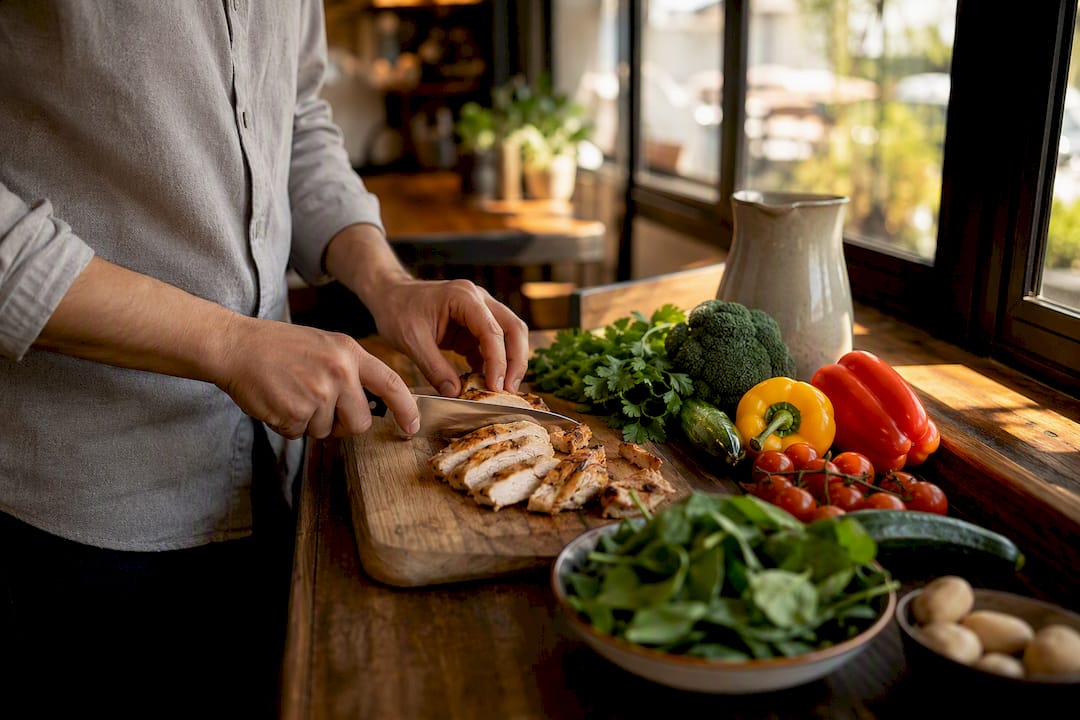
Gallstones deserve specific attention here. Rapid weight loss, regardless of the method, is a known risk factor for gallstone formation, and GLP-1 medications combined with poor intake can accelerate that timeline.
Watch for these warning signs that intake has dropped too low:
- Weight loss exceeding 2 to 3 pounds per week for multiple consecutive weeks
- Persistent fatigue, dizziness, or lightheadedness when standing
- Hair thinning or noticeable shedding
- Lab results showing declining iron, B12, or protein markers
If any of these show up, contact your prescriber or a registered dietitian before making further changes to your medication or diet. This isn’t a sign to push through. It’s a sign your calorie floor needs to move up, not down.
How Much Protein Do You Need on GLP-1?
Protein is the nutrient most likely to fall short when appetite drops, and it’s the one most directly tied to preserving muscle during weight loss. Aim for a protein intake within the recommended clinical range based on your body weight to help preserve muscle during weight loss. For a 160-pound adult, that’s 128 to 160 grams a day, a target that can feel steep when a few bites leave you full.
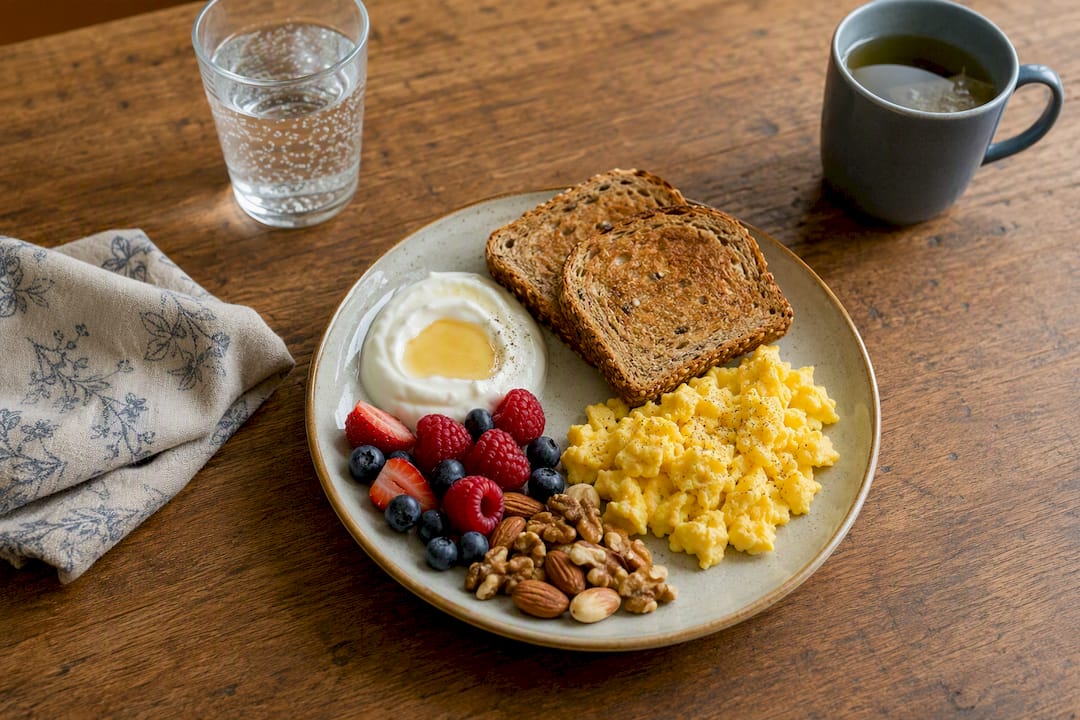
UCHealth’s nutrition guidance recommends prioritizing protein, fiber, and hydration precisely because reduced appetite makes it easy to under-shoot all three at once.
A few tactics make the target achievable even with a smaller stomach’s worth of appetite:
- Eat your protein source first at every meal, before vegetables or starches take up limited stomach space
- Lean on high-protein liquids like fortified shakes or bone broth on days when solid food feels like too much
- Fortify meals with Greek yogurt, cottage cheese, or a scoop of protein powder stirred into oatmeal or soup
- Spread protein across three to four smaller meals rather than trying to eat one large, protein-dense plate
Fiber matters too, both for digestion and to offset the constipation some people experience on GLP-1s. The Mayo Clinic’s fiber guidance is a useful reference if GI side effects show up alongside appetite changes.
Pro Tip: Front-load protein at breakfast. If nausea tends to build as the day goes on, getting 30 to 40 grams in early gives you a buffer even if dinner ends up small.
What Do 1,200, 1,500, and 1,800 Calorie Days Look Like?
Numbers on a page mean little without a picture of an actual plate. Here’s how three calorie targets translate into meals that still hit protein goals, based on the low-volume, high-protein approach dietitians recommend for reduced appetite.
- 1,200-calorie day: Greek yogurt with berries and a protein shake for breakfast (roughly 30g protein), a canned salmon salad for lunch (25g protein), and a small portion of grilled chicken with roasted vegetables for dinner (35g protein). Total protein lands near 100 to 110 grams.
- 1,500-calorie day: Add a mid-morning cottage cheese cup and increase dinner portions slightly. Total protein reaches 115 to 130 grams.
- 1,800-calorie day: Include a full breakfast with eggs and toast, a larger lunch with a grain base, and an evening snack like a protein bar. Total protein climbs to 130 to 150 grams.
| Calorie Target | Sample Protein Sources | Approx. Protein (g) |
|---|---|---|
| 1,200 kcal | Greek yogurt, protein shake, canned salmon, chicken | 100-110 |
| 1,500 kcal | Above plus cottage cheese, larger dinner portion | 115-130 |
| 1,800 kcal | Above plus eggs, grain-based lunch, protein bar | 130-150 |
When appetite is especially low, liquid meals and fortified yogurts do more nutritional work per bite than solid food. For more structured meal ideas built around this protein-first approach, a GLP-1 meal plan can help you build out a full week without reinventing the wheel daily.
When Should You Track Calories on GLP-1?
You don’t need to log every bite indefinitely. A short baseline period tells you most of what you need to know.
- Track intake for 3 to 5 days when you start or change doses, to see where your actual eating lands versus your calculated target
- After that, shift to periodic spot checks rather than daily logging, unless something changes
- Watch two numbers specifically: protein grams and whether you’re consistently under your calorie floor
- Monitor the rate of weight change; losses faster than 2 to 3 pounds per week deserve a second look
Photo-based logging apps and simple daily checklists work well for spot checks because they take less time than full nutrient breakdowns. A dedicated GLP-1 tracker can simplify this further. If symptoms like fatigue or dizziness appear, that’s the signal to escalate from self-tracking to clinician-reviewed monitoring.
Why Resistance Training Matters as Much as Calories
Calorie and protein targets protect muscle on paper. Resistance training is what actually forces your body to keep that muscle instead of burning it for fuel. Aim for multiple resistance training sessions per week, focusing on major muscle groups, and progressively increase weight or resistance as you adapt. Research on protein and resistance training shows the combination helps preserve resting metabolic rate, which matters even more during medication-assisted weight loss.

Strength work paired with adequate protein is what keeps the scale’s progress from being mostly muscle loss. If you’re older, deconditioned, or recovering from an injury, a physical therapist or trained coach can build a program that fits your starting point. For more on this connection, see how preventing muscle loss on GLP-1 ties directly into your calorie strategy.
Pro Tip: Two focused strength sessions a week beat five inconsistent ones. Consistency preserves muscle better than volume.
How GLPCare Personalizes Your Calorie and Protein Targets
Self-reported intake has a blind spot: it only shows what you remember to log. GLPCare’s wearable band tracks sleep, heart rate, and activity continuously, layering biometric data on top of what you enter about meals and dosage. That combination can flag early signs of under-eating, like declining activity or disrupted sleep, before they show up as a symptom you’d notice on your own.
- A wearable band feeding real-time biometric data to your care team
- An AI companion that helps translate your inputs into personalized calorie and protein targets
- Licensed clinician support to adjust your plan as your weight and needs change
- Built-in calculators to keep protein and calorie floors visible day to day
A Practical, Safety-First Closing Note
The right number isn’t the lowest one you can tolerate. It’s the one that keeps you fed enough to build strength, protect your labs, and sustain this for the long haul. Work with a clinician who can individualize your plan, prioritize protein and nutrient density over restriction, and treat any warning sign as information, not failure.
— Dominique
A Monitored Path to Personalized Calorie Targets
Calculating your own TDEE and clamping it to a safe floor gets you close, but it’s a snapshot, not a moving picture. Your appetite, activity, and needs shift as you lose weight, and a formula run once at the start doesn’t catch that drift. GLPCare’s precision care model pairs a wearable band with clinician oversight so your calorie and protein targets adjust as your body changes, not just at your next appointment.

The wearable tracks sleep, heart rate, and activity continuously, while you log meals and dosage through the AI companion. That combination gives your care team a clearer picture between visits, which matters most when appetite suppression makes it easy to under-eat without noticing. If you want to know your specific protein target right now, the protein intake calculator gives you a number based on your actual body weight in under a minute. If you’re deciding whether GLP-1 treatment fits your situation at all, start with the GLP-1 readiness quiz to see where you stand.
Sources
- Tirzepatide SURMOUNT-1 trial (NEJM)
- Nutrition is vital when taking GLP-1 weight loss drugs — UCHealth
- Clinical review on low-calorie diets (PMC)
FAQ
Is 1,200 Calories Enough on GLP-1?
For many adult women, 1,200 calories is the floor, not an ideal target, and it should include adequate protein to avoid muscle loss. If your calculated TDEE minus a deficit lands below this, stay at 1,200 rather than going lower, and check in with a clinician.
How Many Calories Are People Actually Eating on GLP-1?
Reported intake varies widely, but most adults on GLP-1 medications naturally settle between 1,200 and 1,800 calories a day due to appetite suppression, consistent with the reduced spontaneous intake documented in clinical reviews.
How Long Would It Take to Lose 20 Pounds on GLP-1?
Timelines vary by starting weight, dose, and adherence, but a sustainable pace of 1 to 2 pounds per week is typical for many adults. Faster loss increases the risk of muscle loss and should be discussed with your prescriber.
How Many Calories Should I Eat to Lose Weight on GLP-1?
Calculate your TDEE using the Mifflin-St Jeor formula, subtract 300 to 500 calories, and clamp the result to at least 1,200 (women) or 1,500 (men). GLPCare’s protein calculator can help you set the protein side of that target alongside your calorie number.