Intermittent Fasting on Semaglutide: A Safety-First Protocol

Intermittent Fasting on Semaglutide: A Safety-First Protocol

Mild intermittent fasting is often possible on semaglutide, but it usually isn’t necessary and it isn’t risk-free. The STEP trials showed 15 to 22 percent weight loss without any fasting protocol, so fasting is an add-on, not a requirement. If you want to try it, wait until your dose stabilizes, protect your protein and fluid intake, and loop in your clinician, especially if you take insulin or a sulfonylurea.
TL;DR:
- Fasting usually offers minimal additional weight loss beyond the 15 to 22 percent achieved with semaglutide alone, as shown in the STEP trials.
- Combining fasting with semaglutide increases risks such as muscle loss, dehydration, and hypoglycemia, especially if insulin or sulfonylureas are used.
- Safe fasting should only be attempted after stabilizing on medication for 4 to 8 weeks and gradually increasing fasting window length under medical supervision.
- Prioritize hitting daily protein targets of 1.2 to 1.6 grams per kilogram of body weight and monitor strength to preserve muscle during time-restricted eating.
- Fasting should be viewed as a scheduling aid rather than a way to accelerate weight loss on semaglutide, which already drives significant results without fasting.
Table of Contents
- What Does Intermittent Fasting on GLP-1 Actually Change?
- Is Fasting Worth the Risk While You’re on Semaglutide?
- How to Try Time-Restricted Eating Safely on Semaglutide
- Getting Protein, Calories, and Training Right Inside a Shorter Window
- When Should You Pause or Stop Fasting on Semaglutide?
- How GLPCare Helps You Fast Safely on Semaglutide
- The Overlooked Truth About Fasting and Semaglutide
- Try Intermittent Fasting on Semaglutide With Clinician Support Behind You
- Sources
- FAQ
What Does Intermittent Fasting on GLP-1 Actually Change?
Semaglutide already does most of what fasting tries to do. It suppresses appetite through GLP-1 receptor activity in the brain, slows gastric emptying so food sits in your stomach longer, and stimulates insulin release only when your blood glucose is elevated. That last mechanism, called glucose-dependent insulin secretion, is why semaglutide carries a low intrinsic hypoglycemia risk on its own.
Fasting with GLP-1 medication means layering a behavioral eating pattern on top of a drug that’s already compressing your natural eating window. You’re often not choosing between hunger and fullness. You’re choosing how to arrange meals around an appetite that’s already blunted.
The trial data backs this up directly. In the STEP program, participants lost a mean of 15 to 22 percent of body weight using standard lifestyle counseling, with no structured fasting window involved.
The overlap that matters:
- Semaglutide reduces hunger signaling; time-restricted eating reduces the hours you’re allowed to eat. Combined, they can compound into genuinely low intake.
- Slowed gastric emptying already extends satiety, so a compressed window may not add much appetite suppression beyond what the drug provides.
- Glucose-dependent insulin release means fasting alone rarely causes low blood sugar on semaglutide, unless another glucose-lowering medication is in the mix.
Quick stat: Trial data shows semaglutide alone drives 15 to 22 percent average weight loss, a benchmark worth remembering before assuming fasting will meaningfully add to that number.
A narrative review on combining GLP-1 therapy with lifestyle changes found real mechanistic overlap between the two approaches, but it also flagged something important: nobody has run a randomized trial testing semaglutide plus intermittent fasting together. The added-value question remains open. For some people, the structure of a fasting window still helps with adherence and decision fatigue, even if it isn’t adding much metabolically.
Is Fasting Worth the Risk While You’re on Semaglutide?
Fasting can offer real, practical upsides for some people on semaglutide. It’s mostly the risks that deserve your attention, though, because they’re specific to what this drug already does to your body.
Potential benefits:
- A defined eating window can simplify meal planning when appetite is already unpredictable.
- Time-restricted eating may modestly improve insulin sensitivity, independent of weight loss.
- Some people find a fixed window easier to sustain than constant, low-volume snacking throughout the day.
Real risks to weigh:
- Inadequate total calories and protein, since appetite suppression plus a short window can leave you eating far too little.
- Muscle loss, or sarcopenia, when protein targets aren’t met during rapid weight loss.
- Dehydration that worsens nausea, constipation, or other GI symptoms already common with semaglutide.
- Elevated hypoglycemia risk if you’re also on insulin or a sulfonylurea, since fasting removes the buffer those medications rely on.
- Micronutrient gaps from a smaller total food volume, particularly iron, magnesium, and B vitamins.
Quick stat: No randomized trial has tested intermittent fasting layered onto GLP-1 therapy. The guidance clinicians give today comes from mechanistic reasoning and observational caution, not head-to-head trial results, according to a narrative review on GLP-1 and lifestyle modification.
The honest answer is that fasting on semaglutide isn’t proven to accelerate results, and it introduces failure modes that don’t exist when you’re just eating three balanced meals with the medication doing its job.
How to Try Time-Restricted Eating Safely on Semaglutide
Rushing into a 16:8 window during your first month on semaglutide is one of the most common mistakes patients make; it is important to verify your semaglutide formulation and safety measures before making such adjustments. Nausea, low appetite, and dose adjustments are already testing your intake capacity. Stacking a fasting window on top of that is how people end up under-eating protein and losing muscle instead of fat.
A conservative, phased approach:
- Wait through titration. Give your body 4 to 8 weeks on a stable dose, or until your clinician confirms your side effects have settled, before attempting any structured fast. Guidance from obesity medicine clinicians consistently recommends waiting for maintenance dosing before adding fasting.
- Start mild. Begin with a 12:12 window for one to two weeks. If protein and hydration targets are consistently met, progress to 14:10, then 16:8. Skip straight to 16:8 only if you’ve already proven you can hit your numbers at the easier stages.
- Avoid extended fasts entirely without direct supervision. One-meal-a-day eating or fasts beyond 24 hours combined with semaglutide’s appetite suppression can create real nutrient deficits fast.
- Adjust diabetes medications first. If you take insulin or a sulfonylurea, your clinician needs to revise your dosing and self-monitoring schedule before you fast, given the documented hypoglycemia risk that fasting introduces on top of those drugs.
- Track four things weekly. Log your protein intake, do a basic strength or performance check (can you still complete your usual set and rep scheme?), monitor fluid and electrolyte intake, and set a clear rule for when a symptom means you stop and call your clinician.
If you take oral semaglutide (Rybelsus), your morning fasting window needs an adjustment too. The medication must be taken on an empty stomach with minimal water, followed by a 30-minute wait before eating or drinking anything else, which effectively dictates the first part of your fasting schedule for you.
Pro Tip: Don’t judge whether a fasting window is working by the scale alone. Track a simple strength marker, like your usual squat or push-up rep count, weekly. If it drops noticeably, that’s often your first sign that you’re losing muscle, not just fat.

Getting Protein, Calories, and Training Right Inside a Shorter Window
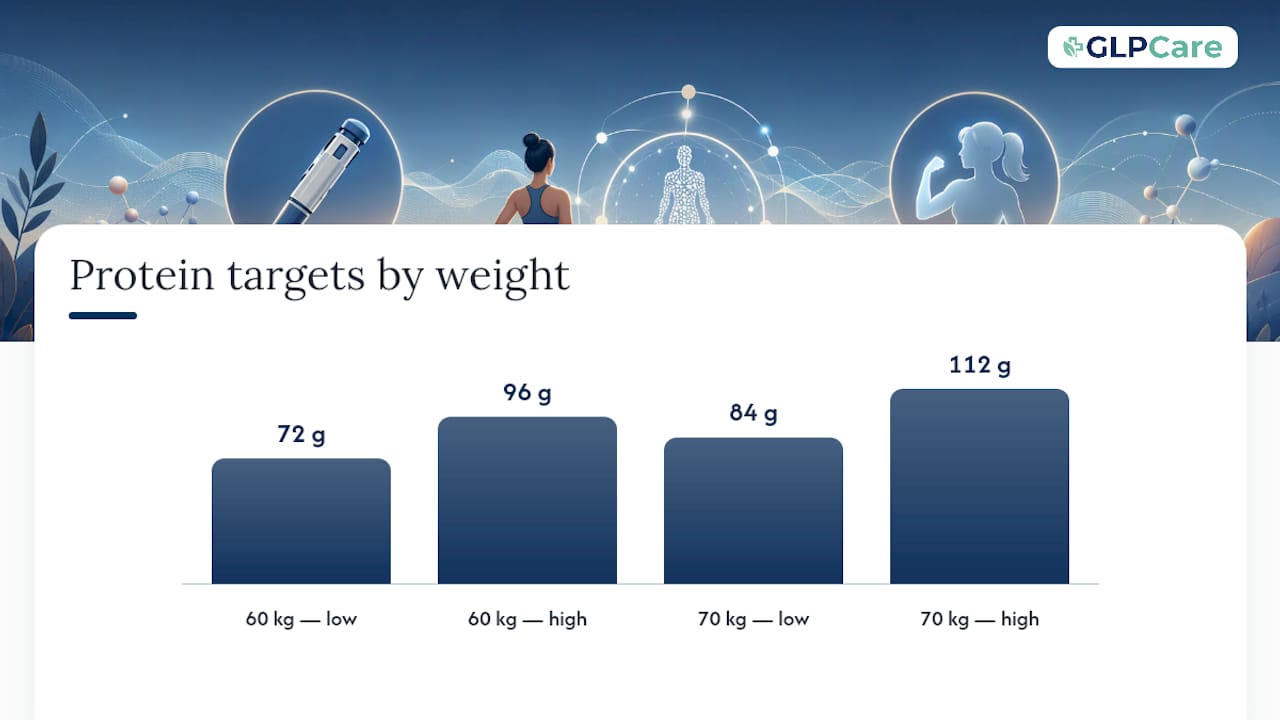
Preserving muscle while fasting on semaglutide comes down to hitting a specific protein number, not just “eating healthy” in whatever hours remain. Clinical nutrition guidance for GLP-1 therapy recommends 1.2 to 1.6 grams of protein per kilogram of ideal body weight daily to limit lean mass loss during drug-induced weight reduction.
For a person with an ideal body weight of 70 kilograms (about 154 pounds), that’s roughly 84 to 112 grams of protein a day. For someone at 60 kilograms (132 pounds), the target lands around 72 to 96 grams. Spread that across two or three meals inside your eating window rather than trying to cram it into one sitting, since appetite suppression makes large single meals hard to tolerate anyway.
Protein sources that work well in a compressed window:
- Greek yogurt or cottage cheese, easy to eat in small volumes
- Eggs, whole or as egg whites for a lighter option
- Whey or plant-based protein shakes when solid food feels like too much
- Canned fish like salmon or tuna, convenient and calorie-efficient
- Lean poultry or beef in smaller, more frequent portions
Resistance training two to three times a week, focused on progressive overload, is what actually protects the muscle your protein intake is trying to preserve. Time-restricted eating studies show modest weight loss of roughly 2 to 6 percent over two to six months in the general population, with better lean-mass outcomes specifically when resistance training is part of the routine.
Hydration matters more than most people expect. Aim for steady fluid intake throughout your eating window, not just at meals, and consider an electrolyte supplement if you’re experiencing nausea, diarrhea, or reduced food volume, since all three can accelerate fluid loss. Reviewing our protein guidance for semaglutide or running your numbers through the protein intake calculator makes hitting these targets far less guesswork.
Pro Tip: If a fasting window ever makes it hard to hit your protein target, shorten the window before you cut the protein. Muscle preservation should always win that trade-off.
When Should You Pause or Stop Fasting on Semaglutide?
Certain symptoms mean you stop fasting immediately and contact your clinician, not tomorrow. These include dizziness or fainting, persistent vomiting, sudden or severe weakness, and noticeably reduced urine output, all signs of dehydration or electrolyte imbalance compounding on top of semaglutide’s existing GI effects.
If you’re on insulin or a sulfonylurea, self-monitored blood glucose checks become non-negotiable during the early weeks of fasting. A reasonable schedule includes checks before meals, at the end of your fasting window, and at bedtime, since combining fasting with these medications raises real hypoglycemia risk that semaglutide alone doesn’t carry. Any dose adjustment to insulin or a sulfonylurea should happen with your clinician’s guidance, not on your own.
Quick stat: GLP-1 medications carry low intrinsic hypoglycemia risk in people without diabetes, but that changes substantially once insulin or a sulfonylurea enters the picture during a fasting window, per clinical guidance on combined GLP-1 and fasting use.
Consider stopping fasting for good, not just pausing it, if you consistently can’t hit your protein target inside the window, if dehydration keeps recurring despite deliberate fluid intake, or if GI side effects like reflux and nausea persist or worsen. Our guide on managing acid reflux with semaglutide covers strategies for exactly this kind of setback.
How GLPCare Helps You Fast Safely on Semaglutide
Trying intermittent fasting on semaglutide without any oversight means you’re guessing at protein targets, hydration needs, and warning signs largely on your own. A clinician-led model can help close exactly those gaps.
Your dosing guidance comes from a clinician who tracks your titration schedule, so you’re not deciding alone when it’s safe to start a fasting window. Nutrition coaching translates the 1.2 to 1.6 g/kg protein target into a real meal plan for your body weight, not a generic number you have to interpret yourself. A wearable fitness band can add a layer some people fasting on semaglutide don’t have access to: real-time tracking of activity, sleep, and heart rate that can flag early signs of dehydration or overexertion before they become a bigger problem.
What this looks like day to day:
- Clinician check-ins during dose titration may occur before any fasting conversation starts
- A protein calculator can adjust to your ideal body weight, rather than offering a one-size-fits-all number
- Wearable data may surface patterns that can be acted on between visits by a clinician
- Continuous support built around real-world adherence data showing that structured follow-up improves outcomes on GLP-1 therapy
The Overlooked Truth About Fasting and Semaglutide
The biggest misconception about combining intermittent fasting with semaglutide is that it’s a shortcut to faster results. It usually isn’t. The STEP trials already produced 15 to 22 percent weight loss without any fasting protocol, so the honest framing is that fasting is a lifestyle preference layered on top of a drug that’s already doing the heavy lifting, not a multiplier on it.
Where conventional advice falls short is in treating fasting windows as a universal add-on rather than a conditional one. Nobody has tested this combination in a randomized trial. The people who benefit most are usually the ones who wait out titration, hit their protein number consistently, and use fasting as a scheduling tool rather than a weight loss accelerant.
If you take one thing from this: prioritize protein and hydration before you ever touch your eating window. Muscle preserved now is muscle you don’t have to fight to regain later. That priority should come before window length, before speed, before anything else.
— Dominique
Try Intermittent Fasting on Semaglutide With Clinician Support Behind You
Fasting on semaglutide works best when someone supervises protein intake, hydration, and glucose response instead of leaving individuals to interpret warning signs alone. Clinician oversight can replace guesswork at every stage of dose titration and any fasting window a person decides to try.

If you’re weighing whether fasting fits your situation, start with the GLP-1 Readiness Quiz to see where you stand before making changes. From there, the protein intake calculator gives you a real daily target instead of a rough estimate, and the GLP Care Band keeps your activity and recovery data visible to the clinicians guiding your plan. None of this replaces medical judgment. Any decision to add fasting to your semaglutide routine should go through your clinician first, and GLPCare’s model is designed to make that conversation easier to have, not harder.
This article is general information, not a substitute for advice from a qualified doctor. Consult a qualified healthcare professional about your own circumstances before acting on anything here.
Sources
- Clinical trials (STEP) demonstrating semaglutide weight loss
- Added value to GLP-1 receptor agonist: intermittent fasting and lifestyle modification (narrative review)
- Intermittent fasting and GLP-1 clinical guidance (review)
- Mayo Clinic drug information: semaglutide
FAQ
Can Fasting Speed Up Weight Loss on Semaglutide?
Not reliably. The STEP trials produced 15 to 22 percent weight loss without fasting, and no randomized trial has tested whether adding intermittent fasting increases that result.
What Should You Avoid While Taking Semaglutide?
Avoid skipping protein-rich meals, large heavy meals that worsen nausea, alcohol in excess, and starting any extended fast before your dose has stabilized for at least 4 to 8 weeks.
Can You Lose 10 Pounds in 2 Weeks With Intermittent Fasting?
That pace isn’t typical or advisable. Time-restricted eating studies show modest results of roughly 2 to 6 percent weight loss over two to six months, and rapid short-term drops usually reflect water loss rather than sustainable fat loss.
How Long Does It Take to Lose 20 Pounds on Semaglutide?
Timelines vary by starting weight and dose, but trial participants reached mean losses of 15 to 22 percent of body weight over time, so 20 pounds often falls within several months for many people, not weeks.
Do I Need to Adjust My Insulin if I Fast on Semaglutide?
Yes, if you take insulin or a sulfonylurea, fasting raises hypoglycemia risk and any dose change needs to happen with your clinician’s direct guidance and a self-monitoring schedule in place.