Stop Chasing Zone 2: Clinician Guided Heart Rate Zones for Fat Loss
Stop Chasing Zone 2: Clinician Guided Heart Rate Zones for Fat Loss
The real fat-loss answer combines both: consistent weekly minutes in zone 1 to 2, a few scheduled higher-intensity intervals, and 2 to 3 strength sessions. Calculate your personal range first. Everything else follows from that number.
TL;DR:
- Training in zone 2 heart rate (60-70%) burns a higher percentage of fat but produces fewer calories than higher zones; a combined approach is most effective.
- Personalizing heart rate zones with the Karvonen method and correct resting heart rate measurement improves workout accuracy; age-based estimates are only approximate.
- Combining moderate zone 1-2 endurance work with intermittent high-intensity intervals and resistance training yields better fat-loss results than focusing on a single heart rate zone.
- Monitoring heart rate with a chest strap generally provides more reliable data during high-intensity efforts compared to wrist sensors; consistent tracking over time is key.
- A balanced weekly plan for fat loss includes at least 150 minutes of moderate activity, with structured workouts across heart rate zones and supporting muscle preservation through protein intake and resistance training.
GlpcareMake Heart Rate Data Work HarderGLPCare combines wearable heart rate insights, nutrition coaching, and clinician support for a more integrated weight management approach.Explore GLPCare
Table of Contents
- What Are Heart Rate Zones for Fat Loss?
- How Do You Calculate Your Fat-Burning Heart Rate Zone?
- Is Zone 2 or a Higher Intensity Better for Fat Loss?
- How Do You Build a Weekly Heart Rate Training Plan?
- Wrist Sensor or Chest Strap: Which Tracks Heart Rate Better?
- Why Nutrition Matters More Than Zone Choice for Fat Loss
- When Should You Check With a Doctor Before Zone Training?
- How GLPCare Applies Heart Rate Data to Real Weight-Loss Plans
- What Should You Actually Prioritize First?
- Ready for Clinician-Guided Support With Your Fat-Loss Plan?
- Sources
- FAQ
What Are Heart Rate Zones for Fat Loss?
Your heart rate climbs in predictable stages as effort increases, and each stage draws on a different mix of fuel. Understanding where you sit in that range tells you more about your workout than pace or distance ever will.
- Zone 1 (about half to slightly more than half of max heart rate): Very light effort, mostly fat-fueled, conversational pace. You could talk in full sentences without pausing for breath.
- Zone 2 (60 to 70% of max heart rate): This is the range Cleveland Clinic identifies as the classic fat-burning heart rate, where the body still leans heavily on fat but the pace is a little more purposeful. Talking is possible, but you’d rather not.
- Zone 3 (roughly 70 to 80% of max heart rate): Moderate to hard, the fuel mix shifts toward carbohydrates, breathing gets noticeably harder.
- Zone 4 (around 80 to 90% of max heart rate): Hard, largely carbohydrate-fueled, short phrases only.
- Zone 5 (close to maximum heart rate): All-out effort, sustainable for a minute or two at most.
Keep this list somewhere you’ll actually see it mid-workout. A sticky note on the treadmill console works better than a memory you’re too out of breath to trust.
How Do You Calculate Your Fat-Burning Heart Rate Zone?
Two formulas get you there, one quick and one more personal to your body.
- Estimate your max heart rate. Subtract your age from 220. A 40-year-old lands at an estimated 180 beats per minute, a number cited by NTNU’s Center for Exercise and Health Research as the standard field formula.
- Apply the fat-burning range. Multiply that max by about 0.60 and 0.70. For our 40-year-old, that creates a zone 2 window roughly between 108 and 126 beats per minute.
- Personalize it with the Karvonen method. Take your heart rate reserve (max minus resting heart rate), multiply by your target intensity percentage, then add resting heart rate back in. This shifts the range based on your actual fitness level rather than age alone.
- Measure resting heart rate correctly. Take it first thing in the morning, before caffeine or getting out of bed, across three consecutive days, then average the results.
Pro Tip: Skip the reading if you slept poorly, drank alcohol the night before, or you’re fighting off a cold. Any of those can inflate resting heart rate by five to ten beats and throw off your whole Karvonen calculation.
Both formulas are estimates. For genuinely precise zones, cardiopulmonary exercise testing in a lab remains the gold standard, measuring your actual gas exchange rather than inferring it from age.

Is Zone 2 or a Higher Intensity Better for Fat Loss?
Neither wins outright, and treating this as a single-answer question is where most people go wrong.
Harvard Health’s breakdown of exercise heart rate zones confirms that zone 1 to 2 work does pull a higher percentage of energy from fat stores. But percentage of fuel and total calories burned are different measurements, and conflating them is the single most common mistake in fat-loss planning. A 30-minute zone 2 session might burn 200 calories with 60% coming from fat.
Mass General Brigham’s clinical guidance puts it plainly: exercise intensity mix matters, but diet remains central to actual fat loss. Neither zone alone decides the outcome.
What research pool from exercise physiology consistently shows is that mixed programming beats single-zone training for body composition:
- Base endurance in zone 1 to 2 builds the aerobic capacity which makes harder sessions sustainable.
- Interval work in zone 4 to 5 burns more calories per minute and drives fitness adaptations zone 2 alone can’t reach.
- Resistance training protects the muscle mass that a calorie deficit would otherwise erode.
Use zone 1 to 2 as your foundation, then layer in higher-intensity intervals for calorie efficiency and cardiovascular gains. That combination, not a single “optimal” zone, is what the evidence actually supports.
How Do You Build a Weekly Heart Rate Training Plan?
The Physical Activity Guidelines for Americans call for at least 150 minutes of moderate-intensity activity or 75 minutes of vigorous activity per week. Heart rate zones give you a way to hit that target with intention instead of guesswork.
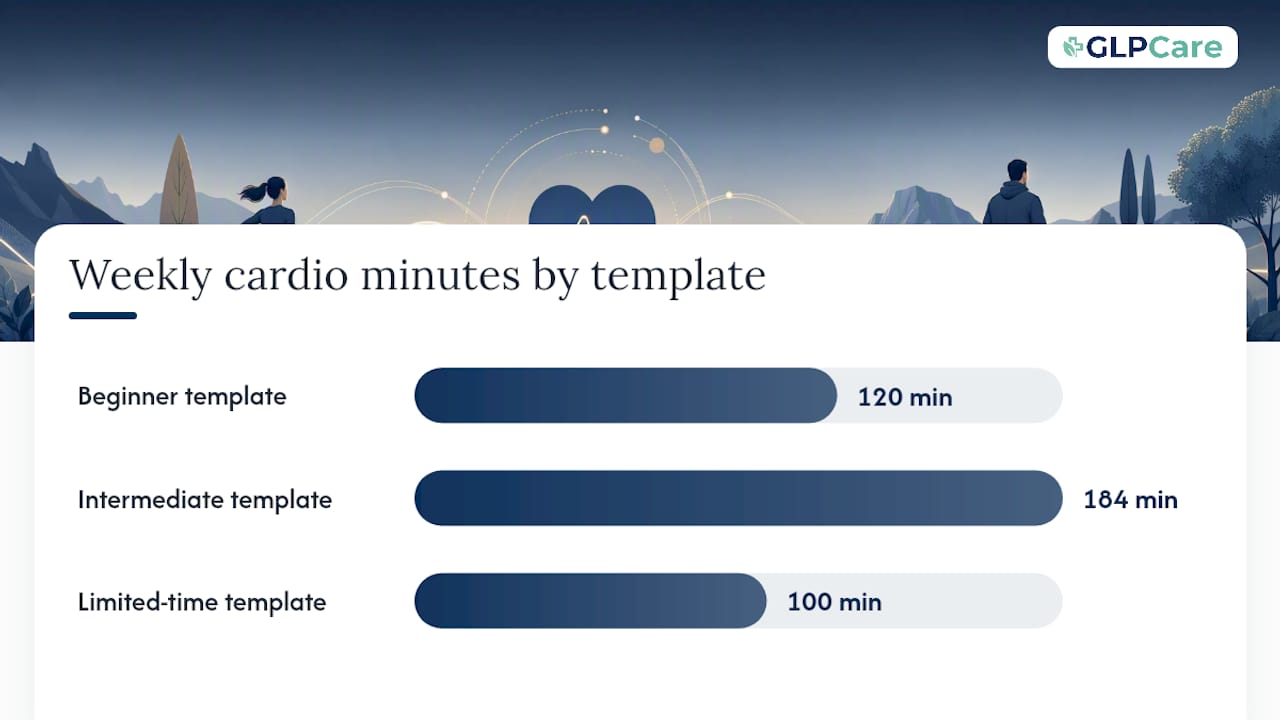
- Beginner template: Four sessions of 30 minutes in zone 1 to 2, plus two short resistance sessions. Build the habit before adding intensity.
- Intermediate template: 120 minutes in zone 1 to 2 across three or four sessions, two interval sessions in zone 4 (think four rounds of four minutes hard, four minutes easy), and three resistance sessions.
- Limited-time template: Two 20-minute interval sessions, two 30-minute zone 2 sessions, and two resistance sessions squeezed into 30-minute windows.
Add resistance training on non-consecutive days so muscles recover between sessions, and prioritize protein intake on those days to support the repair work.
Pro Tip: Instead of chasing exact heart rate numbers during intervals, use time-in-zone targets, like four rounds of four minutes hard, four minutes easy. It’s a more forgiving structure than a rigid number and accounts for daily fluctuations in how your body responds.
Wrist Sensor or Chest Strap: Which Tracks Heart Rate Better?
Wrist-based optical sensors are convenient, but a peer-reviewed accuracy study in NCBI’s wearable sensor research found chest straps deliver more reliable continuous readings during exercise, particularly at higher intensities where wrist sensors tend to lag or drift. If you’re doing steady-state zone 2 work, a wrist sensor is usually fine. If you’re running intervals or lifting, a chest strap earns its place.
A few practical habits matter more than the hardware itself:
- Take resting heart rate readings in the same position, same time of day, ideally each morning before rising.
- Give any sensor a minute to stabilize before trusting the number, especially at the start of a session.
- Watch trends over weeks rather than obsessing over single readings, which can swing with hydration, sleep, or stress.
For a deeper look at what device accuracy actually means for your training, this breakdown of wearable heart rate accuracy is worth a read. The device is there to support consistency, not to be chased for minute-by-minute perfection.
Why Nutrition Matters More Than Zone Choice for Fat Loss
Heart rate zones organize your workouts. They don’t create the calorie deficit that actually drives fat loss. A sustained gap between what you eat and what you burn is the mechanism, and exercise mainly helps by increasing that gap and preserving the muscle mass a deficit would otherwise cut into.
- Aim for a moderate, sustainable calorie deficit rather than an aggressive one that’s hard to maintain past a few weeks.
- Prioritize protein intake to limit muscle loss while in a deficit, an especially important factor during rapid weight loss.
- Resistance training two to three times a week reinforces what protein starts, keeping lean mass while fat comes down.
- Sleep quality and daily non-exercise movement (NEAT) both influence total energy expenditure as much as formal workouts do.
Tools like GLPCare’s calorie deficit calculator can help you find a deficit that fits your numbers instead of a generic estimate pulled from an average body size.
When Should You Check With a Doctor Before Zone Training?
Chest pain, dizziness, or fainting during exercise are not symptoms to push through. Stop and seek medical attention.
Certain medications, including beta blockers, blunt your heart rate response, which makes standard zone calculations unreliable for gauging real effort. The same caution applies to anyone with a diagnosed heart condition or other risk factors: get medical clearance before starting vigorous interval work. This guidance on exercise intensity contraindications covers additional situations where higher-intensity training deserves a second look from a clinician first.
How GLPCare Applies Heart Rate Data to Real Weight-Loss Plans
Calculating your zones is one thing. Living inside them consistently, across weeks of real life, is another. GLPCare’s integrated care system pairs GLP-1 therapy with personalized nutrition coaching and a screenless fitness band that tracks heart rate, sleep, and activity in real time, so your zone data isn’t sitting in isolation from the rest of your health picture.
The approach is built to minimize muscle loss while you’re in a deficit, backed by continuous clinician support and AI-driven advice tailored to your actual habits rather than a generic template. Alongside the wearable, GLPCare’s weight loss percentage calculator helps you track progress against a number that means something, not just a scale reading.
What Should You Actually Prioritize First?
The clinical sources behind this article, Mass General Brigham and Cleveland Clinic among them, agree on something the fitness industry rarely says out loud: the “fat-burning zone” label is a bit of a misnomer. It’s real, but it’s not special. It’s one input in a bigger equation, and treating it as the answer is where most people waste months of effort.
Where conventional advice falls short is in its obsession with precision. That’s backwards. The research is clear that a mixed program, base endurance plus intervals plus resistance work, outperforms rigid single-zone training for body composition.
What should you prioritize first? Consistency and energy balance, in that order. Get your weekly minutes in, mix your intensities, lift weights, and eat enough protein to protect the muscle you’re working to keep. The zone math is useful scaffolding. It’s not the building.
— Dominique
Ready for Clinician-Guided Support With Your Fat-Loss Plan?
Calculating zones and building a weekly plan gets you most of the way there, but doing it without any oversight leaves gaps, especially if you’re managing medication, muscle preservation, or a stubborn plateau. GLPCare closes those gaps with a system built around your actual data, not generic targets.

A GLPCare membership pairs the GLP Care Band, the first fitness band designed around GLP-1 care, with clinician support and an AI companion that reads your heart rate, sleep, and activity trends to adjust guidance as your body changes. You get real-time tracking instead of guesswork about whether your zone 2 sessions are actually landing where they should. Nutrition coaching and protein guidance support muscle preservation while you’re in a deficit.
If you’re curious whether a clinician-guided GLP-1 program fits your situation, start with the GLP-1 readiness quiz to see where you stand.
This article is general information, not a substitute for advice from a qualified doctor. Consult a qualified healthcare professional about your own circumstances before acting on anything here.
Sources
- What Is a Fat-Burning Heart Rate? — Cleveland Clinic
- Estimating maximum heart rate — NTNU/CERG
- Research on exercise physiology and metabolic testing — PubMed
FAQ
Is Zone 2 or Zone 3 Better for Fat Loss?
Zone 2 burns a higher percentage of fat as fuel, but zone 3 burns more total calories per minute. For fat loss, weekly energy balance matters more than which single zone you favor, so most effective plans use both.
Is a 170 Heart Rate Good for Burning Fat?
That intensity burns more total calories per minute and builds fitness fast, but it’s carbohydrate-fueled rather than fat-fueled, so it works best paired with lower-intensity sessions, not in place of them.
What Is the 3-3-3 Rule for Fat Loss?
There’s no single, universally recognized clinical definition of a “3-3-3 rule” for fat loss. If you’ve seen it referenced online, treat it as informal fitness advice rather than an established guideline, and rely on measured heart rate zones and a tracked calorie deficit instead.
How Can I Lose 100 Pounds in a Healthy Way?
Losing that much weight safely comes down to a sustained, moderate calorie deficit combined with adequate protein and resistance training to preserve muscle, plus consistent cardio across heart rate zones. Programs that add clinician oversight and GLP-1 therapy, like GLPCare’s precision care model, can support larger, longer-term weight loss with medical guidance built in.