25–29 AHI Drop: GLP-1s and Sleep Apnea in Adults With Obesity
25–29 AHI Drop: GLP-1s and Sleep Apnea in Adults With Obesity
Yes. Tirzepatide (Zepbound) reduces sleep apnea severity in adults with obesity, and the FDA approved it specifically for this use in December 2024. In the trials that supported that approval, patients with moderate-to-severe obstructive sleep apnea saw their apnea-hypopnea index (AHI) drop substantially, largely because they lost weight and that weight loss opened up the airway. The tradeoff is gastrointestinal side effects, which showed up more often in the treatment groups than in the placebo groups.
TL;DR:
- Tirzepatide can reduce sleep apnea severity by around 25 to 29 events per hour over a year, primarily through significant weight loss.
- The drug’s approval depends on combined use with diet and exercise, not as a standalone treatment, and gastrointestinal side effects are common.
- Weight loss explains most of the apnea improvement, but reductions in inflammation markers suggest potential central effects on sleep regulation.
- Results from trials like SURMOUNT-OSA and SCALE Sleep Apnea show large reductions in apnea-hypopnea index, but longer-term data are still needed.
- GLP-1 drugs are more effective for obesity-driven sleep apnea and work best alongside existing treatments like CPAP, not as replacements.
Table of Contents
- GLP-1 and Sleep Apnea: What the Evidence Actually Shows
- How GLP-1 Receptor Agonists Probably Ease Sleep Apnea
- Trial Data: What SURMOUNT-OSA and SCALE Actually Measured
- Side Effects and How Clinicians Monitor GLP-1 Treatment
- GLP-1 Therapy Alongside CPAP, Oral Appliances, and Surgery
- Who Qualifies, and What to Ask Your Clinician
- Why an Integrated Approach Changes the Odds
- Start Your GLP-1 Evaluation With GLPCare
- Sources
- FAQ
GLP-1 and Sleep Apnea: What the Evidence Actually Shows
The case for GLP-1 receptor agonists in obstructive sleep apnea (OSA) isn’t built on early buzz or extrapolation from weight-loss data. It rests on a completed regulatory approval and a dedicated phase 3 trial designed around sleep apnea as the primary outcome, not as a side note to weight loss.
In December 2024, the FDA approved tirzepatide (Zepbound) as the first medication indicated for moderate-to-severe obstructive sleep apnea in adults with obesity. The approval requires that tirzepatide be used alongside a reduced-calorie diet and increased physical activity, not as a standalone fix. That detail matters. The FDA is signaling that the drug works in concert with behavior change, not in place of it.
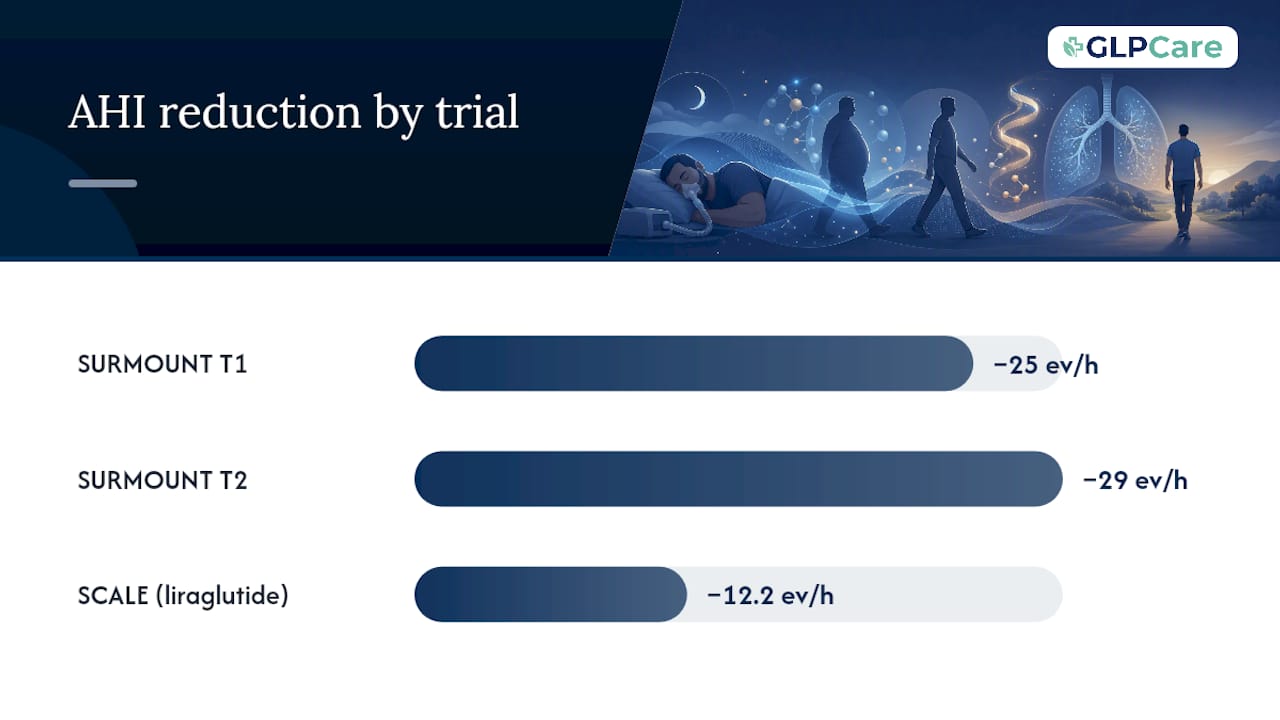
The trial behind that approval, SURMOUNT-OSA, produced some of the most convincing numbers seen in this field. Tirzepatide reduced AHI by roughly 25 to 29 events per hour over 52 weeks, compared to about 5 events per hour with placebo, putting many participants into mild or resolved OSA territory rather than moderate or severe. The SURMOUNT-OSA trial enrolled participants with obesity and moderate-to-severe OSA, split into groups that were and were not using CPAP at baseline, which mirrors real clinical decision-making better than a single homogenous study population would.
Liraglutide, sold for weight management as Saxenda, has a longer track record and its own dedicated sleep apnea trial. In the SCALE Sleep Apnea study, a 32-week trial, liraglutide 3.0 mg reduced AHI by 12.2 events per hour versus 6.1 for placebo, alongside greater weight loss. The effect was smaller than tirzepatide’s, which tracks with liraglutide producing less weight loss overall. That relationship between weight loss and AHI improvement isn’t coincidental. It’s the thread running through this entire drug class.
Semaglutide, the ingredient behind Ozempic and Wegovy, doesn’t have a completed dedicated OSA outcomes trial with the same primacy as SURMOUNT-OSA or SCALE Sleep Apnea. Its role in this picture comes largely through its well-documented weight-loss effects and its mechanistic similarity to liraglutide and tirzepatide as GLP-1 receptor agonists. Clinicians extrapolate cautiously from that overlap, but semaglutide isn’t currently FDA-approved specifically for OSA the way tirzepatide is.
Pooling the available evidence gives a clearer signal than any single trial can. A 2025 systematic review and meta-analysis covering placebo-controlled randomized trials found that GLP-1 receptor agonists significantly reduce AHI in adults with elevated body weight. The same review found a consistent cost: higher rates of gastrointestinal adverse events in the drug groups. That tradeoff shows up in nearly every major trial in this space, and it’s worth taking seriously rather than treating as a footnote.
A few limitations temper the enthusiasm, and they’re worth naming plainly:
- Follow-up windows are still relatively short. Most trial data covers 32 to 52 weeks, so multi-year durability data is still accumulating.
- Trial populations skew toward obesity-driven OSA. Results may not generalize as cleanly to OSA driven primarily by anatomy rather than excess weight.
- Not every GLP-1 agent has equal evidence. Tirzepatide’s dual GLP-1/GIP mechanism appears to drive larger weight and AHI changes than single-agonist drugs like liraglutide, according to the Sleep Medicine systematic review.
- PAP status at baseline varies by trial, which affects how directly you can compare results across studies.
None of that undercuts the core finding. It just means the evidence, while strong, is still a young body of work compared to decades of CPAP research.
How GLP-1 Receptor Agonists Probably Ease Sleep Apnea
Weight loss is the dominant mechanism, and it’s a mechanical one before it’s anything else. Excess fat around the neck and upper airway narrows the space air has to move through while you sleep, and it makes the airway more prone to collapsing when muscles relax. Shed that fat, and the airway has more room to stay open through the night. That’s the primary reason GLP-1 drugs, all of which produce meaningful weight loss, tend to lower AHI scores.
But weight loss doesn’t appear to be the whole story, and that’s part of what makes this drug class interesting rather than just another weight-loss intervention with a side benefit. Trials have tracked improvements in high-sensitivity C-reactive protein (hsCRP), a marker of systemic inflammation, alongside AHI reductions. Chronic low-grade inflammation is thought to affect airway and neuromuscular tone, so a drop in inflammatory markers alongside sleep improvement suggests GLP-1 receptor agonists may be doing more than just shrinking fat deposits. GLP-1 receptors are also present in areas of the brainstem involved in respiratory and sleep-wake regulation, which raises the possibility of a modest central effect on breathing control during sleep, though this piece of the puzzle is less firmly established than the weight-loss mechanism.
What this means practically: two people who lose the same percentage of body weight on the same drug won’t necessarily see identical AHI improvements. A few patterns show up consistently across trials:
- People who lose weight faster and reach a higher total percentage tend to see larger AHI reductions.
- Improvements can lag behind the scale. Objective sleep testing at 52 weeks sometimes tells a different story than how a patient feels at week 12.
- Baseline OSA severity matters. Someone starting at a very high AHI has more room to improve than someone with borderline moderate disease.
- Individual airway anatomy still plays a role GLP-1 therapy doesn’t touch. A narrow jaw or enlarged tonsils won’t resolve with weight loss alone.
Pro Tip: Don’t judge your progress by how alert you feel in the first month. Subjective sleepiness can improve or lag independently of your actual AHI, so the real read on your airway comes from a follow-up sleep study, not just how you feel getting through your afternoon.
Trial Data: What SURMOUNT-OSA and SCALE Actually Measured
Numbers make this concrete in a way that general claims about “weight-loss drugs and sleep apnea” never quite manage. Here’s what the two pivotal trials reported at their respective endpoints.
| Trial | Drug | Duration | Mean AHI change (treatment) | Mean AHI change (placebo) | Estimated treatment difference |
|---|---|---|---|---|---|
| SURMOUNT-OSA, Trial 1 | Tirzepatide | 52 weeks | −25 events/hour | −5 events/hour | Approximately −20 events/hour |
| SURMOUNT-OSA, Trial 2 | Tirzepatide | 52 weeks | −29 events/hour | −5 events/hour | Approximately −24 events/hour |
| SCALE Sleep Apnea | Liraglutide 3.0 mg | 32 weeks | −12.2 events/hour | −6.1 events/hour | −6 events/hour |
Baseline severity in the SURMOUNT-OSA trials averaged around 51.5 and 49.5 events per hour, meaning participants started in moderate-to-severe territory and, on average, dropped into a much lower severity band by week 52. That’s not a marginal shift. For many participants, it represented the difference between qualifying as severe OSA and testing as mild.
The estimated treatment difference of roughly 20 to 24 events per hour in SURMOUNT-OSA represents one of the larger AHI reductions reported for any non-surgical, non-device intervention in this condition’s trial history.
Weight loss tracked closely with those AHI numbers. Participants in the tirzepatide arms lost a substantially higher percentage of body weight than those on placebo, and that weight loss correlated with the magnitude of airway improvement, consistent with the mechanism described earlier. The trial also tracked secondary outcomes beyond the primary AHI endpoint: hypoxic burden (a measure of how much and how deeply oxygen levels drop during apnea events), hsCRP, systolic blood pressure, and patient-reported sleep quality all improved in the tirzepatide groups. Adverse events were dominated by gastrointestinal complaints, most of which were characterized as mild to moderate.
The SCALE Sleep Apnea trial with liraglutide told a smaller but directionally similar story. Over 32 weeks, liraglutide reduced AHI by 12.2 events per hour compared to 6.1 for placebo, a statistically significant difference (P=0.0150), and it produced greater percent weight loss than placebo (5.7% versus 1.6%). The effect size sits well below tirzepatide’s, but the shorter trial duration and the single-agonist mechanism (versus tirzepatide’s dual GLP-1/GIP action) both plausibly explain part of that gap.
Zoom out to the pooled evidence, and the 2025 meta-analysis of randomized, placebo-controlled trials confirms what the individual studies suggest: GLP-1 receptor agonists as a class reduce AHI in adults with elevated body weight, and that benefit comes paired with a higher rate of gastrointestinal adverse events. The review noted heterogeneity across studies, meaning trial populations, drug doses, and follow-up periods varied enough that pooled estimates should be read as directional evidence of a class effect rather than a single precise number applicable to every patient.
One caveat worth sitting with: none of these trials ran long enough to answer what happens at three or five years. If someone regains weight after stopping the drug, does AHI creep back up in lockstep? The trial data can’t answer that yet, and it’s a fair question to raise with a clinician rather than assume either way.
Side Effects and How Clinicians Monitor GLP-1 Treatment
Gastrointestinal issues are the most common complaint, full stop. Nausea, diarrhea, constipation, and reduced appetite show up across nearly every GLP-1 trial, tirzepatide and liraglutide included, and they were the most frequently reported adverse events in SURMOUNT-OSA. Most cases were mild to moderate, and most occurred during dose escalation rather than at a stable maintenance dose. You can read a fuller breakdown of what to expect in GLPCare’s guide to GLP-1 side effects.
Beyond GI symptoms, a few safety signals warrant closer attention:
- Pancreatitis is rare but serious. Persistent, severe abdominal pain, especially radiating to the back, needs prompt medical evaluation, not a wait-and-see approach.
- Kidney function deserves monitoring, particularly in patients experiencing significant vomiting or diarrhea, since dehydration can strain the kidneys independent of the drug itself.
- Blood sugar interactions matter for anyone also taking insulin or a sulfonylurea for diabetes, since combining those medications with a GLP-1 agent raises the risk of hypoglycemia and usually calls for a dose adjustment under clinician guidance.
- Diabetic retinopathy risk can rise temporarily with rapid improvements in blood sugar control, which is why patients with existing diabetic eye disease typically need an eye exam before and during treatment.
Tolerability management works best when it’s proactive rather than reactive. Clinicians typically titrate GLP-1 doses slowly, starting low and increasing gradually over weeks rather than jumping to a target dose immediately, which is one of the most effective ways to blunt GI side effects before they start. Staying ahead of hydration, eating smaller and more frequent meals, and limiting high-fat foods during dose escalation all help too. GLPCare’s meal plan guide covers a protein-first approach that many patients find easier to tolerate than trying to eat normally through nausea.
Pro Tip: If nausea hits hardest in the two or three days after a dose increase, don’t automatically assume you need to stop the medication. Ask your care team whether holding at your current dose an extra week or two before the next increase makes sense. Slower isn’t a failure.
Injection-site reactions are common too, and mostly benign. GLPCare has a dedicated page on what’s normal at the injection site and what warrants a call to your care team.
GLP-1 Therapy Alongside CPAP, Oral Appliances, and Surgery
GLP-1 receptor agonists aren’t positioned to replace CPAP, at least not based on how the trials were built or how clinicians are using this data in practice. SURMOUNT-OSA deliberately enrolled two distinct groups: participants who weren’t using positive airway pressure therapy, and participants who were already on PAP and continued it throughout the trial. That design choice matters for how you interpret your own likely outcome.
- If you’re PAP-naive or PAP-intolerant, the trial data on that group shows tirzepatide can meaningfully lower AHI on its own, which may be relevant if CPAP hasn’t worked for you or you’ve struggled with adherence.
- If you’re already using CPAP consistently, the trial data on the concurrent-use group suggests GLP-1 therapy can add cardiometabolic benefit and further AHI reduction on top of what CPAP is already providing, rather than being framed as a replacement.
- If your OSA is driven primarily by anatomy rather than weight, an oral appliance or surgical evaluation may still be the more direct fix, with GLP-1 therapy serving a supporting role for weight-related risk factors rather than the primary treatment.
Clinicians tend to recommend GLP-1 therapy as an adjunct when the goal is lowering both AHI and broader cardiometabolic risk (blood pressure, inflammatory markers, blood sugar) at the same time, since few other interventions touch all of those at once. CPAP remains first-line for most moderate-to-severe OSA diagnoses, largely because its effect is immediate rather than dependent on weeks of weight loss.
If you start a GLP-1 medication while already on CPAP, expect your clinician to plan a follow-up sleep study or a review of your CPAP’s compliance data once you’ve lost a meaningful amount of weight. Your pressure settings were calibrated for your airway at a specific weight, and a significant change may mean your machine needs retitration to match your new anatomy.
Who Qualifies, and What to Ask Your Clinician
The FDA-indicated population for tirzepatide’s OSA use is adults with moderate-to-severe obstructive sleep apnea and obesity, prescribed alongside a reduced-calorie diet and increased physical activity. That’s a specific clinical profile, not a blanket approval for anyone who snores or feels tired during the day.
A few practical filters worth knowing before you bring this up with a clinician:
- You’ll typically need a documented sleep study establishing your AHI and OSA severity, not just a symptom-based suspicion.
- Body weight and BMI thresholds factor into eligibility, consistent with the trial populations these approvals were based on.
- Certain conditions, including a personal or family history of medullary thyroid carcinoma or Multiple Endocrine Neoplasia syndrome type 2, are contraindications for GLP-1 receptor agonists broadly.
- Insurance coverage often depends on documented OSA severity and prior treatment history, so ask what paperwork your specific plan requires before you assume coverage.
Walk into that conversation prepared. Bring these questions:
- What’s my current AHI, and how was it measured?
- Have I tried CPAP, and if so, what happened with adherence or tolerance?
- What weight-loss goal is realistic for me on this medication, and over what timeframe?
- What’s the plan for managing GI side effects during dose titration?
- When will we retest my sleep apnea, and what would count as meaningful improvement?
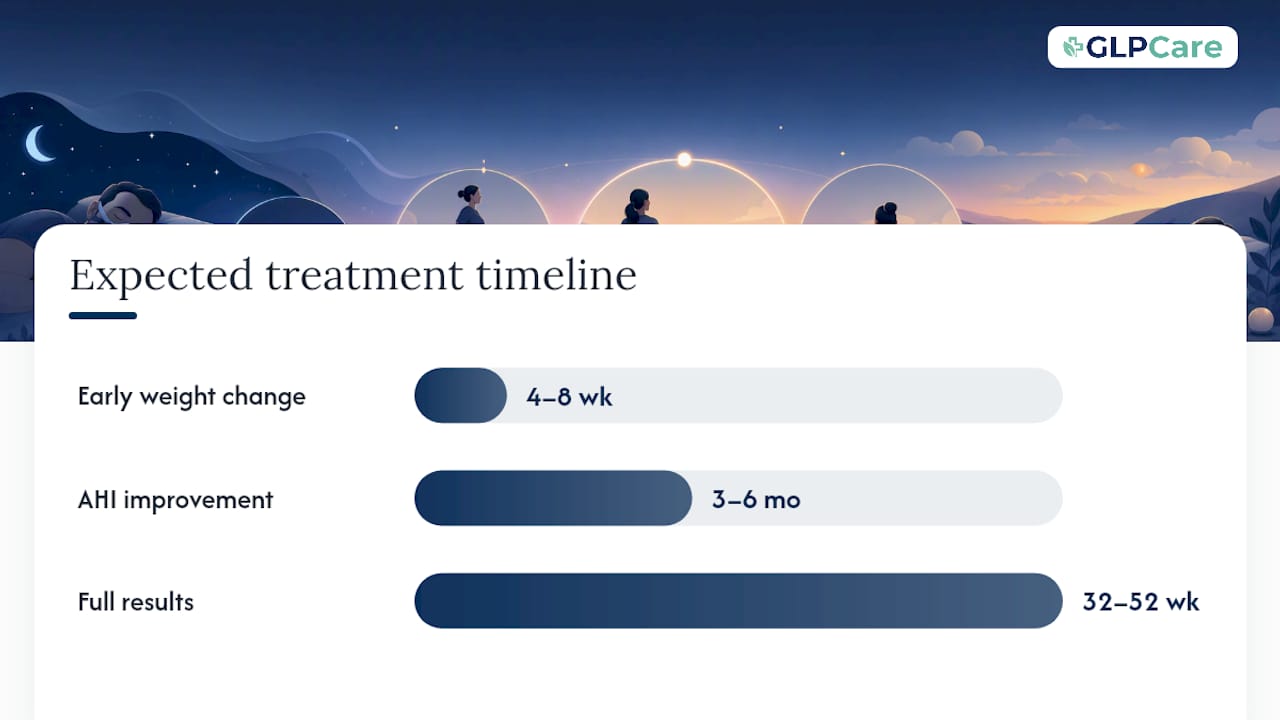
On timeline, expect the earliest weight changes within four to eight weeks, with more substantial AHI improvement typically showing up by the three to six month mark based on trial checkpoints, and full trial-length results reflecting a 32 to 52 week course. GLPCare’s guide on what to expect week by week walks through that curve in more detail. Insurance documentation usually wants your baseline sleep study, BMI, and evidence of prior treatment attempts, so gather those before your appointment rather than scrambling afterward.
Why an Integrated Approach Changes the Odds
The trial data is compelling, but trials happen in controlled settings with structured follow-up. Real life is messier. That gap between what a study shows and what actually happens over months of dose titration, side effect management, and behavior change is where most people struggle, and it’s exactly where GLPCare’s model is built to help.
GLPCare pairs prescription GLP-1 medication with a readiness assessment, ongoing clinician oversight, and a wearable band that tracks sleep, heart rate, and activity in the background. That continuous data matters for the reasons the SURMOUNT-OSA trial itself highlighted: AHI improvement doesn’t always move in lockstep with how you feel day to day. A wearable that flags disrupted sleep patterns or unusual heart-rate variability gives your care team something concrete to act on between visits, rather than waiting for your next scheduled check-in to catch a problem or confirm progress. Nutrition coaching layered on top helps address the tolerability side too, since eating patterns during dose titration heavily influence how much GI discomfort you experience.
None of this replaces a formal sleep study, and it shouldn’t. Consider integrated tracking a way to catch signals earlier and make each clinician conversation more useful.
— Dominique
Start Your GLP-1 Evaluation With GLPCare
If you’re dealing with obstructive sleep apnea and carrying excess weight, GLPCare gives you a clinician-led path to GLP-1 therapy without piecing together a prescriber, a nutrition plan, and a way to track your progress on your own.
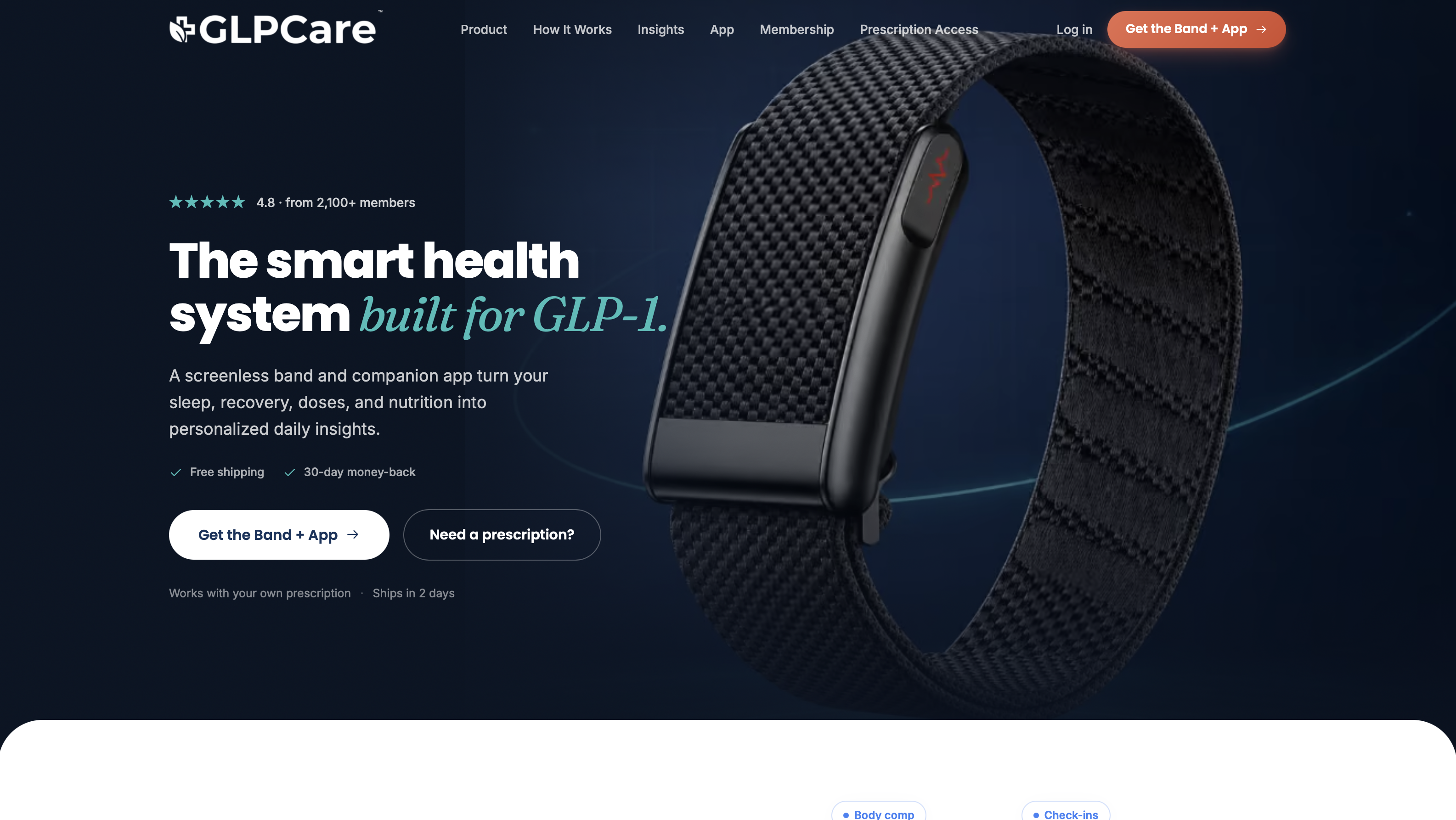
The process starts with a short readiness assessment that looks at your health history, prior OSA treatment (including CPAP use), and weight-loss goals to see whether GLP-1 therapy fits your situation. If it does, you’re paired with a licensed clinician who evaluates your case, prescribes and manages your medication, and adjusts your titration schedule based on how you’re tolerating it. The GLPCare band tracks sleep and activity data continuously, so your care team can see patterns between visits rather than relying only on how you describe things weeks later. Nutrition coaching runs alongside the medical care to help you manage GI tolerability and preserve lean muscle while you lose weight.
Take the GLP-1 readiness quiz to find out where you stand, or look at the clinician-led program powered by the wearable to see how the pieces fit together before you start.
Sources
For readers who want to go straight to the primary data behind this article, these are the sources worth bookmarking:
- FDA: FDA approves first medication for obstructive sleep apnea
- SURMOUNT-OSA trial report (NEJM, PMC)
- Efficacy and safety of GLP-1 receptor agonists in the management of obstructive sleep apnea (systematic review/meta-analysis)
This article is general information, not a substitute for advice from a qualified doctor. Consult a qualified healthcare professional about your own circumstances before acting on anything here.
FAQ
Which GLP-1 Helps With Sleep Apnea?
Tirzepatide (Zepbound) has the strongest evidence and the only FDA approval specifically for obstructive sleep apnea, with SURMOUNT-OSA showing AHI reductions of roughly 25 to 29 events per hour. Liraglutide showed a smaller but statistically significant benefit in the SCALE Sleep Apnea trial.
Does Ozempic Make Sleep Apnea Worse?
No trial evidence suggests semaglutide (Ozempic) worsens sleep apnea. It doesn’t have a dedicated OSA outcomes trial the way tirzepatide and liraglutide do, but its weight-loss mechanism is the same one that improves AHI in related GLP-1 drugs.
What Is the 4% Rule for Sleep Apnea?
The “4% rule” isn’t a term used in the GLP-1 OSA trials or clinical guidance covered by this research, and definitions of it vary across sleep medicine sources. Ask your sleep specialist directly if you’ve seen this term applied to your own oxygen desaturation results.
Do I Qualify for GLP-1 Therapy If I Have Sleep Apnea?
You may qualify if you have moderate-to-severe obstructive sleep apnea and obesity, matching the population in tirzepatide’s FDA approval. A documented sleep study and a clinician evaluation, such as the one offered through GLPCare’s readiness quiz, are the starting points.