150 Minutes of Cardio: Preserve Muscle on GLP-1 with Wearable Data
150 Minutes of Cardio: Preserve Muscle on GLP-1 with Wearable Data
Yes, cardio still matters on GLP-1 medications, but the goal shifts from burning calories to protecting your heart and your muscle at the same time. Aim for about two and a half hours of moderate aerobic activity or about one and a quarter hours of vigorous activity weekly, paired with regular strength training and enough protein to hold onto lean mass. If nausea or low energy shows up, scale back the session, not your commitment to moving.
TL;DR:
- Moderate-intensity cardio such as walking, cycling, swimming, or elliptical is sufficient for health benefits, but should be adjusted to daily energy levels and monitored with simple gauges.
- Combining resistance training with cardio is essential on GLP-1 medications to prevent muscle loss, with full-body strength sessions twice a week fitting most routines.
- Shorter, frequent cardio sessions are more effective and safer than long, calorie-burning stretches, especially when appetite is suppressed by medications.
- Tracking resting heart rate, sleep, and equipment data helps determine if your fitness is improving and guides safe progression in intensity and duration.
- Paired with personalized support tools, consistent moderate activity and resistance training optimize cardiovascular health and muscle preservation while managing side effects.
Glpcareglpcare.orgMake Your Weight Management More PersonalGLPCare combines GLP-1 therapy, nutrition coaching, wearable health insights, and continuous clinician support in one integrated care system.Explore GLPCare
Table of Contents
- Which Cardio Modes and Intensities Work Best on GLP-1?
- How to Pair Cardio With Resistance Training to Protect Muscle
- Fueling, Protein, and Side-Effect Management for Cardio
- What Does the Evidence Say About Cardio Plus GLP-1?
- Practical Cardio Progression and Safety Red Flags
- Balancing Performance, Health, and Sustainability
- How GLPCare Supports Cardio and Strength on GLP-1
- Sources
- FAQ
Which Cardio Modes and Intensities Work Best on GLP-1?
You don’t need a punishing routine to get the cardiovascular payoff. Walking, cycling, swimming, and the elliptical all qualify as moderate-intensity aerobic activity, and each one is easy on joints that may already be adjusting to a lower body weight and changing energy levels. Clinical guidance from the Cleveland Clinic recommends 150 minutes of moderate activity or 75 minutes of vigorous activity per week, combined with consistent strength training to offset muscle loss.
The trick is matching intensity to how you actually feel that day, not to a rigid plan written before you started your dose. Three simple gauges work well:
- Talk test: During moderate cardio, you should be able to speak in short sentences but not sing.
- Rate of Perceived Exertion (RPE): Moderate activity sits around 4 to 6 on a 10-point scale; vigorous activity climbs to 7 or 8.
- Heart rate zones: Moderate work usually falls between 50% and 70% of your estimated maximum heart rate, while vigorous work pushes past 70%.
High-intensity interval training (HIIT) can still fit into your week, but it’s not the default choice for most people on GLP-1 therapy. Interval work spikes appetite suppression and taxes recovery harder than steady-state cardio, which is a problem if you’re already eating less than usual. Save intervals for days when your energy is genuinely good and your last meal sat well. On days when appetite is low or you skipped a meal, steady-state walking or cycling at a conversational pace is the safer, more sustainable option.
Pro Tip: Track your resting heart rate and sleep quality for a week before adding intervals back in. A rising resting heart rate or restless sleep is often the earliest sign that your body needs more recovery, not more intensity.
One mistake shows up constantly: chasing long, calorie-torching cardio sessions while appetite is suppressed. If you’re eating less because of the medication, a 90-minute cardio session on top of that deficit accelerates muscle breakdown rather than fat loss. Shorter, more frequent sessions, three or four 20 to 30 minute walks or rides across the week, tend to protect energy and lean mass better than one long grind. A randomized-trial secondary analysis found that combined exercise and liraglutide improved stair-climb test time by 8.6% (1.2 seconds) and increased VO2peak relative to fat-free mass compared with medication alone, evidence that consistent, moderate activity adds real fitness gains the drug alone doesn’t deliver.
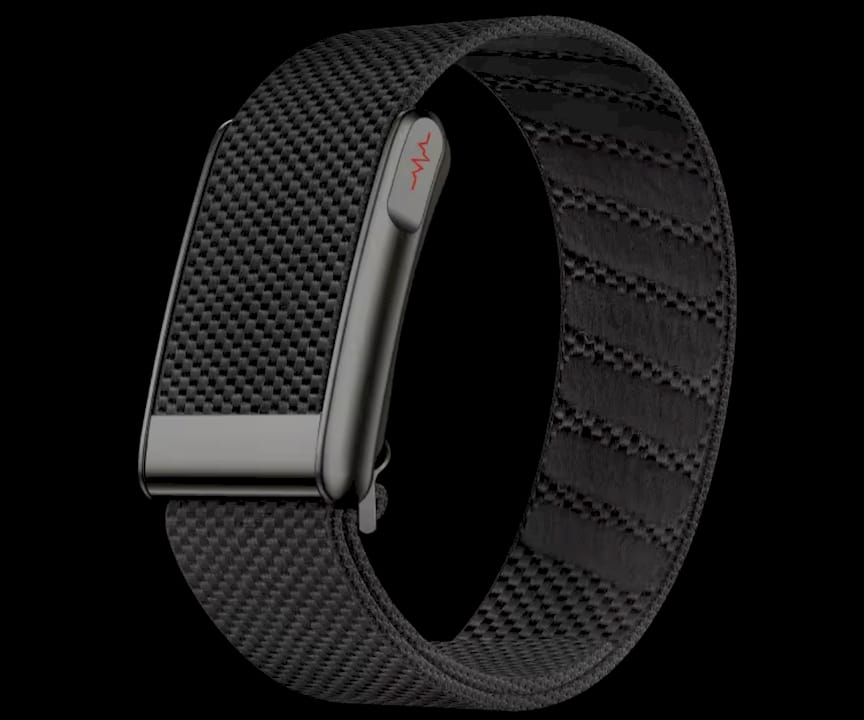
If you’re using a GLP Care Band or similar wearable, watch your heart rate trend over a few weeks rather than obsessing over a single session’s numbers. A gradually lowering resting heart rate at the same workload is one of the clearest signs your cardiovascular fitness is actually improving, independent of the scale.
How to Pair Cardio With Resistance Training to Protect Muscle
Resistance training isn’t optional support here. It’s the priority. GLP-1 medications create a calorie deficit, and without a strong signal to your muscles to keep working, your body will happily burn lean tissue right alongside fat. Reviews of GLP-1 receptor agonist trials conclude that while these drugs deliver meaningful weight and cardiometabolic benefits, they can compromise skeletal muscle integrity unless structured exercise, especially resistance work, is built into the plan.
A weekly template that keeps muscle central without sidelining cardio looks like this:
- Monday: Full-body strength (squat, row, push, hinge patterns), 30 to 40 minutes.
- Tuesday: Moderate cardio, 25 to 35 minutes (walk, bike, swim).
- Wednesday: Rest or light walking.
- Thursday: Full-body strength, second session.
- Friday: Moderate cardio, 25 to 35 minutes.
- Saturday: Optional third strength session or longer easy walk.
- Sunday: Rest.
Sequencing matters more than most people realize. If you’re doing strength and cardio on the same day, lift first while your energy and focus are highest, then finish with lighter cardio. Reversing that order, exhausting yourself with cardio and then trying to lift heavy, is a common reason people plateau on strength gains even while eating enough protein.
Progressive overload still applies here exactly as it would for anyone else. For most people on GLP-1 therapy, 2 to 3 sets of 8 to 12 repetitions per major movement pattern, taken close to muscular fatigue, builds and preserves strength effectively. Add small increases in weight, reps, or sets every one to two weeks rather than jumping in large increments, since recovery capacity can be a little lower while your body adjusts to reduced food intake.
Recovery deserves the same respect as the workouts themselves. If you notice your lifts stalling for more than two consecutive sessions, or your resting heart rate creeps up and stays elevated, that’s your cue for a deload week: cut volume by 30% to 40% for one week rather than pushing through. For deeper strategies on preventing lean-mass loss, our guide on preventing muscle loss on GLP-1 medications covers the nutrition side of this equation in more detail.
Fueling, Protein, and Side-Effect Management for Cardio
Protein is the lever that determines whether your cardio sessions build fitness or quietly erode muscle. Most adults on GLP-1 therapy benefit from spreading protein across the day in doses of roughly 25 to 35 grams per meal, since your body can only use so much at once for muscle repair. That might look like eggs and Greek yogurt at breakfast, a chicken or tofu bowl at lunch, and fish or lean beef at dinner, adjusted for appetite and tolerance.
Timing around workouts helps avoid the lightheaded, shaky feeling that sometimes hits people on reduced-calorie routines. A few practical rules:
- Eat a small, protein-containing snack 60 to 90 minutes before moderate cardio if you haven’t eaten in several hours.
- Rehydrate with water plus electrolytes (sodium, potassium) if sessions run past 30 minutes, especially in heat.
- If nausea flares, try bland, low-fat foods like crackers, rice, or a small banana rather than skipping fuel entirely.
- Sip water steadily throughout the day instead of large volumes at once, which can worsen fullness and nausea on GLP-1s.
The Mayo Clinic’s aerobic exercise guidance recommends starting conservatively and progressing gradually while monitoring symptoms, which matters more on GLP-1 therapy than almost any other exercise scenario, since appetite suppression and slower gastric emptying can mask early signs of underfueling.
If you’re on a glucose-lowering medication alongside your GLP-1, or you notice repeated dizziness, palpitations, or blood sugar swings during or after cardio, that’s a conversation for your prescribing clinician, not something to troubleshoot solo. Dose timing, meal spacing, and even the specific medication can all be adjusted once your care team understands what you’re experiencing. A protein calculator can help you land on a personalized daily target instead of guessing at grams.
What Does the Evidence Say About Cardio Plus GLP-1?
The research on combining exercise with GLP-1 therapy is still young, but it points in one consistent direction: exercise adds fitness benefits that medication alone doesn’t produce. The randomized-trial secondary analysis referenced earlier found that adding structured exercise to liraglutide improved stair-climb time by 8.6% and raised VO2peak relative to fat-free mass, while liraglutide alone showed no comparable improvement in either measure.
| Evidence source | Population/design | Key finding | Limitation |
|---|---|---|---|
| Secondary analysis, exercise + liraglutide vs liraglutide alone | Randomized trial substudy | 8.6% faster stair-climb time, higher VO2peak with exercise added | Single medication studied; short follow-up |
| Narrative review on GLP-1 and exercise | Synthesis of RCTs and cohort data | Structured exercise, especially resistance training, mitigates lean-mass loss | Heterogeneous exercise protocols across studies |
| Meta-analysis of 21 GLP-1 RA trials | Systematic review, cardiovascular outcomes | Reduced all-cause and cardiovascular mortality, fewer major cardiovascular events | Increased GI and gallbladder events noted |
That last row matters for anyone wondering whether cardio is even safe on these medications. A meta-analysis published in JACC found that GLP-1 receptor agonists reduce all-cause and cardiovascular mortality along with major adverse cardiovascular events across 21 trials, though gastrointestinal and gallbladder issues occurred more often in treated groups. That’s reassuring for heart health broadly, but it also explains why some people need to adjust cardio timing around GI symptoms rather than push through them.
The World Health Organization’s activity guidance reinforces the 150-minute moderate or 75-minute vigorous weekly target as a general population standard. Nothing in the GLP-1 literature suggests that target needs to shrink; it just needs to be reached more thoughtfully, with attention to fueling and recovery that wasn’t as critical before you started the medication. The biggest limitation across this evidence base is duration: most trials run weeks to a few months, not years, so long-term muscle and cardiovascular outcomes on combined therapy are still being mapped.
Practical Cardio Progression and Safety Red Flags
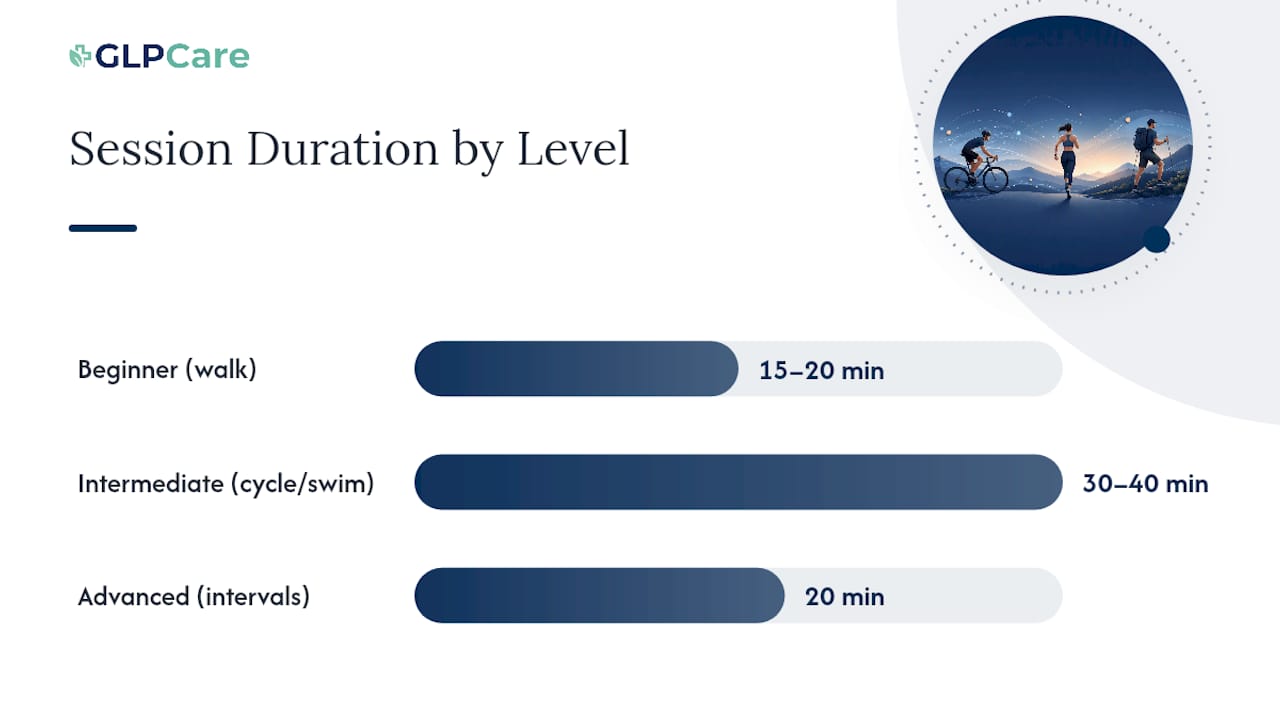
Start where your energy actually is, not where you think it should be. A beginner session might be a 15 to 20 minute walk at a conversational pace, three to four times a week. Intermediate exercisers can extend that to 30 to 40 minutes of cycling or swimming at a moderate RPE, four to five times weekly. More advanced exercisers, those with a longer training history and stable side effects, can add one or two 20 minute interval sessions alongside steady-state work.
On strength training days, a short 10 to 15 minute cardio warmup or cooldown is usually enough. Save the longer, dedicated cardio sessions for separate days so neither modality shortchanges the other.
Progression should follow a clear order:
- Increase total weekly minutes first, in 10 to 15 minute increments every one to two weeks.
- Only increase intensity once minutes feel sustainable without excessive fatigue the next day.
- Watch recovery markers, resting heart rate, sleep quality, and next-day soreness, before adding volume again.
- Pull back immediately if two or more recovery markers move in the wrong direction at once.
Certain symptoms are not something to push through. Severe nausea that prevents eating, fainting or near-fainting (syncope), chest pain, or severe dizziness during exercise all warrant stopping the session and contacting your clinician promptly. These apply regardless of age or fitness level, and they matter even more for older adults or anyone with an existing heart condition, where medication adjustments or supervised activity may be appropriate before increasing intensity further.
Balancing Performance, Health, and Sustainability
The framing that keeps tripping people up is treating cardio on GLP-1 as a calorie-burning obligation instead of a long-term investment in cardiovascular health. That mindset pushes people toward longer, harder sessions exactly when their bodies have the least fuel to support them. The better approach is quieter: moderate, consistent aerobic work paired with resistance training that does the heavier lifting for muscle preservation.
Dose changes and side-effect windows aren’t setbacks. They’re normal parts of the process, and your exercise plan should flex with them rather than stay rigid. A week of lighter walks during a dose increase isn’t falling behind, it’s adapting intelligently. What matters more than any single workout is the trend: strength holding steady even as the scale moves is a genuinely good sign, since muscle function can be preserved even as body composition shifts.
Track what you can, and bring that data to your clinician rather than guessing alone. The conversation gets a lot more useful when it’s grounded in real numbers instead of general impressions.
— Dominique
How GLPCare Supports Cardio and Strength on GLP-1
Getting the balance right between cardio, strength, and fueling is easier with real data instead of guesswork, and that’s exactly where GLPCare’s integrated system fits. GLPCare pairs clinician-supervised GLP-1 care with personalized nutrition coaching, so your protein targets and workout adjustments come from your actual bloodwork and progress, not a generic chart.

The GLP Care Band tracks heart rate, sleep, and activity continuously, giving you and your care team a clear read on whether your cardio intensity matches your recovery capacity week to week. Combine that with the built-in protein calculator in the app, and you get a personalized daily target instead of a one-size-fits-all number pulled from a nutrition label. If nausea or low energy is making cardio harder some weeks, your clinician can see the pattern in your data and adjust your plan accordingly, rather than leaving you to troubleshoot alone. If you’re weighing whether a structured, monitored program fits your situation, the GLP-1 readiness quiz takes a few minutes and gives you a clear next step, with pricing and program details available once you see your results.
This article is general information, not a substitute for advice from a qualified doctor. Consult a qualified healthcare professional about your own circumstances before acting on anything here.
Sources
- Exercise for GLP-1 use | Cleveland Clinic
- Secondary analysis: exercise and GLP-1 combined improved stair-climb time and VO2peak vs liraglutide alone
- GLP-1 agonists and exercise: the future of lifestyle prioritization
- Meta-analysis: GLP-1 RAs reduce mortality and cardiovascular events | JACC
FAQ
Do You Lose Heart Muscle on GLP-1?
GLP-1 medications don’t directly target heart muscle, and large trials show reduced cardiovascular mortality and major cardiac events with GLP-1 therapy overall. The muscle loss risk associated with these drugs applies mainly to skeletal muscle from rapid weight loss, which structured resistance training helps offset.
Can I Still Work Out While on GLP-1?
Yes, and you should. A combination of moderate cardio and resistance training produces better fitness outcomes than medication alone, including improved stair-climb performance and VO2peak in clinical research.
Is It Safe to Run While Taking GLP-1s?
Running is generally safe for most people on GLP-1 therapy once they’ve adjusted to the medication, but it’s wise to start with walking or light jogging and monitor for dizziness, low energy, or GI discomfort before increasing pace or distance. Anyone with an existing heart condition should get clearance from their prescribing clinician first.
Is Walking Enough Exercise on GLP-1?
Walking counts as moderate aerobic activity and can fulfill the 150 minute weekly target on its own, but it should be paired with resistance training to protect muscle mass, since walking alone doesn’t provide the strength stimulus your body needs during a calorie deficit.