520 Reports: What US Patients Should Do About Compounded Semaglutide
520 Reports: What US Patients Should Do About Compounded Semaglutide
Compounded semaglutide carries meaningfully higher safety risks than FDA-approved Ozempic or Wegovy, and the gap comes down to three things: dosing errors, unverified formulations, and outright fraudulent sellers. The FDA has issued repeated warnings about these products, and now that the national semaglutide shortage has ended, the legal pathways that once allowed broad compounding have narrowed considerably.
TL;DR:
- Compounded semaglutide is mainly produced by state-licensed pharmacies for individual patients and is no longer broadly permitted due to recent regulatory changes.
- Most adverse events linked to compounded semaglutide involve severe gastrointestinal issues and dosing inaccuracies, with the true risk likely underreported.
- Many compounded products contain salt forms of semaglutide not reviewed by the FDA and are often packaged without proper light protection, risking reduced potency and safety.
- Fraudulent sellers frequently bypass licensing requirements, ship from unregulated sources, and mislabel doses in units rather than milligrams, increasing patient risk.
- Transitioning to FDA-approved semaglutide under medical supervision remains the safest choice, especially during any dose change or discontinuation.
Table of Contents
- Is Compounded Semaglutide Legal Right Now?
- How Many Adverse Events Have Been Reported?
- Why Compounded Semaglutide Differs From Ozempic
- What Are the Warning Signs of an Unsafe Seller?
- What Should You Do if You’re Already on a Compounded Dose?
- Why an Integrated Care Model Reduces Compounded-Product Risk
- Where to Verify These Facts Yourself
- A Safer Path Forward With Glpcare
- Sources
- FAQ
Is Compounded Semaglutide Legal Right Now?
Compounded semaglutide is still legal in the United States, but only under much narrower conditions than during the 2022 to early 2025 shortage years. Once manufacturers caught up with demand, the FDA declared the shortage resolved, and the temporary enforcement discretion that let pharmacies mass-produce compounded versions ended. That single regulatory shift changed the entire landscape for anyone currently on a compounded product.
Two categories of compounding pharmacies operate under different rules, and the distinction matters more than most patients realize.
- 503A pharmacies are state-licensed and compound for individual patients based on a specific prescription. They are not required to report adverse events to the FDA, which creates a significant blind spot in national safety data.
- 503B outsourcing facilities register with the FDA, follow current good manufacturing practice standards, and face more oversight, though they still are not the same as an FDA-approved drug.
The FDA has also proposed permanently excluding semaglutide and tirzepatide from the 503B bulks list, a move that would close off most remaining legal compounding routes once the underlying drug is no longer in shortage. If that exclusion finalizes, compounding would only be justified for a documented, patient-specific medical need, such as an allergy to an inactive ingredient in the approved product, not general demand or cost.
The practical takeaway: if you are being offered compounded semaglutide today with no individualized medical justification, ask why. The legal shortage exemption that once made this common no longer applies nationwide.
How Many Adverse Events Have Been Reported?
As of April 30, 2025, the FDA had logged 520 adverse event reports tied specifically to compounded semaglutide, according to the University of Illinois Chicago Drug Information Group. That number sounds precise, but it almost certainly understates the real total.
The reason is structural, not incidental. State-licensed 503A pharmacies, which compound the bulk of the semaglutide sold outside FDA-approved channels, are not required to report adverse events to the agency’s FAERS database. Other FDA pages and enforcement updates cite broader tallies that run higher than 520, depending on the reporting window and which database is queried. The variation between sources isn’t a contradiction. It reflects a genuinely fragmented reporting system where a meaningful share of harm never reaches a federal database at all.
By the numbers: 520 confirmed adverse event reports linked to compounded semaglutide as of April 30, 2025, with experts warning the true figure is likely higher due to gaps in 503A reporting requirements.
What do these reports actually look like on the ground? Documented outcomes include:
- Severe gastrointestinal distress requiring hospitalization, often tied to accidental overdose
- Pancreatitis, a known but rare risk with GLP-1 therapy that becomes more likely at supraphysiologic doses
- Dangerous dehydration from unmanaged nausea and vomiting, sometimes severe enough to require IV fluids
- Fainting or dizziness episodes linked to blood sugar swings from imprecise dosing
If you experience persistent vomiting, inability to keep fluids down, severe abdominal pain radiating to your back, or fainting after a dose, that’s not a “wait and see” situation. Those are urgent care or emergency room signs, and they show up disproportionately in compounded-product reports compared to FDA-approved pens with fixed, tested doses.
Why Compounded Semaglutide Differs From Ozempic
The active ingredient name might be the same, but what’s actually in the vial often isn’t. Some compounders use semaglutide sodium or semaglutide acetate, salt forms that are chemically distinct from the semaglutide base used in FDA-approved products. Neither salt form has been reviewed by the FDA for safety or efficacy, and clinical sources at UIC note there’s no established evidence these alternatives behave the same way in the body.
Packaging tells a similar story. Ozempic and Wegovy ship in light-protected pens engineered to guard the peptide from degradation. Many compounded versions arrive in clear glass vials with no light shielding at all. Peptides like semaglutide are sensitive to light exposure, and peer-reviewed lab analysis has found impurity profiles and photostability problems in follow-on and compounded products that can reduce potency and raise theoretical immunogenicity risk, meaning the immune system could react to degraded or altered peptide fragments in ways it wouldn’t to the intact original.
Then there’s the labeling problem, which is arguably the most dangerous of the three.
- Compounded vials are frequently labeled in “units” rather than milligrams or milliliters, and a unit is not standardized across compounders.
- Concentration varies pharmacy to pharmacy, so a dose that’s safe from one supplier can be an overdose from another.
- Multi-dose vials require patients to self-measure with an insulin syringe, introducing a manual step that FDA-approved pens eliminate entirely.
Pro Tip: If your compounded semaglutide is labeled in “units” instead of milligrams, call the pharmacy and ask them to convert your dose to mg/mL before you draw a single syringe. Do the math with them on the phone, not alone at your kitchen counter.
What Are the Warning Signs of an Unsafe Seller?
Fraudulent and careless sellers tend to leave the same fingerprints. Watch for these before you fill a prescription:
- No prescription required. A legitimate compounded semaglutide product always requires a valid prescription from a licensed provider, no exceptions.
- Shipping from overseas or unclear origin. Products shipped from unregulated foreign sources bypass US pharmacy oversight entirely.
- Vague or missing ingredient lists. If a seller won’t specify exact concentration, salt form, and inactive ingredients, walk away.
- Unconventional delivery routes. Sublingual drops or dissolving tablets marketed as semaglutide have not been tested for absorption or safety, a concern Stanford Medicine researchers have flagged directly.
- Add-on “boosts.” B12, glutathione, or other vitamins bundled in as marketing perks add cost and risk with no proven benefit for weight management.
If compounding truly is your only option, three checks add real protection: verify the pharmacy’s state license, confirm whether it’s a registered 503B facility rather than an unverified 503A operation, and check the FDA’s BeSafeRx warning pages for that pharmacy’s name before you pay. Insist on written dosing instructions in mg/mL, not units, and ask directly how the product should be stored.
What Should You Do if You’re Already on a Compounded Dose?
Switching or continuing compounded semaglutide safely starts with verification, not panic. Call the pharmacy and confirm its licensing status, and don’t stop your medication abruptly without talking to your prescriber first, since sudden discontinuation can itself cause rebound symptoms in some patients.
Seek urgent medical attention immediately if you notice severe dehydration, abdominal pain that won’t ease, or fainting spells. Those symptoms warrant an ER visit, not a wait-and-see approach.
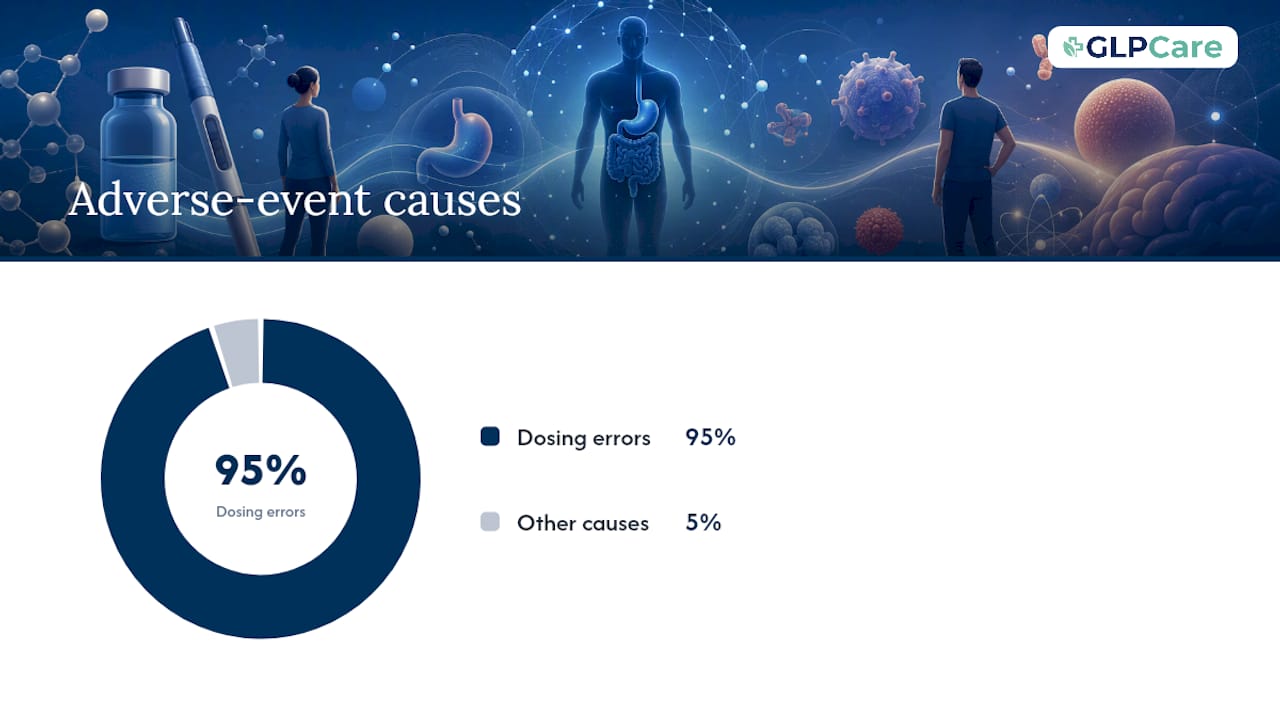
If you and your clinician decide to transition to an FDA-approved product, titrate conservatively. Stanford Medicine’s reporting found that roughly 95% of adverse events tied to compounded GLP-1 medications trace back to administration or dosing errors, not the drug itself, with some patients accidentally receiving 5 to 20 times their intended dose from mismeasurement. That statistic alone argues for starting lower than your presumed compounded dose and letting your clinician retitrate slowly, rather than assuming a 1:1 conversion.
A few practices reduce risk meaningfully during any transition:
- Keep a written log of every dose, date, and injection site, and bring it to every appointment.
- Ask your clinician what labs or clinical signs they want to monitor, such as pancreatic enzymes if you’ve had GI symptoms.
- Review injection site rotation technique if you’re new to self-injection, since poor technique compounds dosing risk.
- Check for drug interactions with any other medications or conditions you manage, since GLP-1 therapy can affect gastric emptying and absorption of other drugs.
Pro Tip: Continuous tracking, whether through a symptom journal or a wearable that logs heart rate and activity alongside your dosing, gives your clinician a clearer picture at your next visit than memory alone ever can.
Why an Integrated Care Model Reduces Compounded-Product Risk
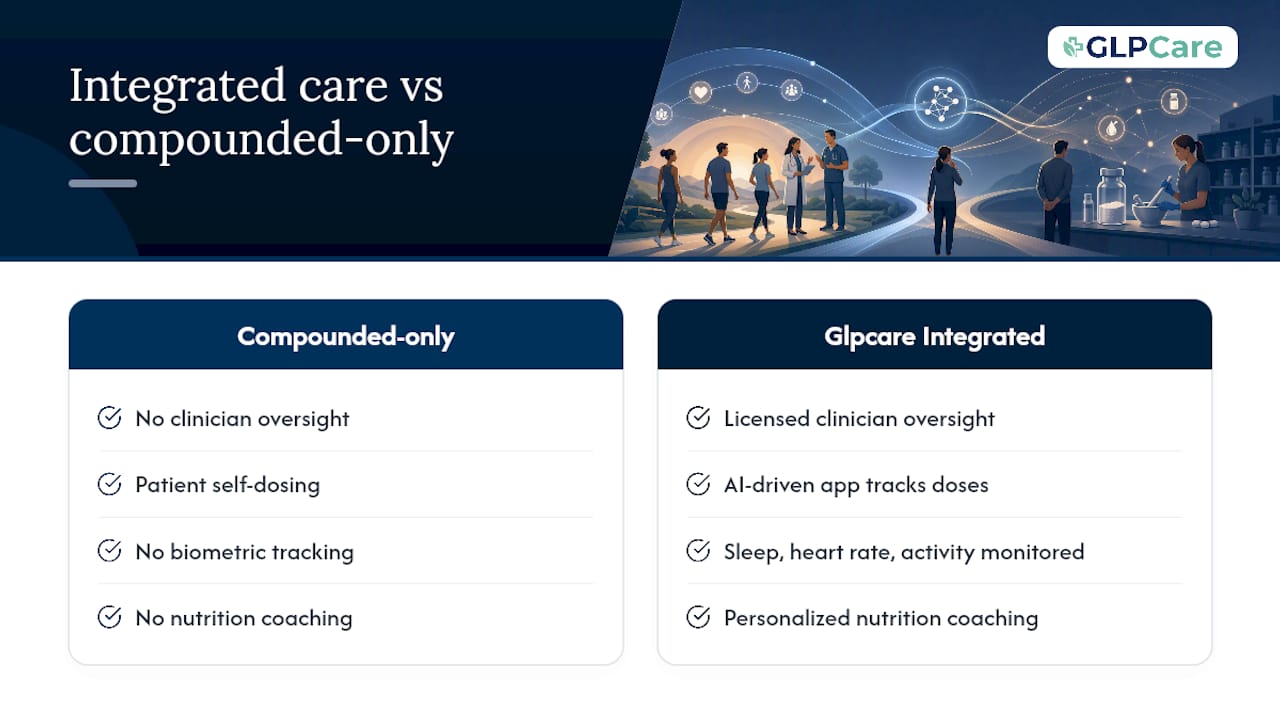
Most of the harm documented above traces back to one root cause: patients dosing alone, with no clinical oversight, using products no one verified. That’s the gap Glpcare was built to close. Every prescription comes with licensed clinician oversight, and patients track doses through an AI-driven app rather than eyeballing a syringe against a “units” label.
The GLP Care Band adds a layer most compounded-only patients never get: real-time biometric tracking of sleep, heart rate, and activity, paired with personalized nutrition coaching to protect lean muscle during weight loss. When a patient comes to Glpcare already using a compounded product, the clinical team reviews their history and, where appropriate, transitions them toward FDA-approved formulations with a conservative, monitored titration plan rather than a blind dose match.
— Dominique
Where to Verify These Facts Yourself
Read the primary sources directly rather than taking any single summary at face value. The FDA’s own safety communications carry the official regulatory record. The UIC Drug Information Group FAQ breaks down adverse-event data in plain language. Stanford Medicine’s reporting offers clinician-level context on why doctors worry. The peer-reviewed impurity study supplies the lab evidence behind immunogenicity concerns. For a broader look at rare GLP-1 side effects worth knowing before you start any formulation, this clinical overview is worth a read.
A Safer Path Forward With Glpcare
Glpcare is built for exactly the gap this article just walked through: the space between “I need GLP-1 therapy” and “I have no idea if what I’m injecting is actually safe.” Instead of a vial from an unverified source and a guess at your dose, you get a prescription pathway with licensed clinician oversight from day one, plus AI-powered dose tracking that removes the “units versus mg” guesswork entirely.
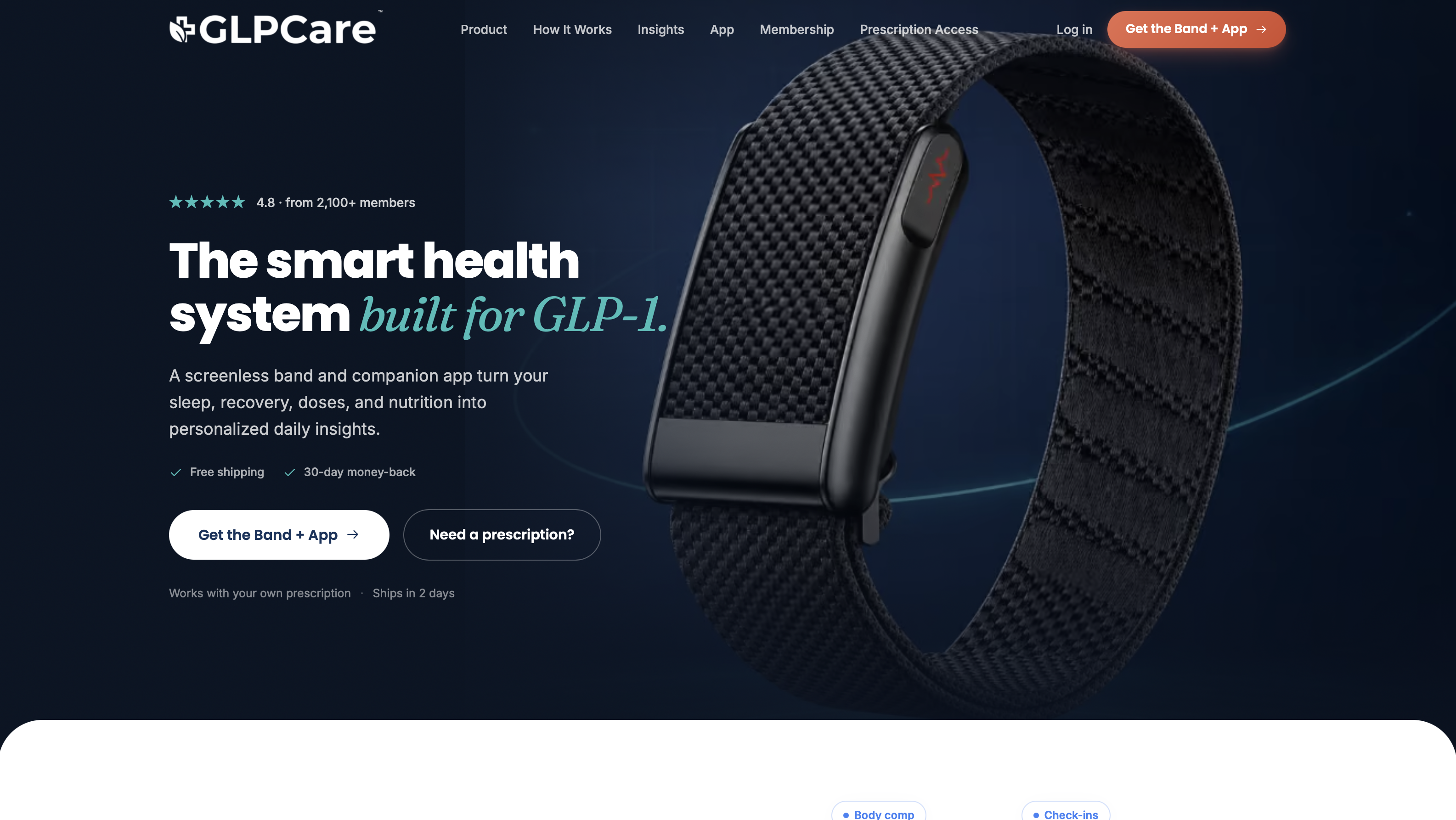
The program pairs medication (semaglutide or tirzepatide, shipped to your door) with the GLP Care Band for real-time biometric feedback and personalized nutrition coaching to protect muscle mass while you lose fat. Whether you’re starting fresh or coming off a compounded product you’re no longer confident in, a short readiness quiz is the fastest way to see whether Glpcare’s clinician-led model fits your situation. It takes a few minutes and gives you a direct next step instead of another search result.
This article is general information, not a substitute for advice from a qualified doctor. Consult a qualified healthcare professional about your own circumstances before acting on anything here.
Sources
- FDA’s Concerns with Unapproved GLP-1 Drugs Used for Weight Loss | FDA
- What Are the Safety Concerns Regarding Compounded GLP-1 Receptor Agonists? | Drug Information Group | University of Illinois Chicago
- Compounded GLP-1s: Why doctors worry and the FDA is cracking down | Stanford Medicine
- Impurities and Potential Immunogenicity Associated With Follow-on and Compounded GLP-1 Receptor Agonists | Pharmaceutical Research
FAQ
Can you still get compounded semaglutide in the US?
Yes, but only under narrower conditions than during the 2022 to 2025 shortage. Legitimate compounding now generally requires a documented, patient-specific medical need rather than general demand.
Is the FDA going to stop compounded semaglutide?
The FDA has proposed permanently excluding semaglutide from the 503B bulks list, which would close most remaining legal compounding pathways once finalized. Compounding for individualized medical needs through licensed 503A pharmacies would likely still be permitted in limited cases.
Why did some patients stop taking compounded GLP-1 products after public concerns?
Public reporting on compounded GLP-1 safety, including adverse events and dosing errors, has led some patients to switch back to FDA-approved formulations for the tested, consistent dosing those products provide.
Is compounded semaglutide safer than Ozempic?
No. FDA-approved Ozempic has undergone federal review for quality, safety, and efficacy, while compounded versions have not, and they carry documented risks from salt-form differences, impurities, and dosing-label inconsistencies.