6 Week Plan Ozempic Weight Loss Results: What to Expect
6 Week Plan Ozempic Weight Loss Results: What to Expect
TL;DR:
- Most patients lose 5 to 12 pounds in the first six weeks of Ozempic treatment, driven by dose escalation and proper diet. Consuming 80–120 grams of protein daily, staying hydrated, and engaging in resistance exercise improve weight loss and preserve muscle. Early side effects like nausea peak shortly after injection but gradually decrease as doses increase.
Ozempic (semaglutide) is a GLP-1 receptor agonist that produces 2%–6% total body weight loss in the first six weeks of treatment. The 6 week plan Ozempic weight loss results most patients see range from 5 to 12 pounds, depending on starting weight, dose adherence, and diet quality. The STEP clinical trials established semaglutide’s weight loss efficacy across diverse patient populations, and Glpcare’s clinical guidance builds on that foundation with personalized nutrition and activity coaching. Understanding what drives results during this early phase helps you stay consistent when the scale moves slowly.
What are the typical 6 week plan Ozempic weight loss results?
Most patients lose 5 to 12 pounds in the first six weeks on Ozempic. For a person starting at 200 pounds, that translates to roughly 6–10 pounds. Someone starting at 250 pounds or more often loses 7.5–18 pounds over the same period.

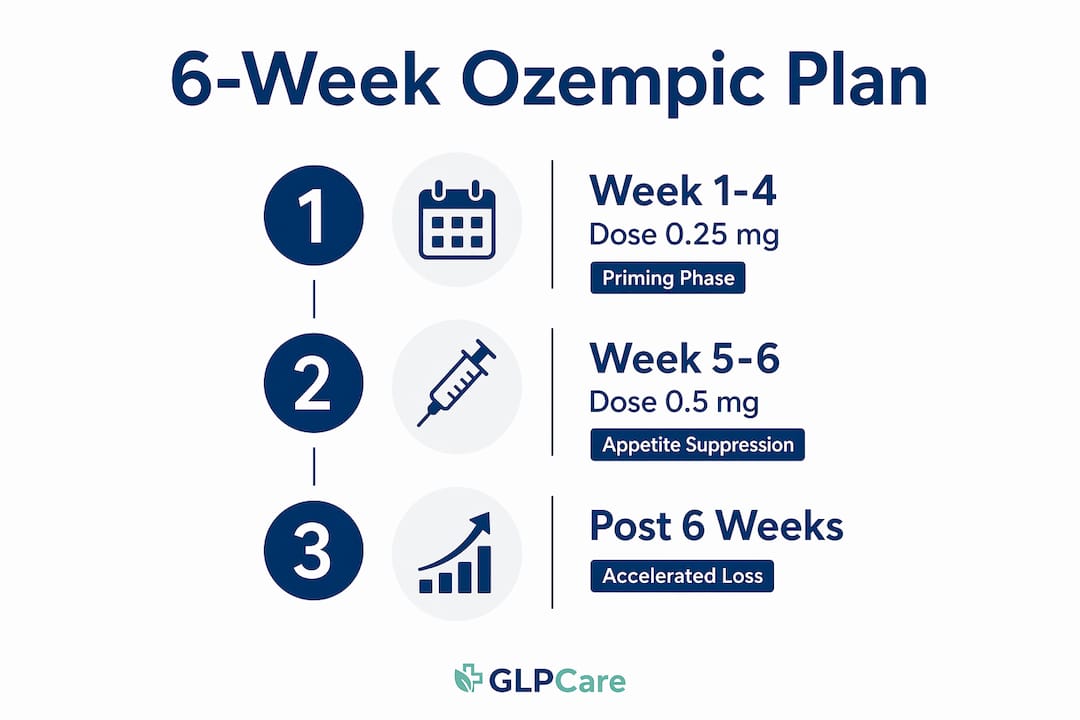
The first four weeks use a 0.25 mg dose, which is sub-therapeutic for fat loss but necessary to prepare your body for higher doses. Weight loss during this phase is modest and often includes water weight and appetite adjustment rather than pure fat loss. Patients who expect dramatic results in week two set themselves up for frustration.
Weeks five and six bring the dose increase to 0.5 mg, and appetite suppression accelerates noticeably. Most patients report feeling full faster, eating less without effort, and seeing the scale move more consistently. This is when the Ozempic weight loss timeline starts to feel real.
Understanding the dosing schedule week by week
The standard six-week protocol follows a clear titration pattern. Each phase serves a specific purpose, and skipping ahead on doses increases side effects without improving results.
- Week 1: Inject 0.25 mg subcutaneously once per week. Expect mild nausea and reduced appetite. Weight loss is minimal, often 1–2 pounds.
- Week 2: Continue 0.25 mg. Your body adjusts to the medication. Nausea typically peaks and then begins to ease.
- Week 3: Still at 0.25 mg. Appetite suppression becomes more consistent. Some patients notice clothes fitting slightly looser.
- Week 4: Final week at 0.25 mg. A plateau around week 4 is common before steady fat loss resumes. This is normal, not a sign of failure.
- Week 5: Dose increases to 0.5 mg. Appetite suppression strengthens. Weight loss accelerates for most patients.
- Week 6: Second week at 0.5 mg. Cumulative results become visible. Most patients have lost a meaningful amount of weight and feel more in control of hunger.
Patience during weeks 1–4 is not optional. The priming phase protects you from the nausea and vomiting that derail adherence when doses escalate too fast.
How to optimize your 6 week Ozempic diet for best results
Diet is the variable that separates patients who lose 5 pounds in six weeks from those who lose 12. Ozempic reduces hunger, but it does not choose what you eat. You do.
Protein is the most important nutrient on Ozempic. Patients who eat 80–120 grams of protein daily lose up to 40% more weight than those who rely on appetite suppression alone. Clinical societies recommend 1–1.5 grams of protein per kilogram of body weight daily to protect lean muscle during rapid weight loss. Without adequate protein, up to 30%–40% of total weight lost can come from muscle, not fat.
Key dietary habits that improve results from an Ozempic plan:
- Eat 5–6 small, protein-focused meals or snacks every day. This stabilizes blood sugar and prevents the nausea that comes from an empty stomach.
- Drink 2–3 liters of water daily. Hydration supports energy and reduces fatigue, which is often mistaken for a medication side effect.
- Prioritize lean proteins: chicken breast, Greek yogurt, eggs, cottage cheese, and fish.
- Avoid high-fat, fried, and heavily processed foods. These worsen nausea and slow gastric emptying further.
- Limit alcohol. It adds empty calories and dehydrates you, compounding fatigue.
A practical daily meal structure looks like this: a protein shake or Greek yogurt at breakfast, a small chicken and vegetable lunch, a mid-afternoon cottage cheese snack, a lean protein dinner with vegetables, and a small protein snack before bed if hunger returns.
Pro Tip: Set a phone alarm every three to four hours to eat a small protein-rich snack. Patients who eat on a schedule report significantly less nausea than those who wait until they feel hungry.
What factors influence your individual results?
Weight loss with Ozempic varies widely, and the reasons are specific and measurable.
Starting body weight and BMI directly affect absolute pounds lost. A higher starting weight means more total weight loss in absolute terms, even if the percentage is similar. This is why comparing your results to someone else’s rarely helps.
Metabolic conditions change the equation. Type 2 diabetes slows early weight loss because insulin resistance affects how the body processes and releases stored fat. Patients with diabetes often see slower initial results but catch up as metabolic function improves.
Dose adherence and titration speed matter more than most patients realize. Missing injections or delaying dose increases extends the sub-therapeutic phase and delays results.
Physical activity amplifies fat loss and protects muscle. Resistance training started early alongside a high-protein diet maintains muscle mass and metabolic rate during the weight loss phase. Even two sessions per week of bodyweight exercises makes a measurable difference.
| Factor | Effect on 6-week results |
|---|---|
| Higher starting BMI | Greater absolute weight loss in pounds |
| Type 2 diabetes | Slower early loss, improves over time |
| Consistent protein intake | Up to 40% more weight lost vs. low-protein approach |
| Resistance training | Preserves muscle, protects metabolic rate |
| Dose adherence | Directly determines when therapeutic effect begins |
Pro Tip: Track your protein grams, not just your calories. Patients who hit their protein target consistently preserve more muscle and report better energy throughout the six weeks.
How do you manage side effects in the first 6 weeks?
Side effects are real, but they are manageable and temporary for most patients.
Nausea is the most common complaint. It peaks 24–48 hours after injection and typically diminishes over the following weeks as your body adapts. The worst mistake patients make is skipping meals when nauseous. Fasting worsens nausea and creates a cycle that also accelerates muscle loss.
Practical strategies that reduce side effects:
- Eat small meals every 3–4 hours. An empty stomach intensifies nausea on Ozempic.
- Increase fiber gradually. Sudden high-fiber intake worsens constipation, which affects many patients in the first weeks.
- Add electrolytes to your water. Sodium, potassium, and magnesium help counteract fatigue caused by reduced food intake.
- Choose gentle physical activity like walking. Light movement reduces nausea and improves mood without taxing a body already adjusting to the medication.
- Inject at night before bed. Many patients find that sleeping through the peak nausea window at hours 12–24 post-injection makes the first day after each dose much easier.
“Fatigue in the first weeks is often caused by dehydration and low caloric intake, not the medication itself. Patients who maintain hydration and eat enough protein consistently report better energy than those who restrict calories aggressively.”
Constipation responds well to gradual fiber increases, consistent hydration, and daily movement. Magnesium glycinate at night is a common recommendation from clinicians for patients who struggle with this side effect.
How to set realistic expectations and plan beyond 6 weeks
Six weeks is the beginning of the Ozempic weight loss timeline, not the peak. The first six weeks are primarily about tolerability and dose titration. Real, sustained fat loss accelerates after week six as doses increase and the body fully adapts.
Here is what realistic milestones look like:
- Weeks 1–4: Modest loss of 1–4 pounds. Appetite begins to shift. Side effects are most noticeable.
- Weeks 5–6: Loss accelerates to 5–12 pounds total. Clothes fit differently. Energy stabilizes.
- Months 2–3: Dose escalates to 1 mg. Weekly weight loss increases. Dietary habits become more automatic.
- Months 4–6: Many patients reach 10%–15% total body weight loss at therapeutic doses. Visible changes in body composition become significant.
- Beyond 6 months: Long-term results depend on sustained lifestyle habits alongside continued GLP-1 therapy.
Most patients notice improved waistline fit before the scale shows dramatic numbers. That is a real result. Contact your healthcare provider if you experience severe vomiting, persistent abdominal pain, or no weight loss after eight weeks at 0.5 mg. These warrant a clinical review, not just patience.
Key Takeaways
The first six weeks of Ozempic treatment are a titration and priming phase, not a peak fat loss period, and patients who pair the medication with consistent protein intake and structured eating lose significantly more weight than those who rely on appetite suppression alone.
| Point | Details |
|---|---|
| Expected early weight loss | Most patients lose 5–12 pounds in the first six weeks, representing 2%–6% of body weight. |
| Dosing follows a fixed schedule | Weeks 1–4 use 0.25 mg; weeks 5–6 increase to 0.5 mg to build tolerance before therapeutic effect. |
| Protein intake drives results | Eating 80–120 grams of protein daily preserves muscle and increases total fat loss by up to 40%. |
| Side effects are manageable | Nausea peaks 24–48 hours post-injection and eases with small frequent meals and consistent hydration. |
| Six weeks is just the start | Larger weight loss occurs at higher doses after week six; early habits determine long-term success. |
What I’ve learned from watching patients through their first six weeks
The patients who struggle most in the first six weeks are not the ones with the most weight to lose. They are the ones who expect the medication to do all the work. Ozempic reduces hunger powerfully, but it does not override poor food choices or replace the muscle-preserving effect of protein and movement.
I have seen patients lose only 3 pounds in six weeks and feel defeated, then lose 25 pounds over the following three months once their dose reached 1 mg and their diet clicked into place. The slow starters often become the biggest success stories because they build habits during the titration phase instead of coasting on appetite suppression.
The insight that changes everything for most patients is this: eating less is not the goal. Eating the right amount of protein, at the right frequency, while the medication handles hunger is the goal. Patients who cut calories aggressively in the first six weeks lose muscle, slow their metabolism, and feel terrible. Patients who eat 80–120 grams of protein daily, move their body regularly, and stay hydrated feel better and lose more fat.
Start resistance training in week one, even if it is just bodyweight squats and push-ups three times a week. Your future self will have a faster metabolism and a better body composition because of it.
— Dominique
Glpcare’s approach to GLP-1 weight loss support
Ozempic works best when medical supervision, nutrition guidance, and real-time health tracking work together. Glpcare combines all three into one integrated program built specifically for people on GLP-1 therapy.

Glpcare provides personalized dose management, clinician support, and nutrition coaching aligned with the protein-first principles that drive real fat loss. The program’s screenless fitness band tracks sleep, heart rate, and activity levels, giving your care team the data they need to adjust your plan as your body changes. Patients also log dietary habits and dosages through an AI companion that delivers tailored advice between clinical check-ins. If you want structured, medically supervised support for your GLP-1 weight loss program, Glpcare is built for exactly that.
FAQ
How much weight can I expect to lose in 6 weeks on Ozempic?
Most patients lose 5–12 pounds in the first six weeks, representing 2%–6% of total body weight. Higher starting weight generally produces greater absolute weight loss.
Why is weight loss slow in the first 4 weeks?
The 0.25 mg starting dose is sub-therapeutic for fat loss. Its purpose is to minimize side effects and prepare your body for higher, more effective doses starting at week five.
What should I eat on Ozempic for the best results?
Eat 80–120 grams of protein daily spread across 5–6 small meals. Prioritize lean proteins, stay hydrated with 2–3 liters of water, and avoid high-fat or fried foods that worsen nausea.
Does Ozempic cause muscle loss?
Ozempic can contribute to muscle loss if protein intake is inadequate. Clinical guidance recommends 1–1.5 grams of protein per kilogram of body weight daily, combined with resistance training, to protect lean muscle.
When do Ozempic results become more noticeable?
Results accelerate after week six as the dose increases beyond 0.5 mg. Most patients see significant body composition changes between months two and six at therapeutic doses of 1 mg or higher.